The Real Costs and ROI of 2026 Outdoor Kitchens
Imagine stepping into your backyard on a bright evening, the scent of grilled vegetables in the air, laughter spilling across a stone patio, and a well-designed outdoor kitchen anchoring it all. It feels like a private retreat, yet it is right outside your back door. Outdoor kitchens have become one of the most desirable additions for homeowners who want to blend entertaining, relaxation, and cooking in one inviting space. Before selecting tile samples and stainless steel cabinets, homeowners should understand the true costs and potential returns of this investment.
Why Outdoor Kitchens Are So Popular
Outdoor living has evolved from a casual weekend pursuit to an essential element of home design. Homeowners seek spaces that extend comfort and style beyond interior walls. An outdoor kitchen fosters natural gatherings, transforming mealtime into a shared experience. It also enhances property aesthetics, fostering a sense of luxury and deeper connection to the outdoors.
The benefits extend beyond visual appeal. Cooking outdoors prevents heat and odors from entering the home, promotes frequent social events, and may lower dining expenses through regular entertaining. For many, this addition represents more than a cooking area; it embodies a commitment to an outdoor-oriented lifestyle.
Understanding the True Costs
Costs for outdoor kitchens vary significantly based on size, materials, design complexity, and included appliances. Homeowners must first consider intended use. Will the space feature a simple grill station with prep counter, or a comprehensive setup with sink, refrigerator, and pizza oven? These decisions shape the overall budget.
Basic Setups:
A straightforward outdoor kitchen includes a built-in grill, compact counter, and essential storage. Such configurations typically begin at $5,000 to $10,000. They suit homeowners desiring core functionality without intricate details.
Mid-Range Kitchens:
These designs incorporate stone countertops, a sink, weather-resistant cabinets, and select built-in appliances. Budgets often range from $15,000 to $30,000, particularly with additions like ambient lighting, plumbing connections, or gas lines.
High-End Designs:
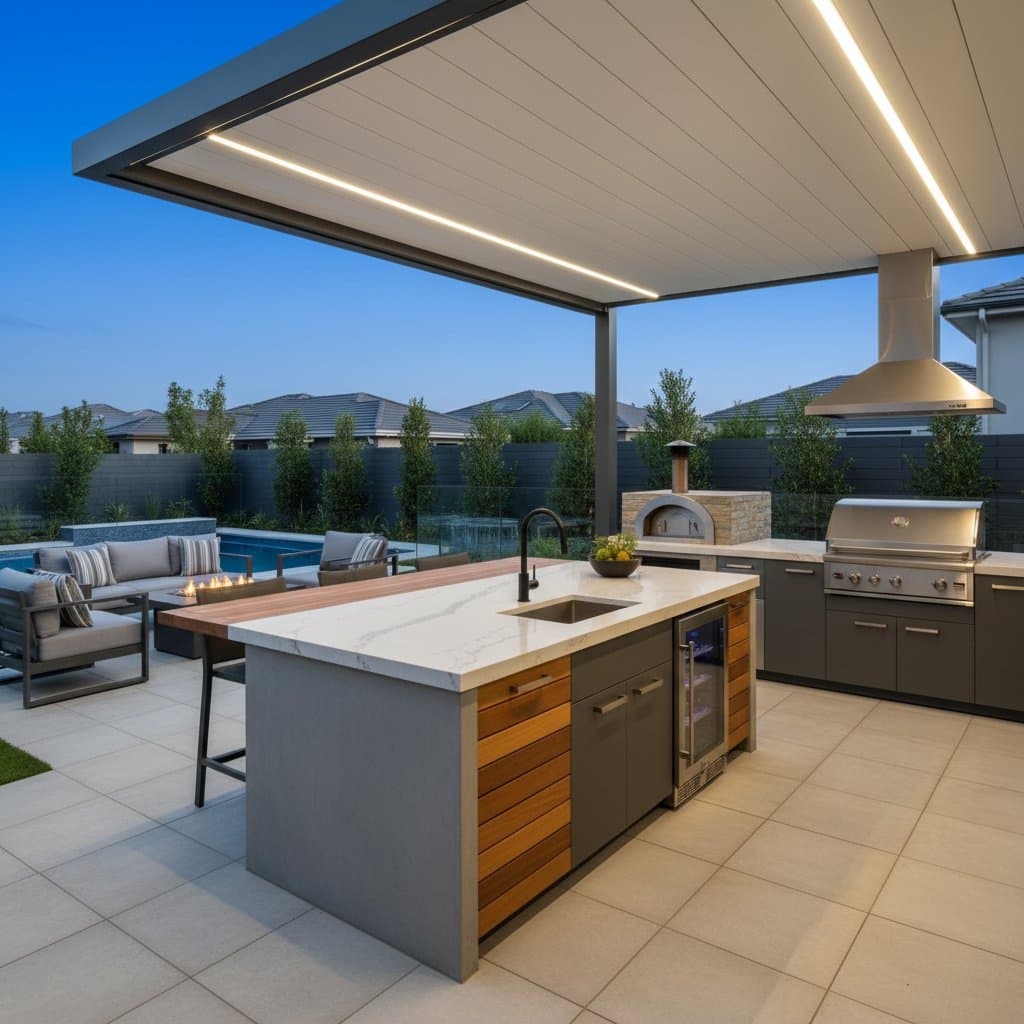
Luxury versions feature multiple cooking zones, bespoke cabinetry, refrigeration units, wine coolers, and premium finishes such as granite, porcelain tile, or natural stone. Complete projects, including expanded patios, pergolas, and integrated seating, may exceed $50,000.
Key Cost Drivers
Multiple elements determine the total expense. Awareness of these factors enables informed decisions.
Materials:
Material selection impacts both initial outlay and longevity. Stainless steel withstands moisture and heat effectively, whereas stone or brick offers enduring elegance but demands skilled installation. Options like porcelain tile, precast concrete, or composite decking balance cost with aesthetic appeal.
Appliances:
Outdoor-rated appliances endure environmental exposure, yet they exceed indoor equivalents in price. Reliable grills, side burners, compact refrigerators, and ice makers accumulate expenses rapidly. Select based on cooking habits: a versatile grill suffices for barbecue enthusiasts, while a wood-fired pizza oven or smoker suits experimental cooks.
Utilities and Installation:
Extending gas, electrical, and water lines incurs fees, especially for distant placements. Adequate drainage and protected wiring prove vital. Engage licensed contractors to guarantee safety and adherence to building codes.
Design and Labor:
Expert design consultations optimize space usage and prevent errors. Masonry, carpentry, and plumbing labor constitutes a major expense, yet it secures enduring performance.
Balancing Budget and Value
Homeowners need not allocate extravagant sums to achieve an appealing, practical outdoor kitchen. Strategic planning extends resources while upholding standards. Consider these approaches:
- Focus on essentials first, such as a durable grill and sturdy countertop, before incorporating luxuries.
- Combine premium elements like stone accents with economical bases such as concrete counters.
- Leverage existing structures, including patios or decks, to minimize groundwork costs.
- Structure the project in stages, allowing future enhancements without disrupting completed areas.
The ROI of Outdoor Kitchens
Initial expenditures may appear substantial, but returns often justify the outlay. Well-constructed outdoor kitchens frequently boost property values. Real estate professionals highlight these features as compelling assets for buyers seeking turnkey outdoor amenities.
Higher Resale Appeal:
These kitchens evoke emotional responses in prospects, who envision hosting events and unwinding al fresco. Properties equipped thusly tend to sell more swiftly and at premium prices.
Lifestyle ROI:
Beyond sales, personal benefits abound. The setup promotes outdoor time, facilitates gatherings, and curbs restaurant visits. Accumulated enjoyment translates to intangible yet profound value.
Maintenance and Longevity:
Durability influences overall returns. Resilient choices like stainless steel and sealed stone endure seasonal shifts. Initial investments in superior components reduce future upkeep demands.
Designing for Maximum ROI
To optimize returns, prioritize utility and universal attractiveness. Avoid niche customizations that may deter future owners.
Incorporate these tactics:
-
Position the kitchen near the home to shorten utility extensions and enhance accessibility.
-
Install protective coverings, such as pergolas or retractable awnings, to broaden seasonal use.
-
Layer illumination sources for safety, mood, and extended functionality after dusk.
-
Integrate ample storage solutions to organize utensils and serveware efficiently.
-
Provision for year-round comfort with adjacent seating, shading elements, and supplemental heating.
Common Mistakes to Avoid
Overlook upkeep requirements at your peril; all surfaces demand routine attention. Opt for low-maintenance, weather-hardy options.
Resist the urge to overscale; an oversized kitchen can dominate a modest yard. Align dimensions with available land.
Plan layouts thoughtfully: position cooking, preparation, and dining zones for seamless flow without congestion. Allocate sufficient counter area adjacent to heat sources.
Secure necessary approvals; jurisdictions often mandate permits for utilities. Noncompliance risks fines and rework.
Maintaining Your Outdoor Kitchen
Upon completion, the space delivers instant gratification through frequent use and effortless hosting. Conduct seasonal inspections to preserve condition.
Clean surfaces regularly, inspect seals for integrity, and store appliances properly during off-seasons. These habits ensure sustained performance and enjoyment.
Steps to Build Your Outdoor Kitchen
Embark on this project by establishing a feasible budget and clarifying functional needs. Evaluate materials and appliances suited to local weather and personal preferences.
Consult professionals early to refine plans. Through deliberate selections, your outdoor kitchen yields enduring financial and experiential rewards, seamlessly extending living areas for memorable occasions.