
Walk-In Pantry vs. Butler's Pantry: Selecting the Best Option for 2025
The National Kitchen and Bath Association's recent survey reveals that 68 percent of kitchen remodel clients prioritize dedicated pantry space. Nearly half of those individuals consider either a walk-in pantry or a butler's pantry. Both designs enhance storage and efficiency, yet they vary in financial impact and operational demands. Homeowners planning a remodel must evaluate how each choice influences budget, daily workflow, and future resale potential.
Understanding the Core Differences: Function and Cost
Pantry projects frequently begin with a need for more space but soon involve broader cost considerations. Individuals seek improved organization, though they often overlook expenses related to construction and custom cabinetry. A walk-in pantry appears simple, but elements such as expanded square footage, tailored shelving, and integrated lighting accumulate quickly. A butler's pantry, with its refined appearance, serves as an auxiliary kitchen area, escalating costs through cabinetry, plumbing, and electrical installations.
Data from the Remodeling Cost Index indicates that a standard walk-in pantry renovation ranges from $3,500 to $9,000, based on dimensions and material selections. In comparison, a butler's pantry typically costs $8,000 to $25,000, reflecting additional utilities and premium finishes. This disparity frequently guides the ultimate choice.
"Homeowners frequently overlook the infrastructure expenses associated with a butler's pantry," notes Rachel Kim, Certified Kitchen Designer at Modern Habitats Design Group. "Incorporating a sink, countertop, and electrical outlets transforms the project from basic storage to a secondary kitchen setup."
Defining Each Pantry's Role in Modern Kitchens
Walk-In Pantry
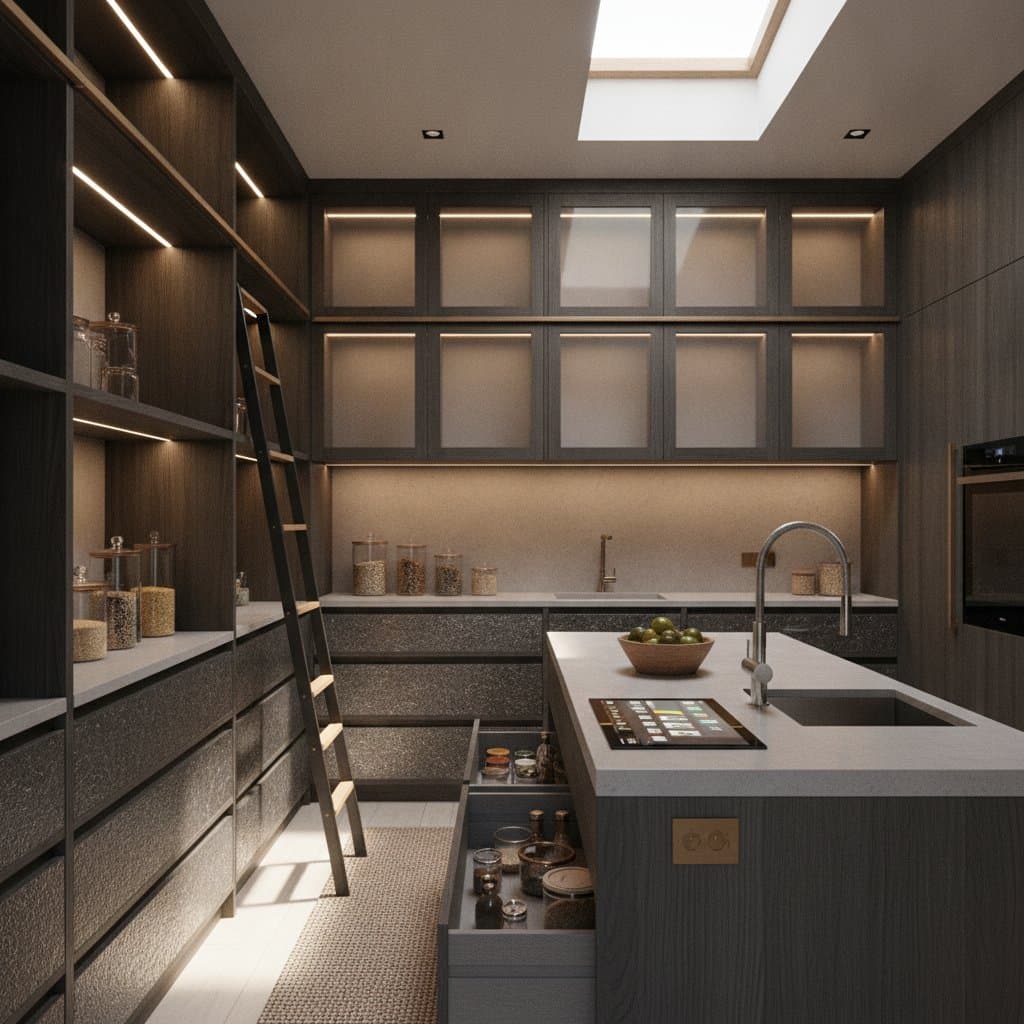
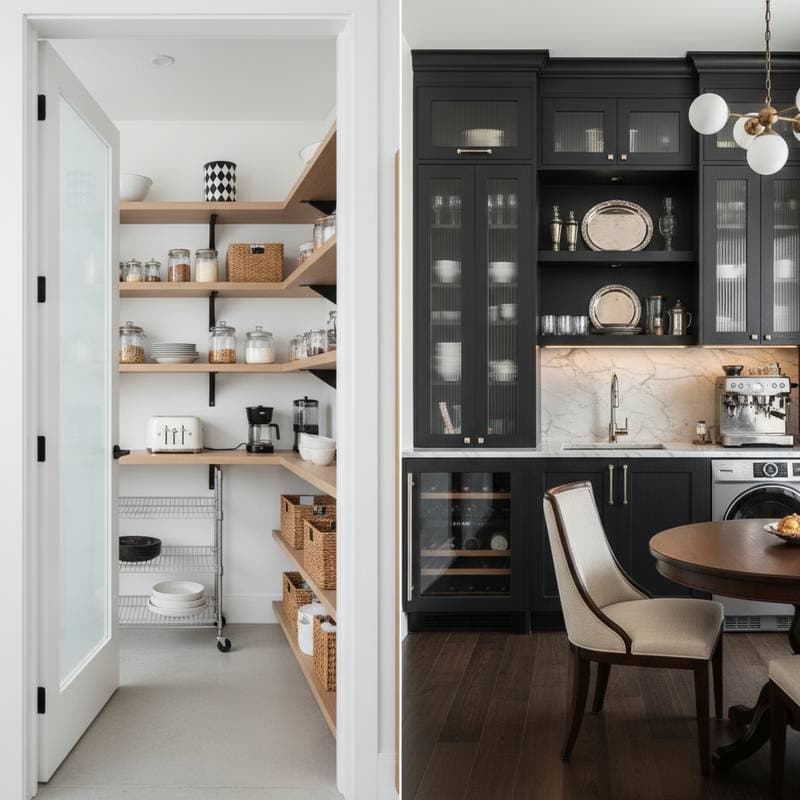
This design functions as a compact room next to the kitchen, optimized for capacity with adjustable shelving and occasional climate controls for perishables. It appeals to those who prefer straightforward access, bulk storage, and minimal complexity. Installation focuses on framing, drywall application, and shelving assembly.
Butler's Pantry
Originally intended for service staff, contemporary versions act as preparation zones, beverage stations, or wine cellars. Positioned between the kitchen and dining space, it provides hidden work areas. Features often encompass custom cabinetry, durable countertops, compact appliances, and focused illumination, delivering upscale utility at elevated expense.
"In terms of oversight, a butler's pantry enters comprehensive remodel territory," explains Marcus Lane, Project Estimator for HomeBuild Consultants. "It demands collaboration among carpenters, electricians, and plumbers, resulting in extended timelines and larger contingency allowances."
Framework for Informed Decision-Making
Select the appropriate pantry through a systematic process. These five steps assist homeowners and coordinators in aligning choices with priorities and finances.
Step 1: Evaluate Available Space
Determine square footage near the kitchen. Walk-in pantries demand 25 to 40 square feet for effective use. Butler's pantries utilize shallower depths but require greater linear space for cabinets and surfaces.
Step 2: Define Intended Purpose
Opt for a walk-in pantry when prioritizing bulk storage and economical solutions. Choose a butler's pantry for hosting scenarios or enhanced market appeal.
Step 3: Analyze Infrastructure Needs
Walk-in designs involve limited mechanical modifications. Butler's pantries often necessitate plumbing for fixtures and dedicated wiring for devices, potentially raising labor expenses by 30 to 40 percent.
Step 4: Calculate Upfront and Ongoing Expenses
Account for initial build costs alongside maintenance. Elements like painted cabinets, quartz surfaces, and under-cabinet lights in a butler's pantry require regular care. Melamine shelving in a walk-in pantry offers durability and simple replacement.
Step 5: Assess Return on Investment
The Home Renovation Value Index reports that walk-in pantries recover approximately 75 percent of costs upon sale. Thoughtfully executed butler's pantries achieve up to 85 percent recovery when part of a high-end kitchen layout.
Uncovering Hidden Costs
Unexpected expenses affect both pantry varieties during renovation. Key areas include:
- Permitting and structural modifications: Minor alterations may incur extra inspection charges.
- Illumination and electrical enhancements: Motion-activated lights, recessed fixtures, or LED strips contribute $500 to $1,200.
- Tailored shelving and materials: Premium wood or acrylic options elevate prices by as much as 40 percent over basic wire racks.
- Appliance accommodations: Compact refrigerators, wine units, or microwaves in butler's pantries add $1,000 to $3,000.
- Labor increases: Delays from scheduling or material shortages can inflate costs by 10 to 15 percent.
"Participants in projects often neglect allocations for accents such as tile surrounds or fixtures," observes Angela Torres, Senior Renovation Planner at Buildwise Group. "These details accumulate into thousands on the final bill."
Strategies for Timeline and Risk Mitigation
Although pantry additions appear modest, they interrupt kitchen operations for periods ranging from one to four weeks. Walk-in installations generally span one to two weeks, whereas butler's pantries extend longer due to custom work and utilities. To avoid extensions, implement these practices:
- Obtain itemized proposals: Insist on breakdowns for supplies and workforce.
- Establish a reserve fund: Set aside 10 to 15 percent of the budget for surprises.
- Track advancement regularly: Seek weekly reports from coordinators and verify completions prior to disbursements.
- Employ fixed-cost agreements: Safeguard against rises in material or labor rates.
Such steps secure finances and enforce contractor responsibility.
Selecting and Engaging Professionals
Qualified experts prevent costly errors. For walk-in pantries, a contractor experienced in residential framing proves adequate. Butler's pantries benefit from a coordinated team, including a kitchen specialist, certified electrician, and plumber.
Essential Hiring Criteria:
- Confirm credentials and coverage for every specialist.
- Solicit three references from similar endeavors.
- Examine images of prior installations, focusing on cabinetry and completions.
- Demand a documented project outline with precise material details.
- Establish payment terms linked to achieved benchmarks.
Statistics indicate that certified-led initiatives overrun budgets 30 percent less often than self-managed ones.
Evaluating Enduring Benefits
Sustainability extends past installation. Walk-in pantries provide reliable utility with reduced care needs. They minimize clutter, streamline access to staples, and adapt via modular components. Butler's pantries demand more attention but boost property worth and facilitate entertaining.
For sales within five to seven years, a butler's pantry distinguishes the home effectively. Those emphasizing practicality and fiscal restraint favor the walk-in approach. Prioritize personal routines and objectives over visual allure.
Executing the Project Effectively
With a choice finalized, success hinges on precise implementation. Develop a comprehensive budget encompassing consultations, approvals, and possible reinforcements. Select materials promptly to avert delays. Maintain ongoing dialogue with specialists regarding dimensions, storage levels, and surfaces.
For balanced outcomes, explore hybrid configurations merging attributes of both designs. A partially enclosed walk-in featuring a modest counter and hidden appliance niche achieves versatility and sophistication at moderated cost, typically $6,000 to $10,000.
Preserving Pantry Performance
Post-completion care sustains efficiency and worth. Organize contents methodically and check periodically for moisture or infestations. In butler's pantries, service plumbing elements and reseal surfaces routinely. Arrange annual expert cleanings to uphold cabinet integrity.
Enhance functionality with upgrades like efficient lighting or automated organizers. Additions such as LED illuminators or flexible racks yield sustained advantages with minimal additional investment.
Final Recommendations for Your Remodel
Align pantry selection with specific needs to maximize utility and value. Walk-in options deliver essential storage affordably, while butler's pantries add refined functionality for discerning lifestyles. Consult professionals early to tailor the design, ensuring a seamless integration that enhances daily life and long-term equity.