
Walk-In Pantry vs. Butler's Pantry: 2026 Cost Comparison
A recent survey from the Home Improvement Research Institute reveals that 58 percent of homeowners undertaking kitchen remodels prioritize storage enhancements. Within this group, almost half weigh the choice between a walk-in pantry and a butler's pantry. These additions improve organization and home value, yet their expenses vary based on construction elements, labor, and integrated features. Reviewing these aspects prior to engaging contractors helps avoid unexpected financial pressures during the project.
Defining the Key Challenge
Homeowners often struggle to harmonize practicality, visual appeal, and expense when selecting a pantry type. Walk-in pantries provide ample capacity and easy access, whereas butler's pantries incorporate preparation areas and elegant styling. Data from Remodeling Magazine's Cost vs. Value report indicates that only 36 percent of such projects adhere to initial budgets. This shortfall typically arises from expanding the project scope, such as incorporating advanced cabinetry, illumination, or plumbing, which can elevate expenses significantly without proportional benefits.
Perspectives from Industry Professionals
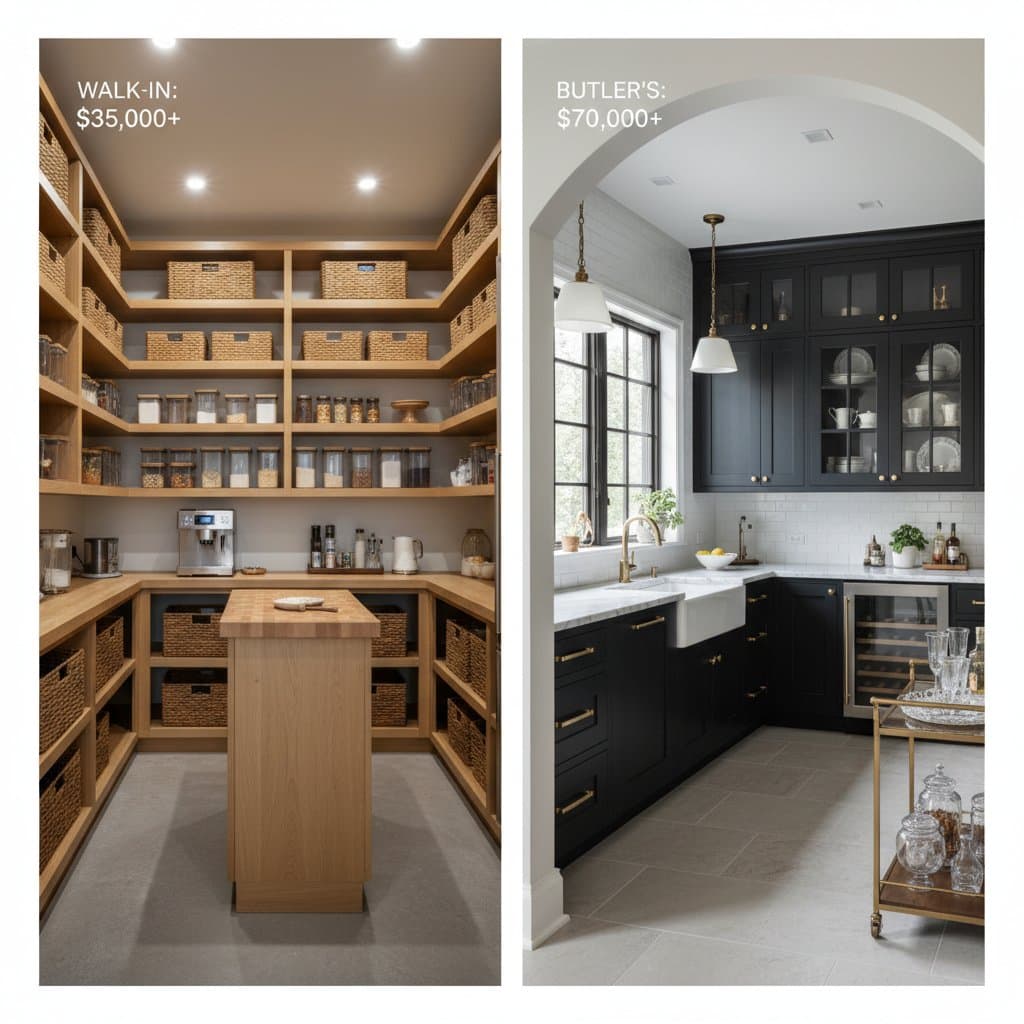
Professionals in contracting and design view these pantries as separate endeavors. Constructing a walk-in pantry parallels building a compact room, encompassing drywall installation, flooring, airflow systems, and tailored shelving. In contrast, a butler's pantry operates like a secondary kitchen zone, featuring cabinets, surfaces, and occasionally built-in appliances.
Sarah Hennings, a certified kitchen planner with two decades at Hennings Design Group, notes, "A walk-in pantry emphasizes efficient use of space for storage, whereas a butler's pantry prioritizes efficient movement and visual presentation." She recommends, "Approach them as distinct budgetary categories rather than equivalent options."
Each variant increases property appeal, though returns fluctuate by location. In suburban settings, the extra square footage from a walk-in pantry often garners higher appraisal value. Urban high-end markets, however, may favor the sophisticated allure of a butler's pantry.
Detailed Cost Analysis
Walk-In Pantry Expenses
For a standard walk-in pantry, expenses range from $5,000 to $15,000, covering framing, drywall, and fundamental shelving. Premium installations with integrated storage, automated lighting, and temperature regulation can surpass $25,000.
Influential elements include:
- Dimensions and configuration: Expanded sizes demand additional structural and surface materials.
- Shelving options: Basic particleboard setups cost about $40 per linear foot; premium hardwood or metal alternatives exceed $100 per linear foot.
- Illumination and airflow: Budget $800 to $1,500 for embedded lights and ventilation modifications.
- Surface materials: Aligning with kitchen floors promotes unity but may add over $1,000.
Tony Ruiz, owner of BuildSmart Renovations and a seasoned general contractor, observes, "Walk-in pantries appear straightforward initially, yet structural requirements and regulatory standards for airflow or lighting often catch clients off guard. Incorporate a 10 percent buffer in your planning."
Butler's Pantry Expenses
Butler's pantry initiatives generally span $10,000 to $30,000, with upscale versions incorporating appliances or premium stone surfaces climbing beyond $50,000.
Major contributors encompass:
- Storage and work surfaces: Bespoke cabinets average $400 per linear foot; quartz or granite tops begin at $70 per square foot.
- Integrated devices: Additions like beverage coolers, compact dishwashers, or warming units contribute $2,000 to $8,000.
- Utility installations: Adding a utility sink or concealed lighting incurs at least $2,500.
- Refinement elements: Backsplashes, moldings, and coatings typically total $1,000 to $2,000.
This setup requires detailed woodworking and basic systems integration, elevating labor demands. Ruiz explains, "Introducing plumbing engages various specialists, which can double workforce expenses relative to a walk-in pantry."
Evaluating Benefits and Financial Returns
The worth of each pantry hinges on intended application. Walk-in designs offer robust utility and recover 65 to 75 percent of investment at sale. Butler's pantries, despite higher upfront costs, may reclaim up to 80 percent in upscale residences when using superior finishes.
Dana Lee, a real estate analyst at Metro Market Analytics, states, "Prospective buyers connect on a personal level with a butler's pantry, viewing it as a marker of refinement and order. However, in compact kitchens or moderate price ranges, the expenditure seldom justifies itself."
Strategies to Prevent Expense Overruns
Projects frequently exceed budgets due to gradual expansions and overlooked detailing. To maintain control:
- Set a firm spending limit upfront, incorporating a 10 to 15 percent reserve.
- Focus on utility before ornamentation; effective storage provides greater everyday utility than aesthetic extras.
- Seek detailed quotations to uncover potential overcharges in supplies or workmanship.
- Address utility needs at the outset; retrofitting pipes or wiring later proves more expensive.
Hennings suggests, "Secure your project outline before procuring cabinets. A single alteration can postpone shipments and inflate costs by thousands."
Essential Tools and Expert Support
Several aids assist in forecasting and organizing:
- National Kitchen & Bath Association directories: Access guidelines and vetted specialists.
- Regional cost indexes: Compare workforce and supply rates by area.
- Budget tracking spreadsheets: Monitor projections, agreements, and expenditures progressively.
Engaging a qualified kitchen designer or overseer safeguards funds by aligning teams, confirming dimensions, and tracking supply arrivals. Ruiz adds, "An effective coordinator can reduce overall expenses by 15 percent through early issue detection."
Project Duration and Coordination
Walk-in pantries demand two to four weeks for structural work, surfacing, and completion. Butler's pantries may extend to eight weeks or more, accounting for cabinet delays and system integrations. Supply procurement or regulatory reviews commonly cause setbacks; allocate an extra one to two weeks for contingencies.
Verify timelines for tailored elements prior to starting disassembly. Mid-process waits result in unproductive labor fees that diminish allocations.
Practical Ways to Trim Costs While Preserving Quality
Budget-conscious choices enable savings without compromising standards:
- Mixed storage solutions: Blend exposed and enclosed units over complete custom assemblies.
- Synthetic surfaces: Opt for resilient laminates at half the price of natural stone.
- Ready-made storage: Pre-assembled pieces shorten setup and minimize excess.
- Existing materials: Reuse current flooring for seamless integration and cost avoidance.
Selecting efficient LED fixtures and airtight entries also curbs ongoing expenses, particularly in high-traffic walk-in spaces.
Securing Long-Term Value from Your Pantry Choice
When deciding between pantry styles, align the selection with your fiscal situation. For optimal storage within constraints, a walk-in option generally proves more economical.
Regardless of preference, clear budgeting, structured oversight, and specialist guidance form the basis of effective execution. This approach ensures the enhancement not only elevates aesthetics but also serves as a prudent asset for the future.