
Understanding 2026 Costs for Modular Kitchen Cabinets
Kitchen renovations spark enthusiasm, yet budgets often face unexpected challenges. Modular kitchen cabinets promise efficiency and adaptability, but costs fluctuate based on materials, customization, and installation. With informed decisions, homeowners achieve high-quality results without financial strain.
The following ten essential rules provide guidance drawn from design expertise and practical construction insights. These principles clarify cost drivers, identify savings opportunities, and support choices that endure daily demands.
1. Assess Your Space and Needs First
Problem: Many overlook how kitchen layout influences cabinet selection, leading to inefficient designs or excess purchases.
Context: A family underestimated storage requirements for a growing household, resulting in cramped drawers and frequent reorganization.
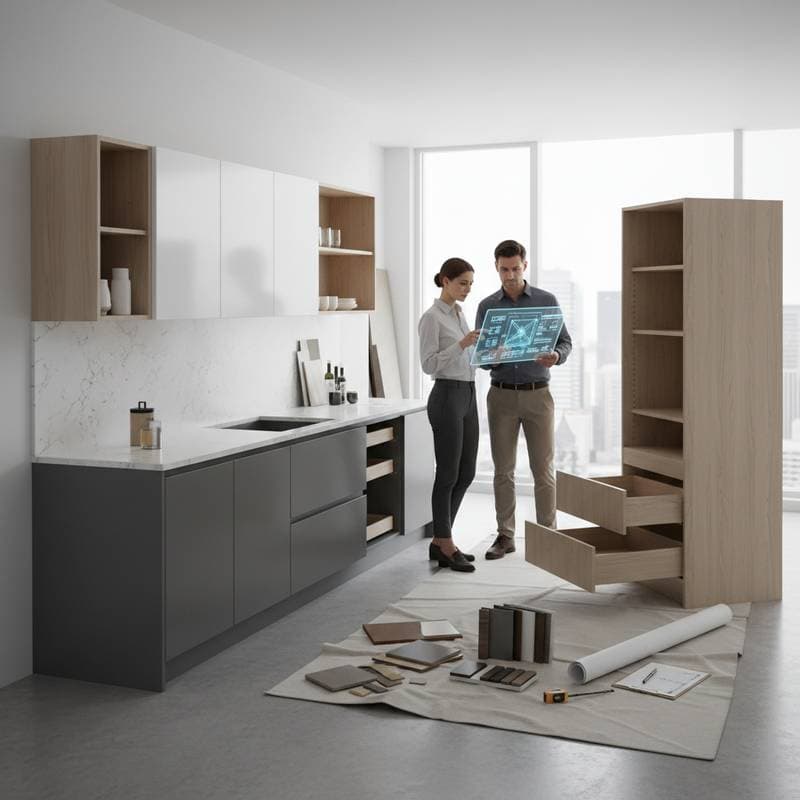
Solution: Measure your kitchen precisely and list daily habits, such as cooking frequency or appliance placement. Consult a designer to map traffic flow and ergonomics.
Technical Detail: Standard base cabinets measure 720 mm high and 600 mm deep; ensure clearances of at least 1000 mm for walkways.
Benefit: Tailored planning maximizes usability and prevents costly redesigns later.
2. Understand Material Costs Before You Commit
Problem: Assumptions that all modular cabinets use identical materials ignore significant price variations among options like medium-density fiberboard, plywood, and particleboard.
Context: During one project, a switch from particleboard to marine plywood for moisture-prone areas raised costs by 35 percent mid-renovation.
Solution: Demand a detailed material breakdown in every quote. Evaluate standard medium-density fiberboard against boiling water proof plywood or high-density fiberboard.
Technical Detail: Medium-density fiberboard panels typically reach 18 mm thickness and suit dry areas; specify boiling water proof plywood or high-density high-moisture resistant board near sinks.
Benefit: Selecting appropriate materials upfront avoids issues like warping or delamination, which prove more expensive to fix than initial investments.
3. Evaluate Finishes and Surface Options
Problem: Attractive finishes drive aesthetic appeal but vary widely in durability and upkeep, often overlooked in budgeting.
Context: A homeowner chose glossy laminates for a modern look, only to face constant cleaning from fingerprints and scratches.
Solution: Review finish samples under kitchen lighting and consider usage patterns. Opt for matte or textured laminates in high-touch zones.
Technical Detail: High-pressure laminates offer 0.8 mm thickness for wear resistance; acrylic finishes provide gloss but require gentle maintenance.
Benefit: Durable finishes maintain appearance over time, reducing replacement needs and preserving the kitchen's style.
4. Plan for Hidden Costs of Modular Assembly
Problem: Marketing portrays modular cabinets as simple to install, yet site-specific adjustments for plumbing, walls, or floors frequently arise.
Context: In an older residence, custom filler panels addressed uneven spaces, extending both timeline and expenses.
Solution: Conduct accurate site measurements prior to ordering. Inquire about potential on-site modifications like trimming or fillers and incorporate them into estimates.
Technical Detail: Budget 5 to 10 mm tolerance per cabinet for irregularities; stock extra laminate sheets or edge bands matching the finish for adjustments.
Benefit: Anticipating these elements ensures timely installation and shields against unforeseen labor fees.
5. Select Hardware and Accessories Wisely
Problem: Basic hardware suffices for light use, but heavy-duty components prevent premature wear in busy kitchens.
Context: Soft-close hinges failed quickly in a high-traffic home, necessitating early replacements that disrupted routines.
Solution: Prioritize concealed, full-extension drawers and adjustable shelving. Verify load capacities match your storage demands.
Technical Detail: Choose 35 mm hinges with 120-degree opening; undermount slides support up to 30 kg per drawer.
Benefit: Robust hardware enhances functionality and longevity, minimizing downtime and repair costs.
6. Account for Delivery and Installation Logistics
Problem: Catalog prices exclude transport and setup fees, which escalate with challenging access like stairs or tight hallways.
Context: Modules from a factory shipment required disassembly to navigate an apartment door, nearly equaling the price of an entire cabinet wall in rework.
Solution: Verify access paths and delivery routes in advance. Obtain quotes for any necessary splitting or on-site reassembly.
Technical Detail: Base units stand about 720 mm tall; confirm passage through doors and corners. For upper levels without elevators, include lifting fees.
Benefit: Thorough preparation prevents delays, safeguards surfaces from transport damage, and maintains schedule adherence.
7. Balance Customization with Standard Modules
Problem: Excessive customization inflates prices, while rigid standards may compromise fit in unique spaces.
Context: A client pursued fully bespoke elements, doubling costs without proportional gains in utility.
Solution: Identify must-have custom features, such as corner units, and pair them with off-the-shelf modules. Discuss modular adaptability with suppliers.
Technical Detail: Standard widths range from 300 to 900 mm; custom depths adjust up to 50 mm for appliances.
Benefit: This approach controls expenses while achieving a personalized, seamless design.
8. Know How Warranty and After-Sales Support Affect Costs
Problem: Discounted options often omit robust warranties, leading to higher long-term expenses from faulty components.
Context: Selecting a supplier without coverage resulted in out-of-pocket laminate repairs shortly after installation.
Solution: Review warranty details prior to contracts. Seek multi-year protection on hardware and surfaces, plus clarity on service fees.
Technical Detail: Warranties should address material flaws and installation errors; retain invoice copies and codes for claims.
Benefit: Modest upfront premiums secure reliable support, easing concerns over potential failures.
9. Consider Energy Efficiency and Sustainability
Problem: Ignoring eco-friendly materials or features increases utility bills and environmental impact over time.
Context: Non-insulated cabinets in a warm climate amplified cooling costs, prompting later retrofits.
Solution: Select cabinets with low-VOC finishes and recyclable components. Integrate LED lighting and efficient organizers.
Technical Detail: FSC-certified plywood ensures sustainable sourcing; insulated backs reduce heat transfer by 20 percent.
Benefit: Sustainable choices lower ongoing costs and align with modern living standards.
10. Budget for Long-Term Maintenance and Replacement Parts
Problem: The belief in zero-maintenance modular systems overlooks gradual wear on moving parts and surfaces.
Context: Three years post-installation, discontinued drawer channels forced mismatched replacements.
Solution: Source from providers offering interchangeable parts. Maintain a reserve of essentials like hinges and handles.
Technical Detail: Schedule hinge tightening biannually; use mild cleaners to avert moisture damage inside cabinets.
Benefit: Routine care prolongs lifespan, ensures smooth operation, and upholds aesthetics affordably.
Maintaining Your Kitchen Investment
Installation marks the start of your kitchen's practical phase. Daily interactions highlight the wisdom of your selections, blending form with utility. Address small concerns promptly to avoid escalation.
Track usage patterns and perform seasonal checks on hardware and finishes. Modular designs facilitate straightforward updates, so utilize supplier services as required. These habits safeguard your space's efficiency and appeal.
Reflect on the process for any expansions: prioritize measurements, comprehensive quotes, and practicality. Solid planning yields a kitchen that serves routines effectively, delivering enduring value beyond trends.