
Understanding the Real Costs of an Outdoor Kitchen in 2026
Outdoor kitchens vary widely in scope, from simple grill setups to elaborate installations with full appliances and custom features. Regardless of scale, success hinges on clear design goals, thorough planning, and alignment with actual usage patterns. Homeowners who prioritize function over fleeting trends invest wisely, avoiding common pitfalls that inflate costs and reduce enjoyment. This guide outlines key principles to build a durable, efficient outdoor kitchen that serves your family for years.
1. Secure Utility Connections from the Start
Challenge: Homeowners frequently lock in layouts without assessing gas, water, or electrical access, leading to costly adjustments later.
Background: Assumptions about easy utility ties often overlook factors like distance from the house, terrain changes, and landscape obstacles.
Approach: Engage a licensed contractor early to map service paths and evaluate capacity. Ensure gas lines match appliance demands, and confirm electrical systems support all loads.
Key Specifications: Install outdoor-rated conduits and ground-fault circuit interrupter outlets. Bury water lines below the frost line with accessible shutoff valves. Design drainage to direct water away from foundations, avoiding ice buildup or flooding.
Advantages: Proactive planning eliminates surprises, safeguards operations, and complies with safety standards across seasons.
2. Optimize the Heat Management Layout
Challenge: Ineffective arrangement of cooking zones, preparation areas, and seating leads to discomfort, with smoke drifting toward guests and cramped workspaces for cooks.
Background: Unlike indoor kitchens, outdoor setups must account for variable winds, sun exposure, and open airflow to maintain usability.
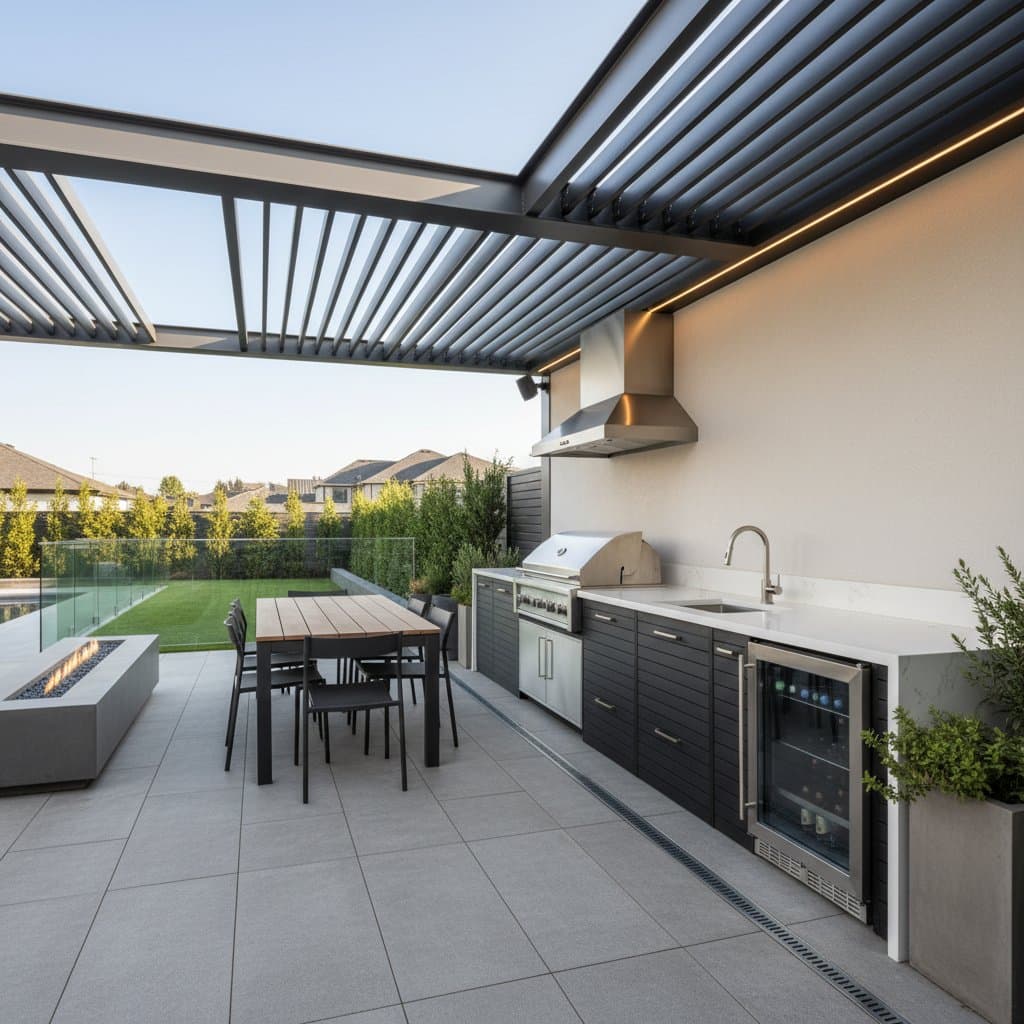
Approach: Place cooking elements so dominant winds disperse smoke from gathering spots. Provide a minimum of three feet between heat sources and flammable surfaces. Incorporate overhead shade that permits heat escape.
Key Specifications: Equip with stainless steel exhaust hoods offering at least 1200 cubic feet per minute airflow for covered areas. Select non-slip porcelain tiles engineered for elevated temperatures to minimize injury risks.
Advantages: Thoughtful configuration promotes comfort, reduces hazards, and invites regular gatherings by making the space welcoming.
3. Integrate Comprehensive Lighting and Power Systems
Challenge: Daytime appeal fades at night without adequate illumination, turning functional areas hazardous and diminishing ambiance.
Background: Basic overhead lights or casual strings rarely deliver the targeted brightness needed for tasks or safety.
Approach: Divide lighting into layers: task options for work surfaces, general illumination for lounging zones, and highlights for structural elements. Route wiring prior to paving or planting.
Key Specifications: Choose light-emitting diode fixtures suitable for damp environments to extend lifespan and cut energy use. Protect switches and receptacles with covers designed for active use. Add dimming controls for adjustable atmospheres.
Advantages: Strategic lighting boosts security, elevates aesthetics, and prolongs evening functionality for extended outdoor living.
4. Incorporate Durable Storage and Weather Safeguards
Challenge: Exposed gear and appliances suffer damage from exposure, while clutter overwhelms surfaces without designated spots.
Background: Premium investments like grills lose value quickly if utensils, fuels, or fabrics face unchecked elements.
Approach: Build in sealed drawers and cabinets for essentials. Apply custom covers to equipment. Allocate space for a dedicated enclosure holding tanks, tools, and off-season goods.
Key Specifications: Opt for stainless steel units with sealing gaskets to block humidity. Install soft-closing mechanisms that resist buildup-induced decay. Use partial walls or roll-down barriers against gusts and precipitation.
Advantages: Systematic organization preserves tidiness, protects investments, and simplifies upkeep for sustained appeal.
5. Build in Adaptability for Evolving Needs
Challenge: Static designs fail as lifestyles change, restricting additions like expanded seating or tech integrations over time.
Background: Family dynamics shift, and modular elements allow seamless updates without full overhauls.
Approach: Select components that support reconfiguration, such as freestanding counters or expandable wiring conduits. Reserve space for potential expansions like sinks or bars.
Key Specifications: Use prefabricated modules with compatible connections for easy swaps. Incorporate reinforced bases that handle added weight from future appliances. Plan scalable power feeds to accommodate smart devices or heaters.
Advantages: Flexible foundations future-proof the investment, accommodating growth and maintaining relevance through changing seasons and preferences.
Embracing a Functional Outdoor Kitchen Long-Term
A well-executed outdoor kitchen transforms backyard routines into effortless pleasures, blending utility with subtle style. By addressing utilities, heat flow, lighting, storage, and adaptability upfront, homeowners create resilient spaces that withstand weather and time. Focus on these elements to realize a return on investment through daily use, minimal maintenance, and enduring satisfaction.