Minimize Laundry Costs: 2026 Strategies for Efficient Remodels
Laundry rooms serve multiple purposes today, from washing clothes to storing supplies and acting as entry points when integrated with mudrooms. Homeowners often encounter disorganized setups, high utility expenses, and poor functionality. Professional design approaches address these issues by optimizing every element, drawing from architectural expertise that emphasizes practical use of space and resources.
1. Map Workflow Prior to Appliance Selection
Problem: Selecting appliances before planning the layout results in tight spaces, inefficient movements, and extended chore durations.
Context: Individuals typically position washers and dryers adjacent without accounting for hampers, folding areas, or drying options.
Solution: Develop a detailed process diagram outlining the path from soiled clothes intake through washing, drying, folding, and storage. Separate soiled and clean areas clearly. Position hampers adjacent to the washer, provide folding counters near the dryer, and locate storage units close to final placement spots.
Technical Detail: Allocate a minimum of 36 inches of clearance in front of each appliance for operation. For stacked configurations, verify sufficient ceiling height and proper venting paths.
Benefit: Streamlined processes reduce completion times and eliminate unnecessary steps, which conserves energy and eases daily routines.
2. Integrate Mudroom and Laundry Spaces
Problem: Treating mudrooms and laundry areas as distinct entities in compact homes increases expenses for duplicate plumbing, storage, and ventilation systems.
Context: These rooms frequently adjoin one another, allowing for seamless combination with thoughtful adjustments.
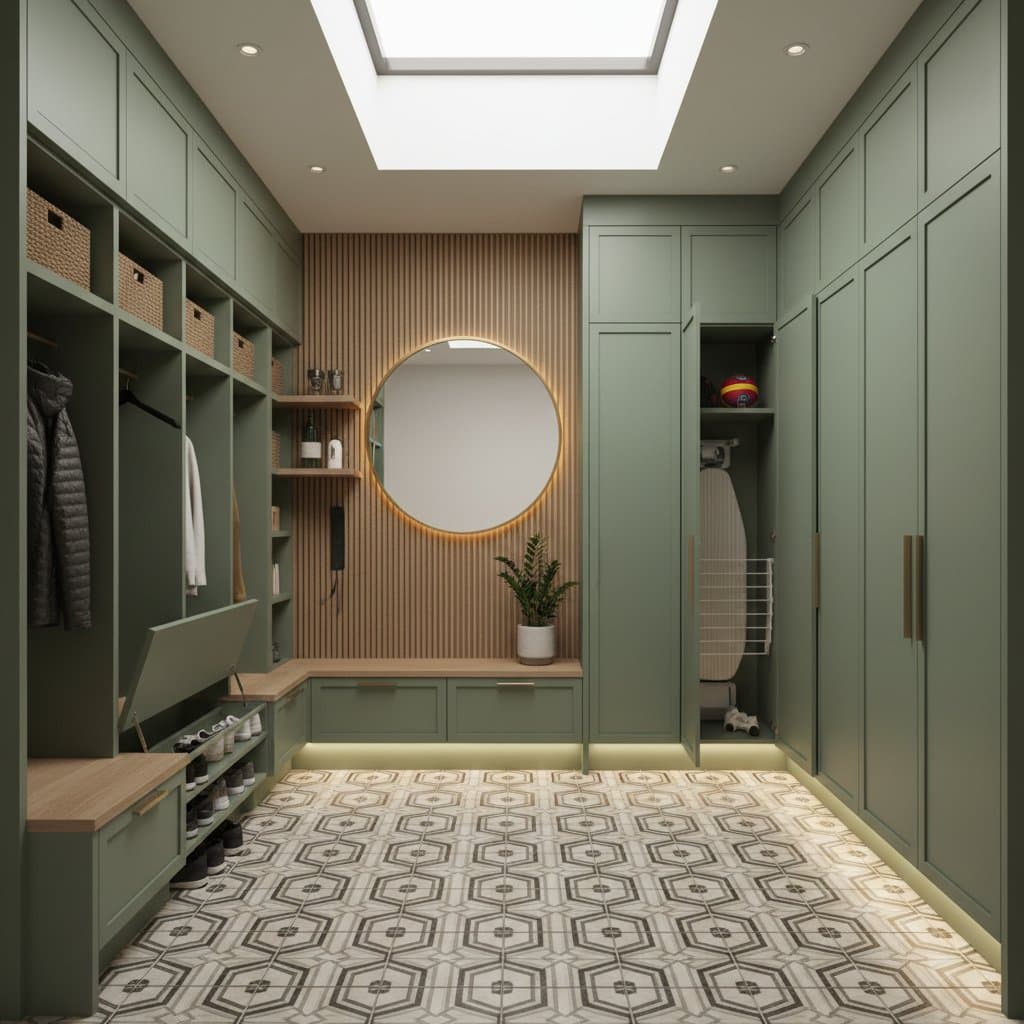
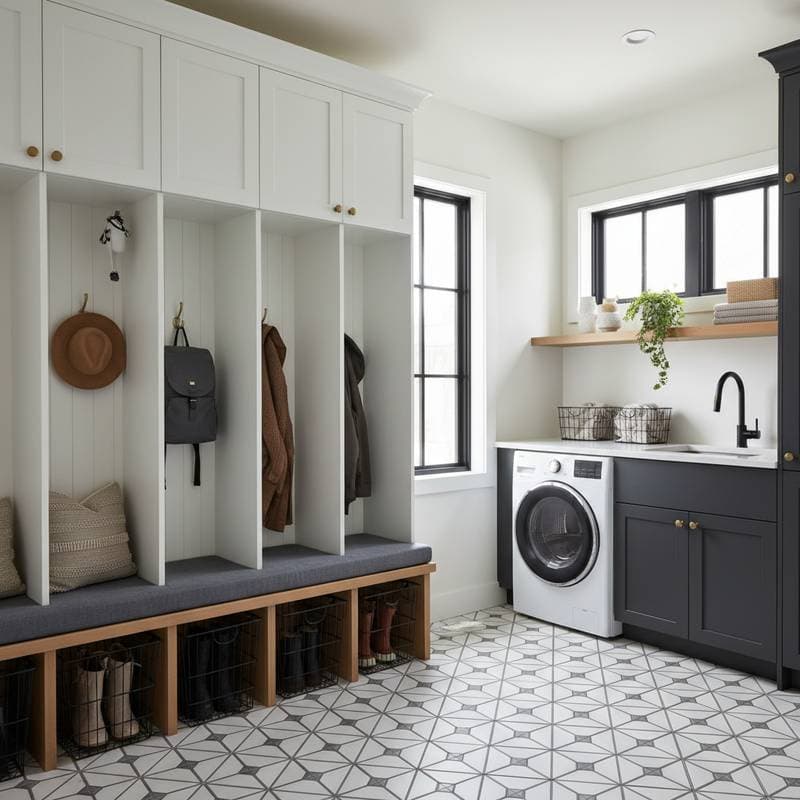
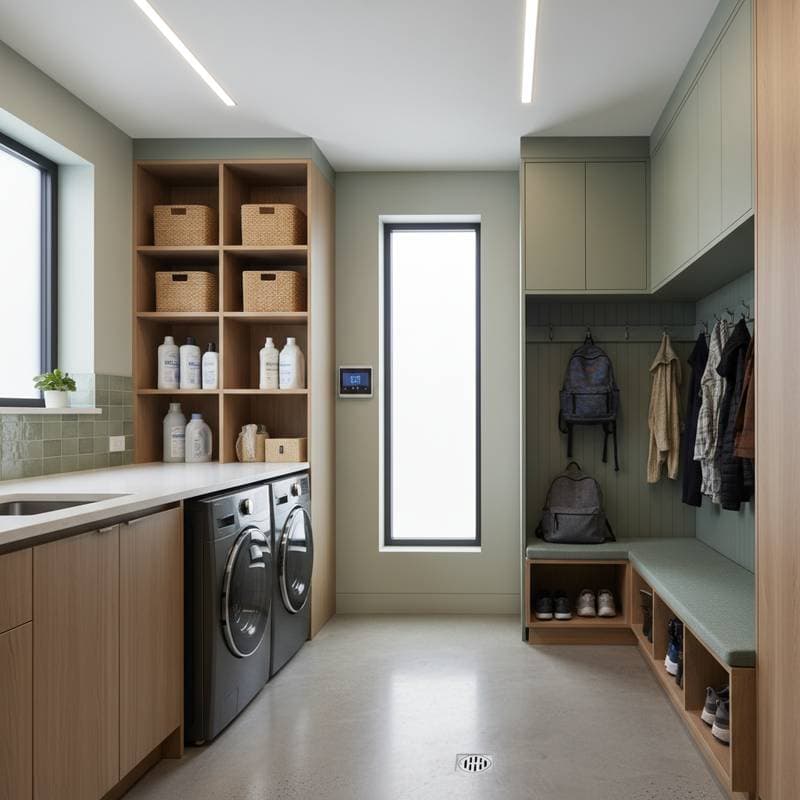
Solution: Unify the areas into a single multifunctional zone. Employ a shared countertop for folding tasks and shoe organization. Incorporate a floor drain to facilitate spill management. Install hooks and compartments above a sturdy bench, with appliances along one wall.
Technical Detail: Select waterproof flooring options like porcelain tiles or sealed concrete. Design the floor with a subtle slope directing water toward the drain.
Benefit: Consolidated infrastructure lowers material and installation costs while simplifying maintenance. The combined space functions as a cohesive utility center rather than isolated zones.
3. Implement Effective Ventilation and Humidity Management
Problem: Inadequate airflow causes odors, surface damage, and elevated energy use due to persistent dampness.
Context: These rooms often reside in enclosed areas like basements or closets, where dryer exhaust and steam accumulate without escape routes.
Solution: Fit a specialized exhaust fan suitable for humid environments. Locate it proximate to the dryer, avoiding direct overhead placement. Opt for a sensor-activated unit that activates upon detecting elevated moisture levels.
Technical Detail: Employ rigid metal ducts over flexible varieties to minimize lint accumulation. Route vents with the shortest, most direct paths possible.
Benefit: Regulated humidity safeguards materials, inhibits mold growth, and maintains superior air quality. It further enables HVAC systems to operate with greater efficiency, reducing overall power consumption.
4. Tailor Storage to Actual Usage Patterns
Problem: Aesthetic-focused cabinetry often proves inadequate for routine demands, resulting in disarray from insufficient depth or weak construction.
Context: Users commonly overlook the volume needed for detergents, fabrics, and tools.
Solution: Design storage systems aligned with specific habits. Incorporate deep base cabinets for bulk items. Provide vertical slots for cleaning equipment. Utilize open shelves for quick-access goods and closed units for lesser-used supplies.
Technical Detail: Construct with humidity-resistant materials such as MDF or marine plywood finished with laminates. Secure shelves using brackets supporting at least 50 pounds per unit.
Benefit: Targeted organization avoids redundant errands and excess purchases. Items remain reachable, orderly, and resilient over time.
5. Select Efficient Energy and Water Fixtures
Problem: Legacy equipment and fixtures squander resources, leading to sustained high operational expenses.
Context: Traditional washers consume significantly more water than contemporary versions, and basic faucets prone to leaks accelerate costs.
Solution: Choose appliances certified by Energy Star standards. Integrate motion-activated lights and retractable drying bars to decrease reliance on machines. For utility sinks, install aerated single-handle faucets that maintain performance while curbing flow rates.
Technical Detail: Front-load models typically require 40 percent less water compared to top-load counterparts. During plumbing updates, add dedicated shutoff valves for isolated line servicing.
Benefit: Decreased utility charges, extended equipment longevity, and lessened ecological impact stem from these informed selections.
6. Utilize Vertical and Overhead Areas Fully
Problem: Unused upper spaces above appliances or along walls represent missed opportunities in constrained environments.
Context: In smaller residences, height optimization separates expert remodels from basic fixes.
Solution: Mount cabinets extending to ceiling levels. Position a drying rod below cabinetry for air circulation. Incorporate slim pull-out units for supplies and tools.
Technical Detail: Preserve at least 18 inches between appliance tops and lowest shelves. Fasten upper cabinets firmly to studs with reinforced screws.
Benefit: Elevated storage frees countertops and curbs accumulation. Compact areas gain the capacity of larger ones.
7. Choose Resilient, Low-Maintenance Surfaces
Problem: Standard materials succumb rapidly to moisture, dirt, and wear in high-activity zones.
Context: Families with children or animals expose these spaces to varied stresses including spills and tracked debris.
Solution: Emphasize function in material choices. Apply semi-gloss paints, premium tiles, or sealed concrete to floors and walls. Steer clear of absorbent options like raw wood or rugs.
Technical Detail: Install water-resistant backing behind wet areas. Seal tile seams with epoxy grout to prevent discoloration.
Benefit: Effortless cleaning preserves appearance. Long-term upkeep expenses decline, ensuring sustained freshness.
8. Layer Lighting for Functionality and Ambiance
Problem: Insufficient or poorly placed illumination hinders tasks and causes discomfort during extended use.
Context: Proper lighting enhances productivity and enjoyment in routine areas.
Solution: Employ multiple sources: overhead LED panels for broad coverage, under-cabinet strips for precise work, and soft wall fixtures near sorting zones. Include sensors that deactivate lights in unoccupied spaces.
Technical Detail: Target 50 foot-candles on task surfaces. Select LEDs with 4000K temperature for clear, neutral illumination.
Benefit: Enhanced sightlines minimize strain and elevate the environment. Automated features prevent energy waste.
9. Facilitate Routine Maintenance Access
Problem: Concealed utilities behind permanent structures complicate and inflate repair efforts.
Context: Aesthetic priorities frequently overshadow practical servicing needs.
Solution: Provide access panels adjacent to appliances. Design removable baseboards or swinging cabinet panels for valve reach. Position controls and outlets in visible locations.
Technical Detail: Integrate floor drains or sensors under units for prompt leak detection. Use durable, braided stainless hoses for connections.
Benefit: Swift interventions avert crises and contain costs. Service visits require minimal disruption.
10. Incorporate Adaptability for Long-Term Use
Problem: Overly specific designs limit adaptability to evolving needs or technology.
Context: Family dynamics and appliance innovations demand versatile planning.
Solution: Reserve three inches laterally and six inches rearward around units for adjustments. Employ adjustable shelves and modular components. Plan zones for potential repurposing, such as convertible pet stations or expandable ironing areas.
Implement These Strategies for Lasting Savings
Applying these principles transforms laundry rooms into efficient assets that endure. Homeowners gain reduced expenses, smoother operations, and adaptable spaces suited to future changes. Professional foresight ensures every investment yields practical returns in comfort and economy.