Mudroom Layouts That Boost Storage and Flow in 2026
Design platforms report a significant increase in engagement with images labeled mudroom organization and entryway storage. Homeowners prioritize areas that serve as the primary interface for daily activities, where items such as backpacks, footwear, and groceries accumulate. The contemporary mudroom has advanced beyond a simple utility space into a deliberate transitional area that links the exterior to the home's core.
This article presents the most popular mudroom layouts from design platforms. Each layout integrates visual appeal with efficient movement, illustrating how strategic planning streamlines routines. Whether in compact urban dwellings or expansive rural properties, these designs establish effective organization from the entry point onward.
1. Family Hub
Location: Minneapolis, Minnesota
Designer: Harper & Co. Design Studio
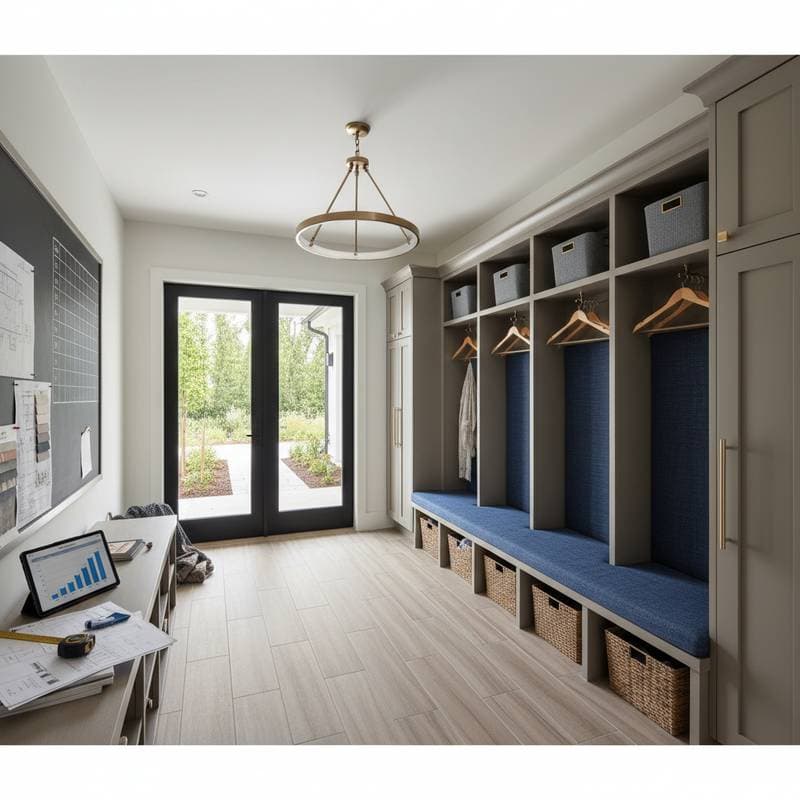
This renovation converted an outdated laundry room into a versatile family center. White oak cubbies align the wall under a quartz countertop designed for folding clothes. Brass hooks and woven baskets maintain visibility and containment of belongings. The designer incorporated a compact charging station for electronics, establishing a reliable drop-off area.
Herringbone-patterned vinyl flooring withstands damage from athletic equipment and animal claws. Warm wood elements complement the clean wall surfaces, fostering an engaging entry that supports family coordination throughout the day.
2. Farmhouse Flow
Location: Franklin, Tennessee
Designer: Willow Gate Interiors
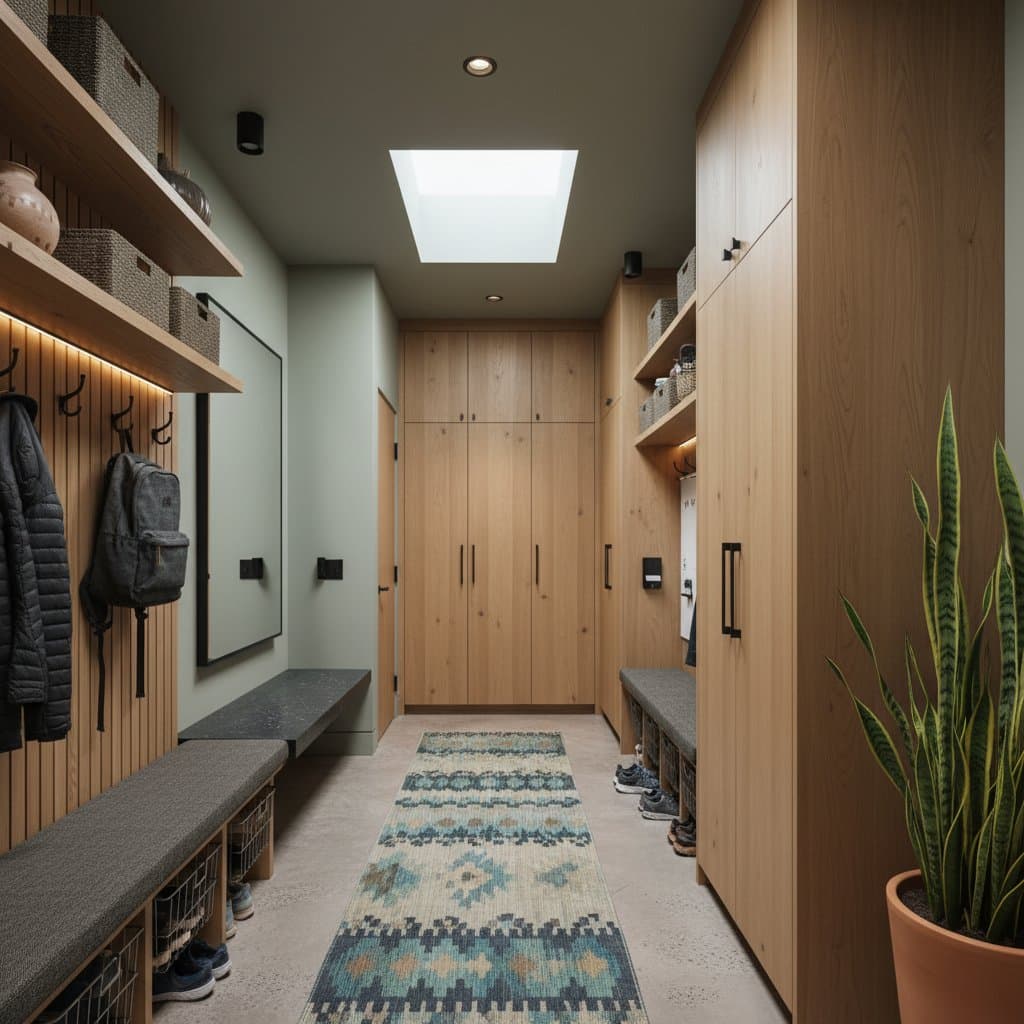
A former side porch now functions as this residence's mudroom, featuring painted shiplap walls and porcelain tile resembling slate. Built-in lockers with beadboard interiors and unlacquered brass hooks provide a classic farmhouse aesthetic. A bench crafted from reclaimed pine introduces softness, merging traditional charm with contemporary utility.
The direct path to the kitchen facilitates smooth navigation during hectic mornings. Varied materials contribute texture and dimension, resulting in a durable yet hospitable environment.
3. Urban Edge
Location: Chicago, Illinois
Designer: Carter + West Interiors
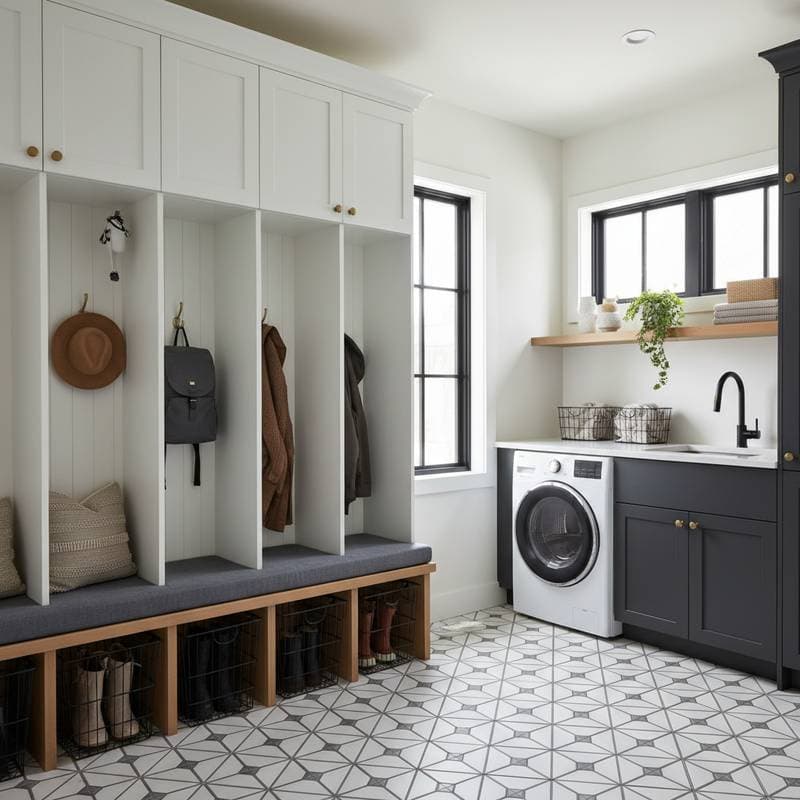
Glass dividers with metal frames distinguish this mudroom from the primary corridor, permitting light to permeate both areas. Cabinetry in matte charcoal pairs with tile mimicking concrete for a solid foundation. A bench of reclaimed wood introduces coziness. The designer fitted a pegboard wall for adaptable suspension storage that accommodates evolving requirements.
The arrangement prioritizes circulation, directing entrants toward living spaces while securing equipment. Industrial elements combined with sensory textures elevate the area into a deliberate stylistic feature.
4. Pet-Friendly Zone
Location: Denver, Colorado
Designer: Maple Row Design
This mudroom suits pet owners with its integrated dog washing station, clad in glossy white Moroccan zellige tiles. A matte black faucet accompanies a drawer that extends for storing leashes and treats. Porcelain tile covers the floor to simplify maintenance.
The area serves dual purposes as entry and care station, confining dirt before animals enter other rooms. Honey-stained wood trim and neutral walls frame the practical setup with comforting tones.
5. Luxe Transition
Location: New York City, New York
Designer: Hudson Atelier
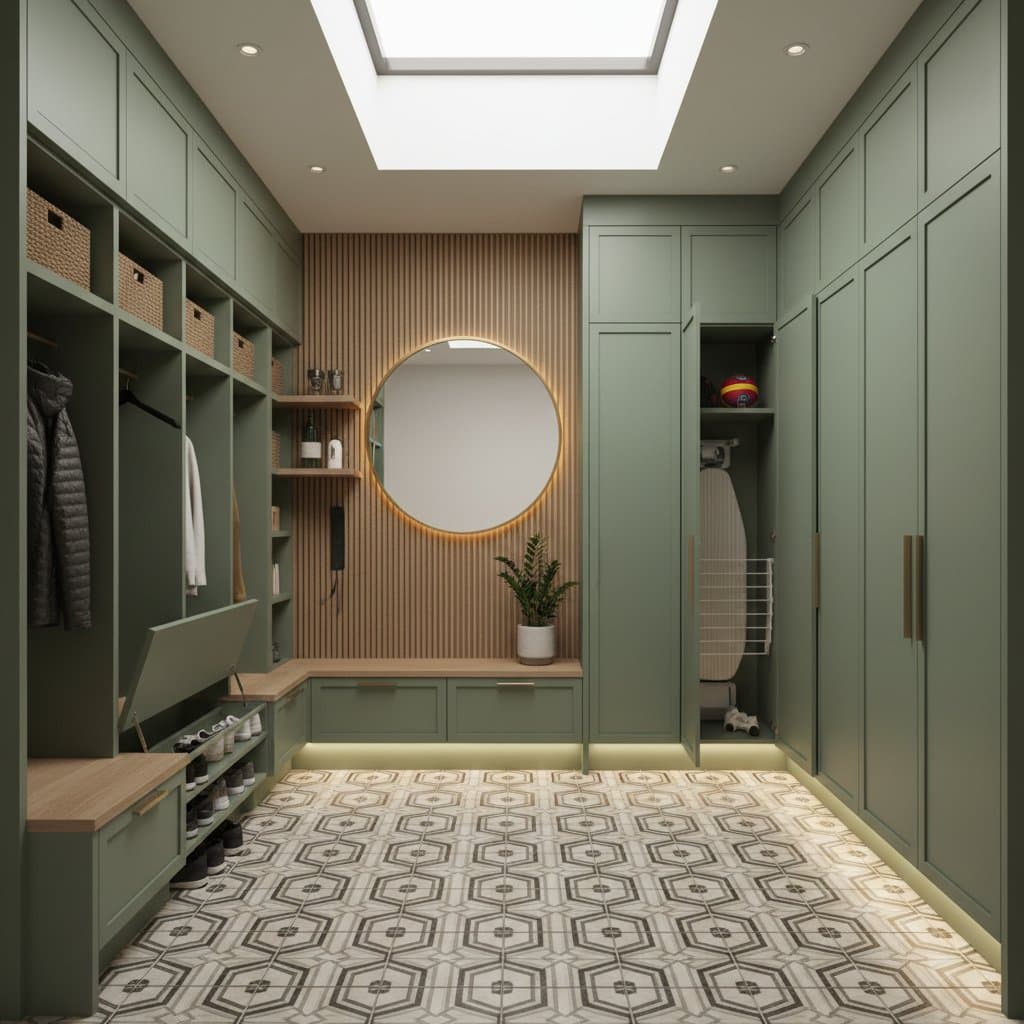
In an apartment high above the city, this mudroom unites sophistication and practicality. Walnut cabinetry reaches from floor to ceiling, hiding a small laundry section and a retractable shoe organizer. Honed marble floors match brushed brass accents for subtle opulence.
Vertical storage optimizes the footprint, preserving a tidy appearance during use. Warm timber alongside cool stone refines the entry, establishing an elegant prelude to the residence.
Applying Mudroom Principles to Your Home
A thoughtfully arranged mudroom extends beyond clutter control; it structures the patterns of daily existence. When storage aligns with pathways, the household gains serenity and purpose. The featured designs confirm that utility can coexist with attractiveness. Textures from materials such as porcelain tile, oak units, and basket weaves add depth and comfort, while strategic illumination and unobstructed views avoid a sense of overload.
To plan or update your mudroom, analyze household traffic patterns first. Note accumulation spots for shoes, coat stacks, and mail placement. Let these observations inform the configuration. Allocate storage by height: reserve upper sections for off-season items and lower compartments for frequent access. Position hooks at multiple levels to accommodate adults and children alike.
Select lighting that supports tasks and ambiance. Install recessed lights or narrow wall fixtures by the entrance for a hospitable illumination. Incorporate daylight via windows or translucent panels when feasible, linking the space to external views. These steps ensure the mudroom enhances overall home efficiency and enjoyment.