Efficient Mudroom Layouts That Reduce Remodeling Costs by 30 Percent
The National Association of Home Builders Remodeling Impact Report indicates that more than 41 percent of homeowners exceed their budgets on entry or utility space renovations. Mudrooms, though compact, frequently lead to unexpected expenses due to poor layout choices. The issue lies not in the mudroom idea itself, but in how design decisions impact material usage, labor time, and future upkeep costs. A strategically planned mudroom adds substantial value when costs remain controlled.
This guide examines budget-conscious mudroom layouts, practical design selections, and advice from experienced builders. Recommendations emphasize scope management, space optimization, and waste reduction, all while ensuring durability and strong resale appeal.
Grasping the Professional Perspective on Mudrooms
Mudroom designs extend beyond aesthetics to include practical workflows. Professionals assess traffic flow, heating and ventilation needs, and moisture protection, each influencing overall expenses. Remodeling consultant Erin Delgado, Project Manager at Midwest Residential Design Group with 18 years of experience, states, "Every square foot in a mudroom must justify itself in function and cost. The goal is to minimize movement, avoid redundant cabinetry, and use materials that last."
Mudrooms often connect to garages or outer walls, requiring attention to insulation, vapor barriers, and durable flooring transitions. These elements affect initial investments and long-term expenses. Effective layouts account for such details early to avoid surprises.
Implementing Value Engineering for Mudrooms
Value engineering helps professionals weigh function against cost and durability. In mudrooms, this approach involves evaluating each element for its financial return.
Selecting Appropriate Flooring
Flooring in mudrooms needs to withstand water and grime. Luxury vinyl tile and porcelain tile offer reliable performance, yet vinyl typically costs half as much for installation. It demands minimal subfloor work as well. Interior Finishes Consultant Laura Benton at Northeast Remodeling Collective notes, "Vinyl plank flooring averages three to five dollars per square foot installed, while porcelain tile can climb to ten dollars. In a 100-square-foot area, that difference saves 500 dollars on materials alone."
Choosing Between Built-Ins and Modular Options
Custom cabinetry enhances appearance but seldom recovers its full price upon resale. Modular systems crafted from melamine or medium-density fiberboard with laminate surfaces provide comparable utility at about 60 percent of the expense. For budget-limited projects, these units support do-it-yourself assembly, potentially saving 1,500 to 2,000 dollars in labor fees.
Applying Finishes and Paint Wisely
Semi-gloss paint resists scuffs and humidity better than flat or eggshell varieties. A modest increase in cost for quality paints avoids repeated applications. Neutral tones also appeal to potential buyers, supporting future marketability.
Adopting Cost-Effective Design Approaches
Intelligent layouts prioritize operational efficiency alongside neat organization. The strategies below extend budgets without compromising standards.
1. Merge Multiple Uses
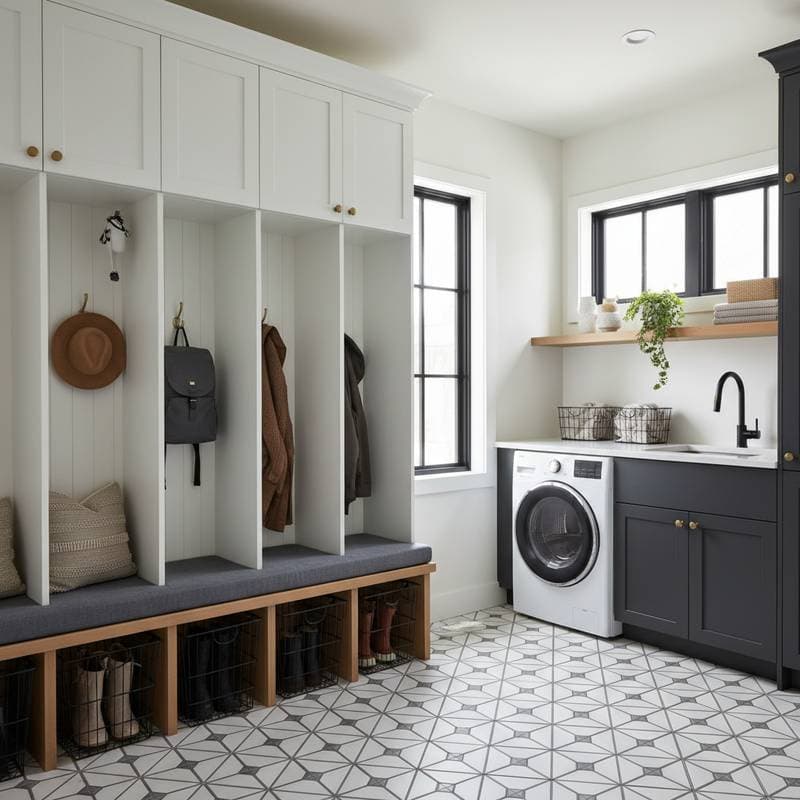
Transform the mudroom into a combined laundry or pet cleaning station if existing plumbing allows. This integration eliminates extra storage and piping needs. Rerouting utilities, however, might inflate costs by 2,000 to 4,000 dollars.
2. Leverage Vertical Storage
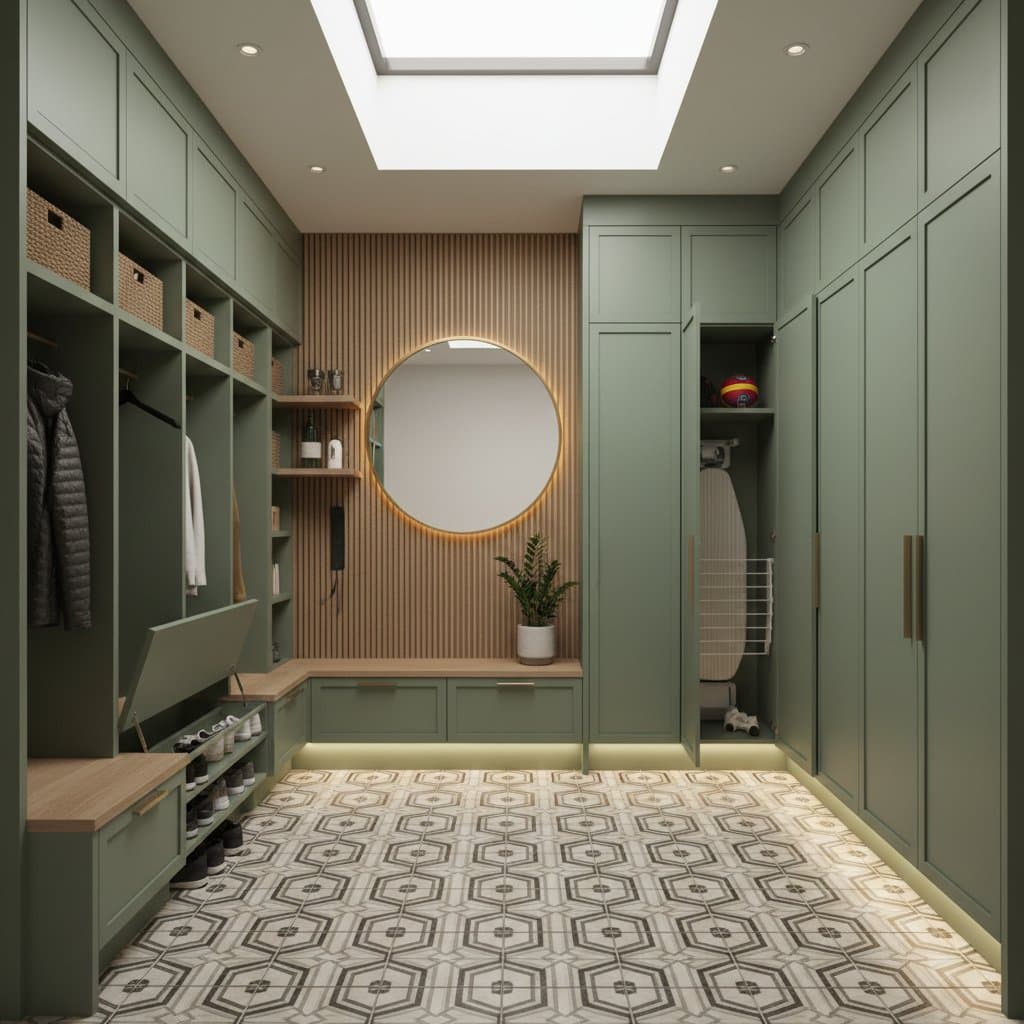
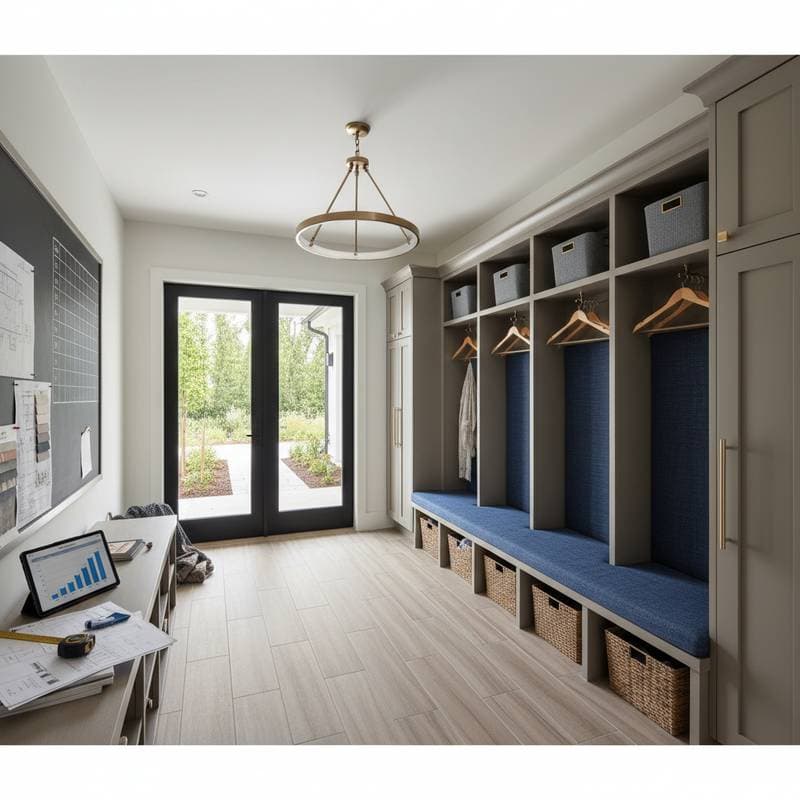
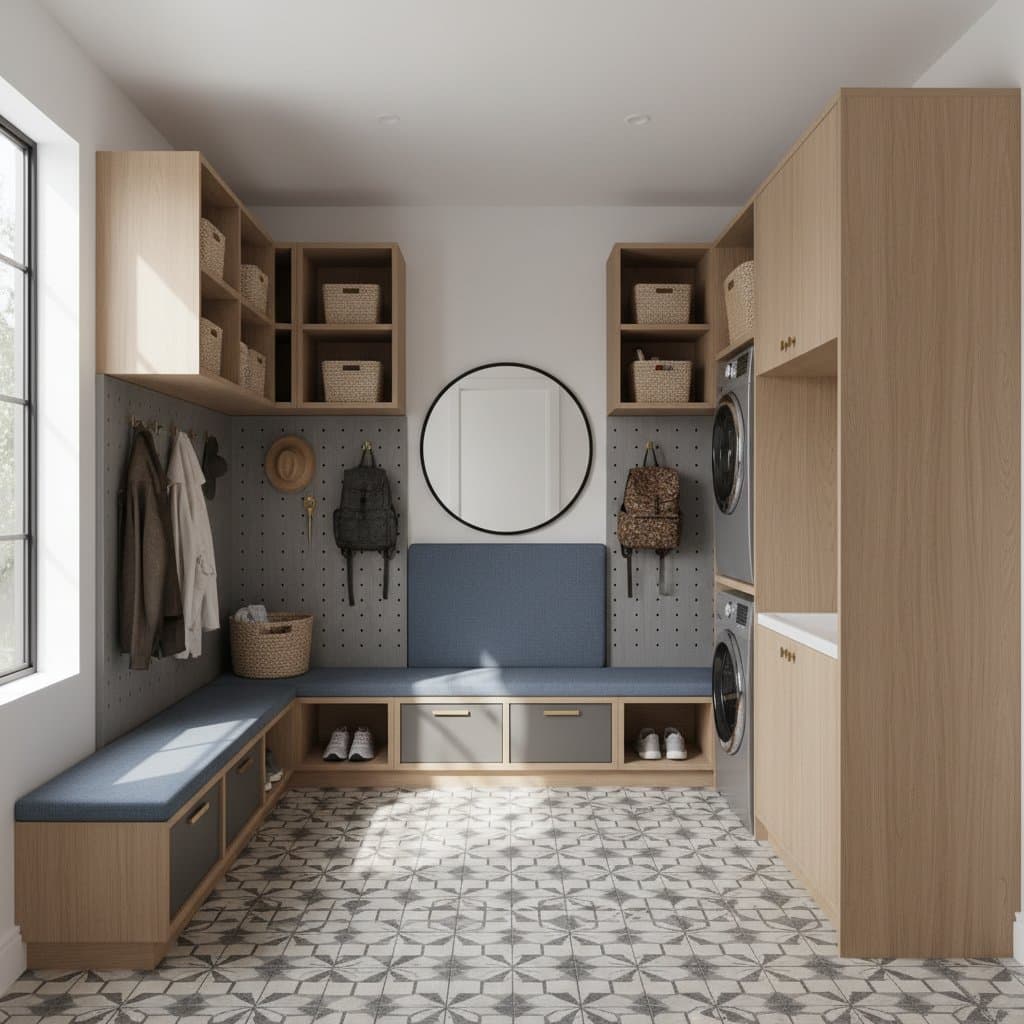
Install high cubbies and overhead cabinets to increase capacity without enlarging the area. Standard units stacked innovatively replicate bespoke woodworking affordably. Wall-mounted hooks, baskets, and open shelves offer adaptable solutions with limited construction.
3. Select Resilient Mid-Range Materials
Replace hardwood benches with polyurethane-sealed veneered plywood. Opt for metal hooks and powder-coated hardware over painted versions for extended durability. Initial investments in sturdy options lower replacement expenses over time.
4. Streamline Lighting Solutions
Recessed lights provide a modern look but involve extensive wiring. A central flush-mount light or LED track setup delivers adequate brightness at reduced expense. Switching to daylight bulbs improves visibility without additional installations.
Engaging Skilled Professionals Effectively
The choice of experts shapes budget adherence. Insist on detailed bids that distinguish labor, materials, and fees for clarity on potential savings.
- General contractors oversee trades and typically add 10 to 20 percent to the total cost.
- Design-build firms integrate planning and execution, cutting miscommunications and saving up to 8 percent on oversight charges.
- Independent designers bill hourly or by project, ranging from 75 to 150 dollars per hour based on location.
Prior to agreements, verify insurance, check references, and secure a comprehensive work outline. These steps avert disputes over project inclusions.
Preserving Mudroom Value Through Upkeep
Remodeling concludes with construction, yet ongoing care determines sustained benefits.
- Wipe surfaces routinely to shield against dirt and dampness damage.
- Renew grout seals or floor coatings yearly to sustain moisture barriers.
- Tighten cabinet hinges and fittings regularly to avoid shifts.
- Examine caulking and seals ahead of weather shifts.
Regular maintenance prolongs the lifespan of floors, storage, and surfaces, safeguarding your investment and home appeal.