
Elevate Your Mudroom: Efficient Layouts and Storage Solutions for 2024
Consider the moment you enter your home after a demanding day, managing bags, footwear, and perhaps groceries. Rather than facing disorder, you encounter an orderly, inviting area where items find designated spots. The mudroom, frequently underappreciated, serves as one of the most vital areas in a residence. When planned with intention, it functions as an effective link between the exterior and interior living spaces. Through appropriate layouts and storage options, your mudroom achieves both aesthetic appeal and operational efficiency.
1. Establish Optimal Flow
Prior to incorporating storage or decorative elements, evaluate movement within the space. An effective layout proves transformative. Begin by determining the mudroom primary function. Does it serve mainly as a deposit area for shoes and outerwear, or does it also accommodate laundry or pet maintenance? This insight guides the creation of zones aligned with your household dynamics.
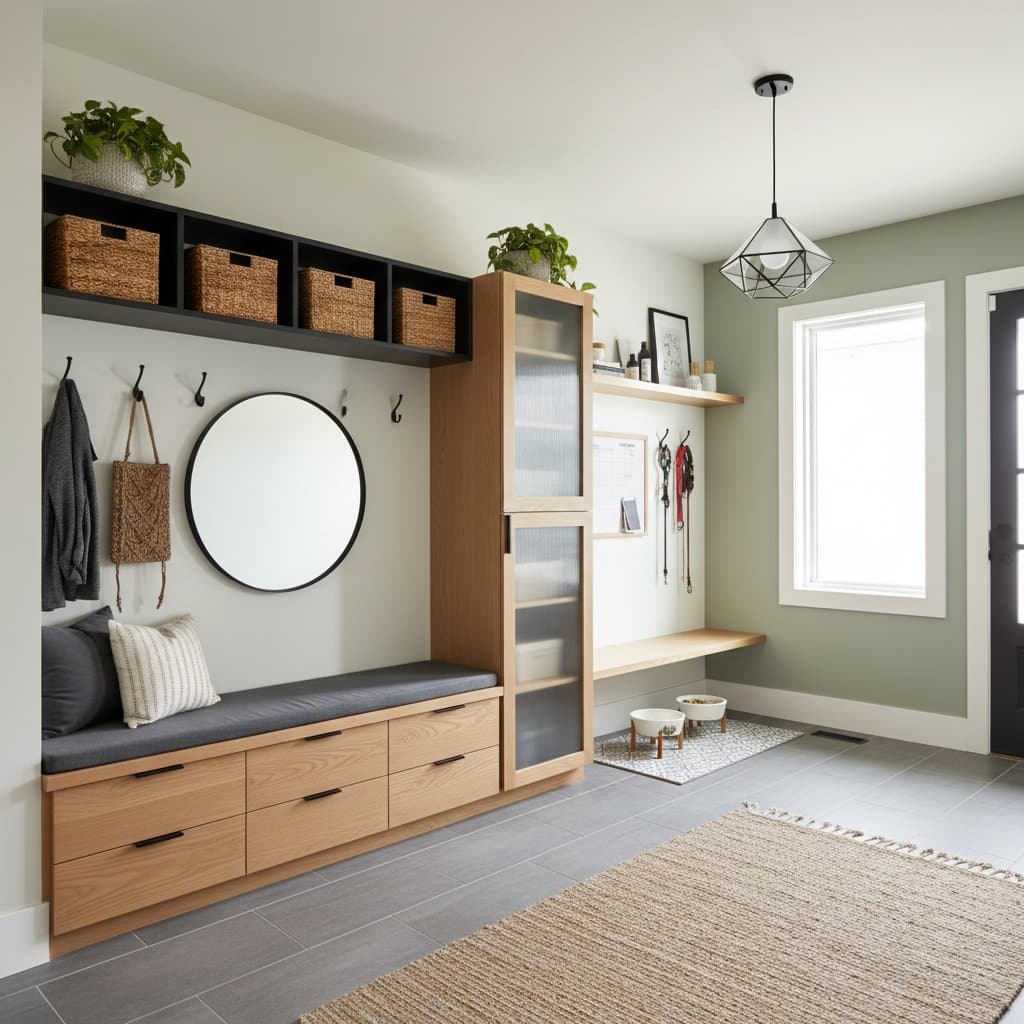
A thoughtfully arranged mudroom typically adheres to a straightforward sequence: entry access, storage provisions, seating, and passage to the primary residence. Maintain unobstructed pathways, ensuring a minimum of three feet for comfortable navigation. In confined entries, opt for vertical storage solutions to prevent congestion. Integrate a custom bench featuring under-seat cubbies to conceal shoes without dominating floor area.
2. Enhance Storage Functionality
Intelligent storage converts a disorganized entry into a tranquil retreat. The objective involves rendering organization intuitive. Extend beyond basic hooks and containers. Employ a mix of accessible and concealed storage to harmonize usability with neatness.
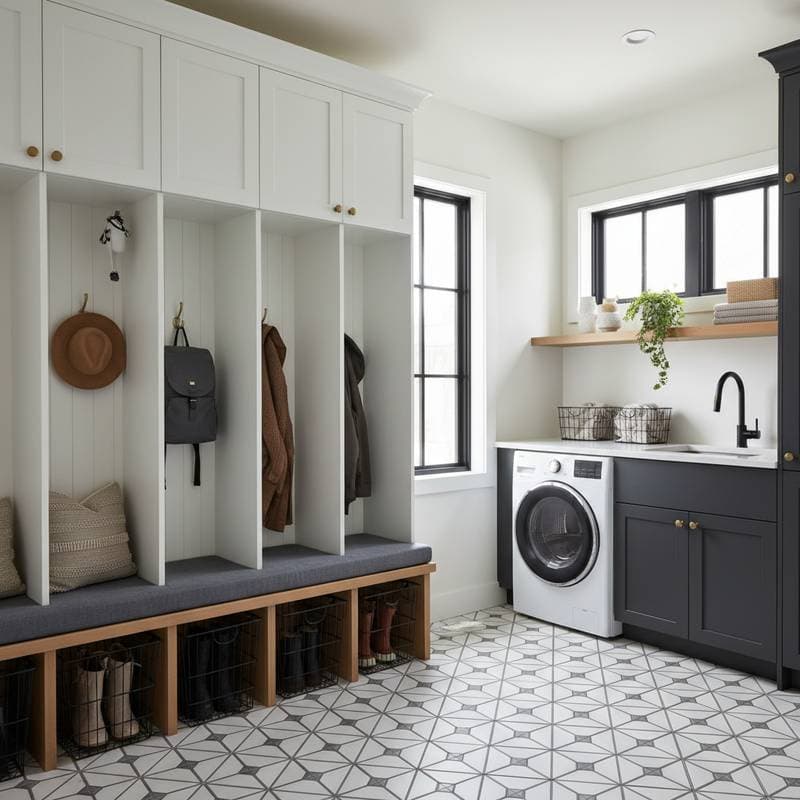
- Lockers or cubbies: Suitable for households with multiple members. Allocate individual compartments for outerwear, backpacks, and seasonal items.
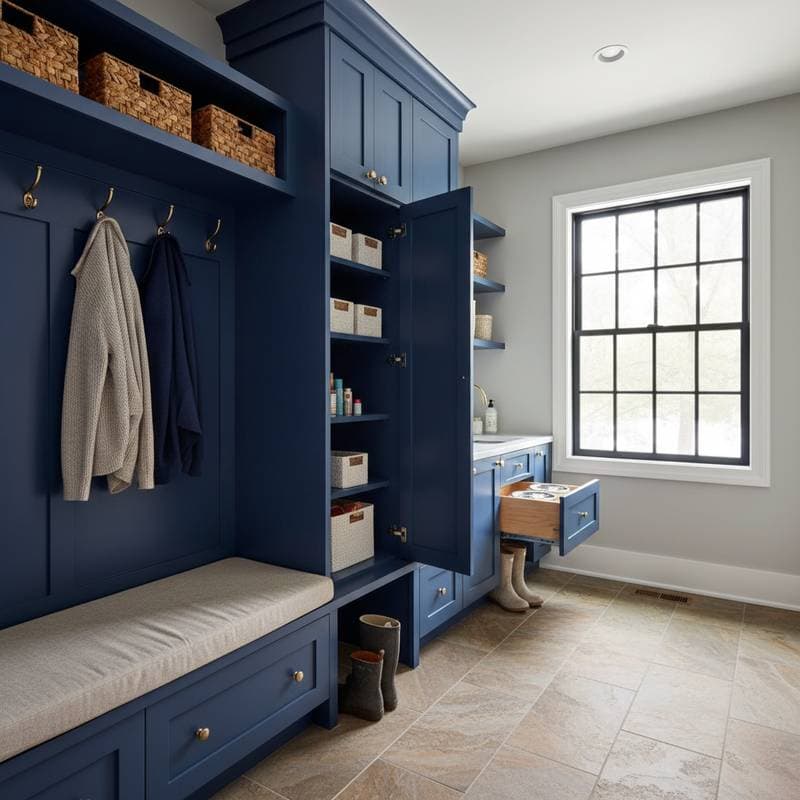
- Concealed drawers: Position drawers under benches to store mittens, neckwear, or pet leads. Incorporate soft-close mechanisms for silent, orderly operation.
- Upper cabinets: Ideal for infrequently accessed goods, such as festive footwear or athletic gear.
- Extendable trays: Effective for soiled shoes or damp umbrellas. Line trays with impervious mats to safeguard floors and storage components.
Select robust materials like laminate or treated timber capable of withstanding humidity and abrasion. Prioritize surfaces that clean effortlessly while preserving elegance.
3. Delineate Functional Zones
Defined layouts foster tranquility in routine activities. An organized mudroom segments responsibilities into distinct areas. Designate one section for apparel and accessories, another for wash items or supplies, and a compact area for readily accessible essentials.
For example, install a row of hooks adjacent to the entrance for convenient coat retrieval, while placing a bench with integrated storage near the interior threshold to prompt shoe removal upon sitting. When the mudroom adjoins laundry facilities, store cleansers and tools within enclosed cabinets to uphold a polished appearance.
Employ area rugs or varied floor treatments to delineate zones visually. Position a resilient indoor-outdoor rug beneath the bench to designate the deposit area and shield surfaces from grime.
4. Select Durable Materials
Utility must complement aesthetics. Appropriate materials enhance the mudroom while enduring regular use. View the area as a blend of practicality and warmth.
- Flooring: Opt for porcelain tiles or sealed natural stone to resist dampness and soil. In cooler regions, consider radiant heating as a valuable addition.
- Walls: Apply wainscoting or beadboard for dimension and barrier against marks. Utilize semi-gloss paint for straightforward maintenance.
- Hardware: Select hooks and fixtures in finishes such as matte black, brushed brass, or antiqued bronze to infuse character. Ensure components support the load of heavy winter garments.
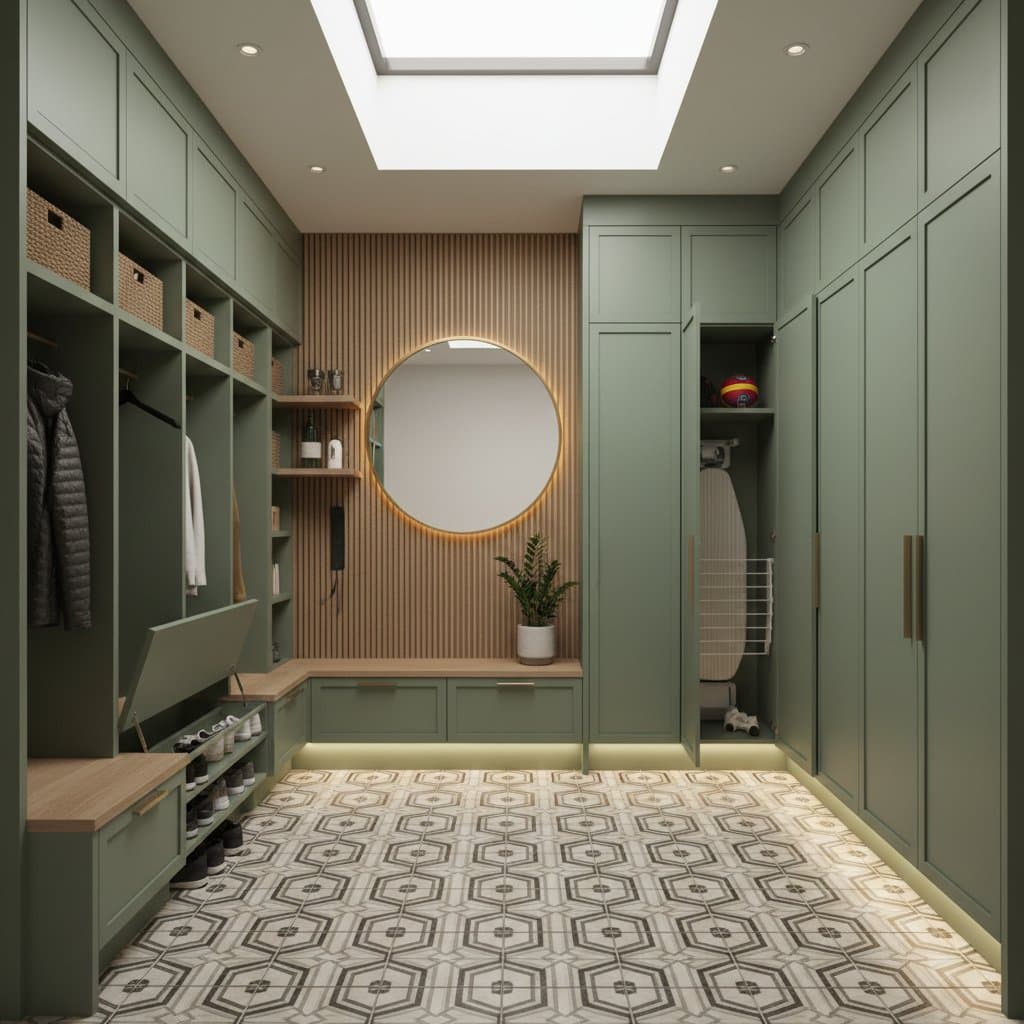
A subdued palette incorporating organic textures promotes serenity. Shades like soft gray, creamy white, or subtle sage green coordinate seamlessly with timber or rattan containers.
5. Integrate Lighting and Character
Illumination alters the ambiance of a mudroom. Maximize natural light where possible; in windowless areas, combine artificial sources for brightness and appeal. Install recessed overhead fixtures for ambient coverage, and add a hanging light above the bench or basin for focal interest. Cabinet-under lighting accentuates zones and facilitates item location.
Infuse personal elements to make the space distinctive. As the initial and final area encountered daily, allow it to echo your residence style. Incorporate framed artwork, a textured floor covering, or a modest plant to temper functionality. Place a mirror by the door for utility and ornamentation, ideal for final appearance reviews.
6. Implement Adaptable Storage
A prominent trend in mudroom planning emphasizes adaptability. Household requirements evolve, and storage must adapt accordingly. Modular shelving permits reconfiguration to match changing demands. Adjustable units, for instance, transition from accommodating student supplies to housing recreational equipment or festive ornaments.
Mobile carts offer further versatility. These units manage footwear in rainy periods, then shift to gardening tools during temperate seasons. Containers with grips enable effortless transport across rooms. Such adaptability guarantees the mudroom enduring relevance post-renovation.
7. Optimize Compact Areas
Compact mudrooms benefit from strategic planning to appear spacious and structured. In limited spaces, favor wall-affixed benches or suspended hooks over cumbersome units. Exploit vertical dimensions with full-height shelving. A slender wall accommodates a sequence of narrow cubbies or an upright shoe organizer.
Strategic mirrors expand perceived size by bouncing light. Choose streamlined yet effective storage, like under-bench sliding baskets. When the mudroom connects directly to kitchens or corridors, consistent materials, hues, and moldings create cohesion rather than constriction.
8. Prioritize Maintenance Simplicity
An attractive mudroom sustains its allure through uncomplicated care. Emphasize materials and coatings that ease cleaning. Detachable mats and machine-washable runners manage debris effectively. Favor wall-mounted hooks over rod systems requiring hangers, as hooks promote prompt organization.
For pet owners, add a compact wash station with a portable hose or integrated basin for soiled feet. Position a discreet hamper or receptacle under a surface to conceal laundry. Simplified maintenance encourages consistent upkeep.
Sustain Daily Efficiency
With your mudroom established, its value emerges in routine support. An optimal design streamlines morning preparations and evening unwinding. Observe incremental conveniences, such as a fixed key location or compartment for outbound correspondence, that yield significant impact.
Adapt the arrangement as circumstances change. Exchange seasonal accents, rearrange containers, and update ornaments to maintain freshness. Introduce fragrance pouches or a compact vaporizer to enhance the entry experience upon arrival.
The essence of an exemplary mudroom resides in its dual role of visual and functional excellence. Through deliberate strategy and targeted improvements, transform a disordered threshold into a composed, hospitable haven.