

Essential Mudroom Strategies for 2024: Reduce Expenses, Enhance Efficiency
Recent trends from leading home improvement sources indicate a marked increase in interest for affordable mudroom transformations. Searches for terms such as budget entryway organization and versatile space solutions have grown significantly. Property owners seek to convert underutilized areas into streamlined zones that support routine activities. This article examines standout mudroom concepts drawn from prominent design resources. These approaches incorporate material selections, organizational techniques, and spatial arrangements to achieve aesthetic appeal and utility. Such methods demonstrate that a refined, effective mudroom emerges from deliberate planning rather than substantial spending.
To begin, assess your entryway's dimensions and usage patterns. Measure the available square footage and identify high-traffic elements like footwear storage or coat hanging. Select durable, low-maintenance materials that align with your home's overall aesthetic. Integrate multifunctional features, such as benches with concealed compartments, to address multiple needs efficiently. These foundational steps set the stage for designs that deliver lasting value.
1. Rustic Revival
Location: Asheville mountain home
Designer: Brentwood & Co.
This design employs rough-hewn pine cabinetry sealed with a low-luster finish to accentuate natural grain patterns. Porcelain tiles mimicking concrete provide a sturdy base that withstands moisture from outdoor gear and animal tracks. Install a deep utility sink enclosed by aged brass fittings to evoke a classic farmhouse ambiance. Construct built-in cubbies that serve as drying areas for jackets and hats. Add a elevated shelf for off-season items, positioned beyond children's reach. The resulting atmosphere conveys authenticity and grounded warmth, reflecting regional mountain traditions while minimizing upkeep expenses.
For implementation, source reclaimed wood from local suppliers to cut costs by up to 30 percent. Apply a water-resistant sealant to protect against humidity. Position hooks near the door for immediate access to keys and leashes. This setup not only organizes essentials but also fosters a welcoming transition from outdoors.
2. Family Function
Location: Minneapolis suburban home
Designer: Harper Design Collective
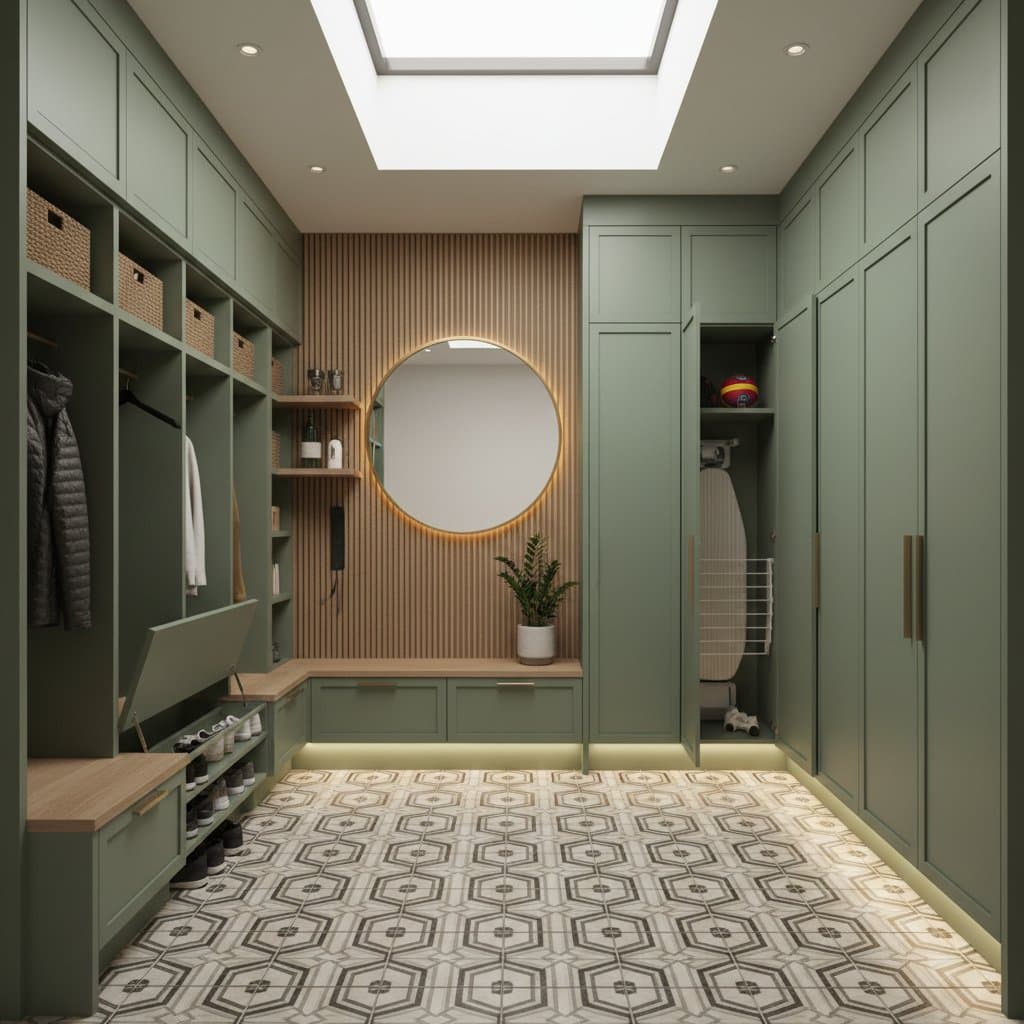
Cabinetry in vibrant sage green pairs with resilient quartz surfaces in this active family space. A integrated bench includes hinged seats revealing storage below for shoes and accessories. Assign labeled compartments to each family member for personalized organization. Apply beadboard paneling along lower walls to guard against marks from bags and toys. The arrangement facilitates morning preparations by centralizing items like backpacks and lunch bags. The visual tone remains lively and refined, mirroring the dynamics of household routines with integrated practicality.
To adapt this for your home, measure bench height at 18 inches for comfortable seating. Use adhesive labels on cubbies for quick identification. Incorporate soft-close drawers to reduce noise during busy periods. These details ensure the space supports daily flows while maintaining a cohesive appearance.
3. Coastal Calm
Location: Charleston cottage
Designer: Rowe + Finch Interiors
Washed oak cabinets complement light blue beadboard walls to create a relaxed seaside feel. Embed a bench with padding in spill-proof fabric, suitable for removing sandy footwear or accommodating pets. Mount a series of nickel-plated hooks for bags and scarves. Place woven containers underneath for discreet storage of smaller items. The color scheme draws inspiration from ocean views yet avoids overt motifs. Daily entries and exits become tranquil pauses that honor waterfront influences.
Replicate this by selecting moisture-resistant paints for walls in high-humidity areas. Opt for linen blends treated for durability in upholstery choices. Space hooks 6 inches apart to accommodate various item sizes. Such elements promote ease of use and a soothing environment that enhances home entry experiences.
4. Hidden Entry
Location: San Diego bungalow
Designer: Lark Home Studio
A sliding pocket door hides this compact mudroom adjacent to the kitchen. Light gray cabinets feature brushed brass accents, while terrazzo-style flooring introduces subtle color accents. Include a retractable laundry bin for towels and a compact device charging area. The configuration extends to laundry tasks, illustrating how confined areas handle diverse functions. Concealment preserves openness in primary living zones, with utility concentrated in the background.
For similar installations, choose pocket doors that fit within wall thicknesses of 4 inches or more. Install USB outlets within cabinets for cable management. Use pull-out trays for hampers to maximize vertical space. These features allow seamless integration without disrupting adjacent room aesthetics.
5. Garden Link
Location: Sonoma farmhouse
Designer: Willow Creek Design
This mudroom connects interior spaces to an exterior garden via direct access. Terracotta hexagonal tiles cover the floor, matched with pale oak cabinets and exposed shelves. Position a spacious ceramic basin under a window with clean white framing, ideal for cleaning vegetables or footwear. The design accommodates garden-related activities, with materials that resist soil and water effectively. The space balances practicality with visual appeal, highlighting where utility meets enjoyment.
To build this, select unglazed tiles for authentic texture and easy cleaning. Install adjustable shelving brackets to customize heights for jars or tools. Add a backsplash of matching terracotta to protect walls from splashes. These choices create a versatile zone that supports outdoor pursuits year-round.
Integrating Mudroom Features into Daily Use
Entryways have evolved into expressive zones that organize chaos while reflecting individual tastes. Balance elements like wood grains, synthetic surfaces, or vibrant finishes to harmonize texture, purpose, and movement. Consider additions such as automatic lights triggered by motion, embedded device compartments, or suspended drying systems. These enhancements extend affordability without compromising sophistication.
Through personal projects like refinishing vintage pieces and maintaining indoor greenery, the importance of purposeful storage becomes clear. A thoughtfully arranged mudroom assigns places for belongings, allowing focus on activities outside the home. Regardless of size constraints, disciplined approaches and innovative ideas in 2024 mudroom designs reduce expenditures and elevate routine passages into refined expressions.