
Open-Concept Kitchen Costs in 2026: Essential Budgeting Guide
Home renovation programs often showcase the transformation of a closed kitchen into an open space with a simple wall removal. Light floods the area, family interactions increase, and the room appears expansive. In reality, such a project requires careful financial planning, as costs range from $15,000 to $45,000 in 2026, influenced by home structure, material selections, and unforeseen issues.
National remodeling surveys indicate that projects involving wall removal frequently exceed initial budgets. Only one-third of homeowners complete these renovations within their planned estimates. Structural elements concealed within walls often drive these overruns.
An open-concept kitchen enhances the sense of space and promotes social connectivity. However, costs vary widely based on project scope. This guide details pricing factors, assessment methods, and strategies to maintain financial control.
Determining If a Wall Supports Structural Load
Before initiating demolition, evaluate the wall in question. Load-bearing walls support the weight of upper levels or the roof, requiring engineered solutions for safe removal.
Assessment Steps
- Engage a structural engineer. Professional evaluations cost between $400 and $1,000, including necessary diagrams for permitting.
- Inspect accessible areas. Examine the attic or basement; joists running perpendicular to the wall suggest load-bearing status.
- Secure required permits. Local authorities mandate approvals for structural modifications, regardless of project scale.
General contractor Eric Bernal of Maple Street Renovation notes, “The biggest mistake is assuming a wall is decorative. I have seen projects double in cost because the homeowner planned to DIY, only to find out halfway through that the wall was holding up half their second floor.”
With this information, develop an accurate budget and prevent emergency consultations during construction.
Breaking Down the Cost Components
Open-concept kitchen renovations encompass multiple elements beyond wall removal. Basic projects start at $15,000 for non-load-bearing walls with standard finishes, while complex builds reach $45,000 or more for structural reinforcements and premium materials.
Key Cost Categories
- Wall removal and structural support: Non-load-bearing demolition costs $1,000 to $3,000. Load-bearing alterations, including beams or columns, add $5,000 to $15,000.
- Electrical and plumbing updates: Rerouting systems to accommodate the new layout ranges from $2,000 to $8,000, depending on existing infrastructure.
- Flooring and finishes: Matching or upgrading surfaces across the expanded area costs $3,000 to $10,000, with options like hardwood or tile influencing the total.
- Cabinetry and appliances: Integrating storage and equipment into the open design adds $4,000 to $15,000, prioritizing durable, space-efficient choices.
- Labor and oversight: Contractor fees represent 20 to 30 percent of the budget, or $3,000 to $12,000, for skilled execution.
These figures reflect 2026 projections, adjusted for inflation and material trends. Customize estimates based on square footage and regional labor rates.
Addressing Unforeseen Expenses
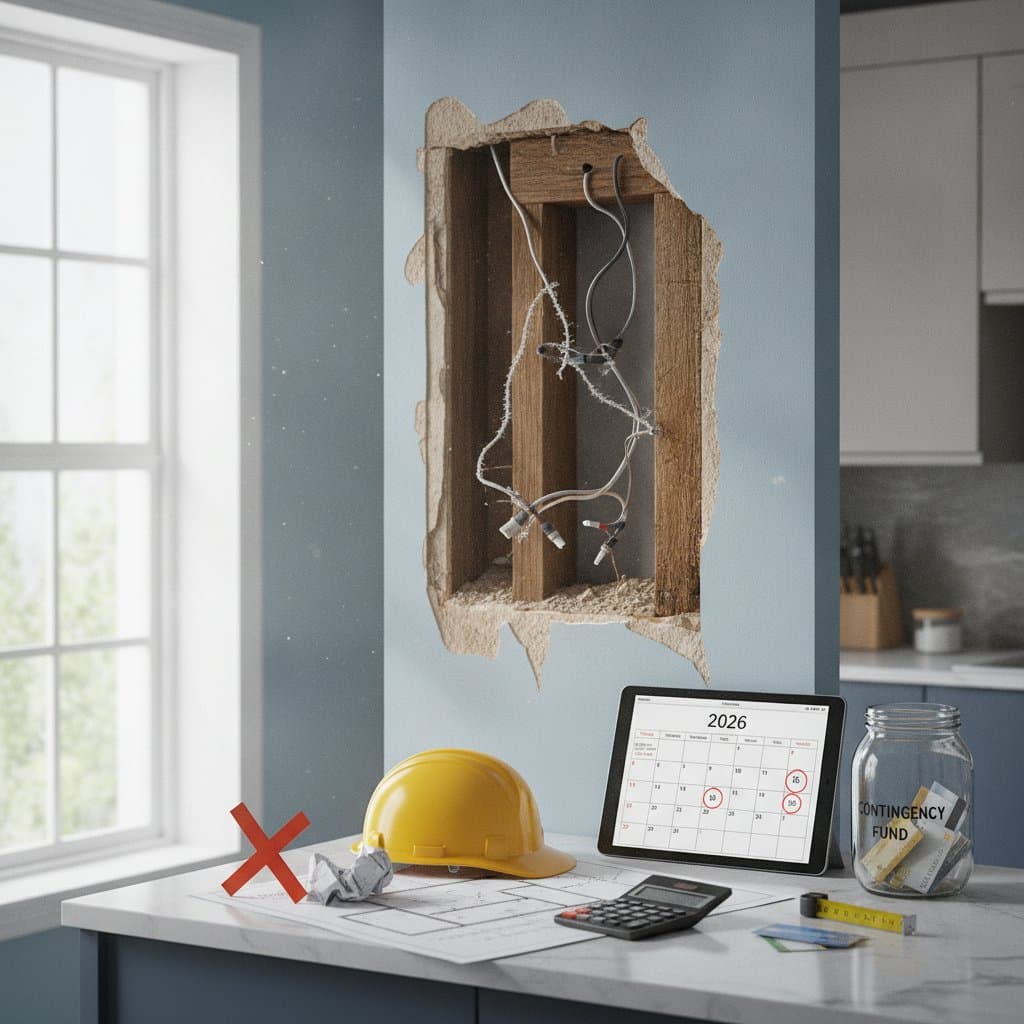
Renovations rarely proceed without complications. Hidden wiring, outdated pipes, or framing adjustments can inflate costs unexpectedly.
Preparation Strategies
- Establish a contingency reserve: Allocate 10 to 15 percent of the total budget for contingencies.
- Account for permit expenses: Fees range from $500 to $1,500, varying by location and project complexity.
- Factor in relocation costs: If the kitchen becomes nonfunctional, budget $1,000 to $3,000 for alternative meals or temporary facilities.
- Include waste management: Dumpster rentals and disposal services cost $400 to $800.
View these allocations as protective measures. Unused funds allow investments in enhancements, such as custom lighting or ergonomic counters.
Evaluating Return on Investment
Consider the long-term value before proceeding. Open layouts attract buyers seeking modern, family-oriented homes.
Remodeling value reports show that layout-altering kitchen projects recover 60 to 80 percent of costs upon resale. Energy-efficient features and contemporary materials boost this return.
Real estate agent Carla Nguyen with Haven Realty Group observes, “Buyers love open plans, but they also look for quality. A solid beam installation and cohesive flooring make a difference when it comes time to sell.”
Expect quicker sales and elevated property appeal, even if full cost recovery remains partial.
Professional Management Tips
Effective oversight ensures the project stays on track and within budget.
Essential Practices
- Obtain multiple bids. Secure at least three detailed proposals from licensed professionals. Evaluate inclusions like permits and cleanup to identify hidden charges.
- Verify credentials. Confirm liability insurance and workers' compensation. Review references from recent clients to gauge reliability.
- Define payment terms. Limit initial payments to one-third of the total. Structure remaining disbursements around completed milestones.
- Outline site protocols. Specify protected zones, dust control measures, and end-of-day cleaning standards for a controlled environment.
- Anticipate personal impacts. Plan for disruptions by organizing meal preparations and daily schedules in advance.
These steps foster accountability and minimize stress throughout the process.
Finalizing Your Open-Concept Vision
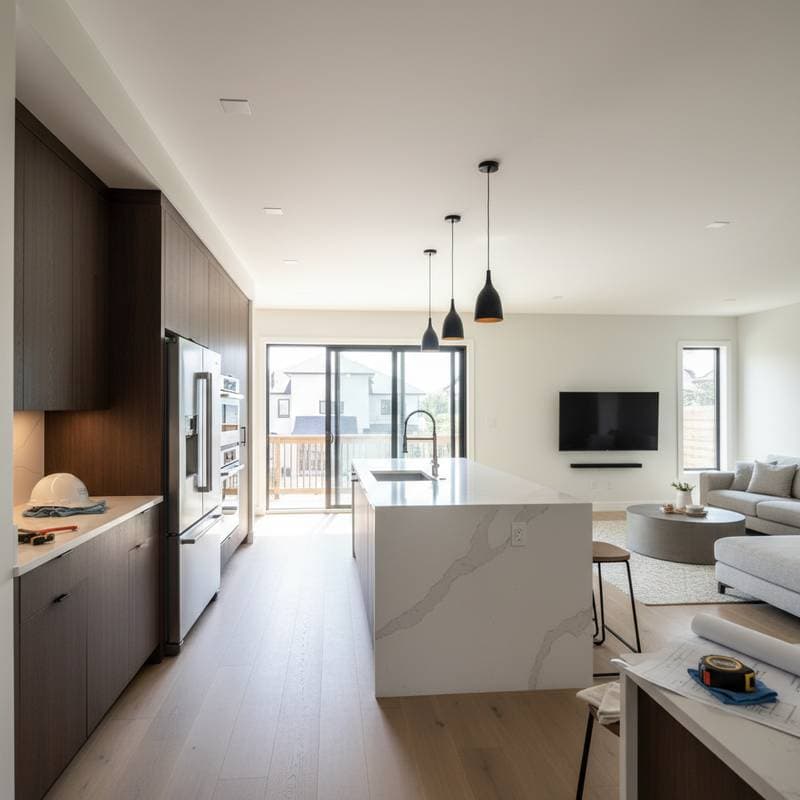
Transforming a kitchen into an open-concept haven revolutionizes daily living. Natural light increases, movement flows seamlessly, and gatherings become effortless. Approach this as a deliberate structural endeavor with significant fiscal implications.
Begin with a thorough wall evaluation and professional guidance. Construct a comprehensive budget covering all phases and reserves. For budget constraints, explore partial openings or surface-level improvements as alternatives.
Upon completion, the result extends beyond physical expansion. Informed decisions yield a functional, inviting space aligned with lifestyle needs and financial realities. Calculate precisely, execute thoughtfully, and enjoy a kitchen that enhances every moment.