
2026 Mudroom Designs: Layouts That Maximize Every Inch
A well-planned mudroom sets the tone for the home by providing immediate organization upon entry. Coats find designated spots, shoes receive proper storage, and the area maintains a clean, inviting appearance. These spaces serve as essential transitions from outdoor elements to indoor comfort, and effective designs streamline routines while preserving aesthetic appeal.
1. Establish a Functional Layout Foundation
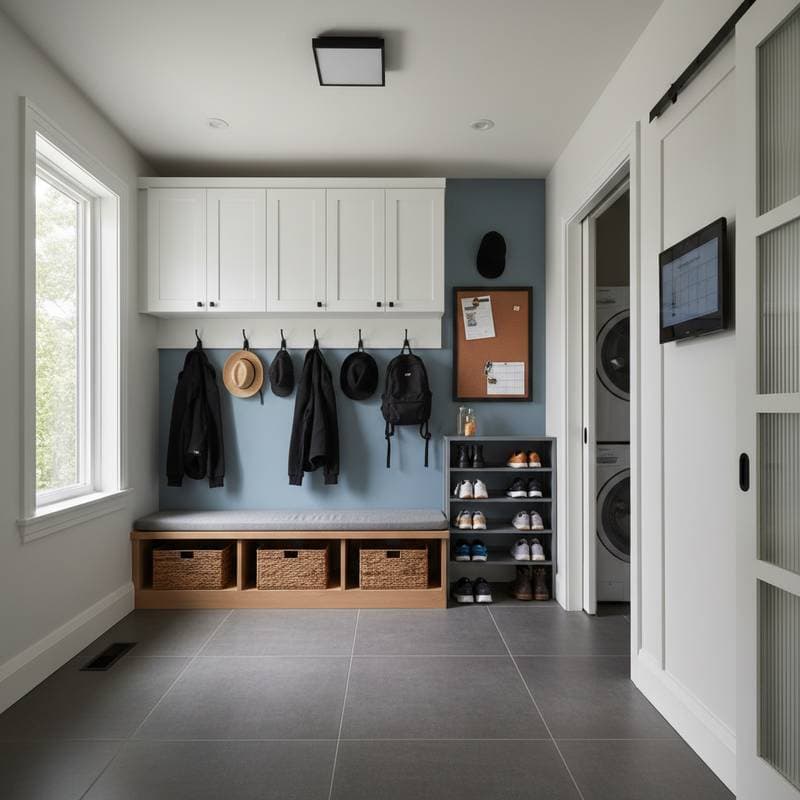
Consider family traffic patterns to create an efficient mudroom layout. Divide the area into distinct zones for shoes, coats, bags, and gear to promote order. In compact spaces, install a bench measuring 18 inches high with under-seat cubbies that accommodate up to six pairs of shoes. For larger areas, adopt a galley configuration featuring open shelves on one wall for quick-access items and enclosed lockers on the opposite side for bulkier storage.
Precise measurements ensure usability. Maintain at least 36 inches of clearance between storage units and walls or opposing fixtures to allow smooth movement for multiple users. Utilize vertical space on walls with tall cabinets reaching eight feet, but incorporate open areas to prevent a sense of enclosure. This approach creates visual openness and enhances the perception of spaciousness.
2. Incorporate Concealed Storage Solutions
Effective mudrooms rely on hidden storage to maintain a streamlined appearance. Install closed cabinets above and below open shelving to store items out of sight while keeping them accessible. Deep drawers, at least 12 inches wide, suit pet leashes, gloves, and reusable bags. Reserve hooks for frequently used objects, and use cabinet doors to conceal less urgent supplies.
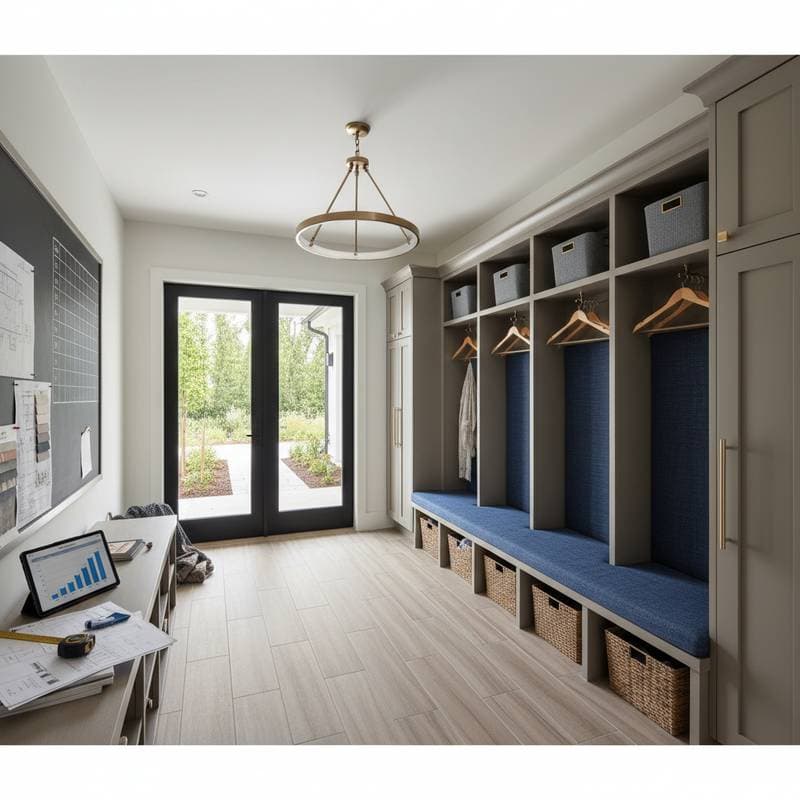
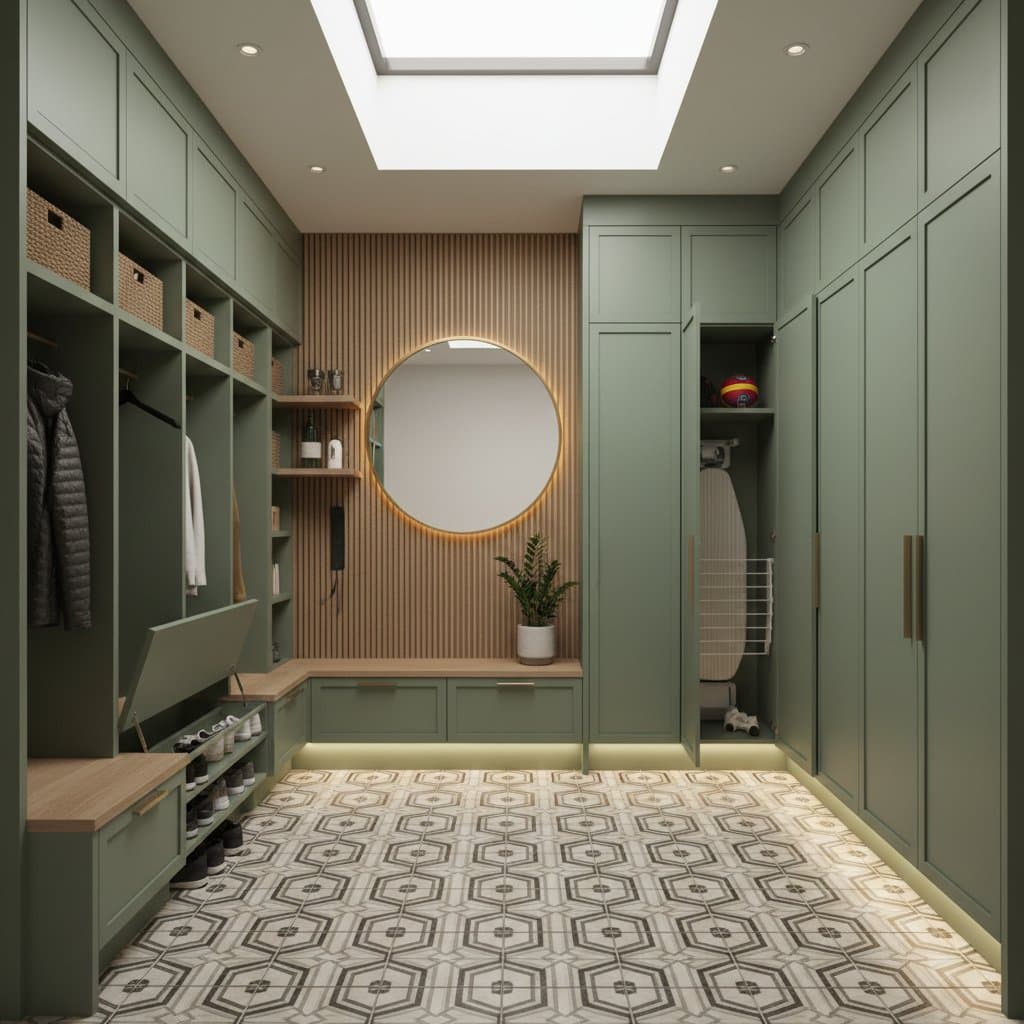
Select built-in units with doors painted to match surrounding walls for seamless integration. Opt for furniture-inspired cabinetry featuring shaker-style fronts or beadboard panels in neutral shades such as sage green, warm gray, or soft white. These hues mask everyday dirt and wear. For added interest, apply patterned wallpaper or painted beadboard to the interior of open cubbies, providing a discreet pop of color visible only when shelves open.
3. Select Resilient and Attractive Materials
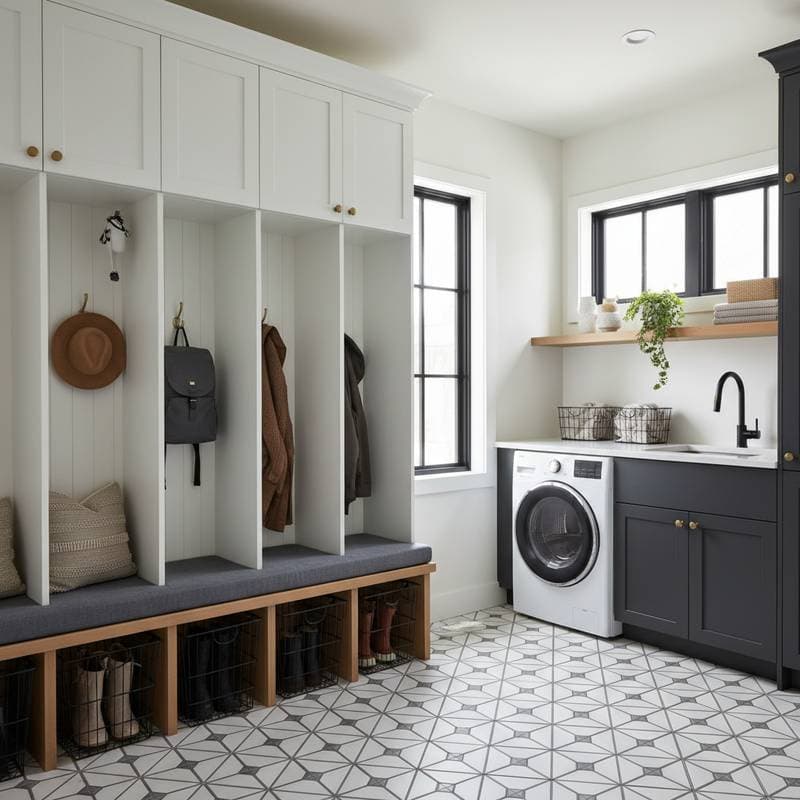
Durability pairs with elegance in high-traffic mudrooms. Choose porcelain tile or sealed natural stone for flooring to withstand moisture from wet boots and pet tracks. For a warmer feel, select waterproof luxury vinyl planks that replicate oak or walnut grains without the maintenance demands. Protect walls with wainscoting panels or semi-gloss washable paint that simplifies cleaning after spills.
Hardware choices influence longevity and style. Prefer matte black, aged brass, or oil-rubbed bronze pulls and knobs, which hide fingerprints and minor scratches effectively. Integrate rattan or metal wire baskets into shelves for containing small accessories like keys or hats. Each material decision contributes to a unified look that endures daily demands while elevating the overall design.
4. Implement Versatile Multiuse Elements
Contemporary mudrooms adapt to diverse needs through integrated features. Position a stacked washer-dryer unit adjacent to custom cabinets to streamline laundry tasks. Add a 24-inch countertop over the appliances for folding garments or sorting correspondence. For pet owners, incorporate a utility sink measuring 20 inches wide with a tiled backsplash to handle grooming or paw washing efficiently.
Create a discreet charging station within a drawer equipped with built-in outlets for devices like smartphones and tablets. This setup keeps cords hidden and ensures readiness without surface clutter. Tailor additional functions to household habits, such as a recycling bin pull-out or a pet food dispenser, to foster efficiency. The result is a space that supports varied activities without compromising core organization.
5. Enhance Illumination and Ventilation
Entry mudrooms frequently lack abundant natural light due to their proximity to garages or side doors. Counter this with pale cabinet finishes and glossy surfaces that reflect available light. Install a transom window or a door with glass panels to introduce brightness; frosted options or cellular shades preserve privacy. Layer in LED under-cabinet strips and a central ceiling fixture rated for damp locations to illuminate tasks effectively.
Proper airflow combats humidity from damp apparel and footwear. Equip the space with an exhaust fan capable of 50 cubic feet per minute or a compact dehumidifier to eliminate odors and protect surfaces. Designate a 4-by-6-foot drying zone near the entrance with absorbent mats to air out items before storage. These elements keep the area fresh and comfortable for regular use.
6. Infuse Personal Elements for Cohesion
Align the mudroom with the home's overall aesthetic through subtle customizations. Place a durable runner rug that echoes patterns from adjacent rooms to create continuity. Hang a full-length mirror near the exit for last-minute adjustments, and add slim wall sconces for ambient glow.
Accommodate family members with child-height hooks at 30 inches from the floor or labeled baskets for toys and gear. Promote adherence to the system by assigning personal compartments, which encourages consistent use and reduces disorder over time.
Refining Your Mudroom for Long-Term Use
After implementing the layout, observe daily interactions to identify improvements. Install an additional hook cluster by the door if bags accumulate there, or introduce divided bins for sports equipment to enhance categorization.
This designed space combines practicality with inviting warmth. It eases the transition home, manages routine demands, and demonstrates how utility areas achieve enduring beauty and efficiency.