
Key Design Strategies and Cost Considerations for 2025 Mudroom Renovations
Picture entering your home after a demanding day to find a serene, orderly space. Footwear rests in designated spots, outerwear hangs precisely, and traces of outdoor grime vanish with minimal effort. Such efficiency defines an exemplary mudroom. This essential area influences the atmosphere of your entire residence by merging utility with elegance. Planning a mudroom upgrade now allows you to craft a visually appealing and operationally flawless environment.
The Rising Importance of the Mudroom in Contemporary Homes
Formerly viewed as a basic rear entrance, the mudroom now ranks among the most critical intermediary zones in today's residences. Daily activities unfold here: footwear is removed, accessories are set aside, and animals dispel rainwater. A deliberate design elevates this high-traffic area into an orderly, hospitable divider between exterior elements and interior comfort.
Effective mudroom enhancements extend beyond mere containment. They establish frameworks that streamline habitual tasks. Regardless of whether the area constitutes a spacious dedicated chamber or a compact corridor alcove, precise selections yield transformative results.
1. Prioritize Functionality in Your Layout
Address operational needs before selecting hues or surfaces. Evaluate the routines of your household. Require accommodations for athletic equipment, animal essentials, or weather-dependent apparel? Designate distinct sectors for each item to ensure systematic placement.
Initiate planning with these targeted elements:
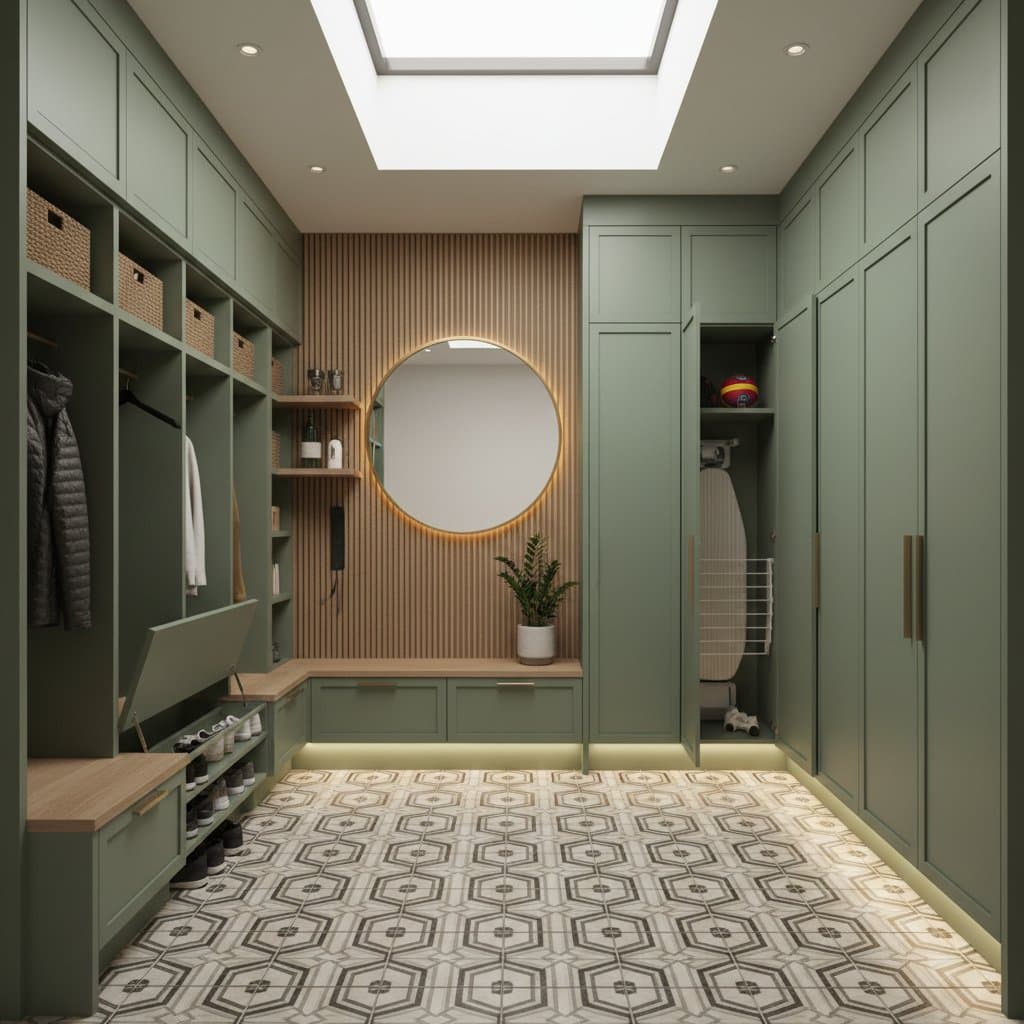
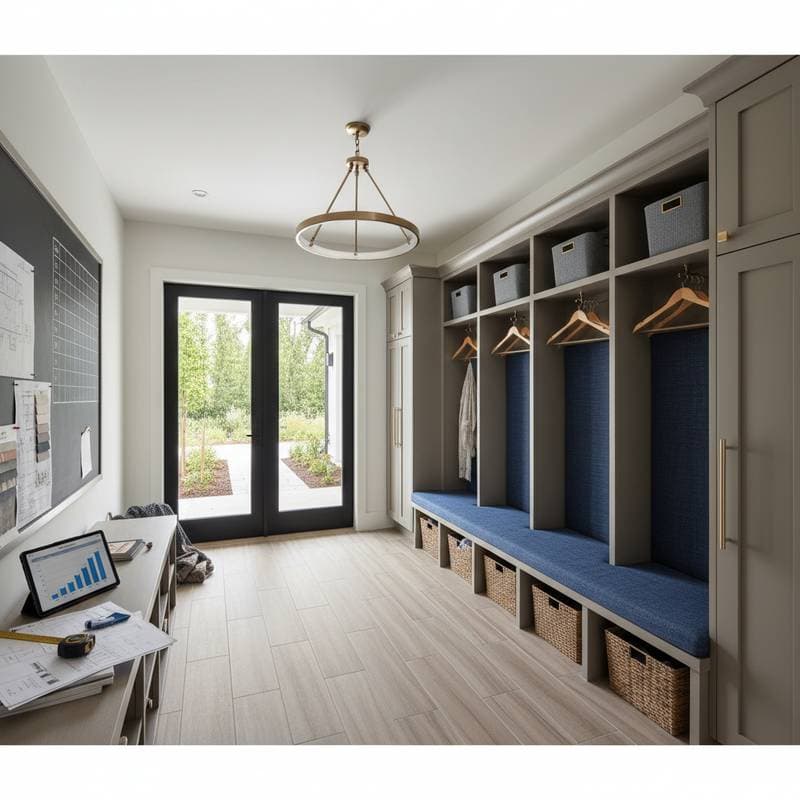
- Integrated seating with concealed compartments: Opt for benches featuring hinged tops that reveal storage for less frequently used items like scarves or gloves.
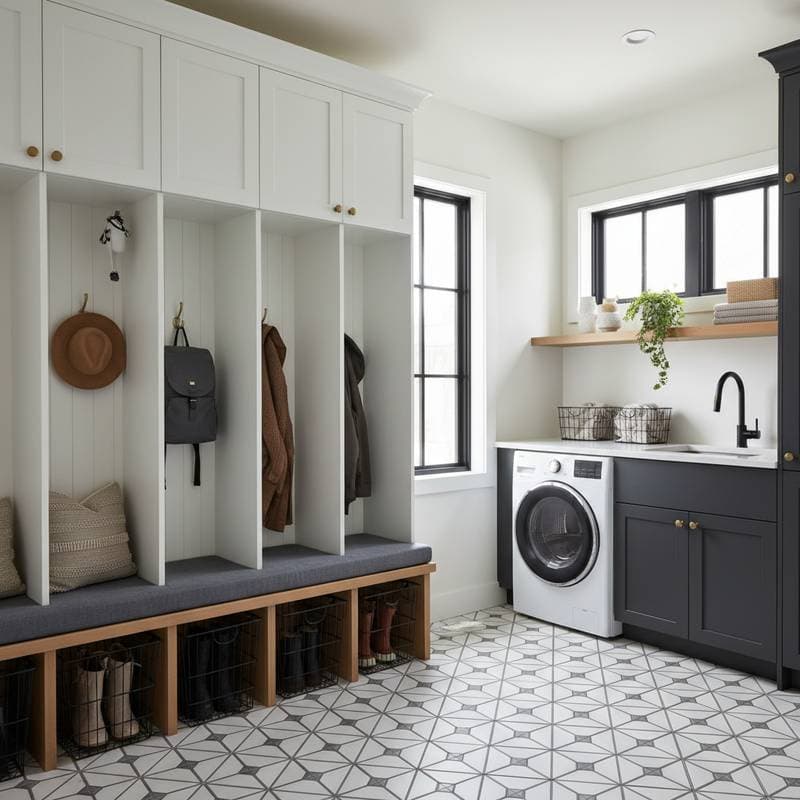
- Personalized compartments: Install cubbies sized for backpacks and shoes, labeled by family member to encourage consistent use.
- Multi-level hanging solutions: Position hooks at child-friendly heights alongside adult reaches, using sturdy options rated for 10-15 pounds per hook.
- Resilient ground coverings: Select porcelain tiles with textured surfaces for slip resistance or sealed concrete polished to a matte finish for moisture repulsion.
Analyze movement patterns within the area. Aim to develop a streamlined deposit-and-depart mechanism that prevents disorder from spreading to adjacent rooms.
2. Select Materials Built for Everyday Demands
Mudrooms endure substantial abuse. Surfaces must allure visually while enduring damp footwear, substantial garments, and frequent handling. Prioritize options that facilitate cleaning and resist humidity to avoid deformation or discoloration.
Recommended selections encompass:
- Ground surfaces: Porcelain tiles mimicking natural stone for timeless durability, luxury vinyl planks with waterproof cores for budget-friendly resilience, or sealed concrete with epoxy coatings for industrial strength.
- Storage units: Solid hardwood cabinets finished with semi-gloss paint for wipeable protection, or high-pressure laminate over plywood for humidity tolerance without aesthetic compromise.
- Vertical surfaces: Semi-gloss paint on drywall for effortless scrubbing, or wainscoting in PVC beadboard that shields against scuffs and splashes.
- Work surfaces: Quartz composites engineered for stain resistance and non-porous hygiene, or sealed butcher block for a tactile, renewable option that warms the space.
For households with animals, incorporate a dedicated grooming nook with a low-threshold drain or absorbent flooring inserts. These additions promote hygiene and confine mess to the entry zone.
3. Infuse Personality and Comfort
Utility forms the foundation, yet visual harmony completes the design. The mudroom contributes to your home's narrative, aligning with broader interior themes. Select elements that harmonize while injecting individuality.
Enhance appeal via:
- Organic timber elements: Incorporate reclaimed wood slats on open shelving or bench fronts for rustic texture.
- Ambient illumination: Mount adjustable sconces at 60-66 inches high or suspend a linear fixture above the entry for layered lighting.
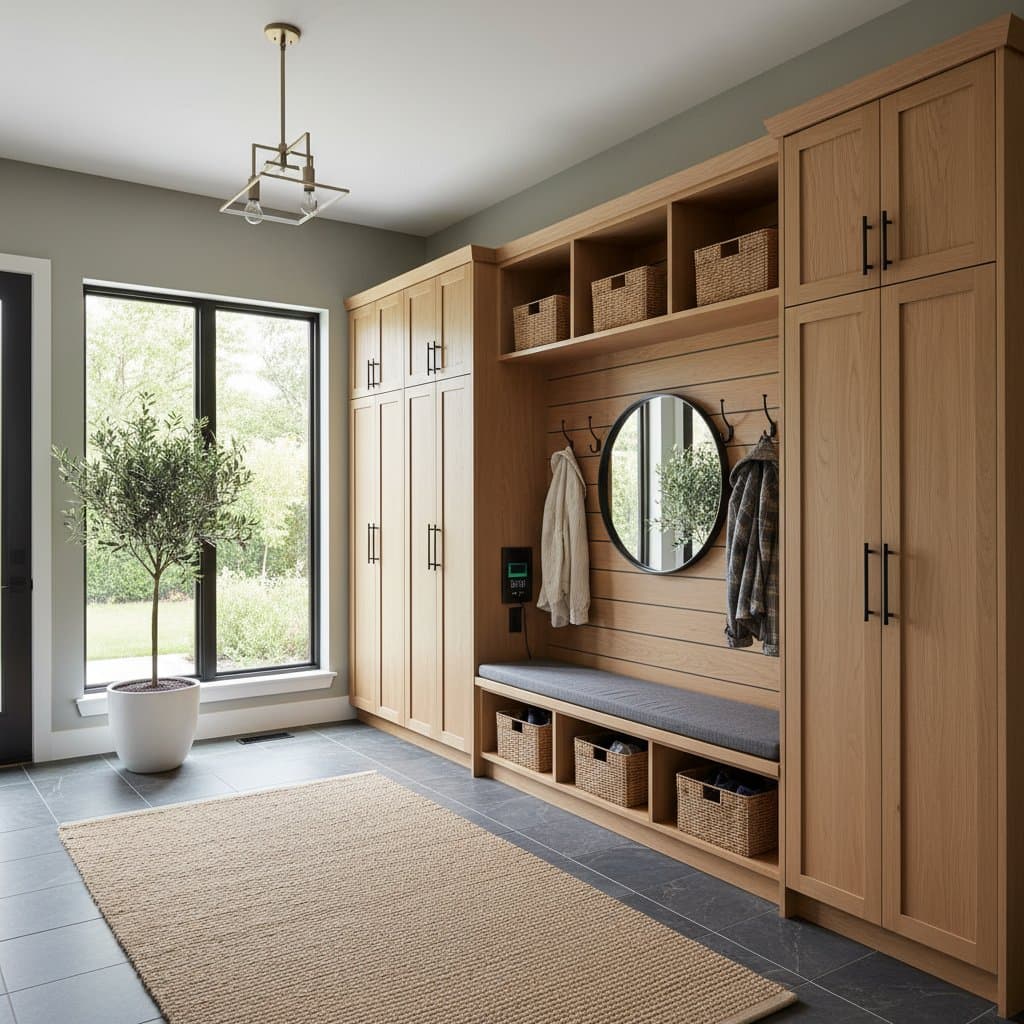
- Fabric integrations: Layer woven rugs in neutral tones for traction or add upholstered bench pads in coordinating fabrics for seated respite.
- Functional adornments: Choose matte black hooks with ergonomic grips or rattan bins for a blend of utility and subtle ornamentation.
Subtle enhancements, like a full-length mirror for last-minute checks or a hardy succulent in a ceramic holder, foster approachability. Balance pragmatism with allure to create an inviting threshold.
4. Develop a Realistic Budget Framework
Renovation expenses fluctuate based on dimensions, selections, and scope, from foundational retrofits to bespoke installations. Typical investments range from economical refreshes to premium overhauls, with national averages hovering between $5,000 and $25,000 for mid-sized projects.
Break down potential outlays as follows:
- Entry-level refresh: Allocate $1,000-$3,000 for repainting walls in durable formulas, installing wall-mounted organizers, and adding freestanding shelving kits.
- Moderate transformation: Budget $8,000-$15,000 for tailored cabinetry installations, resilient flooring replacements, and recessed lighting upgrades.
- Luxury build-out: Plan $20,000+ for custom millwork, radiant underfloor heating systems, high-end stone selections, and utility integrations like a utility sink.
Account for professional labor at $50-$100 per hour, consultation fees around $500-$1,500, and ancillary modifications such as wiring or piping reroutes. Establish priorities to allocate resources effectively and achieve maximum impact.
5. Integrate Technology for Enhanced Efficiency
Modern mudrooms evolve into versatile hubs, often incorporating utility stations, power hubs, or task-oriented setups. During upgrades, evaluate opportunities to embed contemporary tools that amplify convenience.
Incorporate these advancements:
- Embedded power solutions: Design drawers with wireless charging pads accommodating multiple devices, wired discreetly to avoid visible cords.
- Space-efficient washers: Install stackable units or all-in-one machines if water lines permit, complete with folding counters above.
- Concealed access points: Embed outlets behind cabinet doors for tools like blow dryers, ensuring GFCI protection in wet zones.
- Automated illumination: Program motion-sensor LEDs or app-controlled systems to activate upon entry, conserving energy while providing safety.
Such enhancements simplify operations and elevate property appeal for future buyers.
Sustaining Efficiency in Your Mudroom
With completion, upkeep demands minimal intervention. Schedule quarterly purges of off-season gear and employ clear labeling on containers for intuitive retrieval. Durable choices and intuitive organization ensure enduring performance.
An optimized mudroom instills tranquility amid routine transitions. It converts the frenzy of arrivals and departures into structured ease. Initiate with targeted adjustments or pursue a full-scale project to realize a more fluid, hospitable home gateway.