
2026 Mudroom Remodel Costs and Designs: Essential Insights
Imagine entering your home after a demanding day, managing packages, damp footwear, and pet accessories. Rather than disorder, you encounter an orderly mudroom equipped with organized compartments, soft illumination, and a seat for momentary rest. This scenario represents an ideal outcome. In practice, however, renovating this compact yet vital area frequently exceeds initial financial projections.
A current home enhancement study indicates that approximately four in ten homeowners exceed their budgets on entryway and mudroom projects. The primary reasons involve misjudging expenses for materials and workmanship. Therefore, prior to removing outdated surfaces or procuring specialized storage units, individuals benefit from understanding the full scope of commitments involved.
This resource details potential mudroom renovation expenses, outlines designs suited to everyday demands, and identifies opportunities for cost reduction that avoid future dissatisfaction.
Factors Influencing Mudroom Remodel Expenses
Several elements determine the total investment in a mudroom project. These components range from spatial considerations to finishing choices, each contributing to the overall financial picture.
1. Size and Configuration
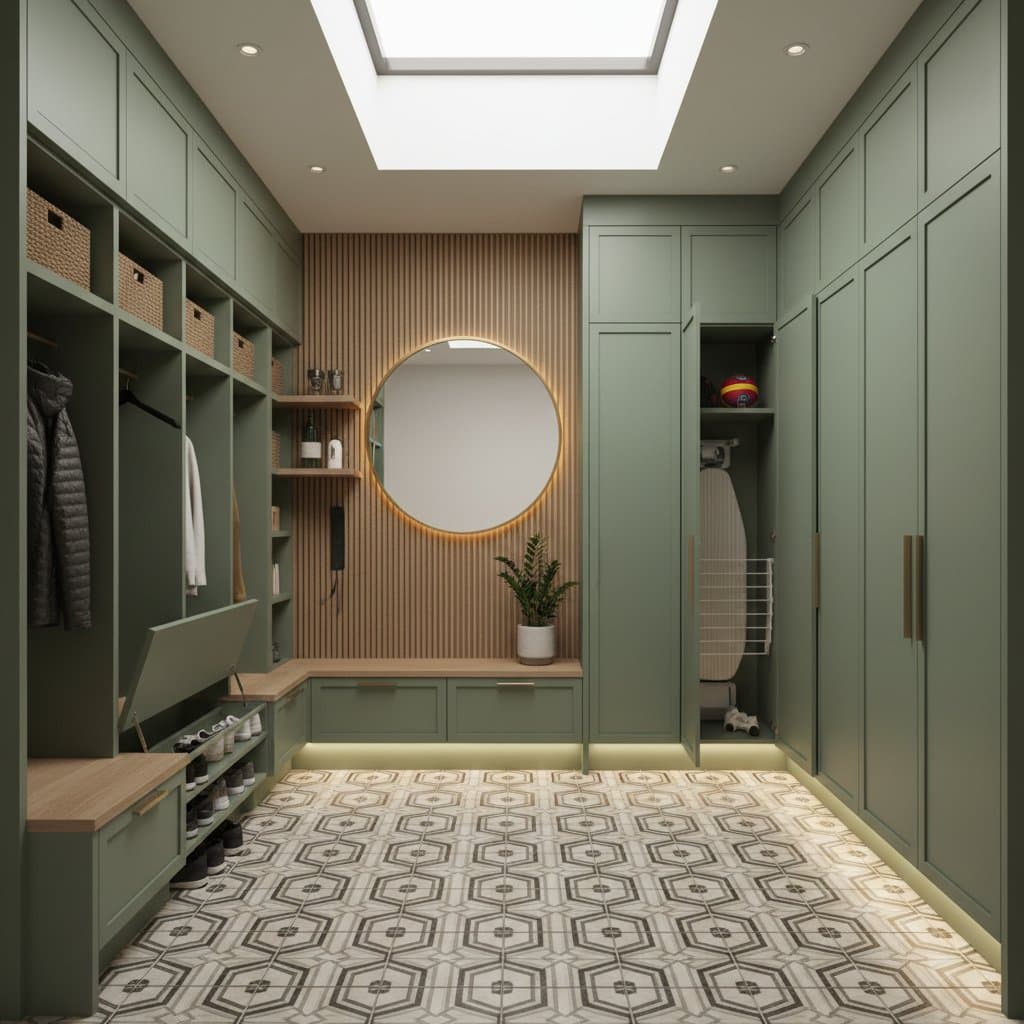
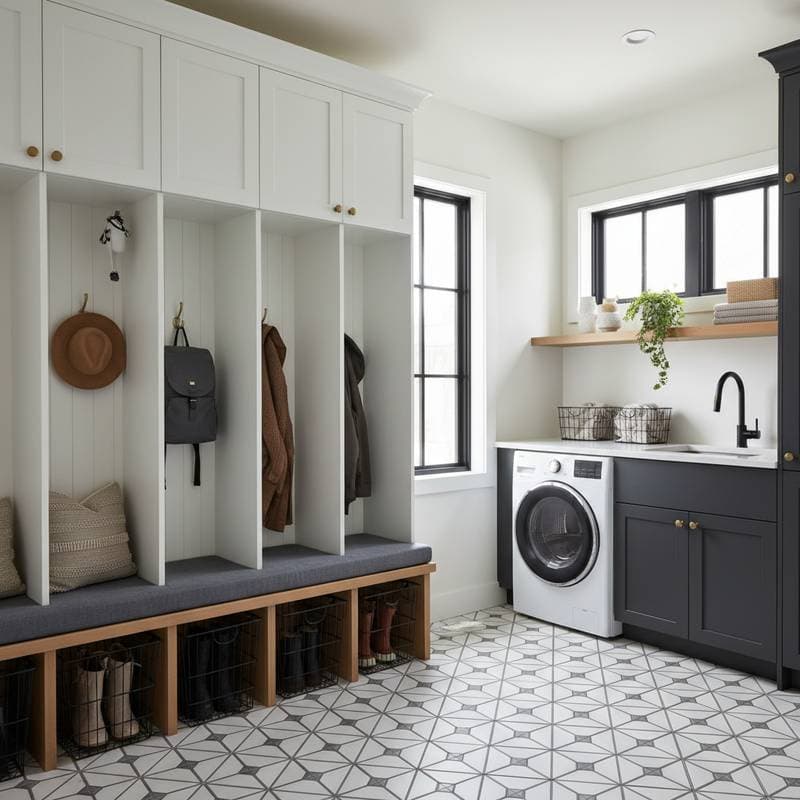
A modest entry alcove featuring a simple seat and wall hooks requires less investment than a comprehensive mudroom incorporating lockers and laundry facilities. As functionality increases, so does the need for supporting structural elements, which elevates costs accordingly.
2. Material Choices
Resilience proves crucial in mudrooms exposed to grime, humidity, and frequent use. Porcelain tiles and engineered wood flooring gain favor for their ability to withstand wear. Natural stone provides striking aesthetics yet typically doubles flooring expenses compared to synthetic alternatives.
3. Custom Versus Prefabricated Storage Solutions
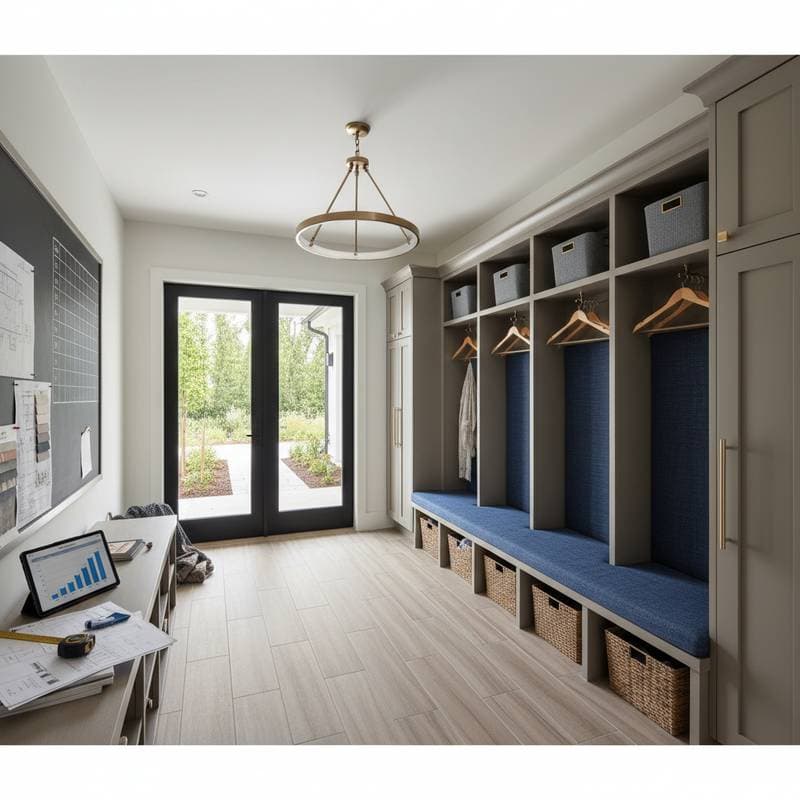
Bespoke cabinetry may consume nearly half the allocated funds, whereas modular options from retail outlets cost about one-third as much. Designer Luke Harrington of Built Form Studios notes, "Custom isn’t always better. I’ve seen prefab units hold up beautifully when installed properly and customized with trim or paint."
4. Placement Within the Residence
Projects linking to existing plumbing or electrical systems incur lower fees. Introducing fresh conduits or altering pathways, however, substantially inflates the estimate.
5. Workmanship Fees
Geographic variations play a significant role. Metropolitan regions often impose 20 to 30 percent higher labor charges than suburban or countryside locations.
Strategies to Reduce Mudroom Remodel Expenses
Renovation outlays accumulate rapidly, yet deliberate decisions extend funds while preserving standards.
1. Maintain Existing Plumbing Positions
Should a sink or laundry zone already connect to water lines, avoid relocation. Shifting pipes can introduce thousands of dollars in additional charges.
2. Combine Bespoke and Standard Components
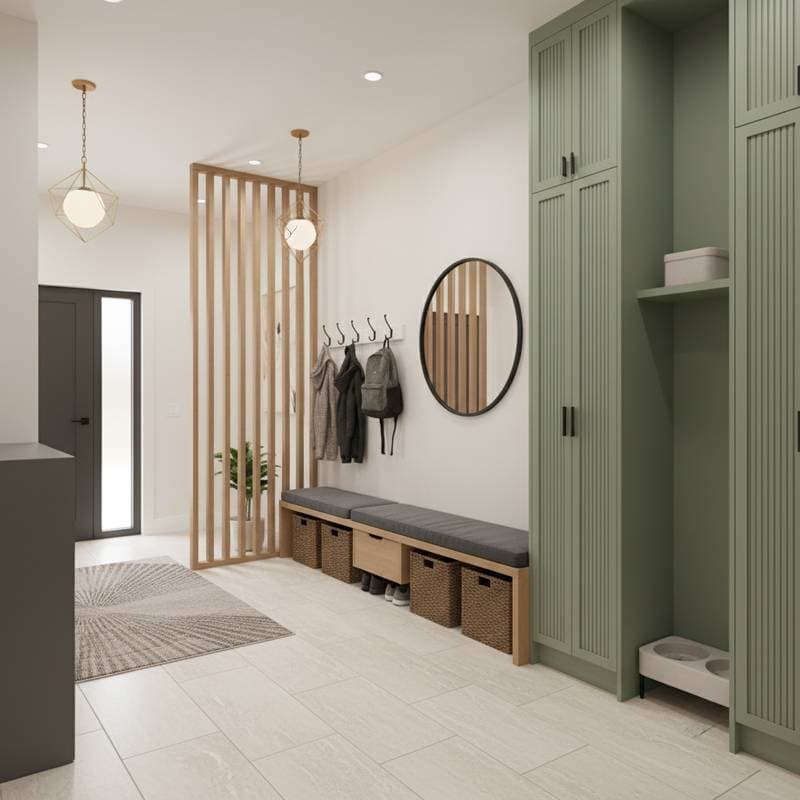
Employ ready-made cabinets for primary storage, supplemented by a tailored bench or edging for an integrated appearance. Such a method yields savings of 30 to 40 percent relative to fully custom installations.
3. Select Resilient Yet Economical Flooring
Luxury vinyl planks replicate wood grains effectively at $4 to $6 per square foot including installation, whereas tiles range from $8 to $12 per square foot.
4. Restore Rather Than Renew
For sturdy wooden cabinets in place, sanding and repainting revives the aesthetic at minimal cost compared to full replacement.
5. Handle Minor Tasks Independently
Homeowners can manage painting, hook mounting, or shelf assembly. Professionals should address electrical and plumbing elements, though these efforts offset labor expenses by hundreds of dollars.
Home renovation specialist Maria Ellis from Homewise Remodeling observes, "Most clients don’t realize how much finishing work they can handle themselves. Even sealing grout or adding trim can make a big visual difference."
Planning Finances and Assessing Value Recovery
An effectively planned mudroom recovers 60 to 70 percent of its investment upon resale. Prospective buyers appreciate structured entry areas that maintain cleanliness throughout the property. Success hinges on harmonizing aesthetics with utility.
Sample Financial Allocation
For a moderate $12,000 renovation, distribution might include:
- Storage units and seating: $4,000
- Surface coverings: $2,000
- Coatings and accents: $800
- Illumination: $700
- Professional services: $4,500
Incorporating features like a pet rinsing station or underfloor heating adds $2,000 to $3,000.
Approaches to Maximize Returns
- Opt for subdued palettes and enduring surfaces.
- Prioritize robust flooring and moisture-resistant coatings.
- Limit personalization to scenarios involving extended occupancy.
Implementing Your Mudroom Upgrade
When an entry space functions more as a clutter repository than a refined element, consider renovation. Begin by evaluating usage patterns to inform decisions.
Solicit bids from at least three specialists, requesting detailed breakdowns to compare expense variations. One provider might emphasize labor yet provide material reductions, achieving equilibrium.
Examine material samples in your home environment. Ambient light and routine exposure alter perceptions of surfaces and hues. Recognize that flawless execution remains a choice, not a necessity.
As Erica Vaughn advises, "The best mudrooms aren’t the ones you never use. They’re the ones that make daily life just a little easier."
Whether envisioning integrated compartments or a straightforward seat with containment options, approach the project emphasizing both appeal and efficiency. Each prudent selection enhances readiness for incoming items, fostering a serene domestic atmosphere conducive to relaxation.