

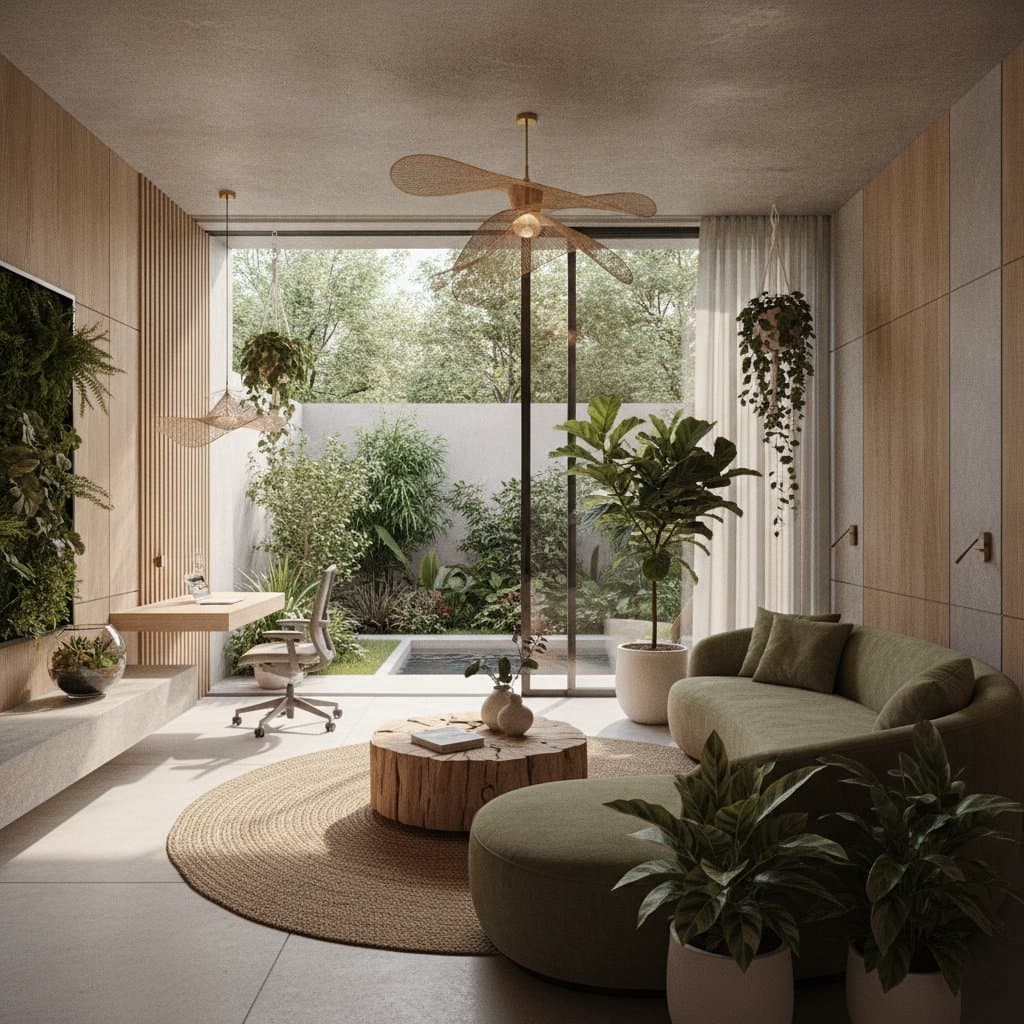
How Biophilic Design Creates Calmer Homes
Biophilic design connects interior spaces with natural elements to reduce stress and improve focus. This approach draws from human affinity for nature and applies it through materials, plants, light, and patterns. Homeowners can adopt these principles to shape rooms that feel balanced and restorative.
Core Principles of Biophilic Design
Effective biophilic design rests on three main categories. The first involves direct contact with nature through plants, water, and sunlight. The second uses natural materials and textures such as wood, stone, and wool. The third incorporates patterns and spatial layouts that mimic outdoor environments.
These categories work together. A living room with a large window, a wooden coffee table, and a living wall satisfies all three at once. The result is a space that feels grounded rather than artificial.
Practical Steps for Living Rooms
- Position seating near windows to capture changing daylight throughout the day.
- Select a solid wood floor or area rug made from natural fibers instead of synthetic carpet.
- Introduce a tall indoor tree or a cluster of potted ferns to soften corners.
- Add a small tabletop fountain to provide gentle sound that masks household noise.
These changes require modest investment yet deliver noticeable shifts in room atmosphere.
Home Office Applications
Natural light remains the most important factor for concentration. Place the desk perpendicular to a window so glare stays off the screen while daylight still reaches the workspace. Supplement with a full-spectrum desk lamp during darker months.
Include at least one living plant within arm's reach. Species such as snake plant or pothos tolerate low light and require little maintenance. A corkboard or bamboo shelf adds warmth without visual clutter.
Bedroom Considerations
Keep palettes muted and materials breathable. Linen or cotton bedding paired with a solid timber headboard supports restful sleep. Avoid placing screens opposite the bed. Instead, mount a simple framed print of a landscape or botanical illustration.
A single large plant such as a peace lily can improve air quality overnight. Ensure the plant receives adequate daylight during waking hours so it remains healthy.
Materials and Finishes to Prioritize
Replace plastic or laminate surfaces with wood, stone, or clay where possible. Unfinished oak, limestone, and terracotta age gracefully and develop character over time. Wool rugs and linen curtains regulate humidity and absorb sound.
Limit the number of finishes to three or four per room. Too many competing textures create visual noise that works against the goal of calm.
Maintenance and Seasonal Adjustments
Rotate plants every few months so each receives even light exposure. Dust leaves regularly to maintain photosynthesis. Swap lightweight summer curtains for heavier wool drapes in winter to retain warmth while preserving the natural aesthetic.
Review the space once a year. Remove any element that no longer feels fresh or functional. This ongoing refinement keeps the design aligned with changing needs.
Long-Term Benefits
Residents report lower perceived stress and improved sleep quality after consistent application of these principles. The design also ages well because natural materials develop patina rather than showing wear. Over time the home becomes a personal sanctuary that supports both daily routines and long-term well-being.