Kitchen Remodels That Deliver Real Value in 2025
Kitchen design offers a wide array of options in 2025, ranging from sleek minimalist setups to warm rustic configurations. Homeowners face choices in styles and materials that reflect personal tastes. However, timeless principles guide decisions that enhance both everyday use and financial worth. These remodel strategies focus on functionality and durability, providing benefits whether selling the home soon or enjoying it long-term.
Smart choices in remodeling create spaces that serve daily needs while increasing property appeal. Professional advice emphasizes practical upgrades over fleeting aesthetics. The sections below detail key areas to address, drawing on industry standards and homeowner experiences to maximize impact.
1. Optimize Layout for Efficient Workflow
Problem: Inefficient layouts lead to cramped movements and wasted space during meal preparation.
Typical Scenario: A cook navigates around a central island that blocks access to the sink and stove, slowing routine tasks.
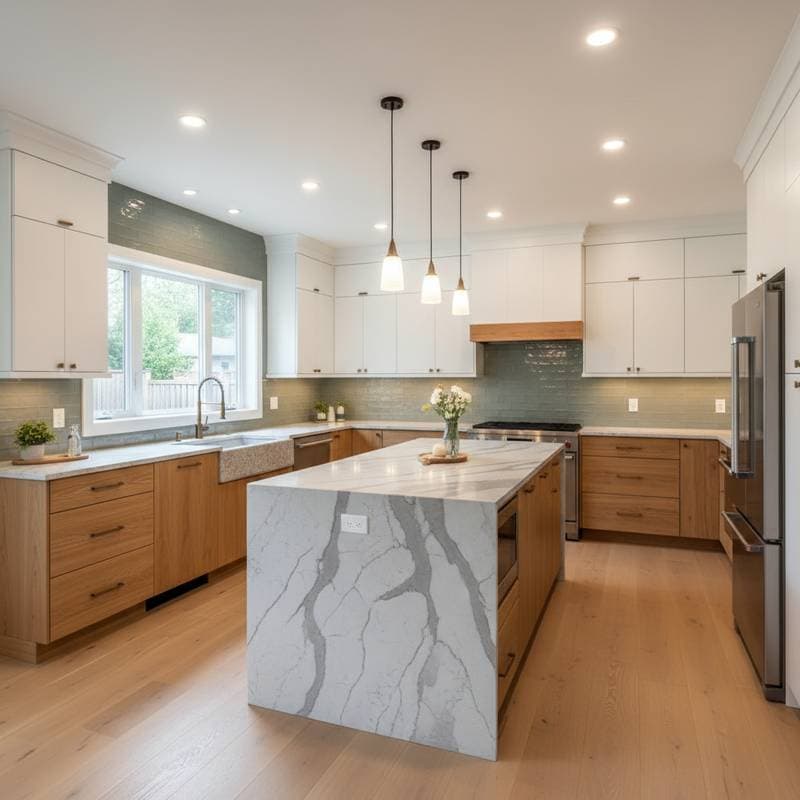
Solution: Adopt the work triangle principle, positioning the sink, stove, and refrigerator within a 4-to-9-foot radius. In open-plan kitchens, integrate islands with seating that does not impede traffic flow. For smaller areas, consider L-shaped or galley designs that promote smooth circulation.
Technical Detail: Ensure at least 42 inches of clearance around islands and 48 inches in high-traffic zones. Use zoning to separate prep, cooking, and cleanup areas with distinct flooring or cabinet heights.
Benefit: An optimized layout streamlines activities, reduces frustration, and appeals to buyers seeking intuitive spaces that support modern lifestyles.
2. Invest in Durable Surfaces, Not Fads
Problem: Materials influenced by trends lose appeal rapidly and succumb to kitchen demands like spills and heat.
Typical Scenario: A trendy glossy concrete countertop impresses initially but develops stubborn stains from everyday cooking.
Solution: Select resilient options such as quartz or solid-surface composites that resist scratches and etching. For natural stone, choose granite or marble with professional sealing. Opt for porcelain tiles or luxury vinyl plank flooring that withstand moisture without warping.
Technical Detail: Prioritize countertops with heat resistance up to 150 degrees Fahrenheit and annual sealing for stone. Flooring should maintain a slip resistance coefficient exceeding 0.42 in wet conditions, per safety standards.
Benefit: These surfaces lower repair expenses over time and attract purchasers who value enduring quality and ease of care.
3. Enhance Lighting for Task and Ambiance
Problem: Poor illumination creates shadows in work zones and fails to highlight design features.
Typical Scenario: Overhead fixtures cast uneven light, making it difficult to chop vegetables or read recipes accurately.
Solution: Layer lighting with recessed cans for general coverage, under-cabinet strips for precision tasks, and pendants for focal points like islands. Select warm LED bulbs at 2700K to 3000K for inviting atmospheres without glare.
Technical Detail: Install dimmable systems with at least 400 lumens per square foot in task areas. Use motion sensors in pantry zones to conserve energy while ensuring accessibility.
Benefit: Effective lighting improves safety, usability, and visual appeal, contributing to a welcoming environment that elevates the home's overall marketability.
4. Keep Appliances Practical and Efficient
Problem: Luxury appliances often exceed typical usage patterns, leading to underutilization and higher costs.
Typical Scenario: A high-end double oven sits idle while the family relies on microwave meals most evenings.
Solution: Choose mid-range models with energy-efficient ratings that align with cooking frequency. Standard sizes, such as 30-inch ranges, fit compact kitchens without overwhelming the space. Integrate induction cooktops for precise control and quick cleanup.
Technical Detail: Seek Energy Star-certified units that reduce consumption by up to 20 percent. Maintain 15 inches of clearance on sides of refrigerators to allow proper ventilation and access.
Benefit: Practical selections deliver reliable performance, cut utility bills, and signal thoughtful design to potential buyers focused on sustainability.
5. Maximize Storage with Smart Solutions
Problem: Inadequate organization results in cluttered counters and inaccessible items.
Typical Scenario: Pots and pans pile up in lower cabinets, forcing frequent bending and rummaging.
Solution: Incorporate pull-out shelves, lazy Susans, and vertical dividers in cabinets. Add open shelving for frequently used dishes and appliance garages to hide small electrics. Tailor pantry setups with adjustable racks for bulk storage.
Technical Detail: Equip drawers with soft-close mechanisms supporting 50 pounds. Design upper cabinets at 18 inches deep to avoid protrusion into walkway space.
Benefit: Intelligent storage fosters order, simplifies routines, and showcases a well-planned kitchen that impresses during home tours.
6. Choose Cabinetry That Balances Cost and Quality
Problem: Budget cabinets degrade quickly, while bespoke options strain finances unnecessarily.
Typical Scenario: Stock cabinets with thin veneers chip at edges within a year of heavy use.
Solution: Select semi-custom lines using plywood carcasses and solid wood fronts. Customize with soft-close hinges and dovetail joints for drawer durability. Finish with water-based paints in neutral tones for versatility.
Technical Detail: Require full-extension glides rated for 75 pounds and adjustable shelving at 6-inch intervals. Apply moisture-barrier coatings near sinks to prevent swelling.
Benefit: Balanced cabinetry endures daily rigors, conveys craftsmanship, and boosts buyer trust in the home's construction quality.
7. Integrate Subtle Smart Technology
Problem: Overly complex tech becomes obsolete or unreliable in high-use environments.
Typical Scenario: Voice-activated faucets malfunction after exposure to steam and splashes.
Solution: Add touchless features like sensor faucets and app-controlled lighting. Install under-sink water filtration systems and smart thermostats for ovens. Keep integrations simple to avoid maintenance hassles.
Technical Detail: Choose Wi-Fi-enabled devices compatible with major platforms, ensuring IP65 water resistance ratings. Position outlets at 18 inches above counters for easy access.
Benefit: Thoughtful tech enhances convenience, appeals to tech-savvy buyers, and adds modern efficiency without dominating the design.
8. Refresh, Do Not Overhaul, When Possible
Problem: Complete renovations inflate budgets beyond proportional value gains.
Typical Scenario: Replacing all elements disrupts life unnecessarily when targeted updates suffice for visual refresh.
Solution: Refinish cabinets with new doors and hardware, or paint walls in light-reflecting sheens. Update backsplashes with peel-and-stick tiles and swap fixtures for contemporary styles. Assess structural needs first to prioritize essentials.
Technical Detail: Use low-VOC paints for quick drying and minimal odor. Ensure new hardware aligns with existing hole patterns to simplify installation.
Benefit: Strategic refreshes yield high returns with less disruption, preserving budget for high-impact changes that elevate appeal.
Applying These Principles Daily
A successful kitchen remodel integrates usability and enduring style. Consider personal habits in cooking, entertaining, and maintenance to guide selections. Focus on elements that promote efficiency and adaptability. Such an approach ensures the space serves immediate needs while securing future value.