Reface or Replace? 2025 Kitchen Costs Breakdown
Every kitchen reaches a stage where signs of wear become evident. Cabinets lose their shine, hardware dulls, and doors may not align properly. Homeowners often face the decision to refresh the existing setup through refacing or undertake a complete replacement. This choice involves balancing financial constraints with desired outcomes, such as enhanced functionality and aesthetics.
Refacing offers a cost-effective update, while replacement provides comprehensive customization. The following analysis examines costs, timelines, and practical considerations for 2025 projects. Homeowners can use this information to evaluate options based on their specific needs and budget.
What Refacing Entails
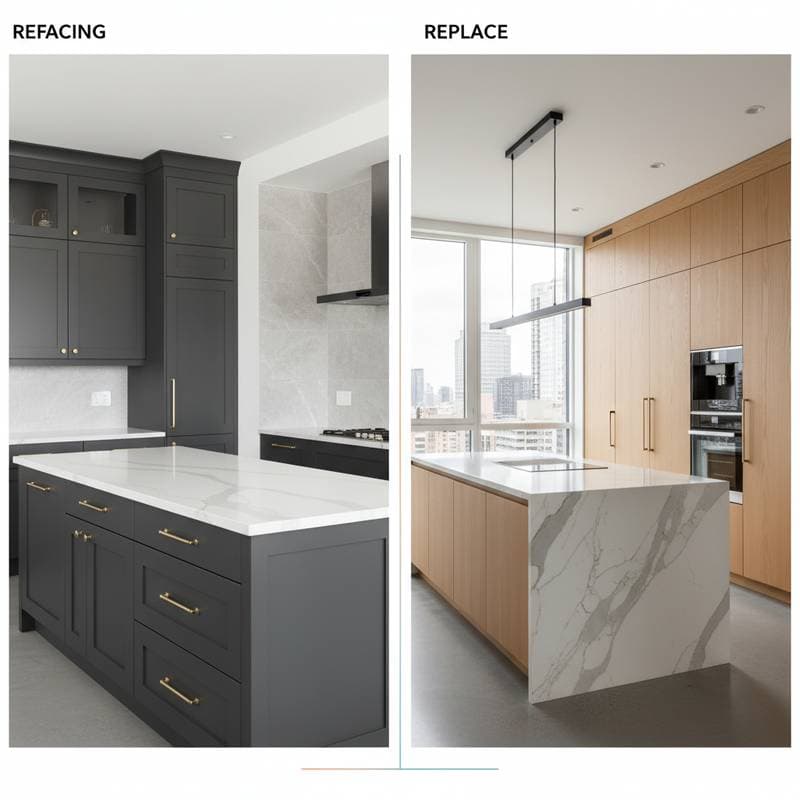
Refacing preserves the existing cabinet framework and updates only the visible surfaces. Professionals replace doors, drawer fronts, and veneers with new materials, such as laminate, wood, or thermofoil. This approach minimizes structural changes and avoids extensive demolition.
Projects typically conclude in three to five days, reducing household disruption. Cooking and daily routines continue with minimal interruption, as workers focus on surface-level modifications. However, refacing suits kitchens where cabinet boxes remain sturdy and free from damage like warping or moisture issues.
Inspect the interior components first. Solid foundations ensure the new exteriors perform well over time. If foundational problems exist, refacing may not provide lasting results.
Costs Associated with Refacing in 2025
Refacing expenses vary by kitchen size, material selection, and additional features. For a standard 200-square-foot kitchen, expect costs between $6,000 and $12,000. Laminate options start at the lower end, around $6,000, while solid wood or custom painted finishes reach $12,000 or more.
Basic packages include new doors, veneers, and hardware like soft-close hinges. Upgrades such as pull-out shelves or integrated organizers add $1,000 to $3,000. Countertop replacements, if desired, contribute another $2,000 to $5,000, depending on material choices like quartz or granite.
These figures reflect 2025 market trends, including rising material costs due to supply chain factors. Professional installation accounts for 40 to 60 percent of the total, ensuring precise alignment and durability. Homeowners save by avoiding waste disposal fees associated with full tear-outs.
When Replacement Proves Necessary
Replacement involves removing all cabinets and installing new ones, ideal for outdated layouts or damaged structures. This method allows reconfiguration, such as relocating appliances or adding an island. It addresses issues like inadequate storage or inefficient workflows that refacing cannot resolve.
The process requires planning for demolition, electrical updates, and plumbing adjustments. Timelines extend to two to six weeks, depending on project scope. During this period, alternative meal preparation areas become essential, such as using a garage setup or relying on dining out.
Custom designs elevate functionality with features like built-in spice racks or soft-close mechanisms. Stock cabinets from retailers offer quicker installation at lower costs, while bespoke units fit unique spaces precisely.
Cost Breakdown for Replacement in 2025
Full kitchen replacements range from $15,000 to $50,000 for a mid-sized space. Budget-friendly stock cabinets cost $15,000 to $25,000, including basic installation. Semi-custom options fall between $25,000 and $35,000, with premium custom builds exceeding $50,000.
Additional expenses include labor (30 to 50 percent of total), new flooring ($3,000 to $7,000), and appliances if upgraded ($5,000 to $15,000). Disposal of old materials adds $500 to $1,500. Factor in potential permits for structural changes, costing $200 to $1,000.
Inflation and labor shortages in 2025 may increase these estimates by five to ten percent. Prioritize high-traffic areas to optimize spending and achieve a cohesive look.
Key Comparisons Between Refacing and Replacement
Evaluating options requires considering multiple factors. The table below summarizes differences in cost, time, and other aspects.
Cost
Refacing saves 40 to 60 percent compared to replacement. For example, a $20,000 replacement project might cost $8,000 to $12,000 via refacing. Savings stem from reusing existing structures, though replacement justifies higher investment through layout flexibility.
Timeline
Refacing completes in days, allowing quick return to normalcy. Replacement demands weeks, with potential delays from supply issues. Plan for temporary kitchen solutions, like portable appliances, to manage the extended downtime.
Environmental Considerations
Refacing reduces waste by 70 percent, as fewer materials enter landfills. Select eco-friendly veneers from sustainable sources to enhance benefits. Replacement generates more debris but allows incorporation of recycled or low-VOC materials for greener outcomes.
Durability
Quality refacing lasts 10 to 15 years with proper maintenance. Replacement cabinets endure 20 to 30 years, especially with solid construction. Regular cleaning and avoiding overload prevent premature wear in either case.
Design Options
Refacing limits changes to exteriors and hardware, maintaining the original footprint. Replacement enables full redesign, including expanded storage or modern layouts. Consult professionals to visualize outcomes using design software.
Overlooked Expenses in Kitchen Projects
Beyond core costs, ancillary items accumulate. Hardware mismatches during refacing may require $200 to $500 in adjustments. Lighting upgrades, such as LED strips under cabinets, add $300 to $800 and improve usability.
Labor ensures professional results; DIY attempts risk misalignment and voids warranties. Appliance relocation during replacement incurs $1,000 to $3,000 in plumbing or electrical work. Budget ten percent extra for unforeseen issues like subfloor repairs.
Strategies to Optimize Your Budget
Identify priorities to allocate funds effectively. Invest in visible elements like cabinet fronts and countertops, which impact daily use most. Retain functional hidden components, such as existing drawer slides, if they perform well.
Combine approaches for balance: reface base cabinets and replace uppers for varied aesthetics. Phase the project over time, starting with surfaces and adding appliances later. This method distributes costs and minimizes simultaneous disruption.
Source materials from local suppliers to reduce shipping fees. Obtain multiple quotes from certified contractors to compare value. Energy-efficient upgrades, like low-flow faucets, qualify for rebates and lower long-term utility bills.
Realizing Benefits in Daily Use
After completion, the updated kitchen enhances routine tasks. Smooth doors and organized storage streamline meal preparation. A refaced space revives appeal without overwhelming change, while a replaced one adapts fully to lifestyle needs.
These improvements foster enjoyment in cooking and gathering. Select durable, easy-to-clean finishes to maintain the fresh appearance. Regular upkeep ensures the investment delivers value for years ahead.