
Unveiling Hidden Kitchen Remodel Costs: Essential 2026 Budget Guide
Recent data from leading home improvement sources indicates that kitchen renovations rank among the most popular projects for homeowners. These spaces serve as the central hub of daily life, blending aesthetics with utility in a significant financial commitment. However, beneath the appeal of sleek designs and premium materials lie unexpected expenses that can escalate costs considerably.
This guide examines key areas where budgets often overrun and offers strategies to navigate them effectively. Drawing from extensive experience in renovation projects, including personal efforts on older homes, the following sections detail common challenges and solutions. Readers gain clarity on allocating funds wisely to realize a kitchen that enhances both lifestyle and property value.
1. Structural Surprises
Older homes frequently reveal foundational issues during kitchen updates, such as uneven floors or load-bearing walls that require reinforcement. Demolition might uncover rot in subfloors or the need for joist repairs, adding thousands to the total expense. Contractors often recommend a pre-remodel inspection to identify these problems early.
- Location: Seattle, Washington
- Designer Credit: Pacific Rim Interiors
- Materials: Reclaimed oak flooring, reinforced steel beams
- Design Strategy: The team integrated open shelving to distract from structural seams while ensuring stability for an island installation.
- Functionality: Adjustments improved traffic flow and supported heavy appliances without compromising safety.
- Visual Impact: Subtle wood tones and clean lines transform potential flaws into a cohesive, modern foundation.
Budget an additional 10 to 15 percent for unforeseen structural work. Professional assessments prevent larger disruptions later in the process.
2. Electrical and Plumbing Rework
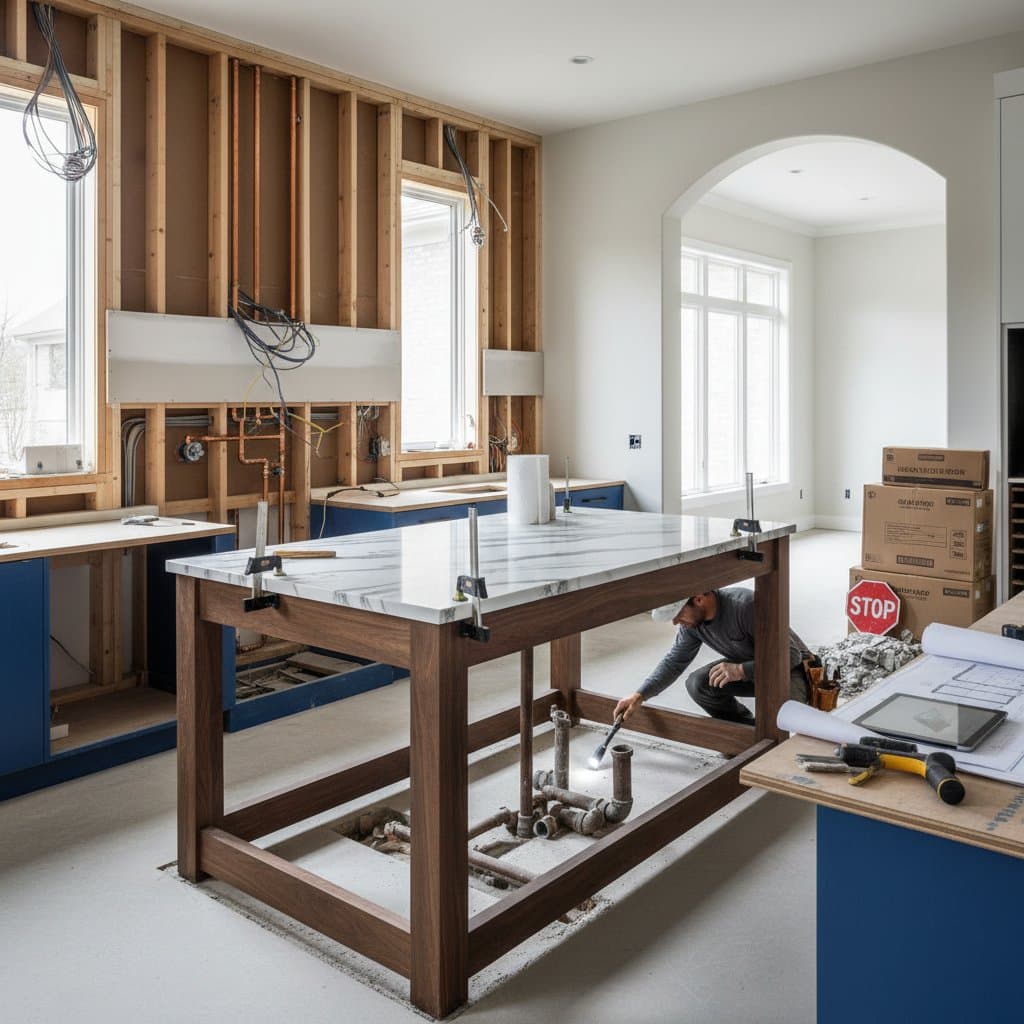
Shifting a kitchen layout demands adjustments to wiring and piping, which increase labor demands significantly. Electricians install dedicated circuits for high-power appliances like induction ranges or integrated lighting systems. Plumbers reposition drains and supply lines to fit new fixture arrangements, ensuring compliance with local codes.
- Location: Minneapolis, Minnesota
- Designer Credit: Linnea Grant Design Studio
- Materials: Brushed nickel fixtures, glossy white Moroccan zellige tile
- Design Strategy: The designer centered the sink under a broad window, using reflective tiles to amplify daylight.
- Functionality: Relocated plumbing enhanced the prep zone ergonomics and incorporated water-saving features.
- Visual Impact: Bright textures and subtle luxury create an enduring, serene environment for everyday use.
Verify that plans encompass necessary permits for electrical and plumbing modifications. These elements safeguard operations and boost long-term home appeal, even if absent from visual inspirations.
3. Custom Cabinetry Choices
Tailored cabinets offer precise fit and storage solutions, yet their construction involves premium woodworking and hardware. Complex designs with soft-close mechanisms or integrated organizers elevate prices beyond stock options. Material selections, from solid hardwoods to painted finishes, further influence the investment.
- Location: Austin, Texas
- Designer Credit: Hill Country Kitchens
- Materials: Walnut veneer panels, matte black hardware
- Design Strategy: Custom uppers with glass fronts maximized vertical space while concealing bulkier lower units.
- Functionality: Pull-out drawers and adjustable shelving optimized accessibility for diverse family needs.
- Visual Impact: Warm grains and minimalist accents deliver a sophisticated, personalized warmth.
Opt for semi-custom lines to balance uniqueness with affordability. Measure spaces meticulously to avoid refit charges that compound expenses.
4. Countertop Complexity
Selections like natural stone provide enduring elegance through unique patterns, but custom cuts for edges or curves amplify fabrication demands. Waste from non-standard dimensions contributes to higher material fees. Blending surfaces, such as stone islands with resilient composites elsewhere, manages durability alongside style.
- Location: Charlotte, North Carolina
- Designer Credit: Studio Viera
- Materials: Honed Calacatta marble, soft gray quartz composite
- Design Strategy: Marble accents the island for visual emphasis, paired with quartz on surrounding surfaces for practicality.
- Functionality: This mix withstands intensive use while maintaining an upscale appearance.
- Visual Impact: Veins and finishes interact with illumination, fostering dynamic depth in the space.
Design layouts that favor fewer joints and conventional slab dimensions to curb waste. Consult fabricators early for accurate quoting on intricate features.
5. Appliance Integration
Upgrading to energy-efficient models enhances performance, but integration requires precise sizing and venting adjustments. High-end units with smart features demand compatible infrastructure, such as reinforced counters or exhaust systems. Delivery and installation fees add layers to the overall outlay.
- Location: Denver, Colorado
- Designer Credit: Rocky Mountain Designs
- Materials: Stainless steel range hood, panel-ready refrigerator
- Design Strategy: Appliances blended seamlessly with cabinetry for a built-in aesthetic.
- Functionality: Efficient models reduced utility bills and streamlined workflows.
- Visual Impact: Sleek integration creates a unified, professional-grade environment.
Research utility rebates for qualifying appliances to offset costs. Ensure measurements align with manufacturer specifications to prevent costly returns.
6. Lighting Layers
Effective illumination involves multiple sources to delineate areas and accentuate features, from task lights over sinks to ambient pendants. Installation entails wiring for dimmers and smart controls, which extend beyond basic fixtures. Layering prevents shadows and supports varied activities.
- Location: Chicago, Illinois
- Designer Credit: Ellis & Rowe Design Group
- Materials: Brass pendant lights, recessed LED strips
- Design Strategy: Zones received tailored lighting to spotlight counters and cabinet details.
- Functionality: Adjustable settings accommodated cooking, dining, or gatherings.
- Visual Impact: Graduated illumination infuses warmth and character, shifting the kitchen's mood.
Incorporate energy-efficient LEDs from the outset to minimize long-term expenses. Test placements during planning to achieve balanced coverage.
Navigating Remodel Realities
Successful kitchen transformations demand attention to logistics beyond core elements, including hauling away debris, coordinating trades, and maintaining a functional temporary setup. These factors influence timelines and comfort during the work. Proactive scheduling with contractors streamlines the experience.
Experience across numerous projects underscores the value of detailed budgeting and vendor communication. Whether pursuing luxurious details or practical upgrades, awareness of potential pitfalls preserves resources and vision. The result stands as a resilient, enjoyable space that endures for years.