Uncover Hidden Damage Before Your Remodel
A recent survey by the National Association of Home Builders reveals that 42 percent of homeowners encounter unexpected structural or moisture issues during the demolition phase of remodeling projects. These discoveries typically increase project budgets by 18 percent and extend timelines by multiple weeks. Individuals preparing for a remodel must prioritize identifying concealed damage to establish financial stability from the outset.
Pre-remodel inspections serve as essential financial protections rather than mere formalities. Early detection of hidden problems averts significant overruns, minimizes risks, and enables precise cost projections. The most effective renovations commence with a comprehensive grasp of conditions behind walls, beneath floors, and overhead, rather than solely with aesthetic visions.
Understanding Pre-Remodel Inspections
Pre-remodel inspections differ from standard home evaluations by focusing specifically on renovation compatibility. Professionals such as inspectors and contractors examine how current structures will accommodate planned modifications, extending beyond basic safety and livability checks.
Structural engineer Marissa Cole, PE, of Cole Structural Group, emphasizes this distinction: “Renovation inspections require a different lens. We focus on load paths, prior modifications, and material fatigue that might not concern a general home inspector.”
Licensed general contractor David Nguyen, with two decades of residential expertise, adds, “The biggest mistake I see is skipping a pre-renovation inspection to save a few hundred dollars. That decision often adds thousands later when hidden problems appear mid-project.”
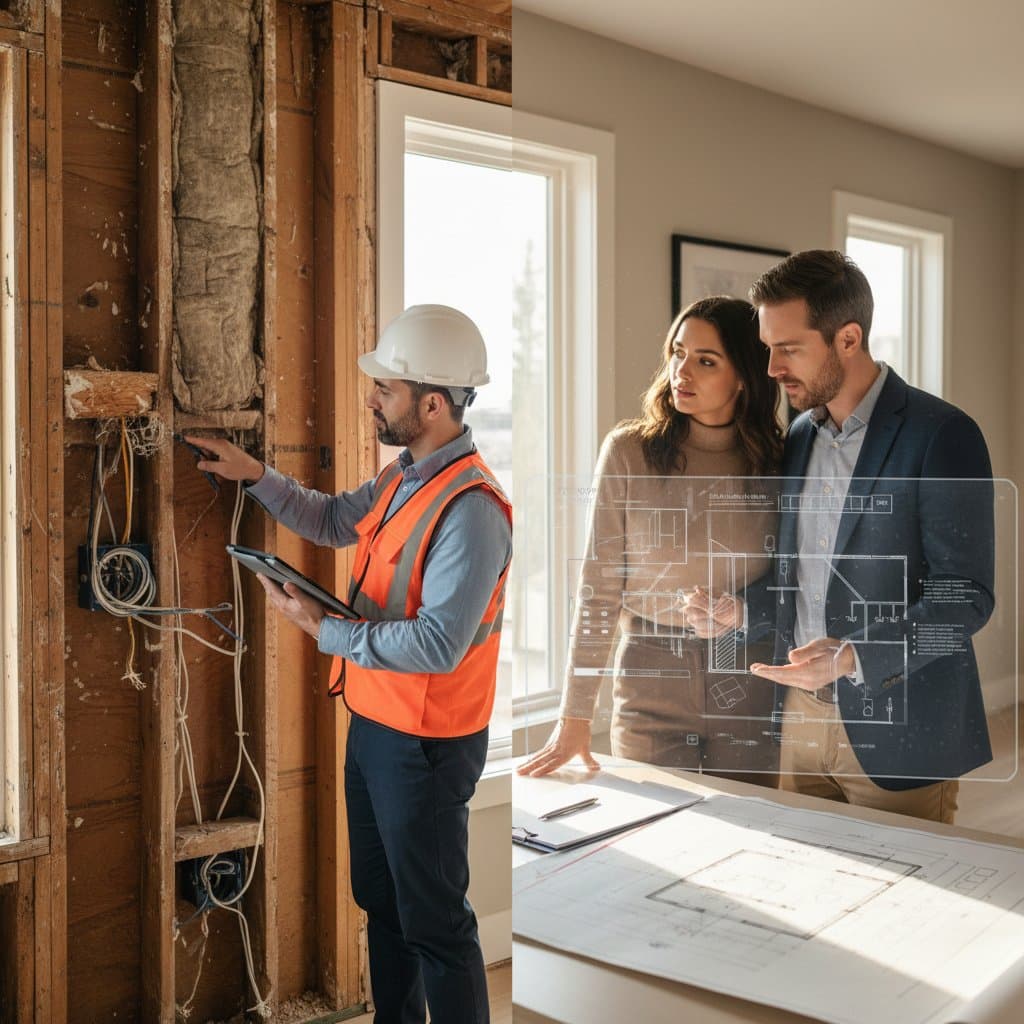
Such professional perspectives underscore the economic benefits of these assessments. Homeowners who commit to initial inspections obtain reliable cost projections, feasible schedules, and reduced unexpected challenges. To conduct one effectively, schedule a specialist familiar with local building codes and renovation dynamics. They will use tools like moisture meters, thermal imaging, and structural probes to reveal issues such as water intrusion, weakened framing, or outdated wiring.
Planning Your Budget with Inspection Insights
After gathering inspection results, convert them into concrete financial projections to eliminate ambiguous future expenses. Quantify each identified concern with detailed estimates, ensuring transparency throughout the process.
Sarah Patel, CPA and construction finance consultant at Blueprint Financial, advises dividing budgets into three distinct categories:
- Known Costs: Include direct fees for the inspection and firm estimates for verified repairs.
- Probable Costs: Account for potential issues that may arise based on the chosen design elements.
- Contingency Reserve: Allocate 10 to 15 percent of the overall project budget to handle unanticipated discoveries.
Patel notes, “Budgeting contingencies is not pessimism. It is financial realism. Homeowners who skip contingency planning are more likely to take on high-interest debt when hidden problems appear.”
Leverage the inspection report to sequence expenditures wisely. For instance, resolve foundation cracks prior to installing new flooring or cabinetry, as these foundational fixes support enduring stability. Delay non-essential cosmetic upgrades to later phases if necessary, preserving funds for urgent structural needs. Consult with a financial advisor specializing in construction to refine these categories further, incorporating variables like material price fluctuations or labor availability.
Developing a Financial Strategy from Inspection Results
Integrate all inspection revelations into your core project estimates from the beginning to prevent uncontrolled expansions during construction. This approach fosters disciplined spending and aligns ambitions with available resources.
In cases of significant structural or moisture concerns, apply value engineering techniques to balance expenses. Consider these options:
- Select mid-tier materials over luxury options to redirect savings toward essential repairs.
- Implement the remodel in sequential stages, prioritizing foundational upgrades before aesthetic enhancements.
- Obtain bids from several vetted contractors, providing each with identical inspection details to ensure comparable quotes.
These methods sustain project viability without compromising quality. View inspection outcomes as vital data for decision-making, which upholds both structural integrity and fiscal responsibility. Regularly review and update your strategy as new information emerges, such as supplier quotes or design adjustments, to maintain adaptability.
Securing Long-Term Property Value
Conducting a detailed pre-remodel inspection extends beyond averting immediate financial setbacks; it establishes a robust base for sustained home worth. Homeowners who systematically document and resolve hidden issues prior to work commencement reap multiple benefits:
- Enhanced Cost Management: Precise budgeting decreases dependence on emergency reserves.
- Improved Efficiency: Familiarity with site conditions accelerates contractor progress.
- Boosted Resale Appeal: Clear records of repairs and improvements build trust with potential buyers.
Retain inspection reports as ongoing references for maintenance schedules or future sales disclosures. This practice not only mitigates risks but also elevates the overall investment in your property. Ultimately, proactive discovery converts potential renovation pitfalls into opportunities for a more secure and valuable home.