
Uncover Hidden Mold Before It Derails Your Remodel
Remodeling a home sparks visions of updated spaces and enhanced functionality. However, concealed issues like mold can transform that excitement into frustration and expense. Mold thrives in moist, dark areas and often hides behind walls or under floors until a project exposes it. Early inspection reveals these problems, allowing remediation before new construction compounds the damage. Professionals recommend a thorough assessment at the planning stage to protect both the project timeline and occupant health.
Mold not only weakens building materials but also poses respiratory risks. In humid climates or older homes, unchecked moisture from leaks or poor ventilation accelerates growth. By prioritizing inspection, homeowners avoid costly surprises and ensure compliance with building codes that mandate moisture control. This proactive approach sets the foundation for a successful renovation.
Locate the Moisture Source First
Homeowners frequently address visible mold without tracing its origin, leading to repeated issues. Surface cleaning fails when underlying leaks persist, allowing spores to recolonize quickly. In a kitchen remodel, for instance, a subtle pipe drip might saturate cabinetry over time.
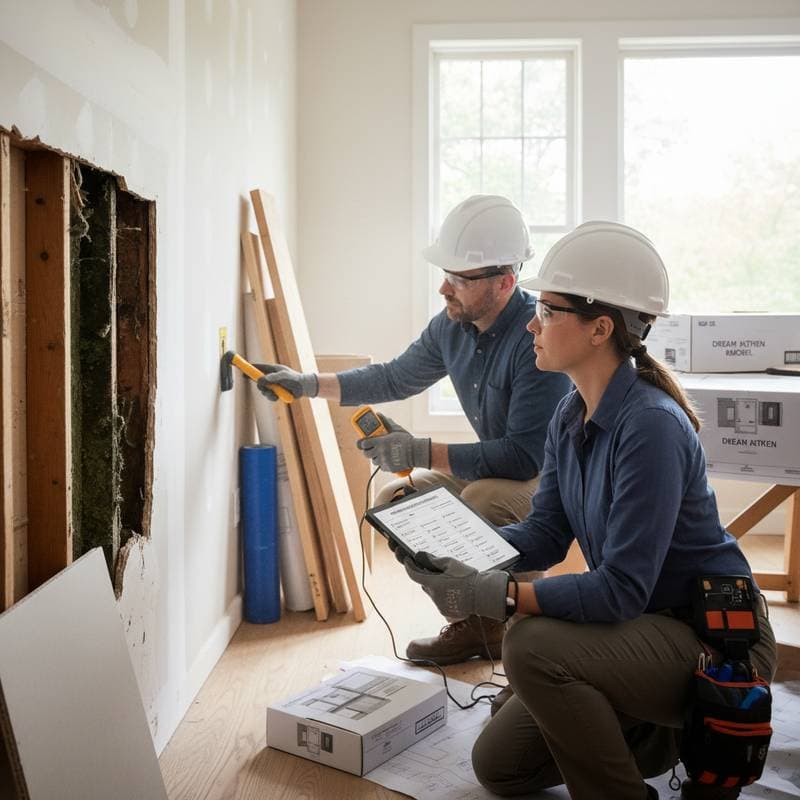
To resolve this, examine potential entry points systematically. Inspect plumbing fixtures, window seals, and roof penetrations for signs of water intrusion. Use a moisture meter to measure levels in walls and floors; readings above 15 percent indicate a need for further investigation.
Professionals employ tools like infrared thermography to visualize temperature differences caused by dampness. Once identified, repair the source immediately, such as resealing joints or redirecting drainage. Dry affected areas completely with dehumidifiers and fans before proceeding, ensuring no residual humidity remains.
This method eliminates the root cause, preventing mold from returning and preserving the integrity of new installations.
Prepare Materials to Resist Contamination
Construction materials stored improperly become breeding grounds for mold spores. Damp environments like garages expose lumber and drywall to airborne contaminants before use. During a basement renovation, untreated wood installed in humid conditions traps moisture within the structure.
Store all supplies in climate-controlled spaces with humidity below 50 percent. Inspect deliveries for existing damage and quarantine suspect items. Apply protective treatments upon arrival to create a barrier against future exposure.
Borate-based solutions penetrate wood fibers effectively, inhibiting fungal growth without altering appearance. For drywall, select varieties with built-in moisture resistance, such as those reinforced with fiberglass. Roll or spray applications dry within hours, ready for integration into the build.
These preparations extend material durability and minimize the risk of hidden infestations post-installation.
Incorporate Mold-Resistant Building Assemblies
Standard materials falter in moisture-prone areas, inviting mold behind finishes. In bathroom projects, ordinary drywall absorbs steam and wicks water when tiles crack. Basements with earth contact face similar vulnerabilities from groundwater seepage.
Opt for assemblies engineered for wet zones. Cement backer boards provide a solid, non-porous substrate that resists microbial attachment. Pair them with liquid-applied waterproofing membranes that form seamless barriers over seams and joints.
For insulation, closed-cell foam expands to fill cavities airtight, blocking vapor diffusion. Licensed applicators ensure even coverage, avoiding gaps that could harbor condensation. In floor applications, install dimple mat drainage boards to channel sub-slab moisture away.
Such choices fortify the remodel against environmental stresses, reducing long-term repair needs and enhancing indoor air quality.
Train the Entire Team on Prevention Protocols
Isolated knowledge gaps among workers undermine mold control efforts. A single oversight, like enclosing wet framing, can introduce problems later. In multi-trade projects, coordination ensures consistent practices across phases.
Conduct orientation sessions outlining moisture management rules. Cover topics from ventilation requirements to drying timelines, using visual aids for clarity. Assign roles, such as designating a moisture monitor for daily checks.
Implement checklists for each stage: verify dryness before drywall hanging, confirm seals on penetrations. Digital logs track compliance, with signatures required for wall closures. Address lapses promptly through on-site briefings.
A unified team approach maintains project momentum while upholding safety standards.
Conduct a Post-Remodel Validation Inspection
Completion does not guarantee mold absence; latent issues may emerge after finishes conceal cavities. Routine walkthroughs overlook hidden pockets where moisture lingers. Schedule a dedicated review to confirm effectiveness.
Engage an independent inspector to scan with specialized equipment. Test air quality for spore counts and measure humidity in enclosed spaces. Probe suspect areas, like behind cabinets, for elevated dampness.
Remediate any findings swiftly, adjusting ventilation or adding barriers as needed. Document results for records, providing peace of mind and supporting warranties.
This final step verifies the remodel's resilience.
Maintain a Mold-Free Remodel for Years
A well-executed renovation demands ongoing vigilance to sustain its benefits. Regular maintenance routines prevent moisture buildup and early detection catches minor issues. Integrate habits like prompt leak repairs and seasonal HVAC servicing.
Monitor high-risk zones with affordable sensors that alert to rising humidity. Clean gutters and ensure proper grading directs water from foundations. For added protection, apply annual treatments to exposed wood elements.
Homeowners who follow these practices enjoy healthier living spaces and preserved property value. The investment in prevention yields lasting comfort and security.