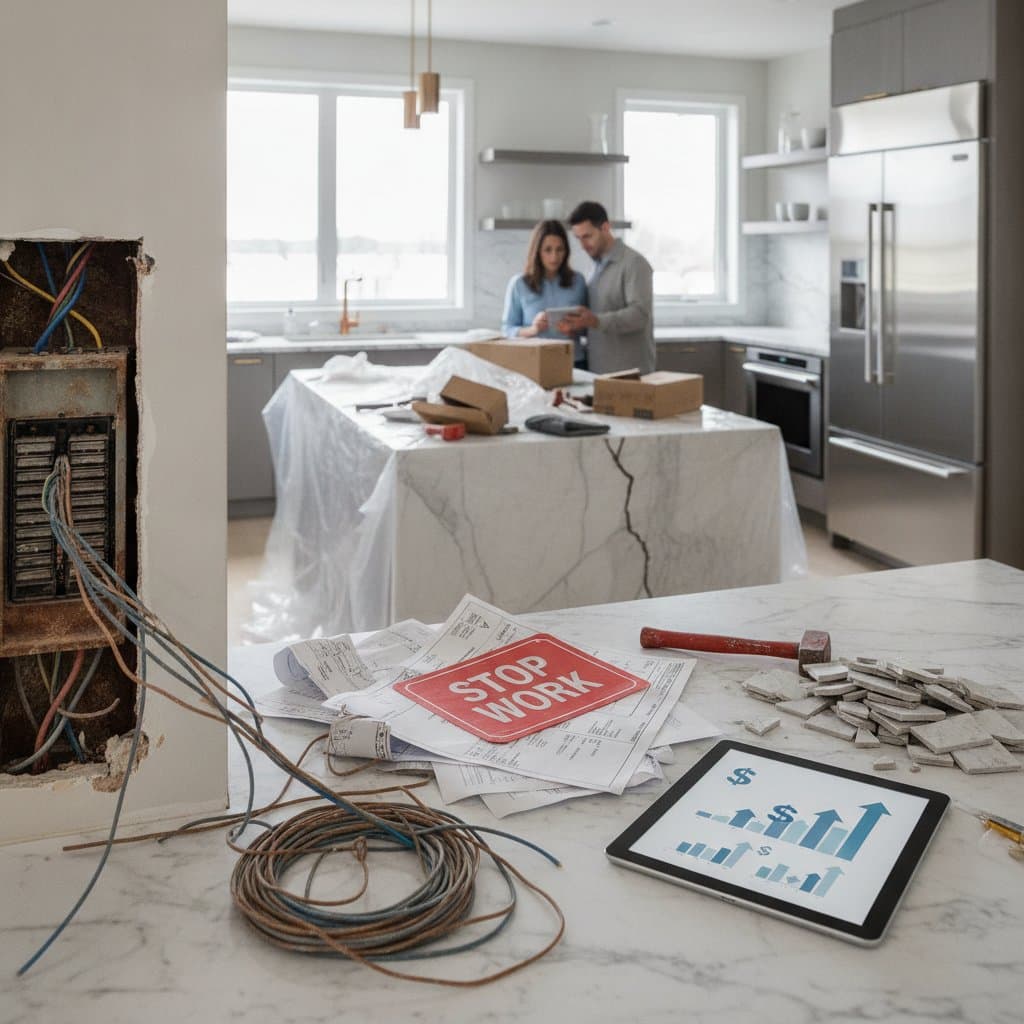


Unseen Expenses in Home Remodeling
Imagine embarking on a kitchen renovation with detailed plans, a comprehensive budget, and a reliable contractor. Midway through demolition, the team discovers extensive subfloor rot that demands immediate replacement. What began as a manageable project transforms into a substantial financial challenge.
A national survey by the Home Renovation Finance Index indicates that fewer than 40 percent of homeowners finish remodels within their initial budgets. The majority face overruns ranging from 10 to 35 percent. These excesses rarely stem from luxury additions like custom cabinetry; instead, they arise from concealed issues that emerge during construction.
The fundamental issue lies in budgeting for visible elements while overlooking potential discoveries beneath surfaces or within building systems. This article examines the primary hidden costs in remodeling projects and provides strategies to mitigate their impact on your finances.
1. Structural Surprises
Quick overview: Foundations, beams, and load-bearing elements often reveal damage only after walls or floors open up.
Older homes frequently conceal structural weaknesses from years of wear, water damage, or settling. Contractors must address these to ensure safety and code compliance, which can halt progress and inflate expenses.
Structural engineer Elena Vasquez of Stable Foundations Consulting notes, "What appears as a simple wall removal can uncover cracked joists or unstable supports. Remediation ensures long-term integrity but adds significant time and cost."
Typical cost impact:
- Subfloor or joist repairs: $3,000 to $12,000
- Foundation reinforcement: $5,000 to $20,000
- Load-bearing wall modifications: $4,000 to $15,000
Budget strategy: Conduct a pre-remodel inspection by a structural engineer. Include a 15 to 20 percent contingency in your budget specifically for unforeseen repairs.
2. Electrical and Plumbing Upgrades
Quick overview: Outdated wiring and pipes often fail inspection once work begins.
Walls in established homes may conceal electrical systems or plumbing that no longer comply with modern codes. Contractors identify these issues during initial assessments and must upgrade them before proceeding.
Licensed electrician Marcus Holt from Bright Current Solutions explains, "People assume they can just patch old wiring, but inspectors will not sign off on unsafe circuits. Updating an entire kitchen or bathroom can add weeks and thousands to a project."
Typical cost impact:
- Electrical rewiring: $2,000 to $8,000
- Copper or PEX plumbing replacement: $3,000 to $10,000
- Panel upgrade: $1,500 to $4,000
Budget strategy: Require contractors to include assessments of existing systems in their quotes. Allocate funds for potential upgrades based on your home's age and location.
3. Permit Fees and Inspections
Quick overview: Local regulations mandate permits for most remodels, with fees and inspections adding layers of expense.
Every jurisdiction enforces building codes, and obtaining permits involves application costs, plan reviews, and multiple inspections. Delays in approvals or failed inspections can extend timelines and increase labor charges.
Building official Raj Singh of City Permit Services states, "Permits protect communities, but homeowners often underestimate the full process. Fees vary by project scope, and revisions during inspections can double initial estimates."
Typical cost impact:
- Basic permit applications: $500 to $2,000
- Specialized inspections (electrical, plumbing): $200 to $800 each
- Code compliance upgrades: $1,000 to $5,000
Budget strategy: Research local requirements early through your city's building department. Factor in permit costs from the outset and schedule inspections proactively to avoid rework.
4. Material Price Fluctuations
Quick overview: Building material prices shift frequently, often between the time you sign a contract and the day items are ordered.
Supply chain disruptions, inflation, and demand surges cause rapid price changes in essentials like lumber, tile, and fixtures. Contracts typically include provisions for adjustments if costs exceed baselines.
The National Building Materials Index reports that average prices for common finishes rose over 10 percent in the previous year. A planned quartz countertop installation might incur hundreds in additional charges before work commences.
Typical cost impact:
- Lumber and framing materials: up 5 to 20 percent
- Flooring and tile: up 8 to 15 percent
- Hardware and fixtures: up 5 to 10 percent
Budget strategy: Secure material prices by placing deposits upon selection finalization. Maintain a reserve of 10 percent for substitutions due to availability issues.
5. Debris Removal and Cleanup
Quick overview: Demolition generates substantial waste that requires professional hauling and disposal.
Remodeling produces debris from demolished structures, old appliances, and packaging materials. Homeowners seldom account for the logistics of removal, which includes dumpster rentals and landfill fees.
Waste management specialist Tara Kim of EcoHaul Solutions observes, "A full kitchen remodel can fill multiple dumpsters. Recycling options exist, but sorting and transport add to the bill beyond basic estimates."
**Typical cost impact:**n- Dumpster rental and pickup: $400 to $1,200 per load
- Hazardous material disposal (asbestos, lead): $1,000 to $5,000
- Final site cleanup: $500 to $2,000
Budget strategy: Obtain quotes for waste management services during the bidding phase. Opt for contractors who handle debris as part of their service to streamline costs.
6. Temporary Living and Storage Costs
Quick overview: When your kitchen is torn apart or your floors are refinished, you still need a place to live and eat.
Displacement disrupts daily routines, leading to expenses for alternative housing, meals, and furniture storage. These indirect costs accumulate quickly during extended projects.
Typical cost impact:
- Storage unit rental: $150 to $400 per month
- Short-term accommodation: $1,000 to $3,000 per month
- Increased food costs: $300 to $600 per month
Budget strategy: Phase the remodel to keep portions of the home functional. Establish a temporary kitchen setup with basic appliances to minimize external spending.
7. Mid-Project Design Changes
Quick overview: Desires evolve during construction, prompting costly alterations to plans.
Initial designs may shift as homeowners view progress or discover new inspirations. Each change requires adjustments to materials, labor, and timelines, compounding expenses.
Project manager Liam Chen of Renovate Pro advises, "Design tweaks are inevitable, but documenting them prevents disputes. Each modification should include a cost-benefit analysis to maintain budget discipline."
Typical cost impact:
- Layout revisions: $1,000 to $5,000
- Finish substitutions: $500 to $3,000 per area
- Additional labor for changes: $2,000 to $10,000
Budget strategy: Finalize all selections before construction starts. Implement a change order process that details costs and approvals in writing.
8. Contractor Scheduling and Delays
Quick overview: Time is money, and delays cost both.
Factors like weather, material shortages, or subcontractor availability extend timelines. Prolonged projects elevate labor, rental, and living expenses.
Construction planner Hannah Liu of BuildSmart Advisors explains, "Every extra week on-site adds overhead. Even small delays can snowball if trades overlap poorly or materials arrive late."
Typical cost impact:
- Labor extensions: $500 to $2,000 per week
- Equipment rentals: $100 to $300 per day
- Added accommodation or food expenses: $200 to $500 per week
Budget strategy: Demand a detailed schedule with milestones. Incorporate buffer time and require regular progress reports to address issues promptly.
9. Unexpected Design Finishes
Quick overview: Small upgrades multiply fast when applied across square footage.
A premium backsplash or custom faucet appears minor in isolation, yet widespread implementation escalates material and installation costs. Perspective fades amid appealing samples.
Interior designer Nora Patel, who specializes in budget-conscious remodels, says, "Homeowners often forget that choosing premium finishes everywhere can double the materials cost. Mixing high and low finishes smartly keeps budgets balanced."
Typical cost impact:
- Premium countertops or cabinetry: $2,000 to $10,000 extra
- Custom lighting or hardware: $1,000 to $5,000
- Wall treatments or flooring upgrades: $3,000 to $15,000
Budget strategy: Create a finishes mood board with cost tiers. Prioritize high-impact areas for luxury while using affordable alternatives elsewhere.
Strategies to Secure Your Remodel Finances
To avoid the pitfalls outlined, begin with thorough planning. Engage professionals for inspections and estimates that encompass potential surprises. Build a contingency fund of 20 to 30 percent to cover escalations without derailing your vision.
Track expenses meticulously throughout the project, reviewing invoices against the budget weekly. Communicate openly with your contractor to resolve issues early. By anticipating these hidden costs, you position your 2026 remodel for success, delivering a transformed space without financial strain.