

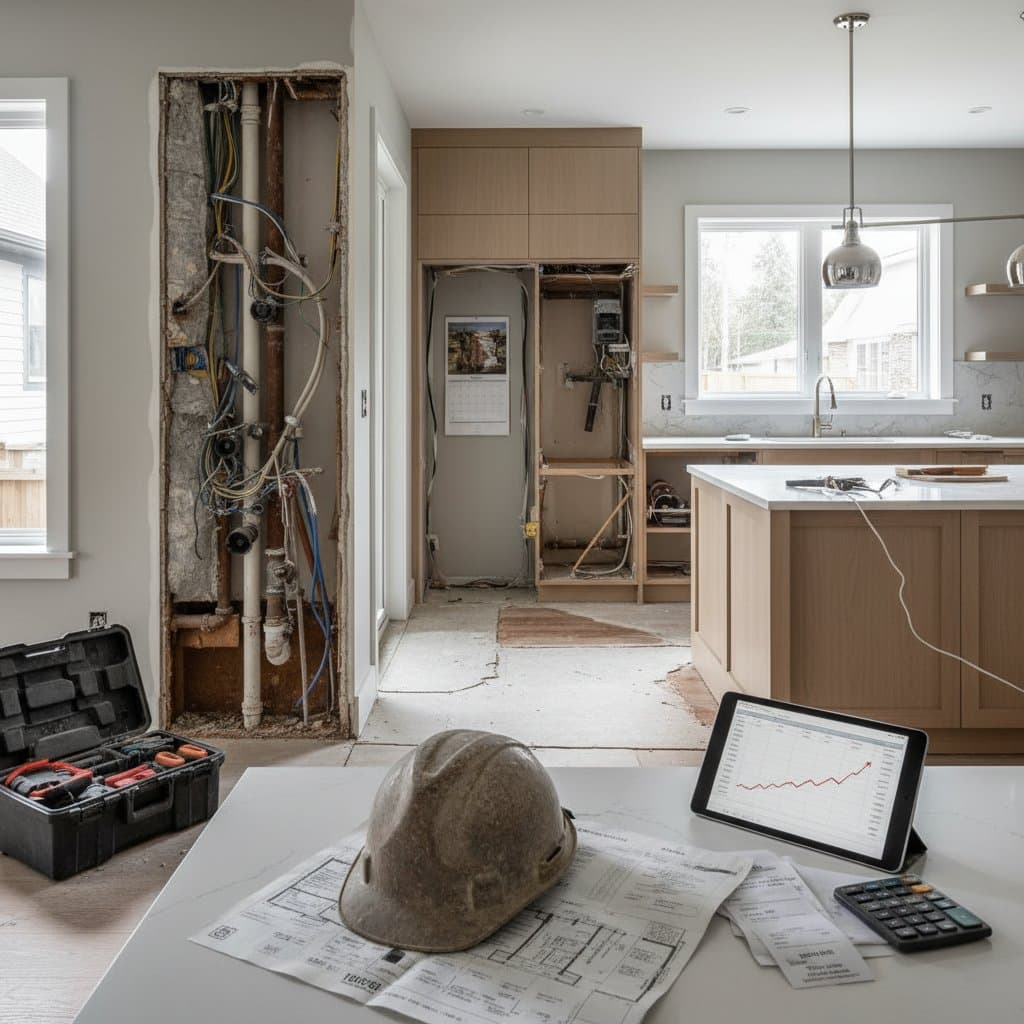
Anticipating Hidden Costs in a 2026 Kitchen Remodel
A kitchen remodel in 2026 promises a functional and stylish space, yet unforeseen expenses often exceed initial budgets. These costs arise from structural discoveries, regulatory requirements, and installation complexities. Homeowners benefit from understanding these elements to plan effectively and avoid financial strain.
Professionals recommend allocating 20 to 30 percent of the total budget for contingencies. This approach allows flexibility when surprises emerge during demolition or installation. By preparing in advance, individuals secure a smoother renovation process.
Electrical System Upgrades
Older homes frequently reveal outdated electrical systems during kitchen renovations. Contractors may uncover wiring that fails to meet current safety codes, such as those requiring ground-fault circuit interrupter outlets near sinks. Full rewiring becomes necessary to support modern appliances like induction cooktops or multiple small gadgets.
The expense of electrical work varies by home size but typically ranges from $1,500 to $5,000 for a standard kitchen. Additional outlets or dedicated circuits for high-power devices add $200 to $500 each. Delaying these updates risks safety hazards and code violations during inspections.
To mitigate costs, conduct a pre-remodel electrical inspection. Electricians assess capacity and identify issues before demolition begins. This step prevents work stoppages and ensures compliance from the outset.
Cabinet Installation Challenges
Cabinets form the foundation of kitchen design, with costs influenced by material, size, and customization. Stock options start at $100 per linear foot, while custom builds exceed $400 per linear foot due to precise measurements for irregular spaces.
Uneven walls or floors complicate installation, requiring shimming or adjustments that increase labor fees by 15 to 25 percent. Professional installation ensures alignment, preventing gaps or operational issues with doors and drawers.
Homeowners save by selecting semi-custom cabinets, which balance affordability and fit. Measure the space accurately and consult installers early to anticipate modifications. These practices maintain budget control without sacrificing quality.
Appliance Integration Expenses
Appliances contribute significantly to both aesthetics and functionality, yet installation often incurs hidden fees. Gas ranges demand venting systems costing $300 to $1,000, while water lines for refrigerators add $150 to $400 in plumbing.
Integrated models require cabinet modifications for seamless fit, with errors leading to $500 or more in rework. Energy-efficient units, though pricier upfront by 20 to 30 percent, reduce long-term utility bills through features like smart controls.
Evaluate appliance specifications against cabinet plans during selection. Hire certified installers to handle connections and verify performance. This preparation minimizes disruptions and ensures warranties remain valid.
Regulatory and Disposal Fees
Permits represent a critical yet overlooked expense, with fees ranging from $200 to $1,000 based on project scope and location. Structural changes or electrical alterations trigger inspections, and non-compliance results in fines up to $5,000 or forced rework.
Waste disposal accumulates quickly, as demolished materials fill multiple skips at $300 to $600 each. Hazardous items like asbestos-containing tiles require specialized removal, adding $1,000 or more.
Budget for delivery charges of $100 to $300 and temporary setups like portable sinks at $50 per day. Obtain permits early and sort waste for recycling to lower fees. These steps streamline the process and avoid penalties.
Maintaining the Renovated Kitchen
After completion, regular maintenance preserves the investment. Clean surfaces daily to prevent stains on countertops and grout buildup in tiles. Schedule annual inspections for appliances to detect wear early.
Organize storage to optimize space and reduce clutter. Avoid overloading cabinets to maintain structural integrity. These habits extend the lifespan of components and enhance daily usability.
Maximizing Value from Your Remodel
Kitchen renovations demand thorough planning to manage costs effectively. Review estimates line by line and include a contingency fund for discoveries. Engage licensed professionals to navigate complexities.
The result yields a space that elevates cooking and gathering. With strategic preparation, homeowners achieve a durable, efficient kitchen aligned with their needs.