Ten Strategies to Reduce 2026 Mudroom Remodel Costs
Mudrooms serve as the hardworking gateway to homes, managing shoes, gear, and daily chaos. Variations across households highlight diverse needs, yet effective designs share core principles of practicality and efficiency. For a 2026 remodel, focus on function to control expenses while delivering a space that enhances daily life.
These ten strategies, drawn from extensive professional experience, address common challenges. They emphasize smart planning, material choices, and installation techniques to achieve durability and organization without unnecessary spending.
1. Assess Needs Before Design
Problem: Remodels often start with aesthetics, leading to layouts that fail to accommodate actual use.
Context: Families overlook how mudrooms function for specific activities, such as storing sports equipment or managing pet messes, resulting in inefficient spaces.
Solution: Conduct a thorough needs assessment. Map traffic flow, identify storage requirements, and note high-use areas. Sketch simple layouts that prioritize accessibility over elaborate features.
Technical Tip: Measure door swings and clearance zones to avoid obstructions. Allocate zones for shoes, coats, and cleaning supplies based on family routines.
Benefit: Tailored designs eliminate rework, saving on labor and materials from the outset.
2. Reuse Existing Materials
Problem: Complete demolition generates high labor and disposal costs, even for viable elements.
Context: Solid wood cabinets or flooring from prior installations often get discarded due to outdated appearances, inflating budgets unnecessarily.
Solution: Inspect and salvage usable components. Refinish cabinets with fresh paint or hardware. Repurpose benches by adding protective tops, and restore tile through cleaning and re-grouting.
Technical Tip: Apply bonding primer to laminate surfaces for adhesion. Replace only compromised sections of cabinetry, preserving intact structures.
Benefit: Salvaging reduces expenses significantly and minimizes environmental impact while upholding quality.
3. Simplify Layout for Efficiency
Problem: Complex floor plans increase construction time and material demands.
Context: Elaborate corners or multi-level designs complicate installation in compact mudrooms, driving up costs without proportional benefits.
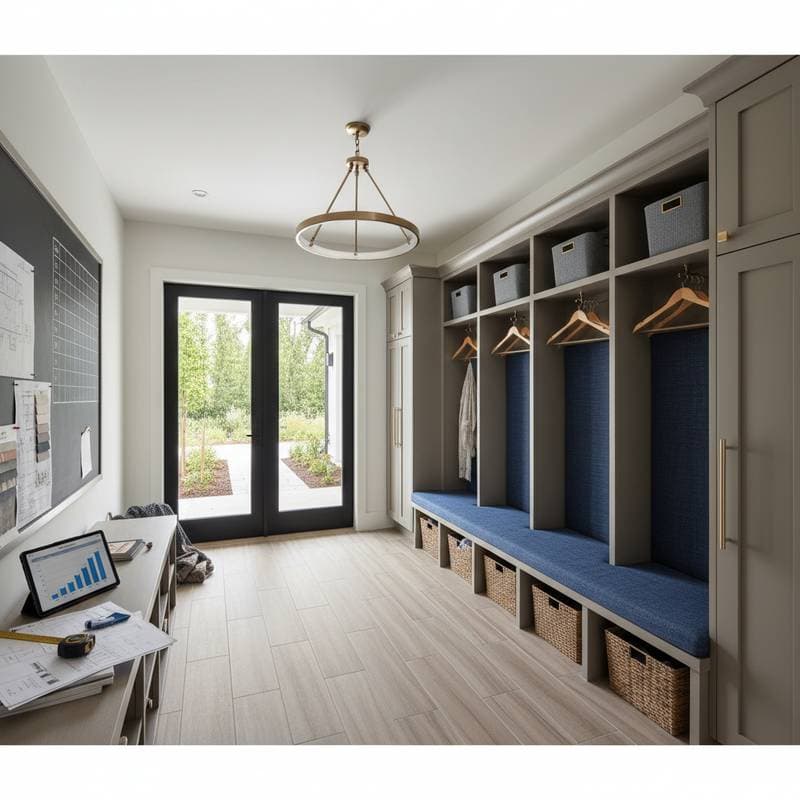
Solution: Opt for straightforward configurations. Use linear shelving along walls and central benches to maximize space. Avoid unnecessary partitions that fragment the area.
Technical Tip: Position utilities like outlets and vents during initial planning to integrate seamlessly. Employ standard dimensions for built-ins to match common material sizes.
Benefit: Streamlined layouts cut fabrication and assembly expenses, fostering a more navigable space.
4. Select Durable, Low-Maintenance Finishes
Problem: Fragile materials succumb to wear in high-traffic environments, prompting frequent replacements.
Context: Exposure to moisture, dirt, and impacts demands resilient surfaces unsuitable for delicate options typically reserved for formal areas.
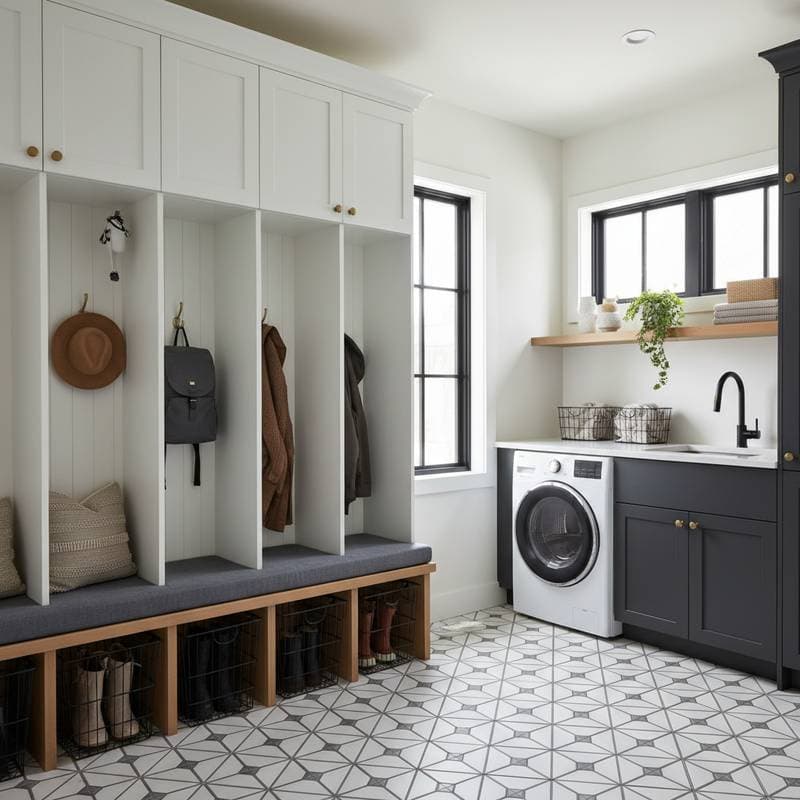
Solution: Prioritize robust alternatives such as porcelain tiles, sealed concrete floors, or resilient vinyl planks. Choose washable paints or beadboard for walls that withstand cleaning.
Technical Tip: Apply semi-gloss paints to trim for wipeability. Seal joints with silicone caulk to prevent water infiltration.
Benefit: Resilient finishes lower long-term upkeep and repair costs, ensuring sustained performance.
5. Optimize Storage Solutions
Problem: Inadequate storage leads to clutter, necessitating expensive add-ons post-remodel.
Context: Mudrooms accumulate items from outdoor activities, and poor organization exacerbates disarray in limited square footage.
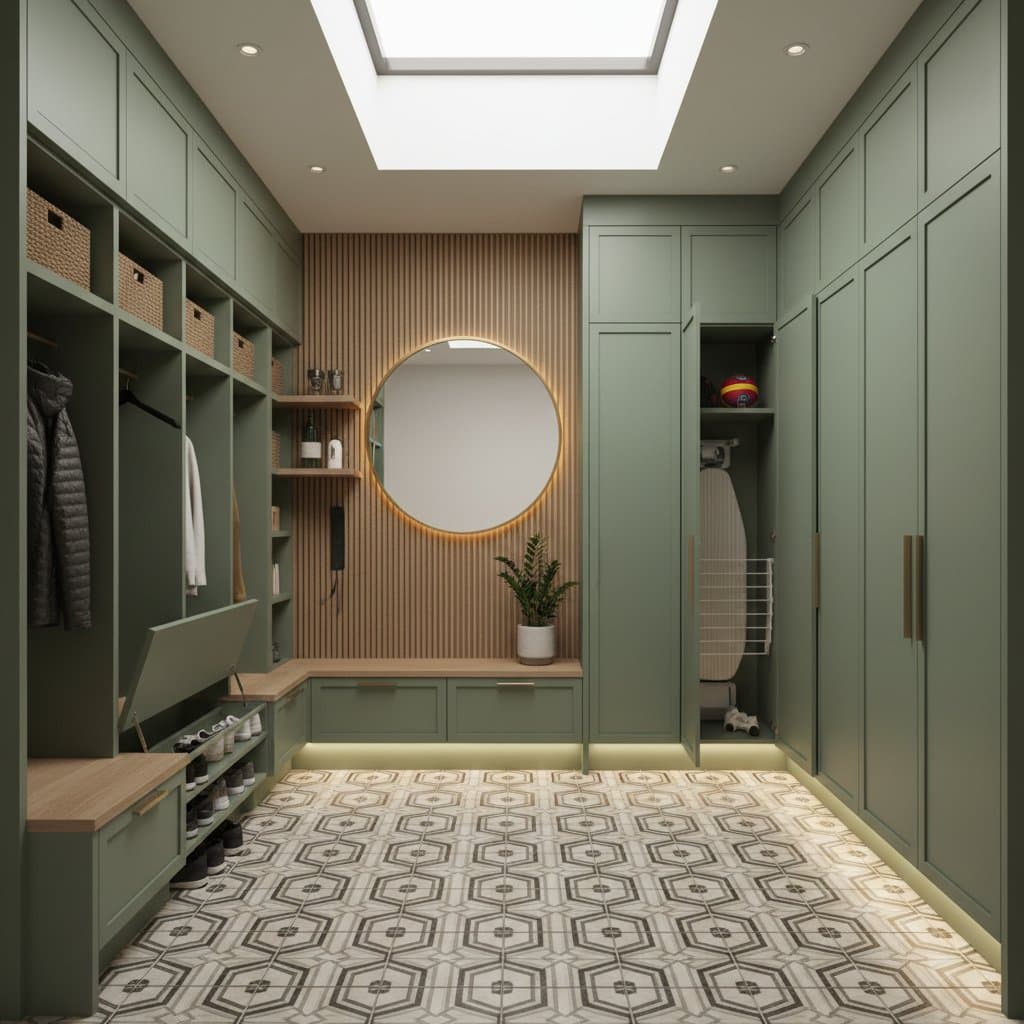
Solution: Integrate multi-functional storage like hooks, cubbies, and pull-out bins. Design vertical space utilization with wall-mounted units to free floor area.
Technical Tip: Secure heavy shelving with wall anchors rated for dynamic loads. Incorporate adjustable tracks for customizable heights.
Benefit: Efficient storage promotes order, reduces frustration, and avoids future expansions.
6. Integrate Lighting Strategically
Problem: Overlooking illumination creates shadowy zones, requiring disruptive upgrades later.
Context: Limited windows in mudrooms demand artificial light for safe navigation and task completion.
Solution: Incorporate layered lighting during framing stages. Combine recessed overhead fixtures for general coverage with task-oriented under-cabinet or sconce lights.
Technical Tip: Select 4000K LEDs for clear visibility. Add dimmer switches for adjustable intensity, or use plug-in options to bypass wiring expenses.
Benefit: Thoughtful lighting boosts functionality, safety, and ambiance without retrofitting costs.
7. Control Moisture Proactively
Problem: Water damage from entryway elements erodes structures, leading to premature failures.
Context: Wet gear and tracked snow challenge materials, especially in climates with harsh winters.
Solution: Install drainage features like sloped floors or grated mats. Use vapor barriers and ventilation to manage humidity.
Technical Tip: Apply waterproof membranes under flooring. Position dehumidifiers or exhaust fans near entry points.
Benefit: Moisture management extends material lifespan, preventing costly water-related repairs.
8. Incorporate Prefabricated Elements
Problem: Bespoke construction escalates expenses through specialized labor and custom fabrication.
Context: Achieving a seamless, integrated appearance seems to require full customization, yet modular pieces offer comparable results.
Solution: Assemble stock cabinets and moldings into bespoke configurations. Unify with consistent coloring and trim details.
Technical Tip: Opt for plywood-based units for durability. Fasten with adhesives and hardware, then seal seams for a flawless finish.
Benefit: Modular approaches deliver professional aesthetics at reduced material and installation prices.
9. Budget for Essential Utilities
Problem: Underestimating plumbing or electrical needs results in scope creep and overruns.
Context: Mudrooms may require sinks for cleanup or additional circuits for appliances, often addressed reactively.
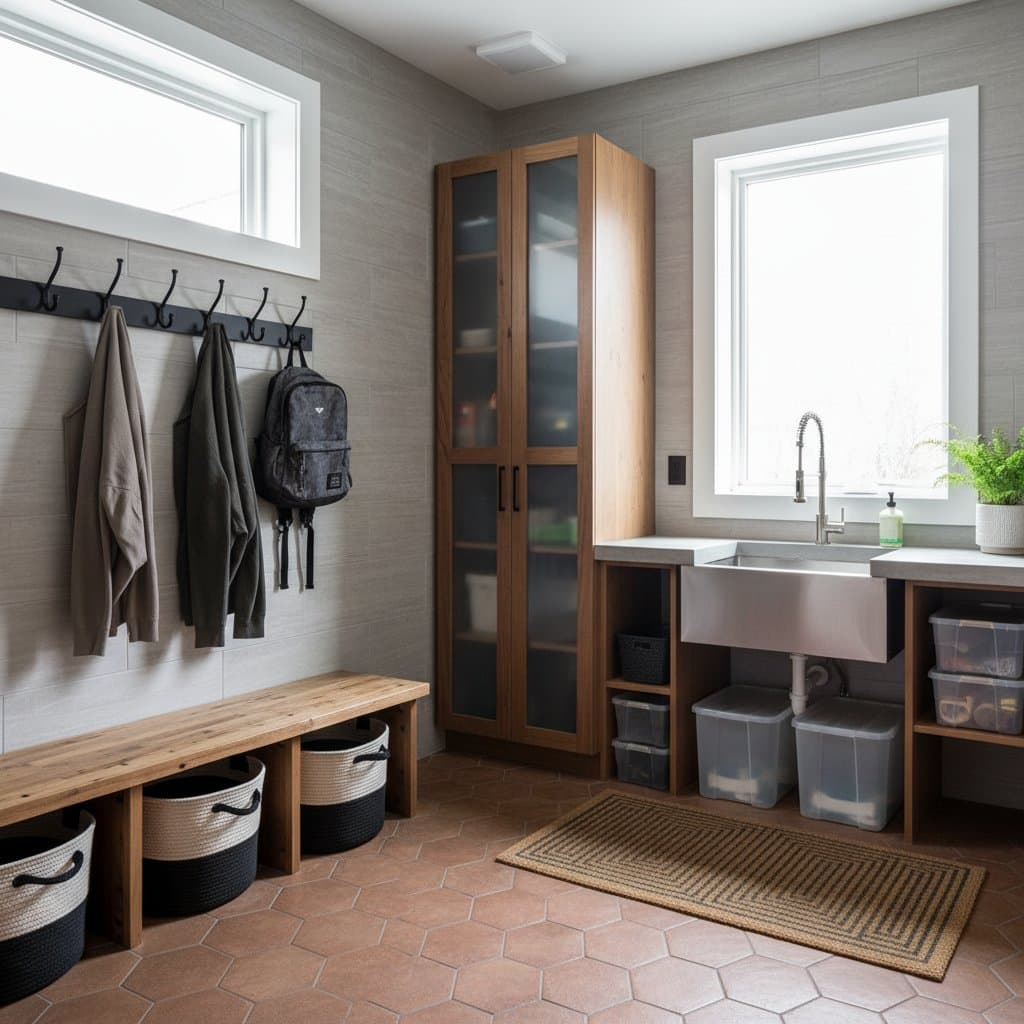
Solution: Identify utility demands upfront, such as a utility sink or charging stations. Coordinate with subcontractors early to bundle work.
Technical Tip: Route conduits during rough-in phases. Choose energy-efficient fixtures to comply with 2026 codes affordably.
Benefit: Proactive utility planning streamlines the project, controlling costs and enhancing convenience.
10. Build in Adaptability
Problem: Rigid designs become obsolete as household dynamics evolve.
Context: Initial setups for young families may not suit later stages, like accommodating hobbies or aging in place.
Solution: Employ modular components and neutral palettes. Design elements that allow reconfiguration without structural changes.
Technical Tip: Mount cleats for repositionable shelving. Select finishes compatible with easy updates.
Benefit: Flexible designs maximize longevity, deferring additional renovations and preserving investment value.
Maximize Your Mudroom's Long-Term Value
Implementing these strategies transforms mudrooms into efficient, enduring assets. Focus on practical decisions yields spaces that support routines while respecting budgets. Consult professionals to adapt these principles to your home, ensuring a remodel that delivers lasting satisfaction.