
Smart Mudroom Layouts That Deliver Top ROI in 2026
Imagine returning home after a demanding day, managing bags, footwear, and perhaps a pet with damp paws. An ideal entry area absorbs this disorder before it spreads further into the house. The modern mudroom transforms such moments into seamless routines, serving as a strategic renovation with substantial financial returns.
National remodeling surveys indicate that practical entry spaces rank among the leading home upgrades for investment recovery. Property owners who install or enhance mudrooms typically regain 60 to 80 percent of expenses, particularly with integrated storage and resilient surfaces. This approach elevates everyday usability while supporting resale potential.
Why Mudrooms Enhance Resale Value and Everyday Functionality
Mudrooms contribute to property worth through intentional organization and practical benefits. They demonstrate foresight to prospective buyers, suggesting meticulous care throughout the residence. Daily, these areas reduce disorder in high-traffic zones, fostering a more serene home environment.
Interior designer Carla Mendoza of Reno & Co. observes, “A mudroom prioritizes utility over extravagance, yet effective planning infuses it with an air of sophistication.” Real estate professional Mark Hall from Hallstone Realty adds, “Prospective buyers appreciate visible order. A structured entry implies broader home maintenance, often leading to stronger bids.”
Essential Layouts for Optimal Performance
Effective mudroom configurations prioritize circulation, capacity, and endurance against wear. The following options integrate these elements affordably, ensuring both utility and aesthetic appeal.
- Bench-and-Locker Configuration
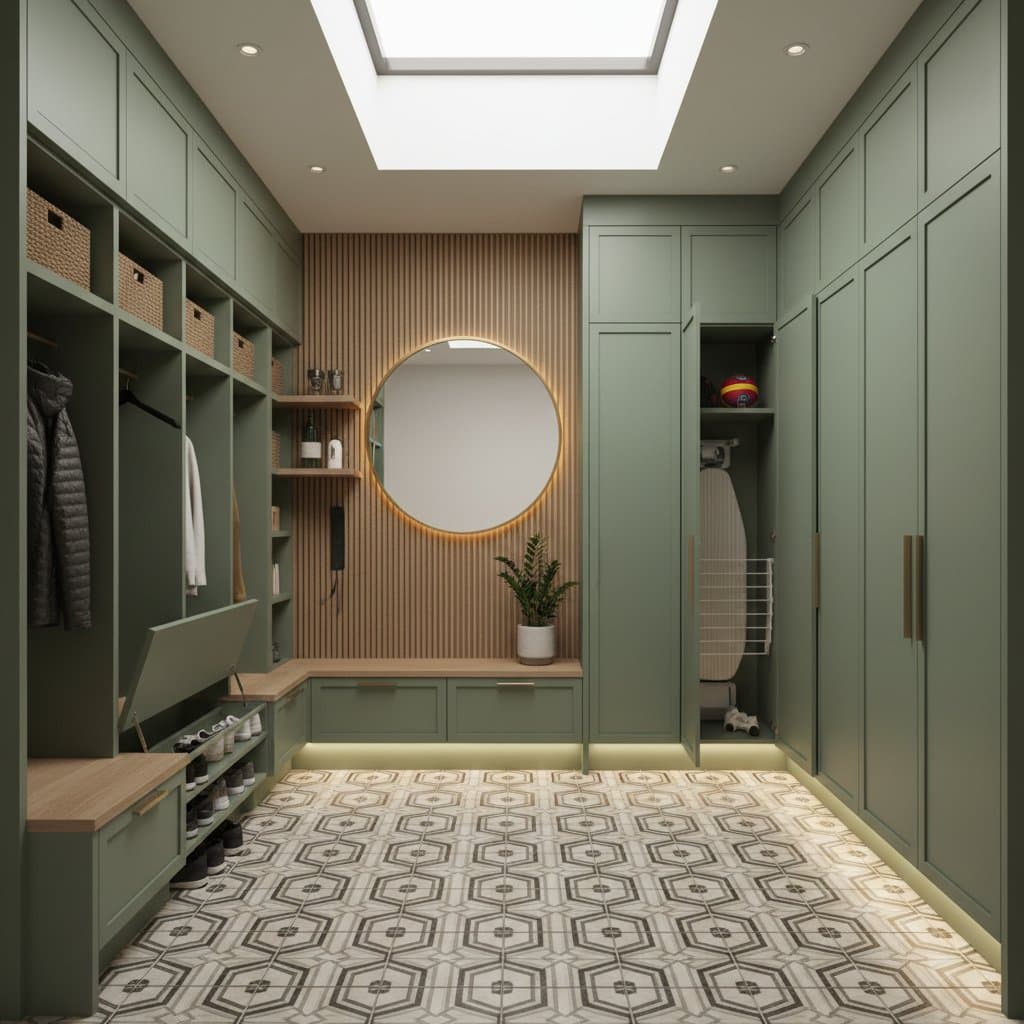
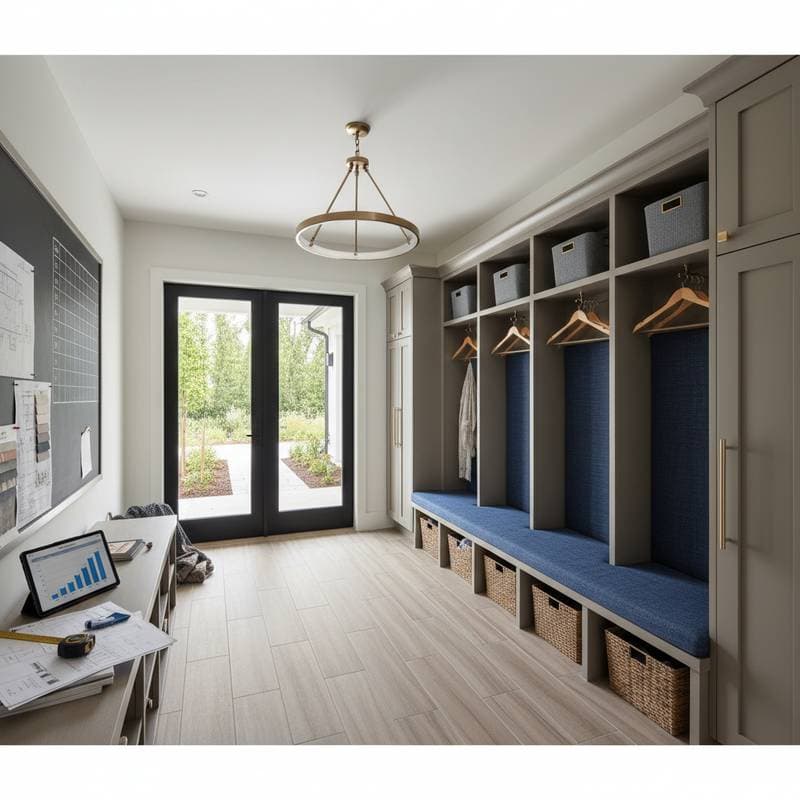
This timeless arrangement features a robust bench for seating, personalized cubbies or lockers, and upper shelving for off-season items. It requires less investment than bespoke cabinetry and adapts to various entry sizes. Budget expectations align with standard bathroom fixture installations, typically ranging from $2,000 to $5,000 for materials and labor.
To implement, measure the wall space precisely and select modular units for easy assembly. Incorporate soft-close doors on lockers to minimize noise and add pull-out trays beneath the bench for quick-access items like leashes or gloves. Such details enhance usability without escalating costs.
- Laundry-Mudroom Integration
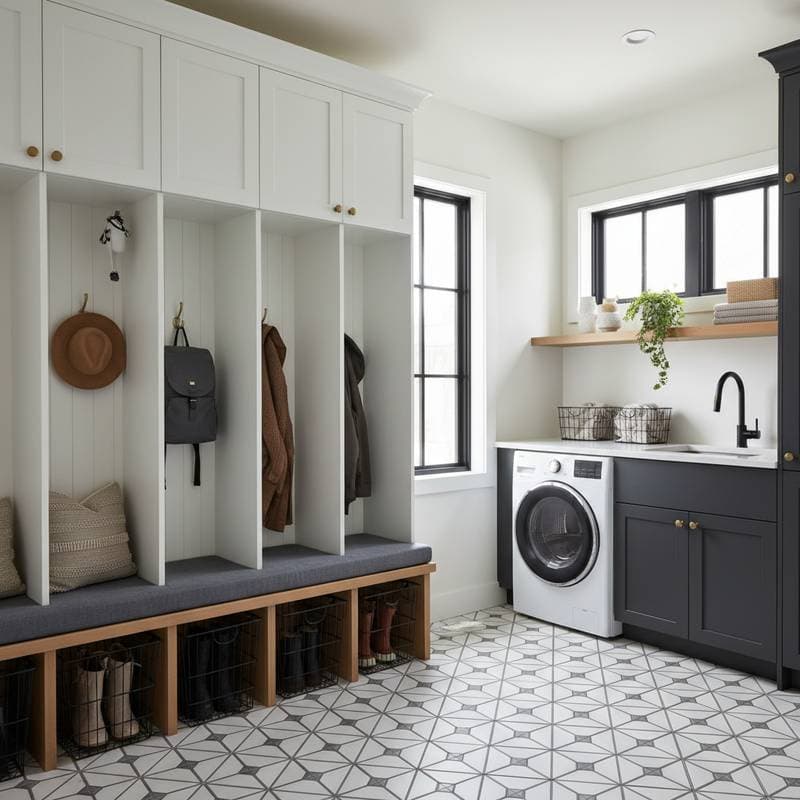
In constrained areas, merging laundry facilities with the mudroom amplifies efficiency at minimal extra expense. Install moisture-resistant tile floors, a spacious utility sink, and ceiling-mounted drying lines to handle wet garments and outdoor equipment. This setup consolidates chores, preserving cleanliness elsewhere in the home.
Home remodeling expert Priya Shah of Function First Design states, “Clients value a centralized area for soiled footwear, damp linens, and animal accessories. It minimizes house-wide dirt and cuts down on ongoing floor repairs.” For best results, position the washer-dryer stack against one wall, leaving open floor for movement, and add a fold-down ironing board for added versatility.
- Concealed Wall-Mounted System
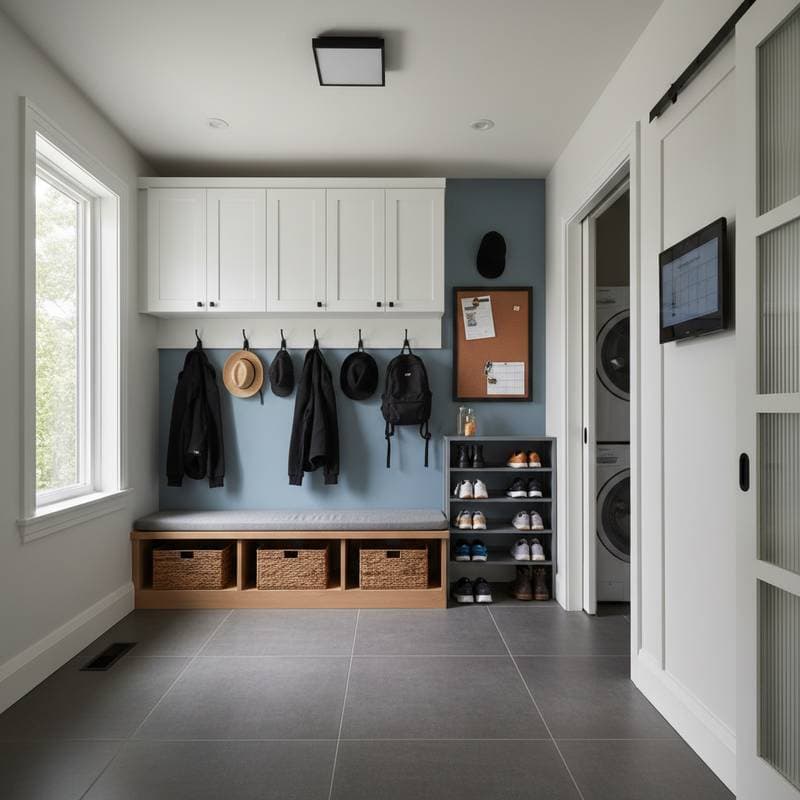
For compact residences or units, a dedicated wall with embedded hooks, compartments, and a slim bench provides full functionality economically. This method avoids the need for structural expansions, often costing under $1,500. Incorporate textured panels like beadboard for visual interest at low cost.
Begin by assessing traffic patterns: place hooks at adult and child heights, and include ventilated bins for sports gear. A full-length mirror mounted nearby serves dual purposes, aiding outfit checks while expanding perceived space. This layout suits urban dwellers seeking subtle yet effective solutions.
Selecting Materials to Safeguard Investment Returns
Mudrooms endure exposure to moisture, debris, and frequent activity, so material choices directly influence longevity and upkeep. Prioritize selections that balance durability, affordability, and ease of maintenance to protect the initial outlay.
-
Flooring Options: Opt for porcelain tiles, which resist stains and slips; sealed concrete for an industrial vibe with low upkeep; or luxury vinyl planks that mimic wood grain while handling spills. Each withstands daily demands and cleans with simple sweeping or mopping.
-
Wall Treatments: Apply semi-gloss paints for quick wipe-downs or install PVC panels that repel humidity and marks. These prevent mold growth in damp climates and maintain a fresh appearance over years.
-
Storage Components: Use painted medium-density fiberboard for budget-conscious setups in lighter-use homes, or choose solid maple or high-pressure laminate for rigorous environments. Reinforce with corrosion-resistant hardware to avoid premature wear.
Subtle enhancements amplify returns. Integrate a recessed boot well to contain tracked-in soil, or design drawers under benches for organized shoe storage. Install adjustable shelving to adapt as family needs evolve, ensuring the space remains relevant and reduces replacement costs.
Strategic Budgeting for Mudroom Projects
Establish a detailed budget from the outset to align expectations with outcomes. Mudroom transformations span from basic self-directed modifications to comprehensive room builds, with expenses varying by scale, finishes, and utilities like plumbing.
Typical projects range from $3,000 for wall systems to $15,000 for hybrid additions, influenced by regional labor rates. Allocate 10 percent for unforeseen elements, such as custom trim or enhanced grout sealing. Track expenses in categories: materials (40 percent), labor (50 percent), and permits (10 percent).
When engaging contractors, solicit three detailed proposals, requesting itemized breakdowns of workforce and supplies. This practice reveals potential overcharges and facilitates informed discussions. Focus on versatile, semi-custom elements over elaborate designs to optimize value without excess spending.
Sustaining Mudroom Efficiency Over Time
After installation, consistent use according to design intent preserves the space's effectiveness. Assign labels to bins for intuitive organization, clear hooks regularly to prevent overload, and reseal floors annually to repel stains.
To extend lifespan, inspect for wear quarterly: tighten loose fixtures, refresh paint on scuffed areas, and declutter seasonally. Integrate smart habits, like designated zones for recycling or pet items, to minimize daily effort.
If embarking on a project, map your current entry challenges first. Note accumulation spots for bags or outerwear, then tailor the layout accordingly. This user-centered approach yields a mudroom that streamlines routines, enhances comfort, and secures enduring financial benefits.