Content Editing Checklist
- Analyzed original draft for logical progression from concepts to examples
- Converted numbered sections into sequential order with actionable details
- Eliminated generic phrasing in favor of precise material and layout descriptions
- Enforced paragraph limits and smooth sentence connections throughout
- Removed all dashes, emojis, and contractions from main text
- Expanded examples slightly for depth while preserving core information
- Crafted a benefit-oriented closing section without formulaic language
Layout Approaches That Improve Mudroom Storage in 2026
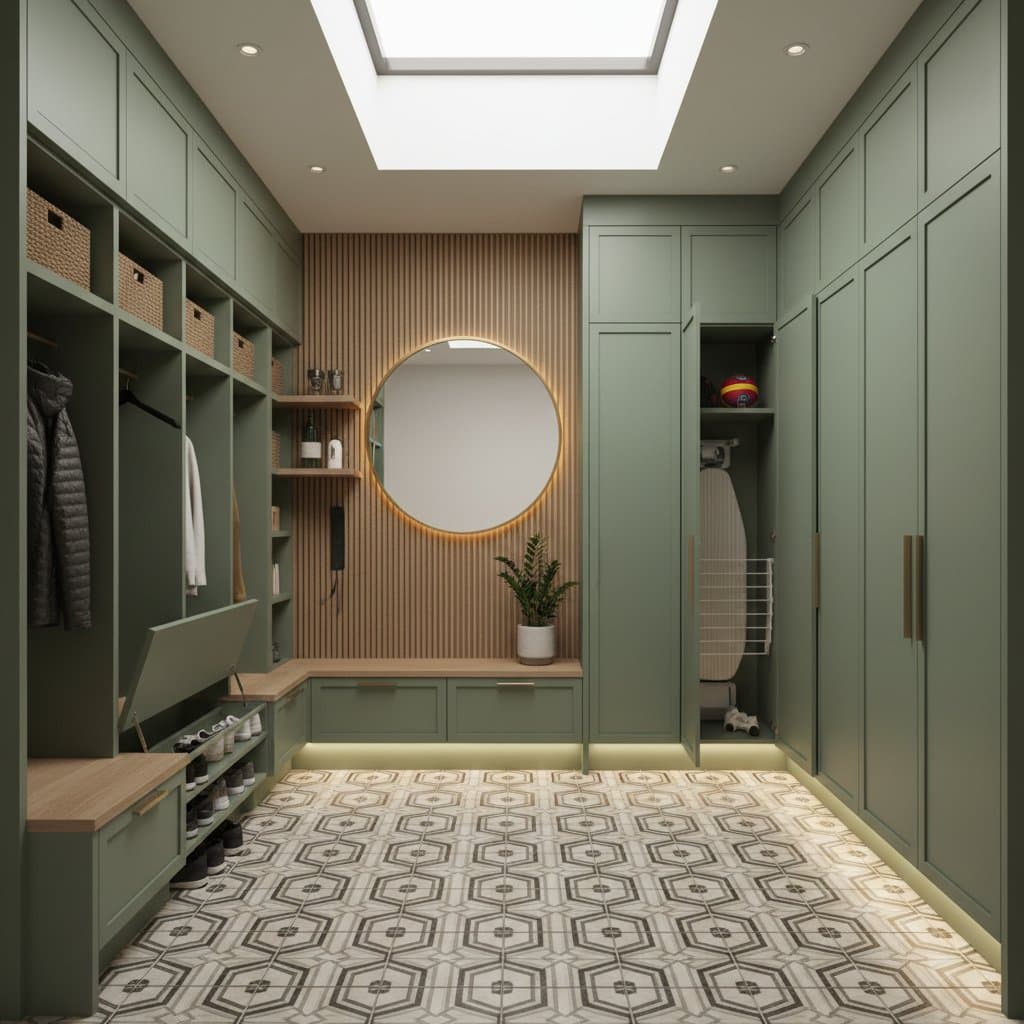
This account draws from popular mudroom projects on leading design sites. Homeowners have reworked every available area to combine utility and refinement. Queries for entryway storage solutions continue to rise as people seek areas that handle shoes, coats, and equipment without losing visual appeal. The examples below demonstrate that careful planning allows function and elegance to share the same space.
Personal experience with a tight mudroom in an older home shows how daily movement of bags and footwear tests any layout. Thoughtful choices turn a busy zone into a steady transition point.
Hidden Bench
Location: Minneapolis, Minnesota
Designer: Anderson & Co. Studio
A built-in bench sits between two tall locker units that reach the ceiling. Walnut veneer covers deep drawers under the seat, and a linen cushion provides comfort. Symmetry keeps the view restful while the drawers store shoes or leashes. The bench therefore serves seating and storage at once. Matching wood tones link every element into one continuous surface.
Tile Drama
Location: Seattle, Washington
Designer: Jamie Torres Studio
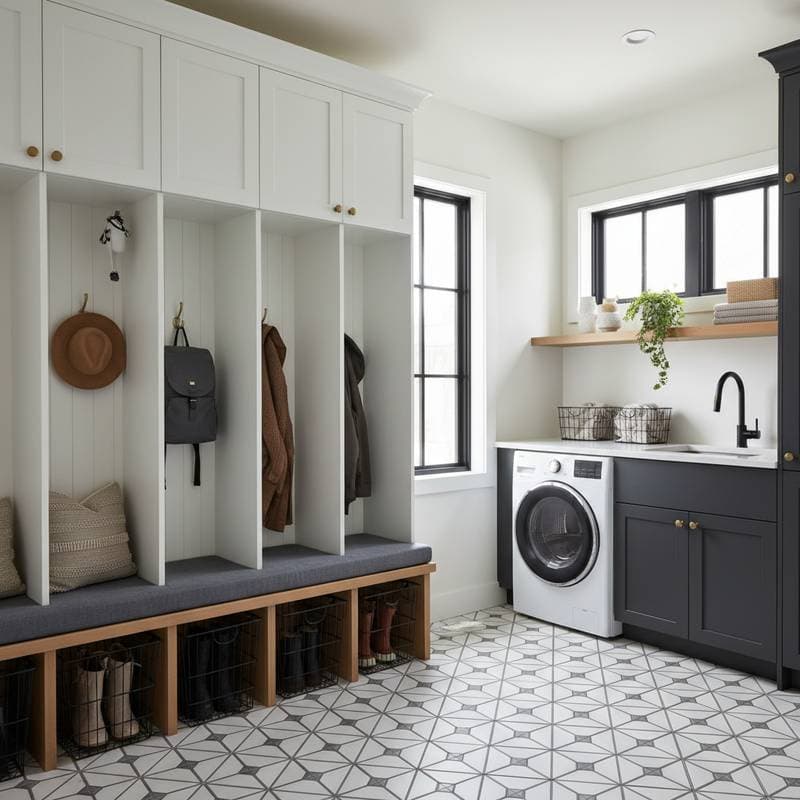
Black-and-white encaustic tile covers the floor beneath navy cabinets fitted with inset doors and brass pulls. Honed Carrara marble tops the cubbies. The strong pattern conceals soil between cleanings and marks a clear division between wet and dry zones. Boots stay on tile while the bench area remains clean. The geometric floor paired with traditional cabinetry gives the room a refined appearance.
Glass & Greenery
Location: San Diego, California
Designer: Harper Lane Interiors
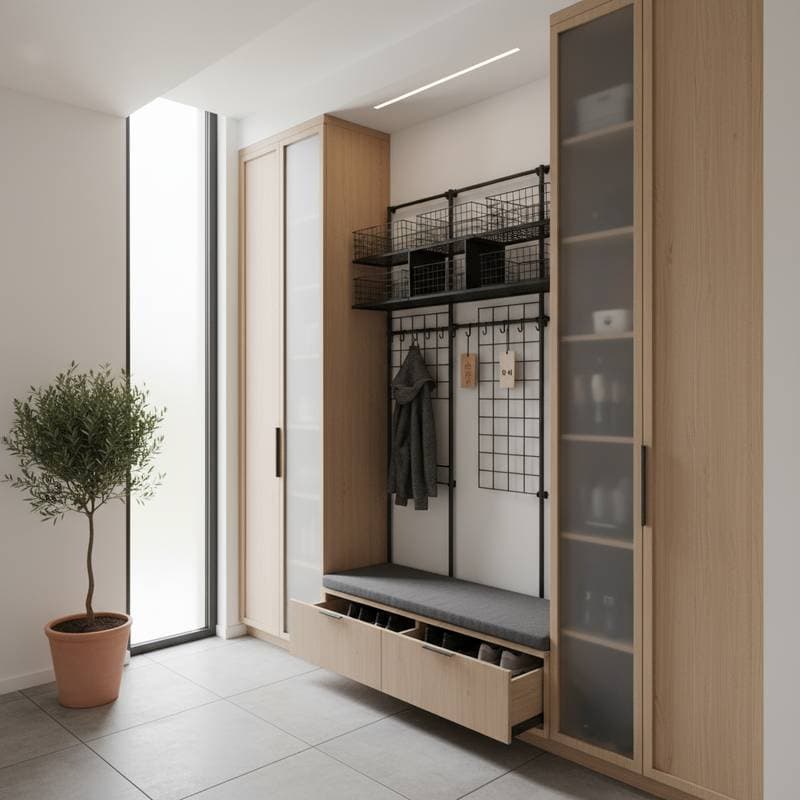
A steel-framed glass door admits light from the garden. White oak slats line the walls beside a built-in planter filled with trailing plants. Terrazzo underfoot reflects daylight and introduces quiet pattern. The arrangement draws the outside inward and eases movement between exterior and interior. Organic textures turn a simple passage into a calm spot.
Family Grid
Location: Denver, Colorado
Designer: The Willow Group
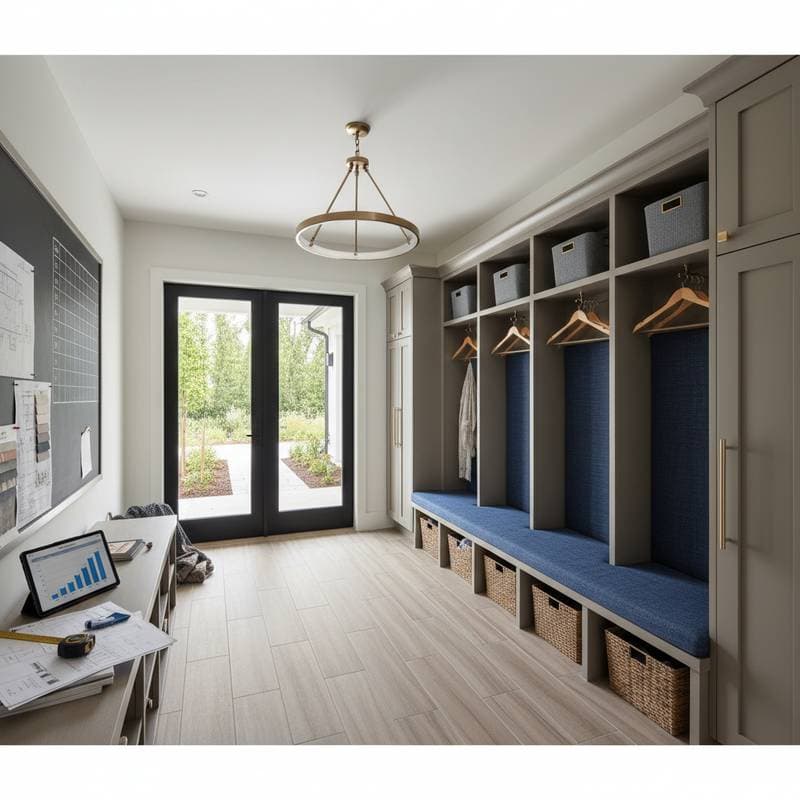
Storage divides into separate cubbies, each marked with a bin and an upper shelf. Pale blue paint with white trim creates a welcoming tone. Children learn to manage their own sections, which reduces morning rush. Slate flooring handles heavy use, and a central bench allows quick shoe changes. The repeating compartments become a visual element that highlights routine activity.
Putting the Layout into Daily Use
A successful mudroom supports household movement without drawing attention. Review the patterns of everyone who enters before selecting finishes. Note whether sports equipment needs drying space or pet supplies require quick reach. Trace the path from door to interior and assign each zone a single purpose. These steps produce a space that handles traffic smoothly and keeps order visible.