Mudroom Remodel ROI: Costs and Design Ideas for 2026
A well-designed mudroom transforms the daily arrival home from a scramble into a calm routine. When groceries, coats, shoes, and wet umbrellas each have a designated place, the rest of the house stays cleaner and more organized. The same features that simplify family life also appeal to buyers who want a home that feels thoughtfully maintained.
The strongest returns come from combining durable materials with storage that matches actual household needs. A mudroom that works well every day tends to hold its value at resale because buyers immediately recognize its practical benefit.
What Does a Mudroom Remodel Cost?
Project costs vary based on room size, existing conditions, and the level of customization. A basic refresh that includes paint, hooks, shelving, and lighting can stay within a few thousand dollars. Larger projects that involve new flooring, built-in cabinetry, plumbing, and electrical work require a significantly higher budget.
Three common project tiers help homeowners set realistic expectations:
- Basic refresh: Paint, hooks, baskets, a bench, and updated lighting.
- Midrange remodel: Durable flooring, built-in cubbies, cabinet storage, trim, and improved ventilation.
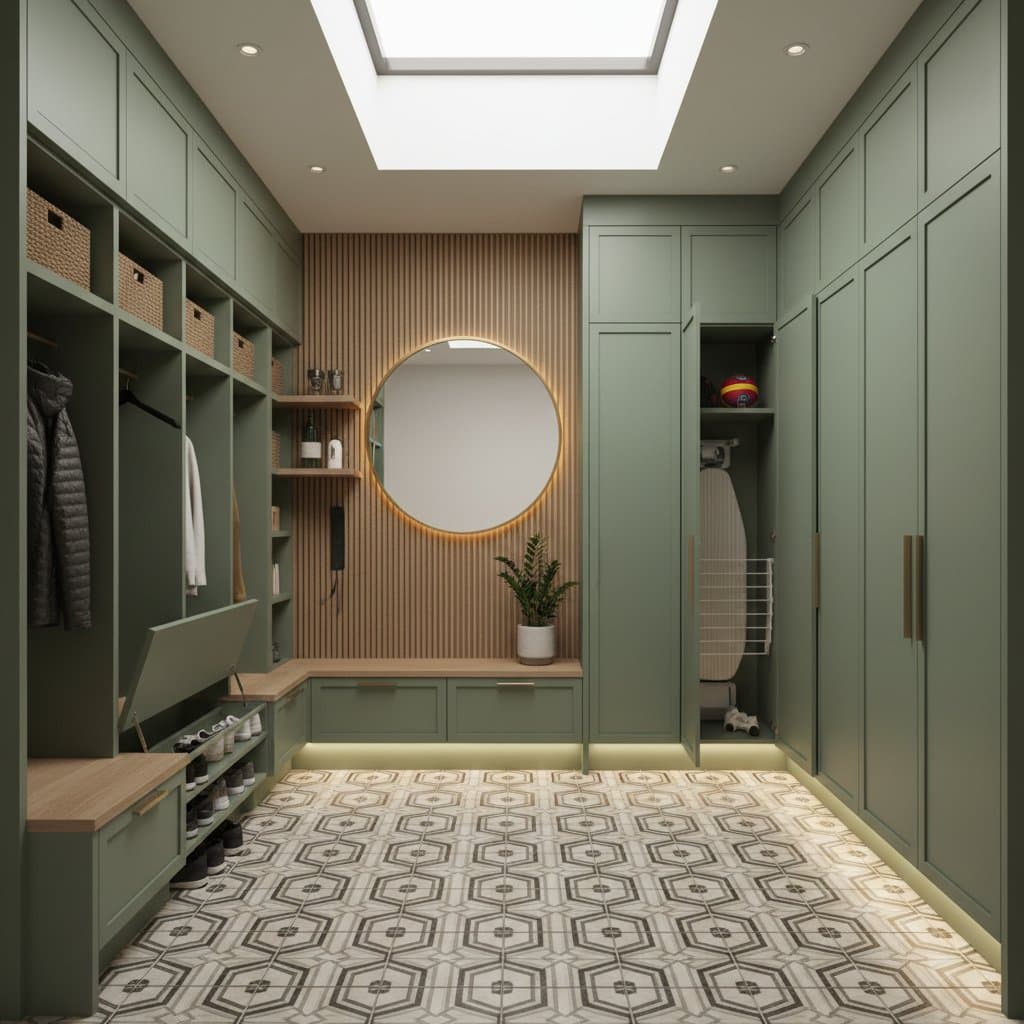
- Premium renovation: Custom cabinetry, a utility sink, heated flooring, pet washing space, upgraded windows, and professional design services.
Labor rates, material selections, and regional conditions influence the final price. Before selecting finishes, have a contractor inspect the subfloor, walls, wiring, plumbing, and ventilation. Hidden repairs can shift the budget quickly.
Reserve 10 to 20 percent of the total budget for unexpected work. This contingency covers water damage, outdated wiring, or uneven flooring without forcing cuts to important design elements.
Where Does Mudroom Renovation ROI Come From?
Return on investment appears in both daily convenience and resale appeal. Buyers notice spaces that make a home easier to maintain. A clean, organized entry signals that the property has been cared for and thoughtfully planned.
A mudroom also protects finishes in adjacent rooms. Sealed flooring catches dirt before it reaches hardwood or carpet. Cabinets keep bags and sports equipment off the floor. A dedicated drying area reduces moisture damage around entrances.
The strongest returns usually come from practical improvements:
- Storage sized for coats, shoes, bags, and seasonal gear
- Flooring that withstands water, grit, and frequent cleaning
- A bench at the right height for removing footwear
- Lighting that improves safety and visibility
- Surfaces that clean easily
- Clear separation between outdoor mess and living areas
Avoid overspending on features that serve only a narrow purpose. A custom locker system may look impressive, yet a simpler design can deliver comparable function at a lower cost.
Design Ideas That Improve Daily Function
Create a Landing Zone for Each Person
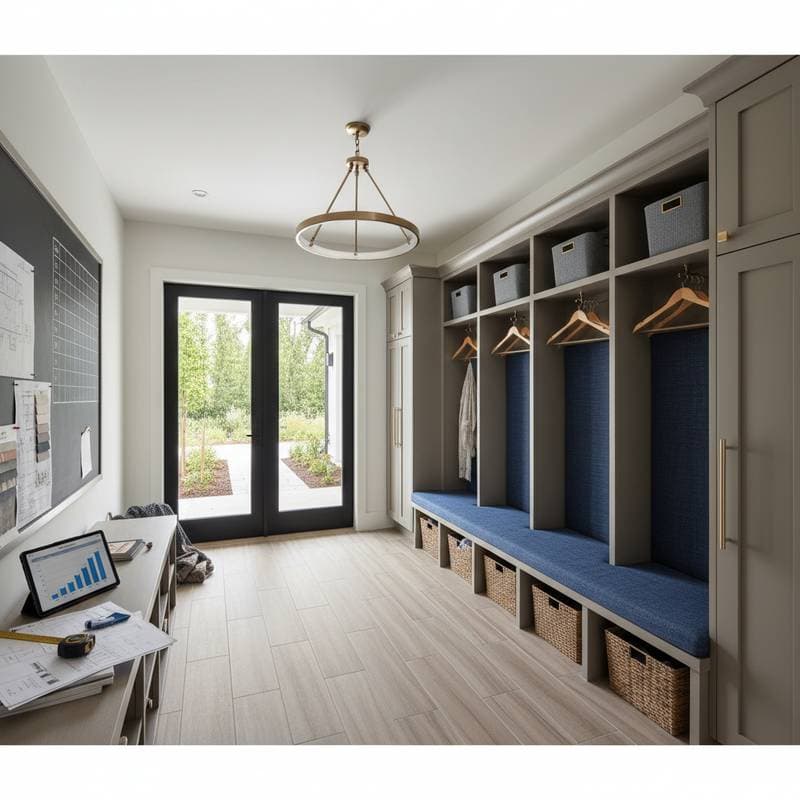
Assign every household member a designated space. A cubby, upper hook, lower basket, and small shelf can handle most daily belongings. Labeling helps younger children learn where items belong.
Plan hooks at several heights so everyone can reach their space comfortably. Keep everyday footwear on open shelves or in ventilated drawers. Reserve closed cabinets for less attractive items such as cleaning supplies, helmets, and pet accessories.
Choose the Right Bench
A bench provides a clear focal point and makes footwear changes easier. Aim for a seat height near 18 inches with enough depth to sit comfortably without blocking the walkway.
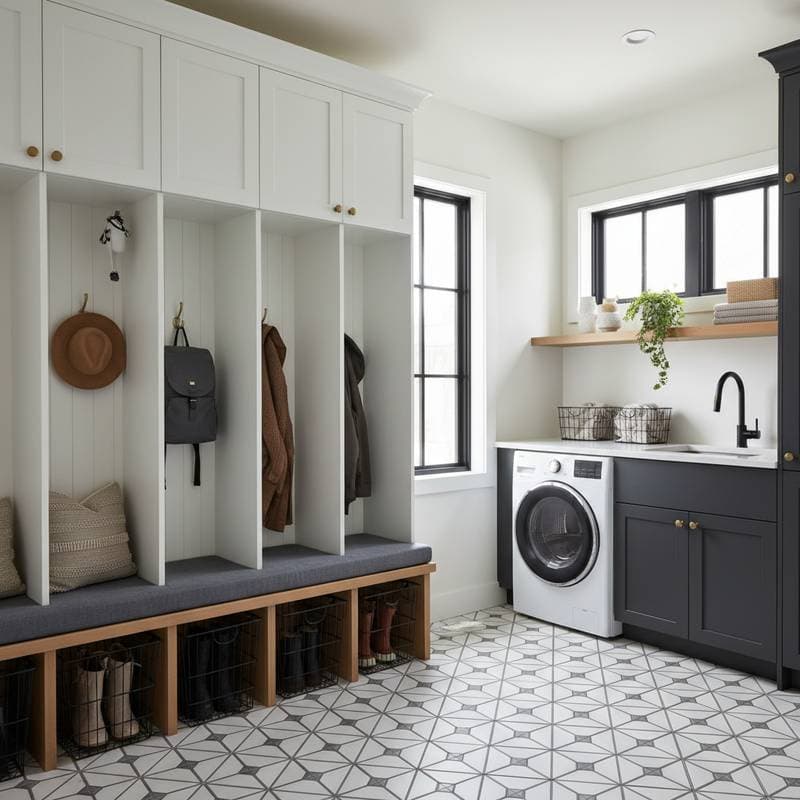
A lift-up seat offers hidden storage for boots and bulky winter items. Drawers provide easier access, while open shelves allow wet shoes to dry. Add washable cushions only if the fabric can handle frequent use.
Use Durable Flooring
Mudroom flooring must resist water, grit, stains, and repeated cleaning. Porcelain tile remains a dependable choice, especially in textured or matte finishes that provide traction. Luxury vinyl offers warmth and resilience at a moderate cost. Sealed concrete suits modern interiors and handles heavy wear well.
Choose grout color carefully. Medium tones disguise everyday dirt better than very pale grout. A quality entry mat inside and outside the door protects the floor and reduces maintenance.
Add Vertical Storage
Wall height is valuable in a small mudroom. Tall cabinets can store rarely used items above eye level, while open hooks and shelves keep daily essentials accessible. If the ceiling is high, use the upper section for labeled bins.
A narrow cabinet can hold umbrellas, cleaning tools, and pet supplies without taking much floor space. Integrated pullout trays make lower storage easier to reach.
Small Mudroom Ideas for a Lower Budget
A full construction project is not always necessary. Targeted changes can improve an existing entry without major expense.
Paint the walls in a washable satin finish. Install a row of sturdy hooks over a wood panel. Add a slim bench with baskets underneath. Replace a basic ceiling fixture with brighter, layered lighting. A framed mirror can make the entry feel larger while providing a practical last look before leaving.
If the room has a closet, consider removing part of the door or replacing it with a space-saving sliding panel. This improves access without changing the footprint. Use matching baskets and consistent hardware to give budget-friendly storage a polished appearance.
Design Details That Support Resale
Neutral materials appeal to the widest range of buyers. Warm white cabinetry, natural wood accents, soft gray tile, and black or brushed metal hardware create a versatile foundation.
Personal style still has a place. Add color through removable cushions, artwork, a painted door, or patterned baskets. Keep permanent features practical and easy to update. Buyers appreciate personality when it does not limit how they imagine using the room.
If you add plumbing, plan for long-term value. A utility sink helps with muddy shoes, gardening tools, and pet care. Place it near existing water lines when possible to reduce installation costs. Good ventilation matters, especially when wet coats and shoes are stored indoors.
Planning a Cost Effective Remodel
Start by listing the problems you want the room to solve. Is clutter gathering by the front door? Are shoes damaging the floor? Does the family need a place for sports gear or pet supplies? Clear answers guide the budget more effectively than copying a picture from a design magazine.
Measure the room carefully, including door swings, vents, outlets, and windows. Sketch storage zones before ordering cabinets. Keep walkways at least 36 inches wide where possible, and check that drawers and doors can open without blocking traffic.
Request several detailed estimates. Ask each contractor to separate labor, materials, permits, demolition, and disposal. This makes comparisons easier and helps reveal low bids that exclude necessary work.
Living With Your New Mudroom
A successful mudroom should feel easy to maintain from the first week. Choose finishes that tolerate your household rather than demanding constant care. Keep a small cleaning kit nearby, use washable mats, and review storage once a season to remove items no longer needed.
The most valuable design combines beauty with routine. Focus your mudroom remodel budget on storage, flooring, lighting, and ventilation before adding decorative upgrades.