The True Cost of a 2025 Wet Room Bathroom Renovation
Home renovation trends indicate a surge in demand for wet room bathrooms, with searches for these designs increasing by over 100 percent in recent years. Data from design platforms and industry reports reveal that homeowners seek open, barrier-free spaces that combine spa-inspired aesthetics with practical accessibility. These layouts eliminate traditional shower curbs, fostering a fluid environment that simplifies movement and maintenance. However, the sophisticated engineering behind this seamless appearance demands careful financial planning to avoid surprises.
This article examines authentic renovation examples drawn from professional sources, highlighting cost drivers such as waterproofing systems, drainage solutions, and material selections. By understanding these elements, homeowners can make informed decisions that align luxury with longevity. The following breakdowns illustrate real-world applications, followed by a comprehensive cost analysis and practical upkeep advice.
Natural Calm Design
Location: Portland bungalow
Designer: River & Root Interiors
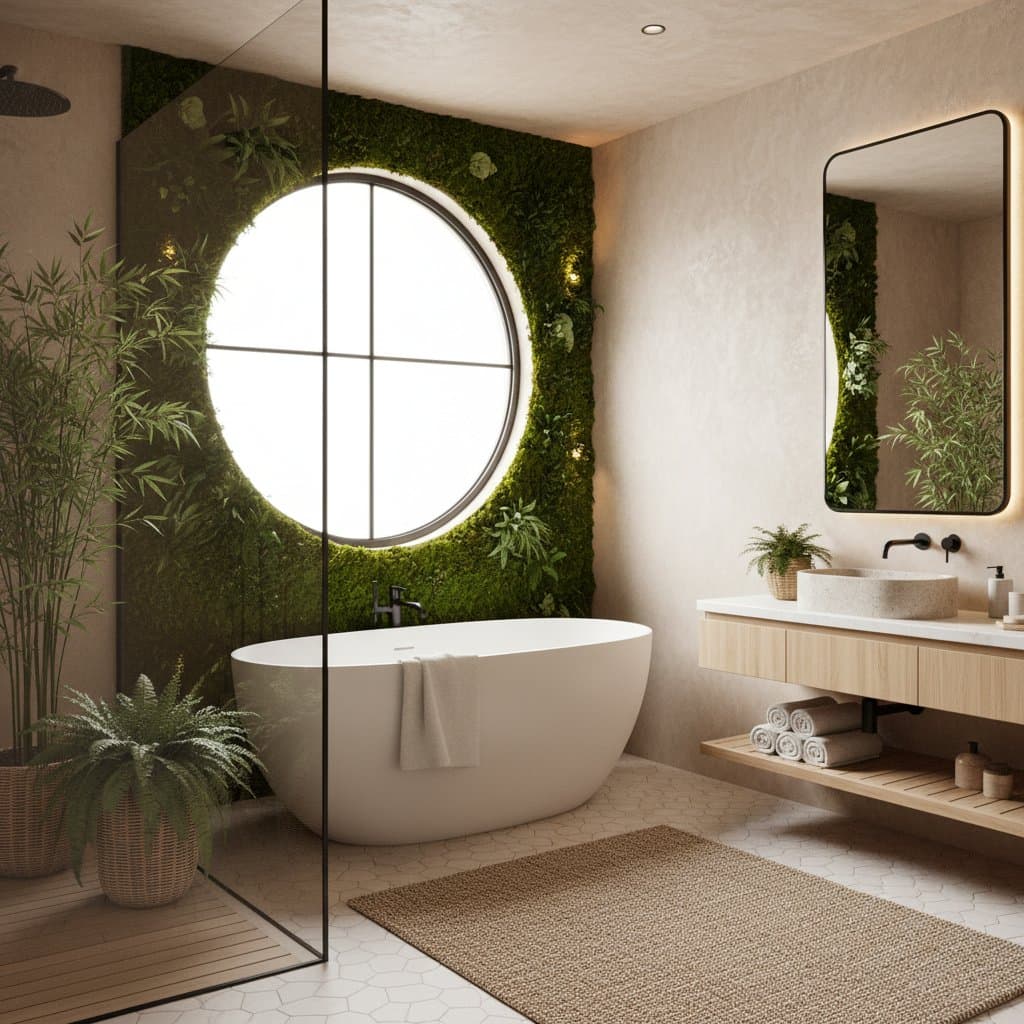
In this project, tumbled limestone tiles form the floor and extend several feet up the walls, providing a natural texture that complements the room's organic vibe. A frameless glass panel, custom-fabricated to 8 feet high, subtly delineates the shower area while preserving the open flow. The installation includes a concealed thermostatic valve that maintains precise water temperatures, enhancing user comfort without visible hardware.
This design supports dual functionality as a steam shower, with sealed joints that withstand humidity. The stone's subtle variations add warmth to the space, contrasting with polished fixtures for a balanced, inviting retreat. Labor-intensive cutting and setting of the limestone contribute significantly to the overall expense.
Estimated cost: $45,000 to $60,000 for a 100-square-foot space, driven by premium natural stone sourcing at $20 to $30 per square foot and custom glazing at $2,500 to $4,000.
Coastal Bright Design
Location: San Diego home
Designer: Isla West Design
Glossy white zellige tiles, handcrafted with irregular edges, cover the walls and floor to evoke a light-filled coastal escape. Brushed brass fixtures, including a rainfall showerhead and wall-mounted controls, introduce subtle metallic accents that enhance durability in salty air. A honed quartz bench, integrated into the layout, serves as both seating and a shelf for toiletries, maximizing utility in a compact 80-square-foot room.
The shower zone relies on a low quartz-capped half wall for splash containment, ensuring the space remains airy and easy to navigate. In humid environments, these moisture-resistant materials dry quickly, reducing mold risks. The design prioritizes light reflection to amplify the sense of openness.
Estimated cost: $30,000 to $45,000, influenced by zellige tile pricing at $15 to $25 per square foot and quartz fabrication at $1,500 to $2,500, plus standard installation fees.
Urban Modern Edge
Location: Seattle condo
Designer: Apex Studio
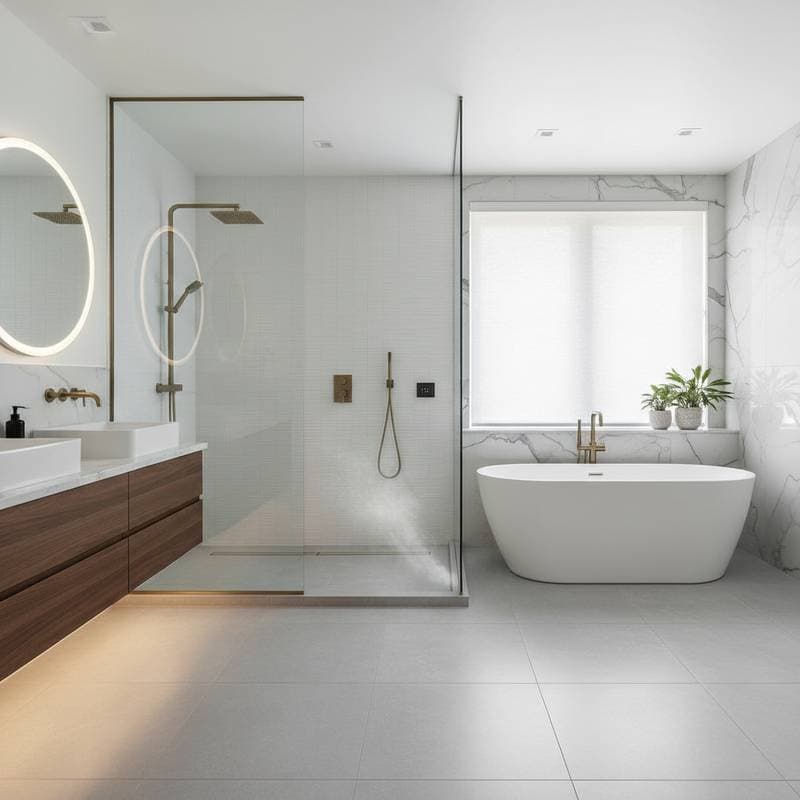
Large-format porcelain slabs in matte gray mimic concrete, covering floors and walls for a minimalist, industrial feel in a 90-square-foot urban wet room. A pivot-hinged glass door, etched for privacy, encloses the shower when needed but folds away for full openness. Recessed LED lighting and a digital shower panel with preset temperatures add smart-home integration.
This setup accommodates wheelchair access with zero-threshold entry and adjustable-height fixtures. The porcelain's low porosity minimizes water absorption, ideal for high-use scenarios. Custom milling for the slabs ensures precise alignment with linear drains.
Estimated cost: $35,000 to $50,000, with porcelain slabs at $10 to $18 per square foot, custom glass at $3,000 to $5,000, and smart controls adding $1,000 to $2,000.
Key Cost Components Explained
Wet room renovations typically range from $25,000 to $70,000 for spaces between 60 and 120 square feet, exceeding standard bathroom updates by 30 to 50 percent due to specialized requirements. Factors like room size, existing plumbing, and finish quality dictate the final figure. Below is a detailed overview of major expenses, including average ranges based on current market data.
-
Waterproofing Materials and Labor: Essential for preventing leaks, a complete tanking system with liquid-applied membranes coats floors, walls, and junctions. Expect $5,000 to $12,000, covering materials like epoxy or polyurethane and professional application to ensure a watertight seal.
-
Drainage Design and Installation: Linear drains or point drains necessitate a sloped subfloor, often requiring underlayment adjustments. Costs run $2,000 to $6,000, including custom grating and plumbing modifications to handle increased water volume efficiently.
-
Tile and Surface Selection: Choices from porcelain to natural stone affect both aesthetics and budget. Budget options like ceramic tiles cost $8 to $15 per square foot installed, while luxury marble or limestone reaches $25 to $40 per square foot, plus grouting and sealing labor.
-
Heating Systems: Underfloor radiant heating provides even warmth, especially on tile surfaces. Electric mats or hydronic systems add $3,000 to $8,000, with energy-efficient models offering long-term savings on utility bills.
-
Glass Enclosures and Fixtures: Frameless panels or folding screens, tempered for safety, range from $2,000 to $7,000 based on size and hardware. Thermostatic valves and rain heads contribute another $1,000 to $3,000 for precision and style.
-
Structural and Electrical Work: If the space requires floor reinforcement or new wiring for lights and outlets, add $4,000 to $10,000. Accessibility features like grab bars integrate seamlessly at minimal extra cost.
These investments yield returns through enhanced property value, often recouping 60 to 80 percent upon resale, particularly in aging-in-place markets.
Strategies for Budget Optimization
To manage expenses without sacrificing quality, start with a detailed site assessment to identify reuse opportunities, such as existing drains or walls. Select versatile materials like porcelain that mimic pricier options at lower costs. Collaborate with designers early to simulate layouts, avoiding costly changes mid-project.
Phased installations, like adding heating post-waterproofing, allow flexibility. Sourcing from trade suppliers can reduce material prices by 20 percent. Always prioritize certified contractors experienced in wet rooms to minimize rework and ensure code compliance.
Maintaining Your Wet Room for Longevity
Daily care involves squeegeeing glass and surfaces to prevent water spots, followed by a quick wipe with a microfiber cloth. Monthly inspections of seals and grout help catch wear early; reapply sealant as needed to maintain barriers against moisture. Clear drains with enzymatic cleaners to avoid clogs from hair and soap residue.
Annual professional checks verify the waterproofing integrity, especially in high-humidity areas. These routines preserve the design's crisp lines and functionality, ensuring the space remains a reliable sanctuary. Over years, this approach maximizes the wet room's appeal and protects your investment.