2026 Wet Rooms: Costs and Waterproofing Essentials
This analysis draws from the most popular wet room remodel images shared on leading design platforms over the past several months. Homeowners increasingly favor seamless, spa-inspired bathrooms that remove barriers and emphasize texture, natural light, and fluid movement. These spaces merge practicality with luxury, delivering environments that perform reliably while offering visual and tactile appeal.
Design professionals often combine large-format stone tiles with advanced waterproofing solutions that safeguard the entire area. The aesthetic remains minimalist yet inviting, incorporating brushed metal accents and organic materials to soften modern lines. This guide examines the factors fueling the wet room surge, the waterproofing innovations enabling it, and the realistic expenses involved in creating such a space.
Defining the Wet Room Aesthetic
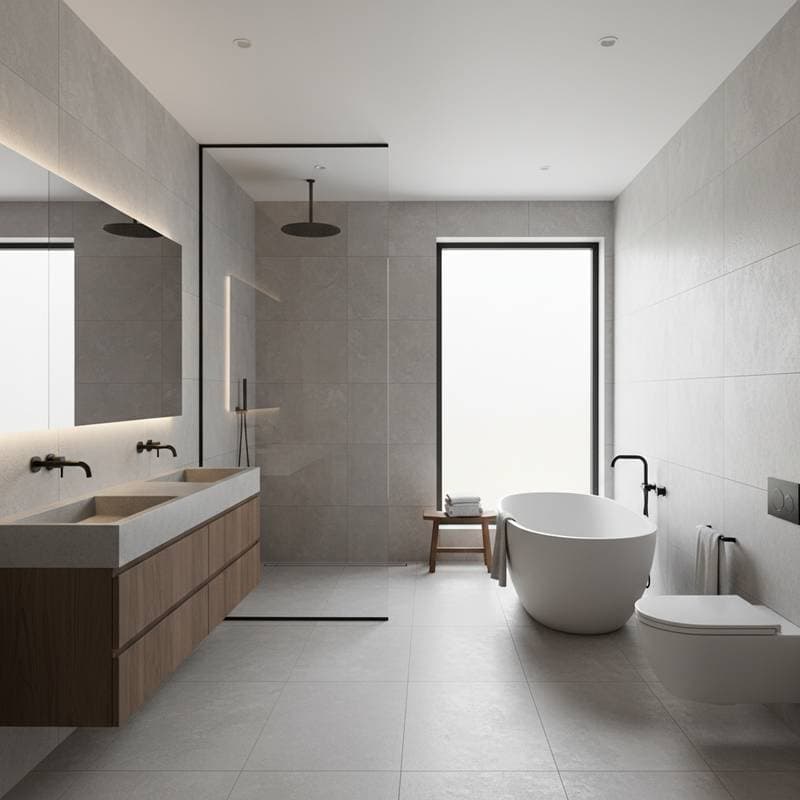
Wet rooms consistently feature specific elements across design inspirations. Floors typically incorporate porcelain or natural stone with a subtle, nonslip texture for safety. Walls receive uniform treatments like tadelakt plaster, microcement, or oversized porcelain panels that reduce visible grout joints and promote a continuous flow.
Glass panels supplant traditional shower enclosures, preserving unobstructed views and enhancing the sense of openness. Color schemes favor neutrals such as soft sands, deep charcoals, and warm ivories, allowing finishes to provide variety. Brushed brass hardware introduces subtle elegance, whereas matte black or polished nickel elements deliver sharp definition. Strategic lighting, including recessed LED fixtures, highlights surface textures and adds dimensional depth to the room.
Warm Minimalism in Action
Location: Austin
Designer: The Studio Collective
In this compact wet room, cream-toned microcement coats all surfaces, fostering a seamless, enveloping atmosphere. A frameless glass partition delineates the vanity zone without disrupting the visual unity. A ceiling-mounted rain showerhead provides an immersive, resort-quality rinse, supported by a liquid-applied elastomeric waterproofing layer under the microcement for comprehensive, invisible protection.
Subtle wood elements, such as a suspended oak shelf and matching stool, introduce organic warmth against the smooth backdrop. This approach shows how restrained design can evoke comfort through thoughtful texture and scale. Integrated waterproofing here enables innovative surface choices to withstand daily use without compromise.
Urban Edge Redefined
Location: Brooklyn
Designer: Studio Fen
This narrow townhouse bathroom employs large-format porcelain tiles in slate-gray tones across walls and floors. A wall-mounted faucet in matte black pairs with ceiling-embedded LED strips for ambient illumination. A linear drain positioned along the rear wall manages runoff effectively, complemented by a full-spectrum waterproof membrane securing the subfloor.
The result channels a sophisticated urban vibe that aligns with the structure's historic framework. The barrier-free layout boosts airflow and brightness, while the unified material selection promotes serenity. Such a configuration highlights how wet rooms enhance utility and character, even within constrained city spaces.
Core Waterproofing Components
The durability of any wet room hinges on its waterproofing foundation. Without a thorough moisture defense, even superior designs risk structural damage and aesthetic decline. The following outlines the essential layers that form a reliable system.
Seamless Membrane Application
Membranes come in sheet forms or liquid coatings, but coverage must span floors, walls, and transitions without interruption. Reinforce critical areas like corners, seams, and fixture penetrations using specialized tapes or fabric collars to block water intrusion.
Effective Floor Sloping for Drainage
Direct water toward the drain by angling the floor with a gentle pitch, achieved via prefabricated bases or custom mortar builds. Aim for a slope that feels level underfoot yet channels water swiftly, typically one-quarter inch per foot, to avoid pooling.
Protective Vapor Barriers
In moisture-prone regions or sealed rooms, install vapor barriers behind walls to shield underlying materials from condensation. This layer proves vital for porous options like natural stone, which might otherwise draw in humidity and lead to deterioration.
Sealed Electrical and Fixture Integration
Select recessed lights rated for wet locations within shower areas to prevent electrical hazards. Position outlets and controls beyond the splash zone or equip them with watertight gaskets, ensuring compliance with safety standards.
Pre-Finish Integrity Testing
Conduct a flood test by filling the sloped floor with water for a set period to detect leaks. This verification step confirms the system's soundness prior to applying tiles or finishes, averting costly post-installation repairs.
Practical Costs Breakdown
Budgeting for a wet room remodel requires accounting for materials, labor, and specialized features. Average costs range from $15,000 to $40,000 for a standard 50- to 80-square-foot space, depending on location, finishes, and complexity. Basic setups start at $200 to $300 per square foot, while luxury iterations climb to $500 or more.
Waterproofing alone accounts for 10 to 20 percent of the total, with liquid membranes costing $5 to $10 per square foot installed, and sheet systems $8 to $15. Drainage solutions, including linear drains, add $300 to $800. Tile and surface materials vary widely: porcelain slabs run $10 to $25 per square foot, microcement $15 to $30, and natural stone $20 to $50.
Labor constitutes the largest share, often 40 to 60 percent, at $100 to $200 per hour for certified installers. Factor in permits ($200 to $500) and potential structural adjustments like subfloor reinforcement ($1,000 to $3,000). To control expenses, prioritize essential waterproofing over premium aesthetics and consult local contractors for precise quotes.
Installation Insights for Success
Professional execution ensures a wet room's longevity. Begin with a site assessment to evaluate subfloor stability and plumbing alignment. Remove existing fixtures and prepare surfaces for membrane adhesion, allowing adequate drying time between layers.
Incorporate expansion joints in larger areas to accommodate movement without cracking. After waterproofing, apply finishes in thin, even coats to maintain slope integrity. Final inspections, including another flood test post-tiling, confirm readiness for use. Engage licensed experts familiar with building codes to navigate regional requirements seamlessly.
Everyday Benefits and Enhancements
A completed wet room streamlines routines with its unified design. Maintenance proves straightforward, as seamless surfaces eliminate crevices where grime accumulates, reducing cleaning time and mold risks.
The level entry enhances accessibility for all ages, minimizing slip hazards and supporting independent living. Integrate features like radiant floor heating ($1,000 to $2,500 installed) for added luxury, or recessed shelves for organized storage. Ambient elements, such as dimmable sconces, elevate the space from utilitarian to restorative, maximizing daily comfort and value.