
2026 Wet Room Guide: Achieving Barrier-Free Waterproofing
Visualize entering a bathroom that resembles a serene spa retreat. Warm air envelops the space, floors flow seamlessly without raised edges or enclosing doors, and every element promotes ease of movement. This vision defines a well-designed wet room: a space that combines sleek aesthetics with practical functionality and universal accessibility.
A wet room extends beyond a simple open shower. It requires meticulous waterproofing to manage moisture effectively while maintaining visual appeal. Proper execution prevents water damage, ensures safety, and enhances longevity. This guide provides a step-by-step checklist for 2026 designs, focusing on waterproofing from the ground up. Follow these steps to create a space that transforms routine tasks into moments of relaxation.
1. Assess Your Space and Plan Waterproofing Basics
Begin with a thorough evaluation of your bathroom's dimensions and existing structure. Measure the area to determine floor slope requirements, typically a 1-2% gradient toward the drain to facilitate water flow without noticeable inclines. Consult local building codes for waterproofing standards, as they vary by region and influence material choices.
Select a tanking system for comprehensive protection. Apply a liquid waterproof membrane over the substrate, ensuring it covers floors, walls up to 2 meters high, and any penetrations like pipes. This creates a monolithic barrier that seals against leaks. Allow adequate curing time, usually 24-48 hours, before tiling to avoid adhesion issues.
2. Choose the Right Drainage System
Effective drainage forms the foundation of any wet room, directing water away efficiently to prevent pooling. Position the drain strategically based on your layout, ensuring it aligns with the room's slope for optimal performance.
Drain options to consider:
- Linear drains: Install these along the wall or edge of the shower zone for a minimalist appearance. They accommodate large tiles seamlessly and distribute water evenly across wider areas.
- Central point drains: Place these in the shower's center for compact rooms. They demand precise sloping from all directions but integrate discreetly under tile.
Opt for drains with stainless steel grates and accessible traps. Regular cleaning prevents clogs, maintaining hygiene and flow rates of at least 30 liters per minute.
3. Select Waterproof Materials for Walls and Floors
Materials must withstand constant exposure to moisture while contributing to the room's aesthetic. Prioritize non-porous options that resist mold and facilitate cleaning.
Recommended materials:
- Porcelain or ceramic tiles: Choose large-format versions with rectified edges for grout-minimized joints, reducing water ingress points. Apply a sealant to grout lines for added protection.
- Waterproof wall panels: Use solid surface or acrylic sheets that mimic stone or tile patterns. These install directly over the membrane, eliminating the need for wet trades.
- Floor substrates: Employ cement boards or wet room boards as a base layer, secured with waterproof adhesives.
Test materials for slip resistance, aiming for a wet pendulum test value of 36 or higher to ensure safety on inclined surfaces.
4. Plan for Zoning and Layout
A thoughtful layout maintains openness while controlling water dispersion. Divide the space subtly to protect dry zones without compromising the barrier-free ethos.
Strategies for effective zoning:
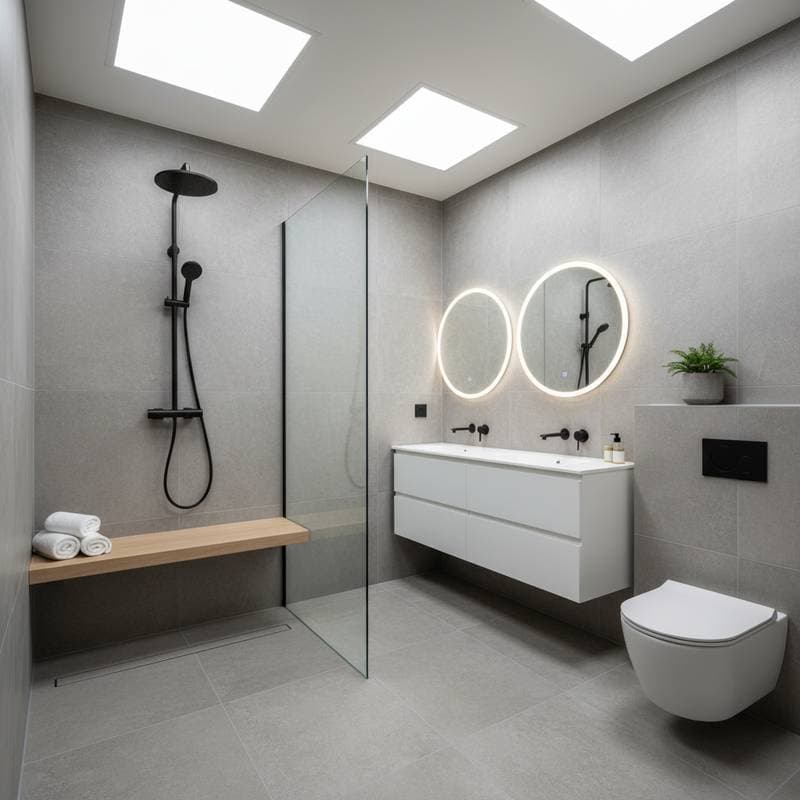
- Install a low-profile glass panel, reaching 60-80 cm high, to shield adjacent areas from spray while preserving visibility.
- Locate the showerhead on the room's farthest wall from the door, directing water flow inward.
- Incorporate a fold-down or fixed bench within the wet zone, positioned at 45-50 cm height for seated use.
Incorporate underfloor heating elements during the substrate phase. This system accelerates drying and provides consistent warmth, integrating with smart thermostats for energy management.
5. Install Shower Fixtures and Hardware
Select fixtures that enhance usability and integrate with the waterproof design. Overhead rainfall heads paired with handhelds offer versatility for different users.
Key installation tips:
- Mount fixtures on reinforced wall sections to support weight, using brackets rated for wet environments.
- Choose thermostatic mixer valves to maintain steady temperatures, preventing scalding risks.
- Ensure all connections feature compression fittings with waterproof tape for leak-proof seals.
Position controls at accessible heights, around 100-120 cm from the floor, to accommodate varied mobility levels.
6. Focus on Lighting and Ventilation
Illumination influences both practicality and atmosphere, while ventilation safeguards air quality. Combine layers to suit daily needs.
Lighting configurations:
- Embed LED recessed lights in the ceiling for uniform brightness, selecting warm white tones (2700K) for a spa-like feel.
- Integrate strip lighting along shelves or benches for task-oriented glow without harsh shadows.
- Install dimmable circuits to adjust intensity from 100% for grooming to 30% for relaxation.
For ventilation, fit a fan with a capacity of 15-20 air changes per hour. Models with humidity-activated triggers activate automatically, expelling moist air and reducing condensation buildup.
7. Integrate Storage Solutions
Storage prevents clutter in a compact wet room, keeping essentials within reach without impeding flow. Opt for built-in options to maximize space.
Practical storage ideas:
- Recess niches into walls at waist height for shampoos and soaps, lined with waterproof backing.
- Install wall-hung vanities with slim profiles, featuring soft-close drawers and ventilated cabinets to deter dampness.
- Add open shelving in dry zones using corrosion-resistant metal or sealed wood.
Ensure all units elevate 10-15 cm above the floor to aid cleaning and avoid water contact.
8. Prioritize Heating and Comfort Elements
Comfort elevates the wet room from functional to inviting. Heating solutions address the chill of wet surfaces.
Underfloor electric or hydronic systems distribute heat evenly, with mats embedded in the screed layer. Program timers to preheat the space 30 minutes before use. Alternatively, wall-mounted radiant panels provide targeted warmth.
Pair with a heated towel radiator, sized to accommodate multiple towels, positioned near the exit for convenience. Select models with frost protection for seasonal efficiency.
9. Enhance Accessibility Features
Barrier-free design ensures inclusivity for all users. Incorporate elements that support aging in place or mobility challenges.
Accessibility enhancements:
- Maintain level thresholds throughout, with flush door tracks if enclosures are present.
- Add grab bars near the bench and toilet, anchored into studs with 250 kg load capacity.
- Select lever-style faucets and door handles for easy operation.
Conduct a usability test post-installation, simulating various scenarios to verify intuitive navigation.
10. Finalize with Styling and Finishing Touches
With core elements in place, infuse personality through curated details. Simplicity amplifies impact in wet rooms.
Styling approaches:
- Layer textures with matte tiles on floors and glossy accents on walls for depth.
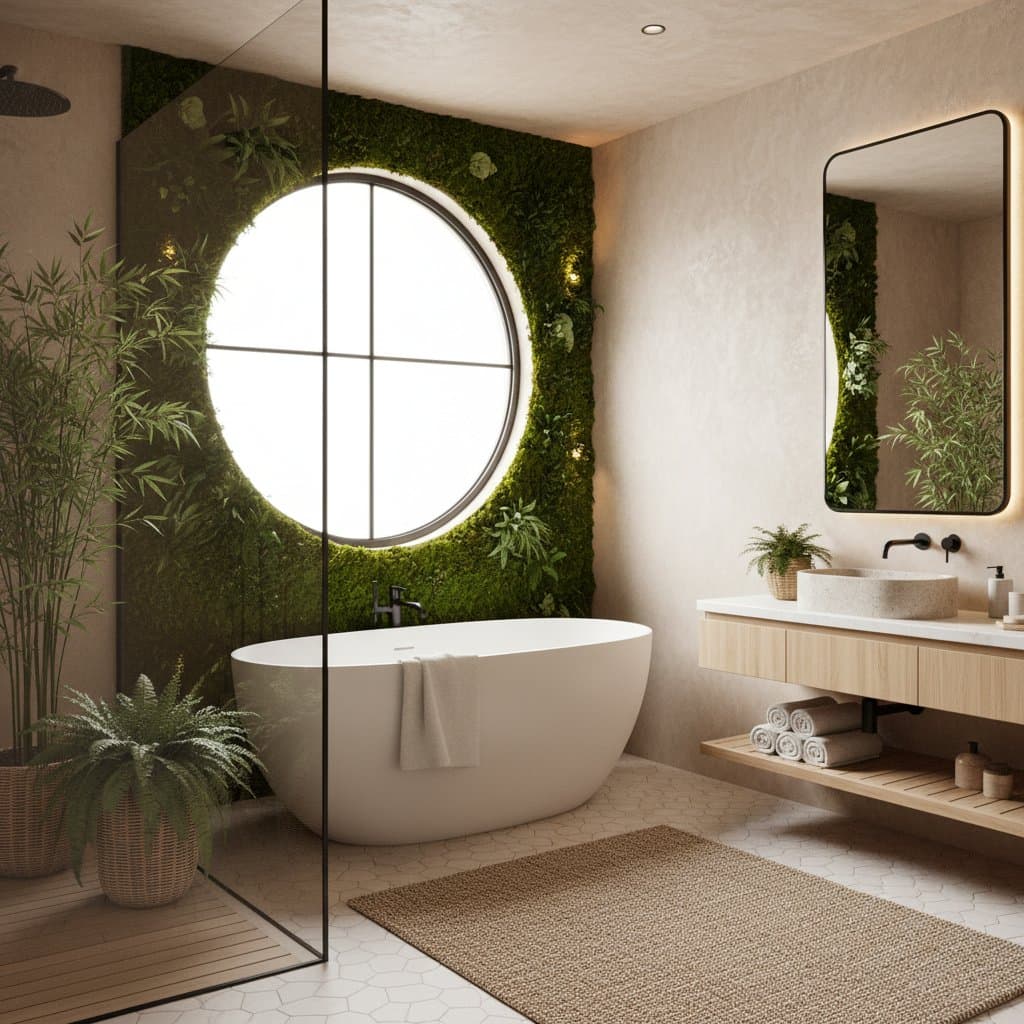
- Introduce organic elements like teak accessories or preserved plants tolerant of humidity.
- Use metallic fixtures in brushed nickel for subtle sheen that complements neutrals.
Balance the palette with 60% neutrals, 30% secondary tones, and 10% accents to create harmony.
Realizing Everyday Benefits
A completed wet room streamlines routines, from quick showers to leisurely soaks, with surfaces that dry rapidly and spaces that adapt to needs. Maintenance involves routine checks on seals and drains, ensuring sustained performance.
This guide equips you to navigate the process confidently, whether updating a modest powder room or crafting a luxurious en suite. The result is a haven that prioritizes safety, style, and serenity, enduring through years of use.