
2026 Wet Room Codes: What Waterproofing Will Cost You
Wet room renovations deliver spa-like luxury while requiring exact waterproofing to satisfy updated building codes. Homeowners pursue curbless showers and open bath layouts for better accessibility and resale value. Behind the finished tile and glass lies a sequence of code-compliant layers that determine both project cost and long-term performance.
Material selection, substrate preparation, and installation sequencing directly affect inspection outcomes and durability. The following sections detail accepted systems, associated expenses, and practical steps that keep projects on schedule.
Material Matters: Choosing the Right System
Sheet Membranes
Polyethylene rolls and rubberized asphalt sheets rank among the most reliable code-approved options. Complete kits from established manufacturers include matching drains and sealants. Material costs range from 6 to 10 dollars per square foot before labor.
These membranes provide consistent thickness and strong vapor resistance when overlaps and corners receive proper sealing. They also support large-format tile layouts that minimize grout lines and simplify cleaning.
Liquid-Applied Membranes
Liquid systems are rolled or sprayed onto irregular surfaces where sheet cutting proves difficult. Average material expense falls between 3 and 6 dollars per square foot. Multiple thin coats checked with a wet-film gauge prevent pinholes that fail inspection.
Installers often apply these membranes under mosaic tile or curved benches because the fluid application reaches every contour. A primer coat improves adhesion on porous substrates.
Cementitious Waterproofing
Cement-based coatings remain acceptable under many local codes and bond readily to concrete backer board. Material prices start at 2 to 4 dollars per square foot. Flexibility is limited, so these coatings perform best on stable, rigid surfaces.
A second flexible membrane placed over the cementitious layer compensates for minor substrate movement and extends service life.
Wall Systems and Code Requirements
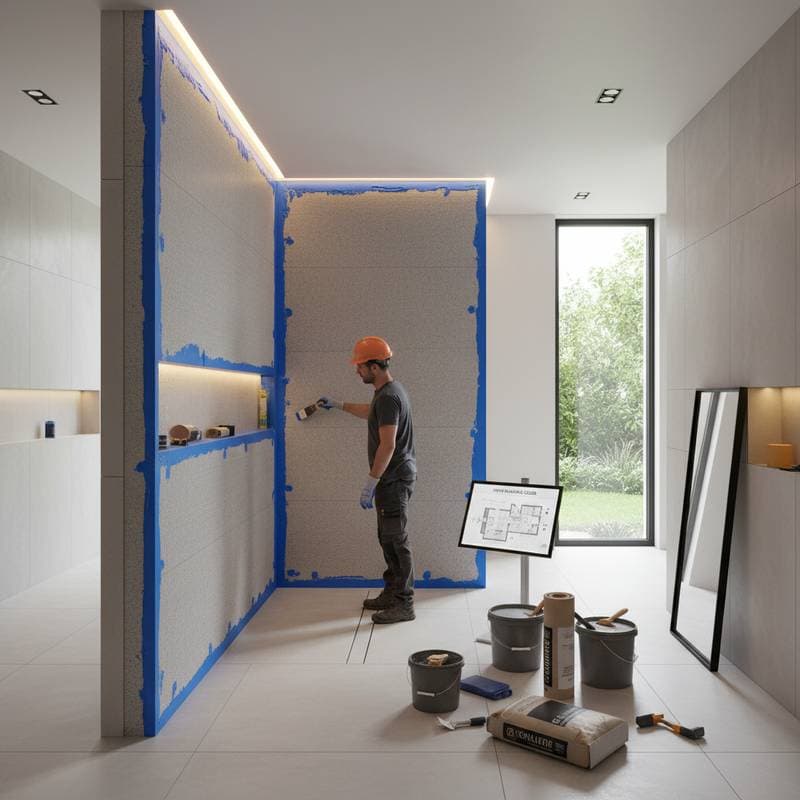
Current codes require cement backer board or foam-core panels in all wet-zone walls, including areas outside direct spray. Standard drywall no longer satisfies vapor-control standards.
Cement backer boards cost 1.50 to 2.50 dollars per square foot. Seams must be taped and coated with waterproof mortar. Foam-core panels such as Wedi or Kerdi-Board integrate waterproofing during manufacture, reducing steps and labor. These panels range from 4 to 7 dollars per square foot and can be shaped into benches or niches without additional framing.
Case Studies in Design and Compliance
Urban Calm
A narrow Manhattan bath received matte gray porcelain tile and a recessed linear drain. A full sheet-membrane system satisfied code while preserving an uninterrupted floor plane that visually enlarges the space.
Forest Retreat
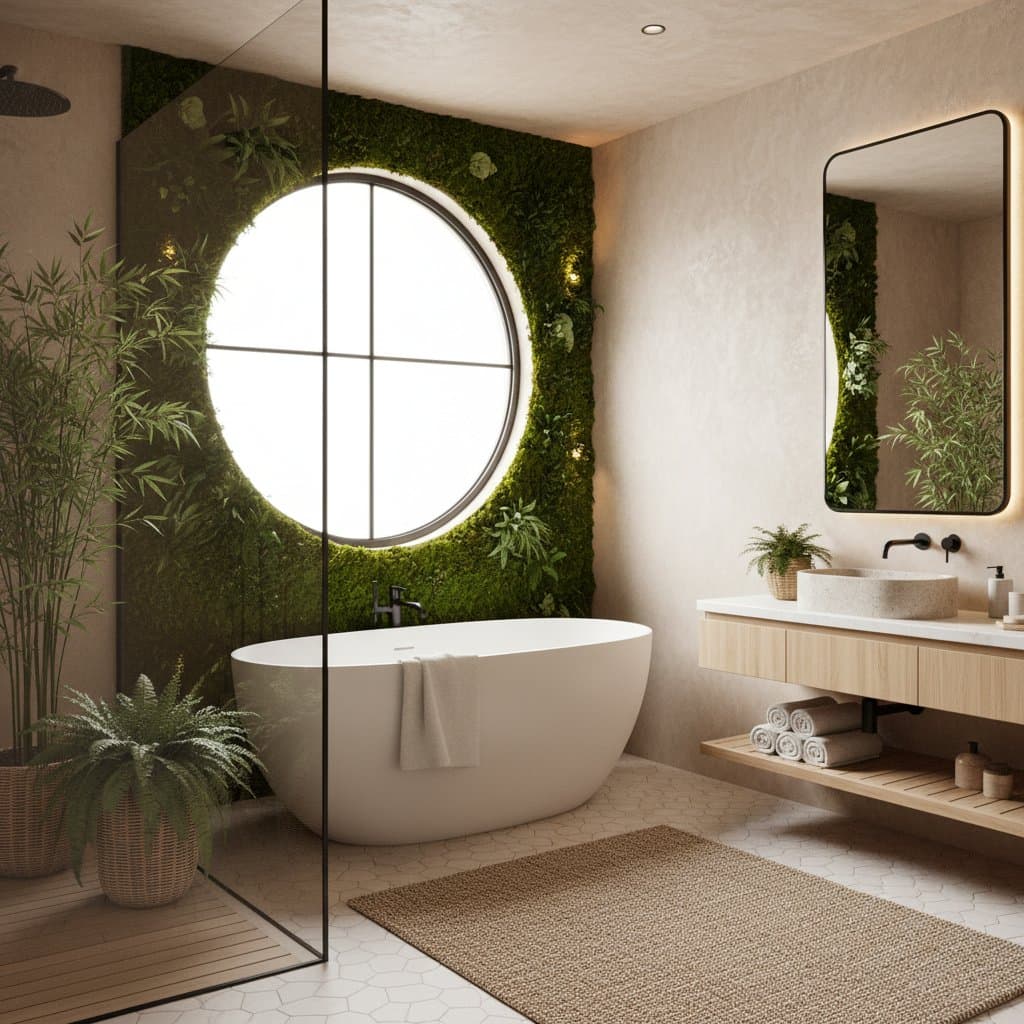
Outside Portland, tumbled limestone tile was installed over cementitious waterproofing. A custom center drain pan maintained proper slope on an uneven subfloor, allowing the surrounding lime-plaster walls to remain breathable yet protected.
Minimal Luxe
A Miami high-rise shower finished in white terrazzo used a liquid-applied membrane beneath a bonded linear drain. The system met both drainage slope and vapor-retardant requirements while supporting a polished brass fixture package.
Common Mistakes to Avoid
- Omitting the required primer coat, which leads to delamination within the first year.
- Leaving corners, niches, and sills without reinforcement strips that code inspectors specifically check.
- Setting the drain flange above or below finished tile height, which prevents complete water runoff.
- Combining membranes and sealants from different manufacturers, voiding warranty coverage.
- Neglecting continuous vapor barriers behind tile, allowing moisture to migrate into wall cavities.
Design Trends Influencing Waterproofing Choices
Continuous floor-to-wall surfaces in neutral stone tones remain popular. Curbless entries now require recessed subfloors or raised perimeters that increase framing and membrane complexity. Tile-insert drains that hide the grate demand precise alignment so the waterproofing layer stays level with the finished surface.
Recycled-polymer membranes satisfy the same performance standards while meeting sustainability goals for some projects.
The True Cost of Compliance
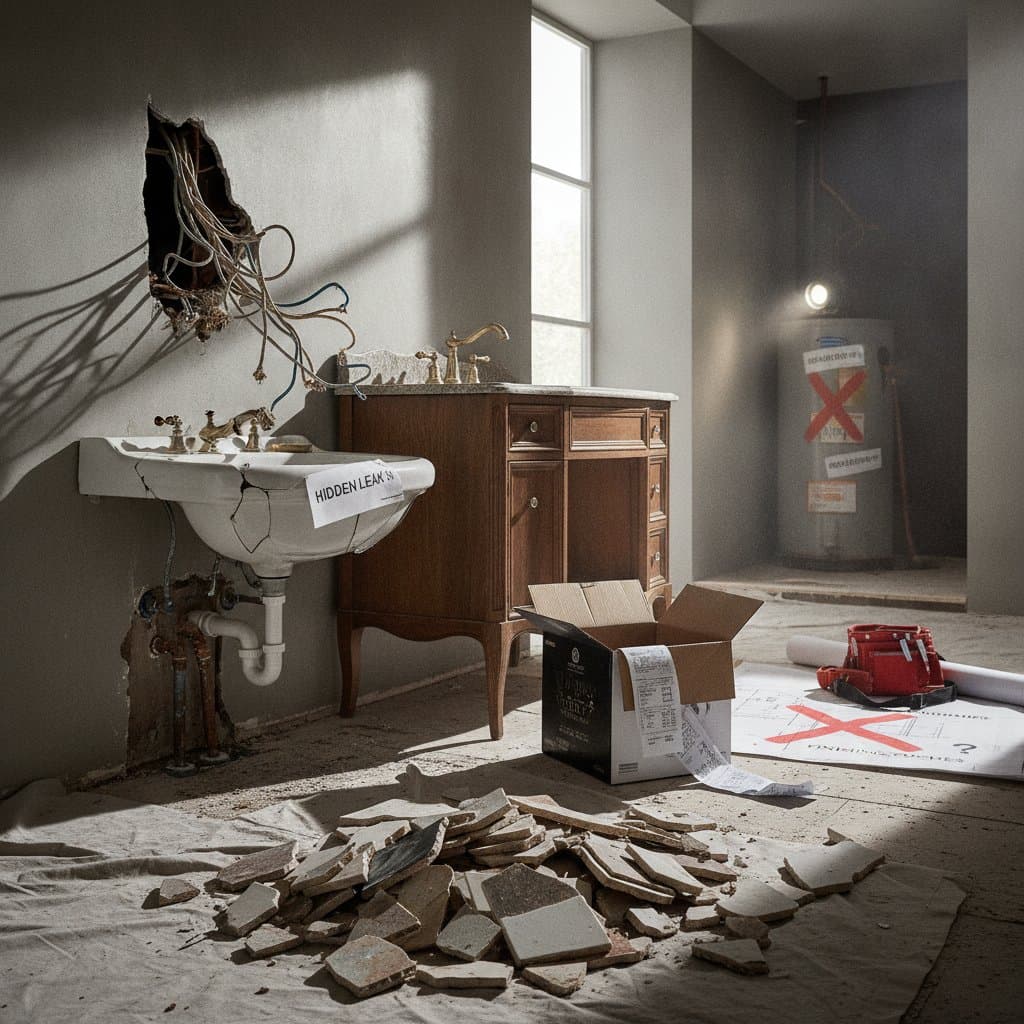
A code-compliant wet room typically totals between 18,000 and 32,000 dollars. Waterproofing represents 10 to 20 percent of that budget. Older homes often need an additional 1,500 to 3,000 dollars for subfloor leveling and slope corrections before membranes can be installed.
Professional installation prevents silent water intrusion that appears years later as swelling or odor. Proper sequencing protects every finish layer above it.
Planning Your Wet Room Project
Begin with a site assessment that confirms substrate condition and required slope. Select a membrane system compatible with the chosen tile format, then schedule inspections at each layer. This sequence delivers a durable, code-approved space that maintains both appearance and structural integrity for decades.