

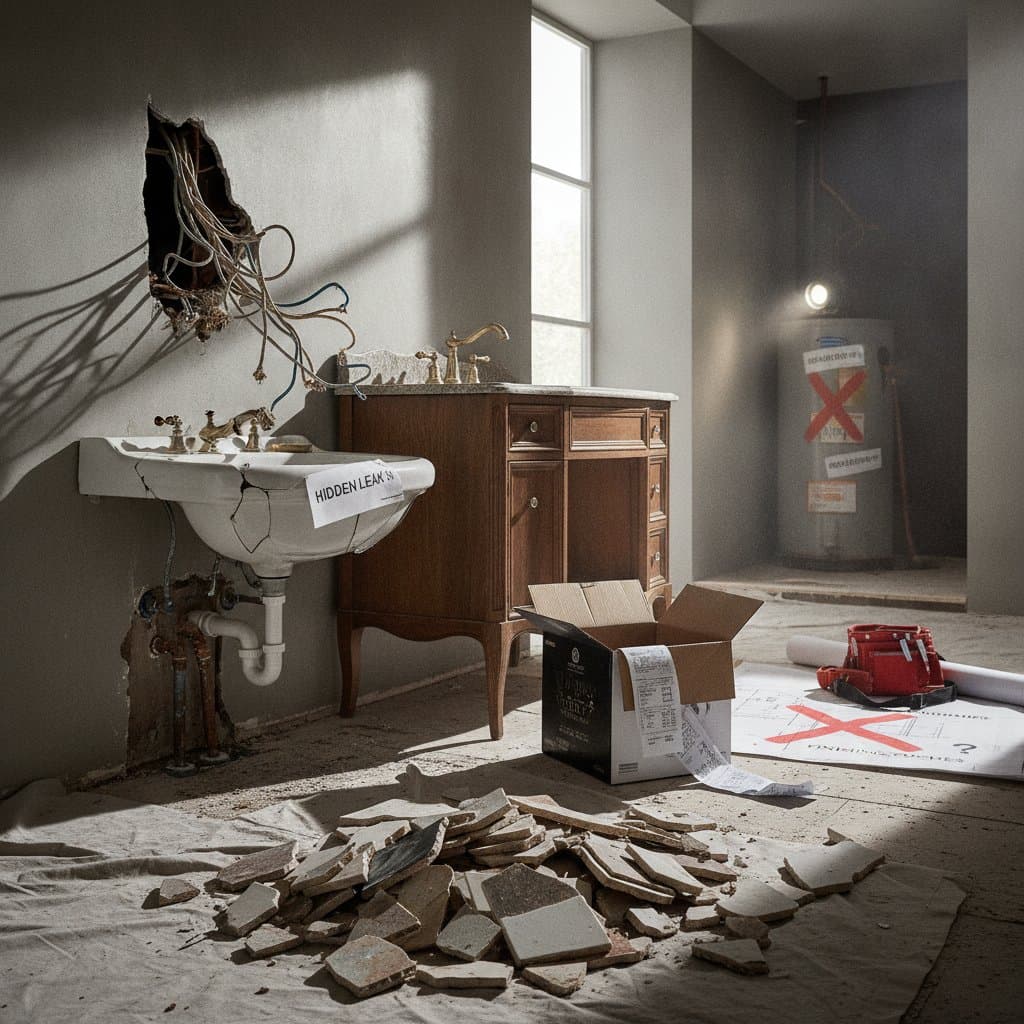
Budget Traps Hiding in Your Bathroom Remodel
A bathroom remodel can unravel hidden costs faster than expected. From plumbing surprises to finishing details, every phase carries risks that inflate expenses. Homeowners often overlook key areas until bills arrive. Planning with awareness prevents these issues from derailing the project.
Identify Potential Cost Overruns Early
- Inspect all existing plumbing lines for corrosion or improper sizing before demolition begins.
- Verify electrical capacity meets modern code requirements for new fixtures and lighting.
- Measure vanity and cabinet dimensions against doorways to avoid custom fabrication fees.
- Account for tile waste rates of 10 to 15 percent during material orders.
- Review permit fees and inspection schedules specific to your local jurisdiction.
Plumbing and Pipe Complications
Outdated pipes frequently surface once walls open. Galvanized steel or cast iron lines may require full replacement rather than simple connections. This work adds labor hours and material expenses that were absent from initial quotes. Schedule a camera inspection of drain lines prior to any demolition to reveal blockages or collapses.
Water pressure problems also emerge during fixture upgrades. New showerheads and faucets demand adequate supply volume. Installing a booster pump or resizing supply lines becomes necessary when tests show shortfalls. These additions surface after rough-in work starts, creating change orders.
Electrical and Ventilation Updates
Bathroom circuits often lack capacity for heated floors, lighted mirrors, and exhaust fans running simultaneously. Upgrading the panel or adding dedicated circuits requires electrician time and possible drywall repair elsewhere. Confirm amperage loads during the design phase rather than after fixtures arrive.
Moisture control depends on proper fan sizing and duct routing. Undersized units fail to clear steam, leading to mold remediation later. Route ducts to exterior walls with minimal bends to maintain airflow efficiency. These details affect both material selection and installation sequencing.
Vanity and Storage Selection
Stock vanities rarely fit older bathroom footprints without modification. Custom builds increase lead times and costs when plumbing rough-ins sit at nonstandard heights. Order units early and confirm cabinet backs allow access to shutoff valves.
Countertop materials introduce another variable. Natural stone requires sealing and precise templating after cabinet installation. Delays in templating push back subsequent trades and extend project duration. Quartz or solid surface options offer more predictable scheduling in many cases.
Finishing Details and Material Waste
Grout, caulk, and transition strips accumulate quickly across multiple surfaces. Small quantities purchased repeatedly cost more than bulk orders planned in advance. Include these items in the initial material list with a 10 percent contingency.
Hardware finishes must match across faucets, towel bars, and lighting. Substituting pieces mid-project creates visible inconsistencies that require full replacement. Lock in finish specifications before ordering begins.
Sequencing Work to Control Expenses
Coordinate trades so demolition reveals all hidden conditions before new materials arrive on site. This order prevents storage fees and damage to finished goods. Establish a written change order process that requires approval before any deviation from the original scope.
Maintain a running total of approved expenses against the contingency fund. Review this total weekly with the contractor to catch trends before they exceed reserves. Adjust material selections or scope items while options remain open.
Protect Your Overall Investment
Allocate time for multiple contractor interviews that include line-item pricing rather than lump sums. Compare each line across bids to spot omitted tasks that later generate extras. Retain 15 percent of the total budget as a true contingency that covers only unforeseen structural or code issues.
Document every decision with photographs and written confirmations. This record supports warranty claims and clarifies responsibility if finishes fail to meet expectations. Thorough preparation converts potential budget traps into manageable line items.