
2026 Waterproofing Strategies for Leak-Free Wet Rooms
Picture a modern wet room where a curbless shower delivers spa-level luxury alongside reliable daily performance. Walls shine without blemish, floors channel water smoothly to drains, and no unwanted moisture appears in hidden areas. This ideal setup depends on meticulous waterproofing, the foundational aspect of bathroom construction that ensures longevity and ease of use.
Waterproofing extends beyond mere leak prevention. It establishes a robust base for hygiene, structural integrity, and user confidence. The following strategies outline how professionals construct wet rooms that combine aesthetic appeal with superior functionality.
1. Select Stable, Moisture-Resistant Substrates
The foundation of any wet room lies in the substrate, the supportive layer beneath tiles or finishes. This material requires absolute stability and resistance to water exposure. Standard drywall or untreated plywood deteriorates quickly in moist conditions, leading to mold and structural failure.
Opt for cement backer boards or specialized waterproof foam boards engineered for wet environments. These options withstand humidity, prevent microbial growth, and offer a solid anchoring point for tiles. Secure all board joints with alkali-resistant waterproofing tape and a matching thin-set mortar to eliminate pathways for water infiltration.
2. Apply Seamless Waterproofing Membranes
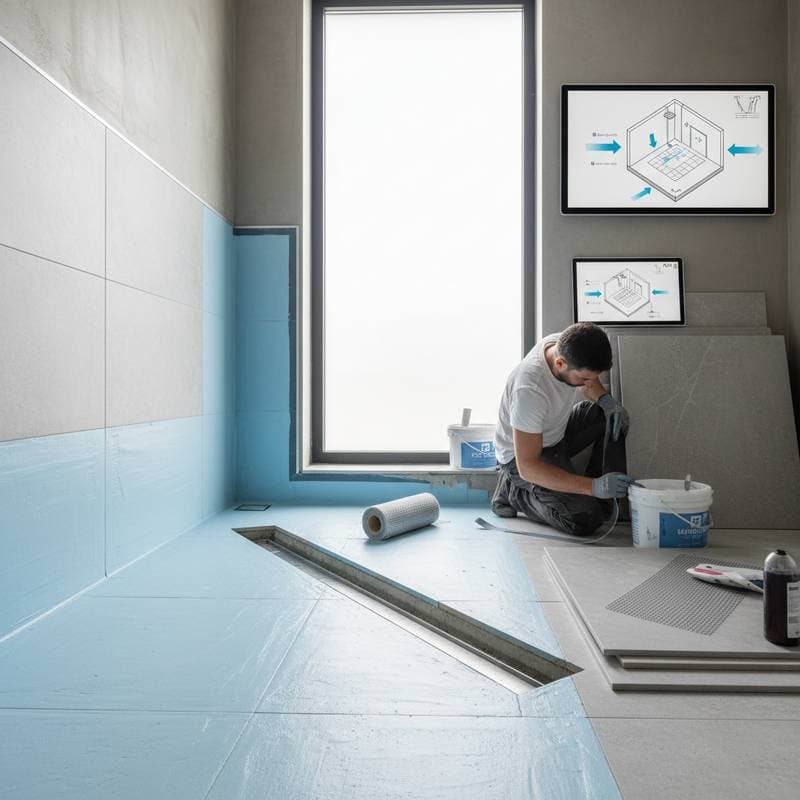
Treat the entire wet room as a unified waterproof system encompassing walls, floors, and adjacent ceiling areas. Begin by installing a liquid-applied waterproofing membrane or a prefabricated sheet membrane over the prepared substrate prior to tiling.
Liquid membranes, applied via brush or roller, dry to form a flexible, monolithic barrier that accommodates minor movements. Sheet membranes, rolled out and adhered with thin-set mortar, provide reliable coverage in larger areas. Ensure overlaps exceed six inches, reinforce corners with pre-folded membrane pieces, and conduct a visual inspection for uniform application.
3. Engineer Precise Floor Slopes and Drainage
Superior waterproofing proves ineffective without effective water evacuation. In curbless designs, achieve a consistent slope of one-quarter inch per linear foot toward the drain to facilitate rapid runoff and eliminate standing water.
Incorporate linear drains positioned along a wall to support uniform sloping and accommodate oversized tiles. This configuration minimizes cutting requirements and maintains a minimalist aesthetic. Confirm compatibility between the drain assembly and membrane system through manufacturer guidelines to prevent vulnerabilities at connection points.
4. Secure All Penetrations Against Leaks
Pipes, valves, and fixtures represent high-risk points where water can breach the system. Neglecting these elements often results in the most frequent waterproofing failures.
Install pre-manufactured waterproofing flanges or rubber gaskets around each penetration, bedding them in thin-set mortar for a compression-fit seal. For surface-mounted hardware such as shower arms, apply a continuous bead of 100 percent silicone sealant at the tile interface. Avoid dependence on grout alone, as its porous nature permits gradual water passage.
5. Integrate Compatible Waterproofing Components
Incompatibility among waterproofing products can undermine the entire assembly. Select components from a single manufacturer or verified system to guarantee adhesion and performance synergy.
Review technical data sheets to confirm that backer boards, membranes, sealants, and drains share aligned chemical compositions and curing requirements. Consult with installers to verify compliance with industry standards like ANSI A118.10 for waterproofing efficacy. This approach minimizes risks and enhances overall system reliability.
6. Specify Performance-Oriented Tiles and Grout
Tiles serve both decorative and protective roles in wet rooms. Prioritize porcelain or vitrified ceramic tiles with water absorption rates below 0.5 percent to resist moisture uptake and cracking.
Larger-format tiles enhance visual continuity but demand precise slope execution to avoid lippage. Pair them with epoxy-based grout, which offers superior resistance to water, chemicals, and staining compared to cementitious alternatives. Epoxy grout maintains integrity in humid conditions, reducing cleaning frequency and preserving appearance.
7. Perform Comprehensive Flood Testing
Validate the waterproofing integrity through a flood test before committing to tile installation. Temporarily dam the perimeter and fill the floor area to a depth of two inches, allowing the water to stand for a full 24 hours.
Monitor for any seepage on the underside or adjacent surfaces, addressing issues immediately with additional membrane applications. This proactive measure safeguards against costly rework once tiles are in place. Professionals consider it indispensable for high-stakes installations.
8. Incorporate Ventilation and Ongoing Maintenance
A sealed wet room still requires airflow to manage humidity and prevent condensation buildup. Position a high-capacity exhaust fan, rated at least 50 CFM, directly above the shower zone to extract moist air efficiently.
Operate the fan for 20 minutes post-shower and maintain it by cleaning the grille quarterly. Routinely inspect and reseal silicone joints, clear drain strainers, and wipe surfaces to sustain the system's performance over time.
Realize the Benefits of a Secure Wet Room
With waterproofing executed to these standards, your wet room transforms into a dependable retreat. Heated floors respond evenly, cleaning requires minimal effort, and concerns about subsurface damage vanish.
This unseen engineering empowers open layouts and contemporary features without compromise. For any scale of project, from modest updates to luxurious expansions, prioritize these methods to secure a space that delivers consistent comfort and resilience.