
Budget-Friendly Mudroom Layouts for 2025
If you have ever tripped over a pile of shoes near the front door, you understand the appeal of a well-organized mudroom. In an ideal scenario, this space serves as a serene area where items find their designated spots, towels remain clean, and muddy tracks stay outside. In practice, it often becomes a hub of disorder where bags accumulate, boots scatter, and socks appear unexpectedly. With thoughtful planning, however, you can develop a functional and attractive mudroom that respects your budget and enhances daily routines.
Understanding Ideal and Practical Mudrooms
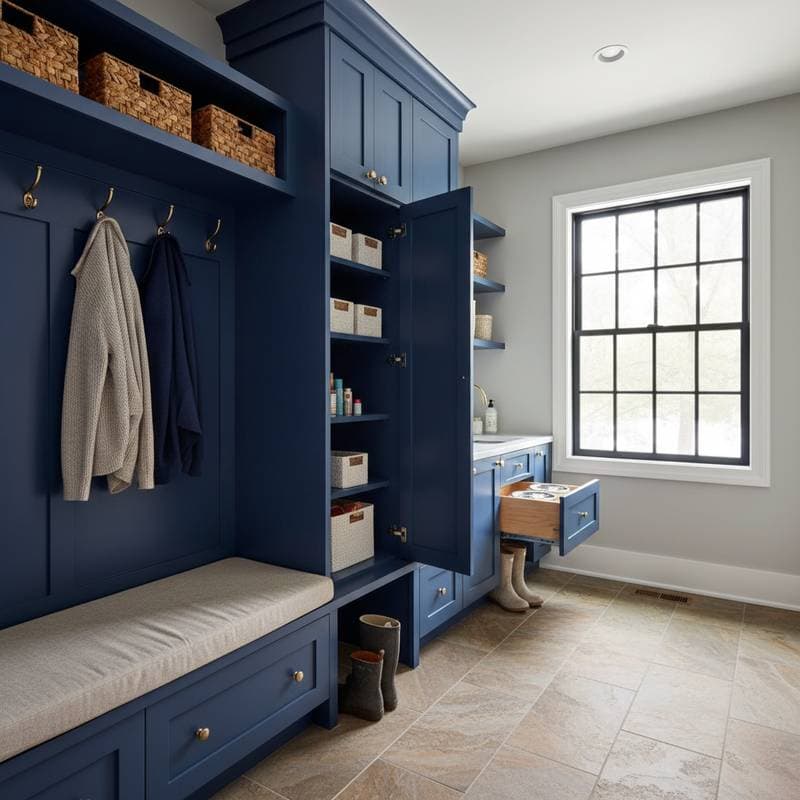
The idealized mudroom resembles a feature from a high-end design publication, complete with custom oak benches, brass hooks, and self-maintaining storage. The everyday version features assorted rain boots, multiplying backpacks, and pets claiming furniture as territory. The key lies in blending utility with appeal while keeping expenses manageable.
During my own entryway renovation, initial plans included bespoke cabinets and radiant floor heating. The cost estimate quickly grounded those ambitions. Through creative approaches and basic DIY efforts, such as painting, I achieved a welcoming, orderly space that supports real-life demands.
Planning the Layout First
Before any purchases, map out the layout using a simple sketch to reflect actual usage patterns. Consider traffic flow: where do shoes typically collect, and where do coats gather? The goal is to accommodate these behaviors rather than resist them.
Effective layouts divide the area into three distinct zones:
-
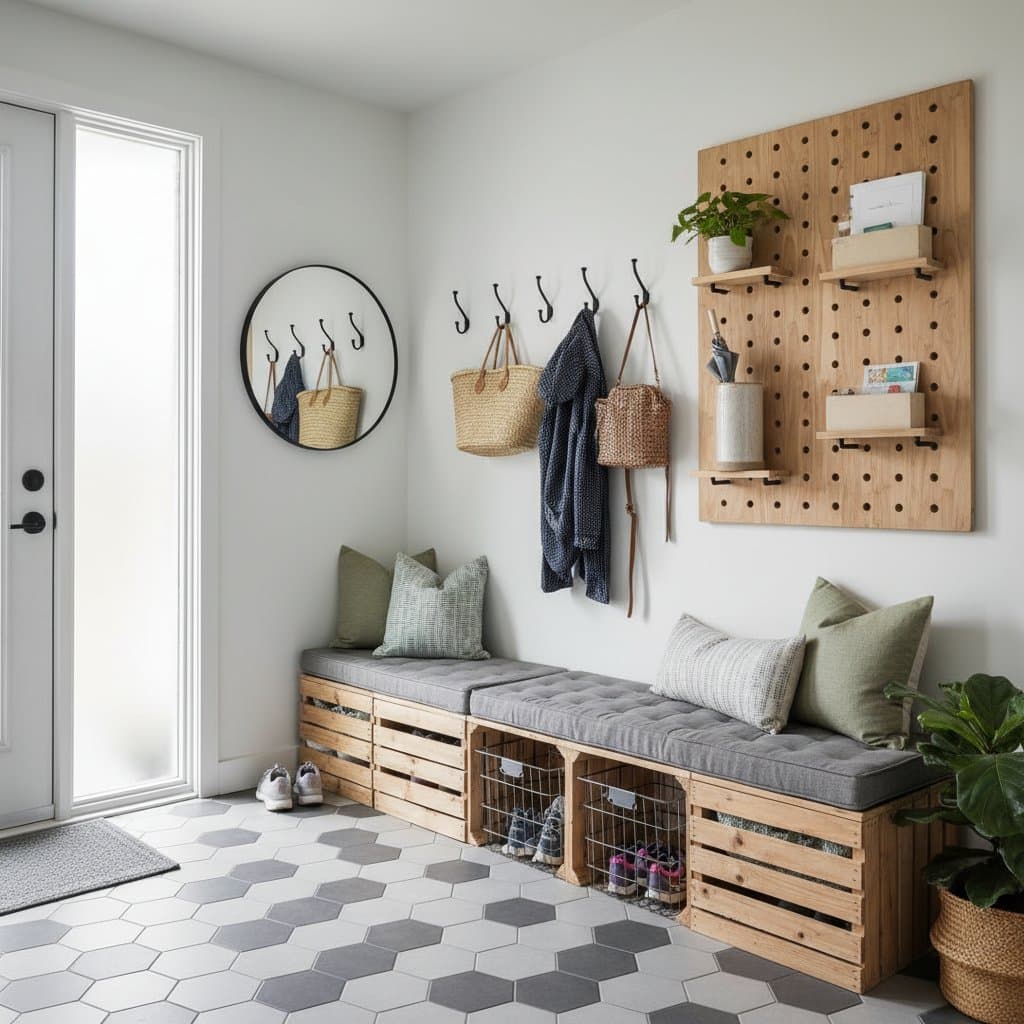
Drop Zone: Install a bench or shelf for keys, mail, and bags. This setup confines clutter and prevents morning rushes to locate essentials like keys.
-
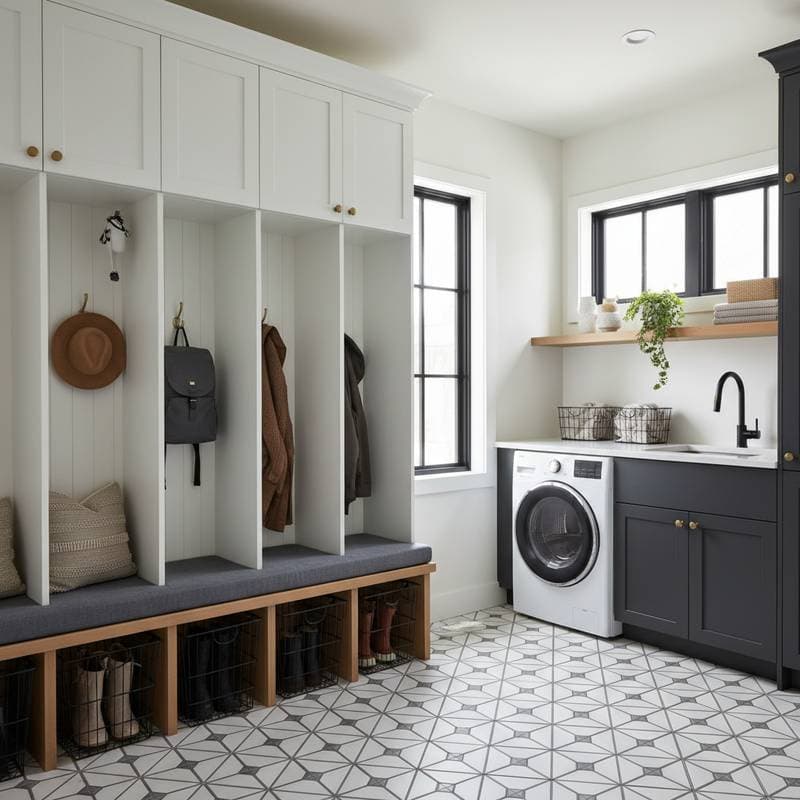
Storage Zone: Use hooks for coats, cubbies for footwear, and baskets for accessories. Modular units provide flexibility at a lower cost than permanent installations.
-
Cleaning Zone: In larger areas, incorporate a compact sink or boot-washing mat. For tighter spaces, a durable doormat paired with a towel hook suffices to manage dirt effectively.
Evaluate family habits realistically. If children rarely reach high hooks, install lower ones to encourage use and maintain tidiness.
Selecting Cost-Effective Materials and Features
A successful remodel avoids financial strain by focusing on strategic material choices.
-
Repurpose Existing Items: Convert an old dresser into a bench by removing upper drawers, then add a padded seat for combined storage and seating.
-
Apply Paint Strategically: Choose one color to harmonize disparate pieces. Neutral tones promote tranquility, while deeper shades conceal wear from daily use.
-
Source Second-Hand Options: Locate benches or hooks through online marketplaces or thrift stores. Sanding followed by a fresh coat of paint restores them affordably.
-
Focus Investments Wisely: Allocate funds to essentials like resilient flooring and adequate lighting. Avoid inexpensive options that degrade quickly under moisture and traffic.
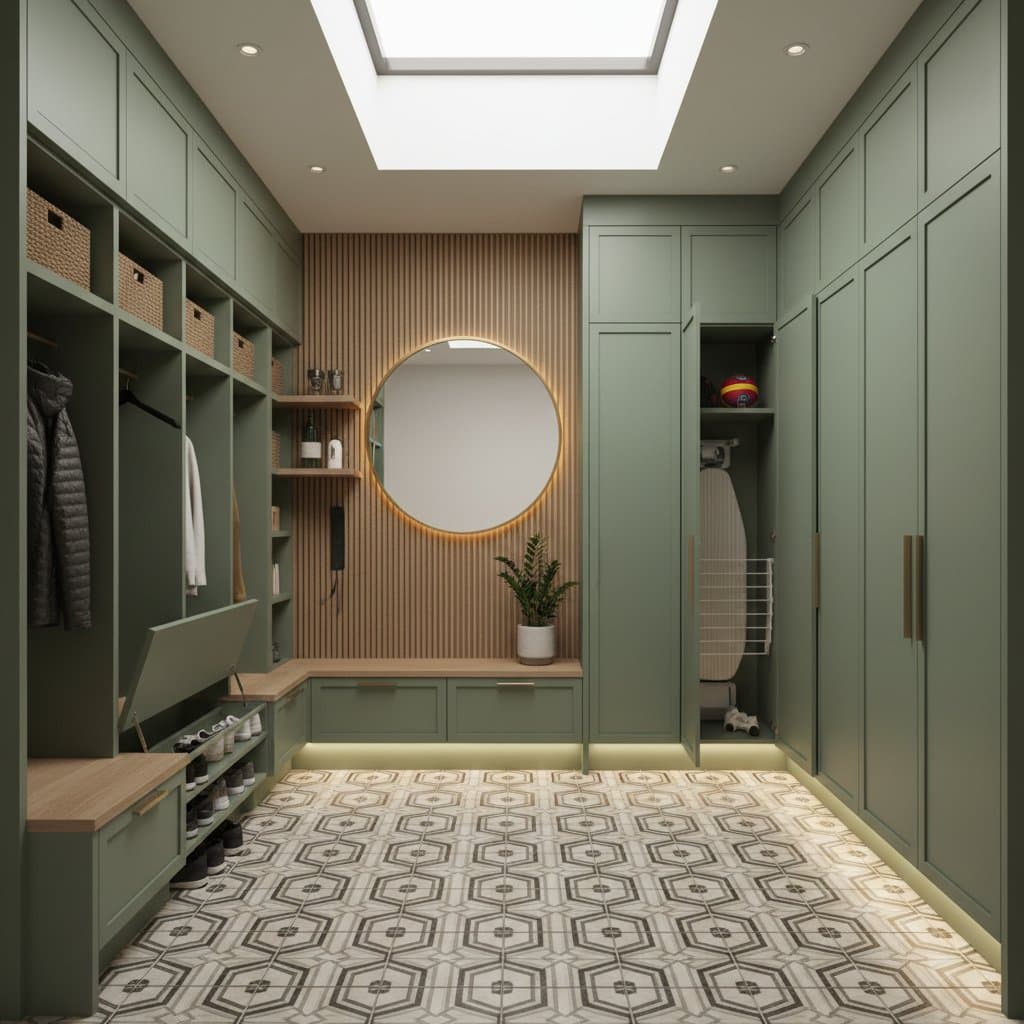
In my project, I invested in a quality wall fixture for ambiance and reused surplus tiles for the floor. The lighting elevates the overall feel, and the eclectic tiles contribute authentic character.
Optimizing Layouts for Compact Areas
Even limited spaces benefit from targeted design strategies to enhance efficiency.
-
Emphasize Vertical Space: Mount hooks, shelves, and slim cabinets to exploit wall height. Position daily items at reachable levels and store off-season goods overhead.
-
Incorporate Sliding Doors: For mudrooms adjacent to living areas, sliding panels conserve floor space compared to swinging doors.
-
Design Benches with Integrated Storage: Build or buy a bench featuring under-seat drawers or baskets to elevate items off the ground and simplify retrieval.
-
Add Strategic Mirrors: Place a mirror to reflect light, expanding the perceived size, and offer a quick appearance check before departures.
Integrating Aesthetics with Functionality
While utility drives the mudroom, its role as an entry point warrants aesthetic consideration to welcome visitors warmly.
Hang a modest artwork or print above the bench for visual interest. Introduce a plant where natural light reaches, or select a realistic artificial one otherwise. A patterned rug conceals soil while infusing coziness. Quality lighting, such as a pendant fixture or sconce, refines the space and supports tasks like sorting mail.
Infuse personal elements to align with lifestyle. For outdoor enthusiasts, display woven baskets for hiking poles or leashes. Urban residents might prefer a minimalist rail and neutral scheme. This approach ensures the mudroom integrates seamlessly with the home.
Maintaining the Design Over Time
After installation, observe how the space performs amid routine activities. Mudrooms endure constant use and rarely remain spotless. Select forgiving elements: hooks over rods for coats, open baskets over enclosed drawers, and robust flooring resistant to tracked-in grime.
Realizing Everyday Benefits
With your mudroom complete, notice the smoother transitions into daily life, from streamlined mornings to tidier evenings. This organized entryway reduces stress and sets a positive tone for the home. Share your solutions with others to inspire similar improvements and sustain the space's effectiveness.