
2026 Laundry Remodel: Costs, Layouts, and Smart Ideas
Laundry rooms often serve as the unsung heroes of the home, handling daily chores amid limited space and functionality. Many homeowners envision a serene utility area that streamlines tasks and adds subtle style. This guide explores remodel options that avoid plumbing disruptions, focusing on costs, layouts, and practical enhancements to create an efficient space.
What Does a Laundry Remodel Really Cost?
Costs for a laundry remodel vary based on scope and materials. A basic refresh, such as painting walls, updating lighting, and adding organizational elements, typically ranges from $1,000 to $3,000. A comprehensive renovation, including new cabinetry, countertops, and appliances, can reach $10,000 to $20,000 or more.
Key factors include cabinetry, flooring, and appliances. Retaining the existing appliance positions eliminates the need for plumbing or electrical rerouting, which can add $2,000 to $5,000. Opt for stock cabinets over custom designs to reduce expenses by up to 50 percent. For example, installing laminate countertops instead of quartz saves several hundred dollars while providing durability.
To maximize value, prioritize high-impact changes. Replace outdated hardware with modern pulls for under $200, and apply peel-and-stick backsplashes to refresh the area without major demolition.
Planning the Perfect Layout
Effective layouts prioritize workflow to minimize effort during laundry tasks. Position the washer and dryer side by side or stacked to facilitate smooth transitions from washing to drying. Include a dedicated folding surface, such as a 36-inch countertop extension, to prevent precarious stacking on machines.
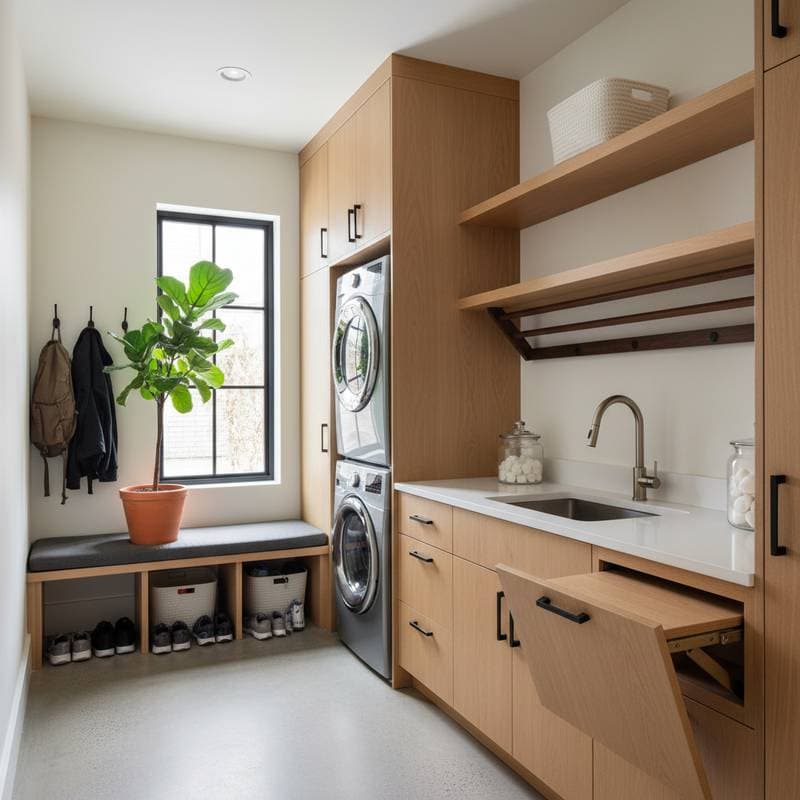
In compact areas, vertical space proves essential. Stackable washer-dryer units save floor area, but verify weight capacity and secure them to wall studs for stability. For galley-style setups under 6 feet wide, incorporate open shelving above appliances to store detergents and supplies within arm's reach.
Enhance openness with strategic elements. Light-colored walls reflect natural light, while LED under-cabinet strips provide focused illumination. Mirrored panels on end walls create an illusion of depth, making narrow rooms feel more spacious.
Combining Laundry and Mudroom Spaces
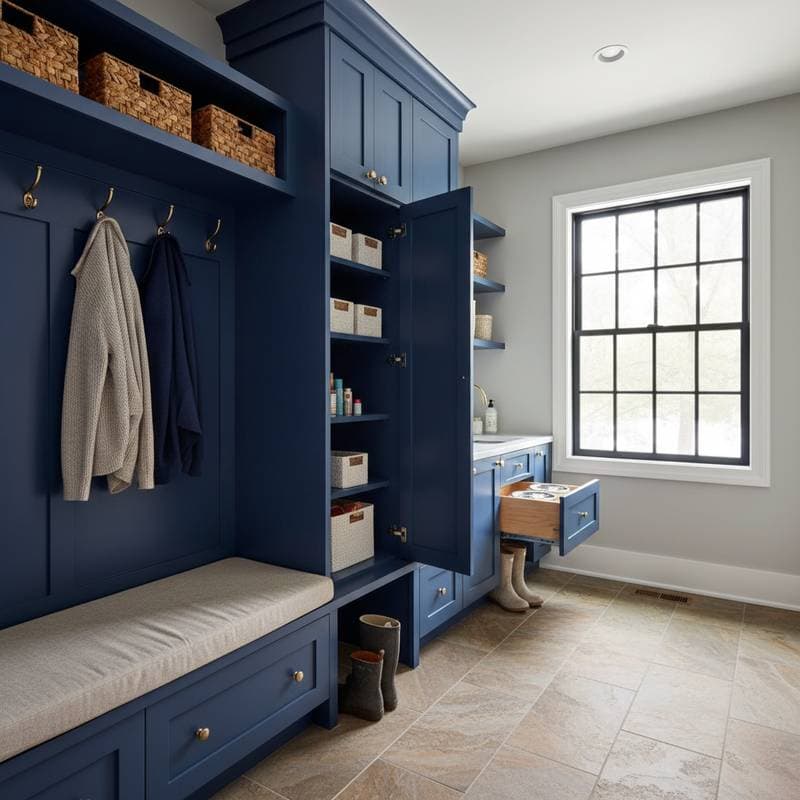
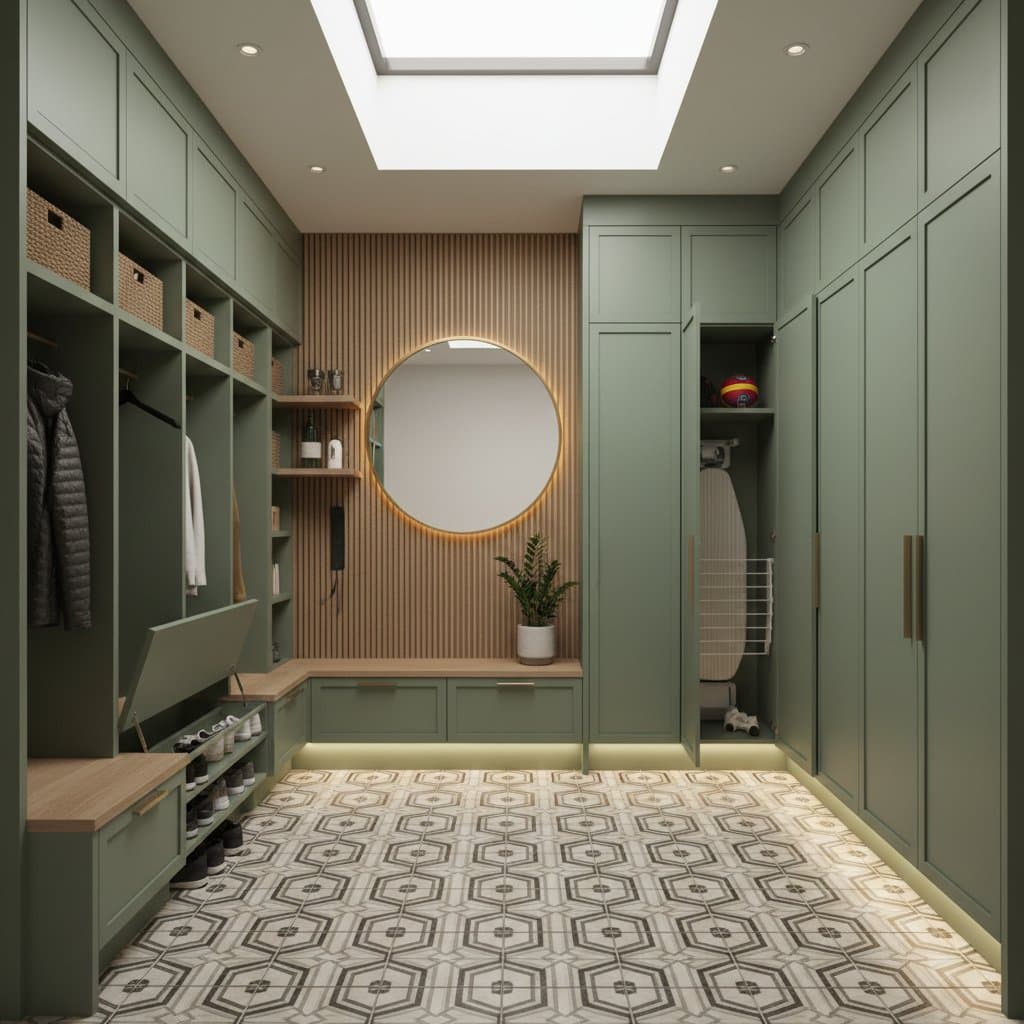
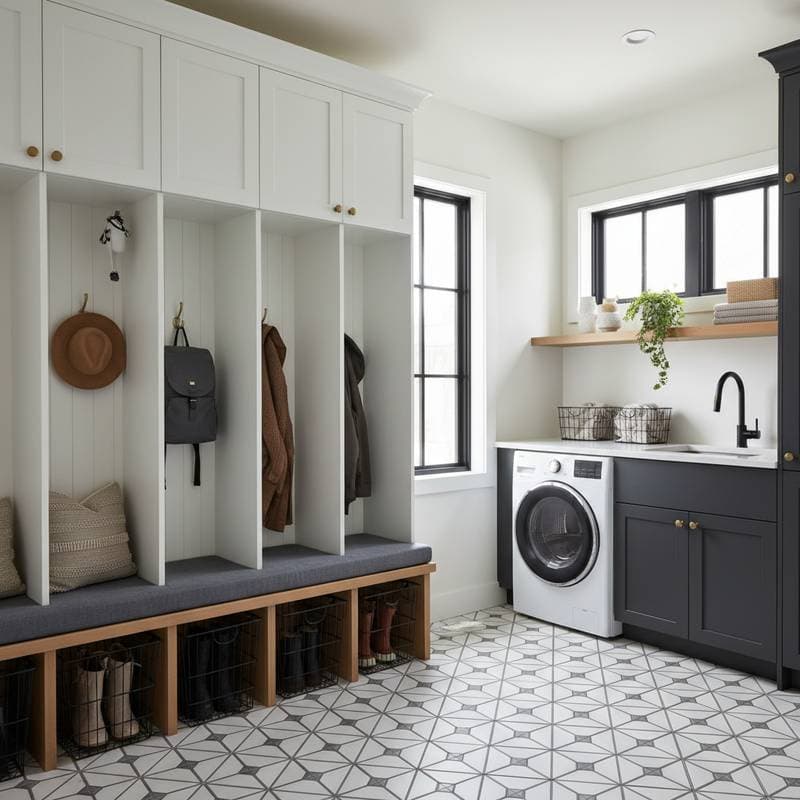
Integrating laundry with a mudroom enhances convenience, particularly in homes with active families or pets. Place the washer near the entry to contain dirt at the source, reducing tracked mud throughout the house. Add a built-in bench with cubbies below for shoe storage, measuring 18 to 24 inches deep to accommodate boots.
Define zones to maintain cleanliness. Install a low partition or use contrasting flooring materials, such as vinyl in the mudroom transitioning to tile in the laundry area. Wall-mounted hooks spaced 12 inches apart organize coats, leashes, and bags without cluttering floors.
This hybrid approach streamlines routines. A simple addition like a removable drying rod above the bench allows air-drying items post-mudroom use, keeping wet gear separate from clean laundry.
Smart Ideas to Make Laundry Day Less of a Chore
Incorporate features that address common pain points for lasting efficiency. Select elements that fit seamlessly into the existing footprint, avoiding structural changes.
- Built-in drying racks: Install retractable models on walls or cabinet doors, supporting up to 20 pounds of delicates without occupying counter space.
- Pull-out ironing board: Mount a 12-inch wide board inside a base cabinet, extending fully for use and retracting to preserve walkway clearance.
- Laundry sorting bins: Embed tilt-out hampers in lower cabinets, divided into three compartments for whites, colors, and delicates to simplify presorting.
- Task-specific lighting: Combine recessed ceiling fixtures with adjustable LED strips under shelves, offering 3000K warm tones to reduce eye strain during sorting.
- Resilient flooring options: Choose waterproof vinyl planks or porcelain tiles with grout sealant, rated for high-traffic areas to withstand spills and drops.
These upgrades transform routine tasks. For instance, automated shut-off outlets for irons prevent energy waste and safety risks.
Steps to Launch Your Remodel
Begin by evaluating current usage patterns. Measure the space precisely and note bottlenecks, such as insufficient counter depth or poor lighting. Consult local contractors for quotes on non-plumbing elements to establish a realistic budget.
Sketch multiple configurations using graph paper or free design software, testing for ergonomics like 36-inch clearances around appliances. Start with cosmetic updates if funds limit scope, then phase in structural additions. This methodical approach ensures the final space supports daily needs while boosting home value.