
Master 2026 Mudroom Costs Through Strategic Layout Planning
Recent analysis of popular mudroom remodels on design platforms reveals a shift toward multifunctional entry spaces that prioritize organization and aesthetics. Searches for terms like custom built-ins, family locker systems, and multifunctional benches have surged, reflecting a desire for entryways that serve as welcoming transitions rather than mere utility areas. This guide examines key cost drivers, effective layout approaches, and design techniques to create a mudroom that aligns with household needs while optimizing expenses.
Data from completed projects indicates that thoughtful planning at the outset can lower overall costs by up to 20 percent through efficient material use and reduced rework. Professionals emphasize mapping daily routines before finalizing designs to ensure every element supports practical use. The sections ahead provide detailed strategies drawn from successful remodels and expert recommendations.
Essential Steps for Layout Planning
Effective mudroom layouts accommodate daily entry and exit patterns while maximizing available space. Begin by observing traffic flow: note where family members place keys, hang coats, or remove shoes. This assessment informs a configuration that minimizes congestion and enhances accessibility.
Three configurations lead current trends in remodels:
-
Galley Configurations
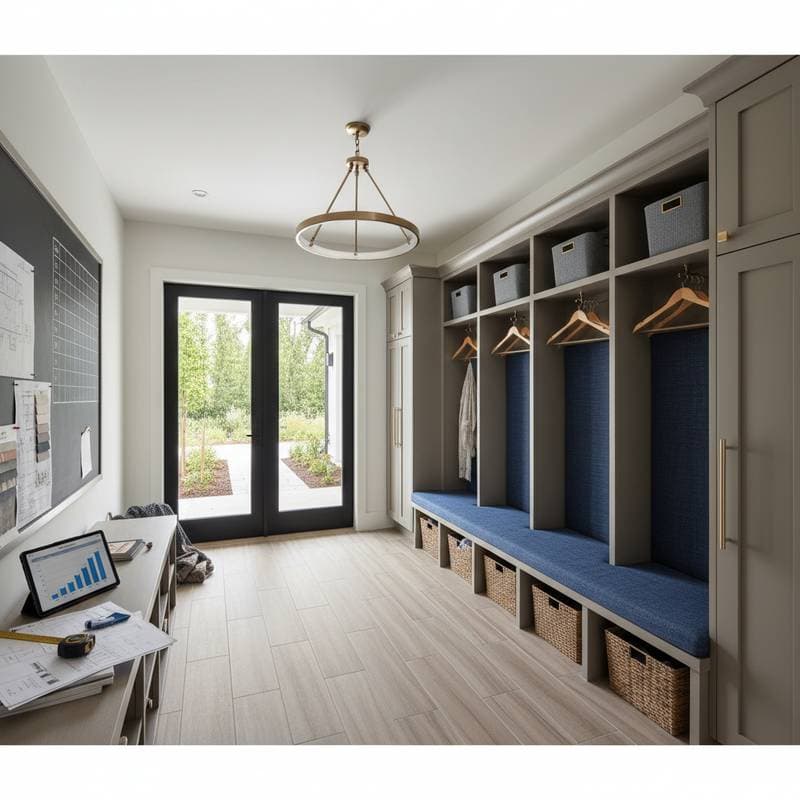
Suited to narrow areas or side entrances, these feature built-in storage along one wall to preserve a central pathway. Incorporate shaker-style cabinetry paired with a resilient area rug to introduce texture and prevent slips. -
L-Shaped Arrangements
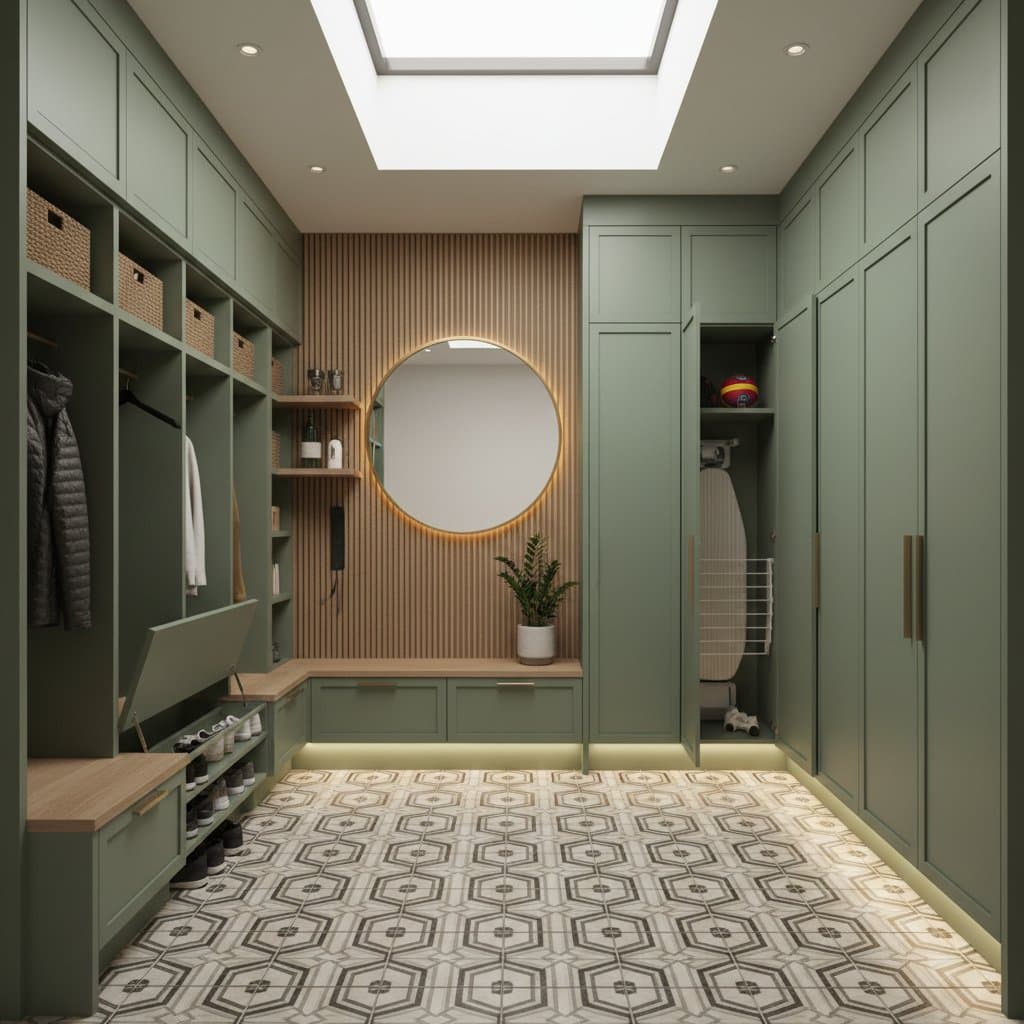
Ideal for family-oriented entries, these wrap storage around two walls, forming a dedicated zone for gear. Include lower cubbies for shoes and upper hooks for bags, ensuring visibility and ease of access for all ages. -
Hallway-Integrated Designs
In open-plan homes, these seamlessly extend into corridors with hidden compartments to maintain visual continuity. Opt for sliding panels or flush cabinetry to conceal clutter without disrupting sightlines.
Integrate lighting and finishes to enhance usability. Recessed ceiling fixtures combined with matte hardware, such as brushed metal hooks, provide illumination and subtle elegance. Textured walls like beadboard in neutral tones add warmth without overwhelming small spaces.
Case Study: Symmetrical Family Entryway
Location: Suburban Minneapolis Residence
Designer: Brooke Dalton Studio
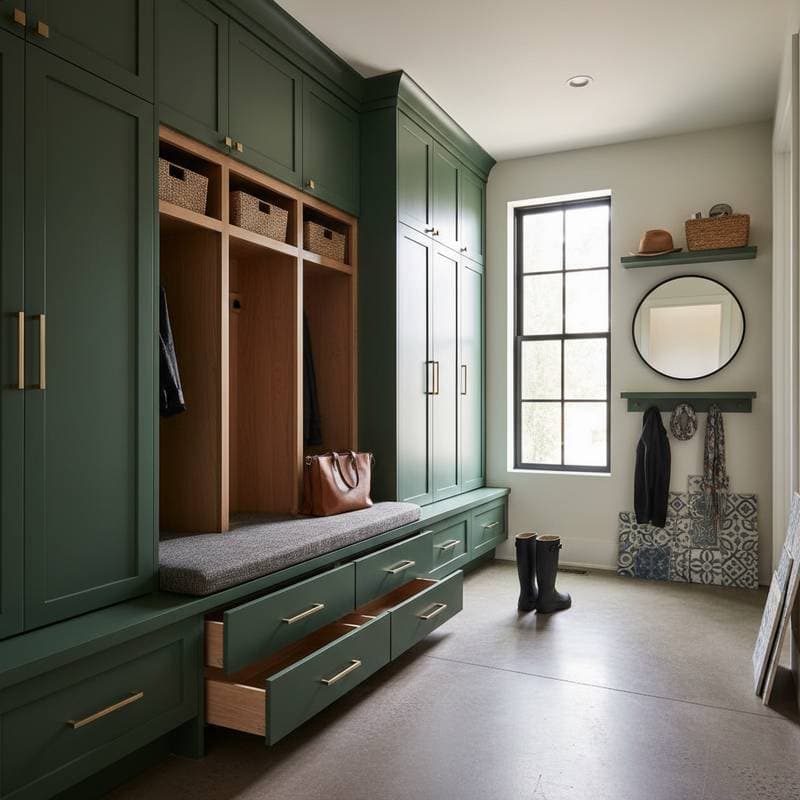
Materials: Soft sage painted maple cabinets, matte black fixtures
Approach: The designer employed symmetrical cubbies to organize a household of five, assigning each member a dedicated section with hooks, charging stations, and labeled upper baskets.
Key Features: Built-in outlets within cabinets manage device cords discreetly, supporting daily routines.
Outcome: The monochromatic green scheme harmonizes with the kitchen, fostering a serene atmosphere in a high-traffic area.
This project demonstrates how balanced organization transforms chaotic entries into calming hubs, applicable to various home sizes.
Case Study: Rustic Retreat in a Mountain Setting
Location: Aspen Area Residence
Designer: Hartman & Co. Studio
Materials: Reclaimed pine paneling, polished concrete flooring
Approach: The team converted an underutilized garage-adjacent corner into a cohesive mudroom, balancing rugged wood elements with streamlined storage units.
Key Features: Underfloor radiant heating ensures quick drying for winter footwear, enhancing practicality.
Outcome: The aged patina of the pine infuses the space with character, creating an inviting contrast to modern lines.
Such designs highlight the value of blending heritage materials with contemporary function for enduring appeal.
Advanced Storage Solutions
Storage systems form the foundation of an efficient mudroom, with each element tailored to item frequency and size. Modular components allow adjustments as family needs evolve, preventing obsolescence.
Consider these proven methods:
- Adjustable Tiered Shelves: Accommodate varying boot heights or seasonal gear shifts with customizable spacing.
- Retractable Trays: Contain footwear in shallow drawers to avoid floor scatter and simplify cleaning.
- Elevated Cubbies: Store bulky or infrequent items like sports equipment overhead, freeing lower areas.
- Multi-Height Hooks: Position at adult and child levels for independent access to coats and bags.
- Concealed Bench Drawers: Hide small essentials such as gloves or leashes beneath seating.
Balance exposed and enclosed options: open shelves for quick-grab items like keys, and cabinets for less-used pieces. Incorporate a dedicated shelf for decorative touches, such as a vase, to blend utility with style.
Optimizing Lighting for Practicality and Ambiance
Layered illumination elevates mudroom performance by addressing both task needs and overall mood. General overhead lights ensure even coverage, while targeted sources highlight specific zones.
Install flush-mount fixtures supplemented by under-cabinet LED strips for shadow-free workspaces. Flank entry mirrors with sconces to amplify natural light and create a hospitable entry point. Where feasible, add a clerestory window to infuse daylight, vitalizing compact designs.
Motion-activated sensors near thresholds enhance security and efficiency during low-light hours. These elements not only improve navigation but also underscore the intentionality of the space.
Strategic Budgeting for Durability
Budget allocation focuses on elements that withstand wear while minimizing long-term upkeep. Prioritize investments that yield ongoing savings through resilience and efficiency.
Target resources here:
- Robust Cabinetry and Fixtures: Select solid construction with reinforced hinges for frequent handling.
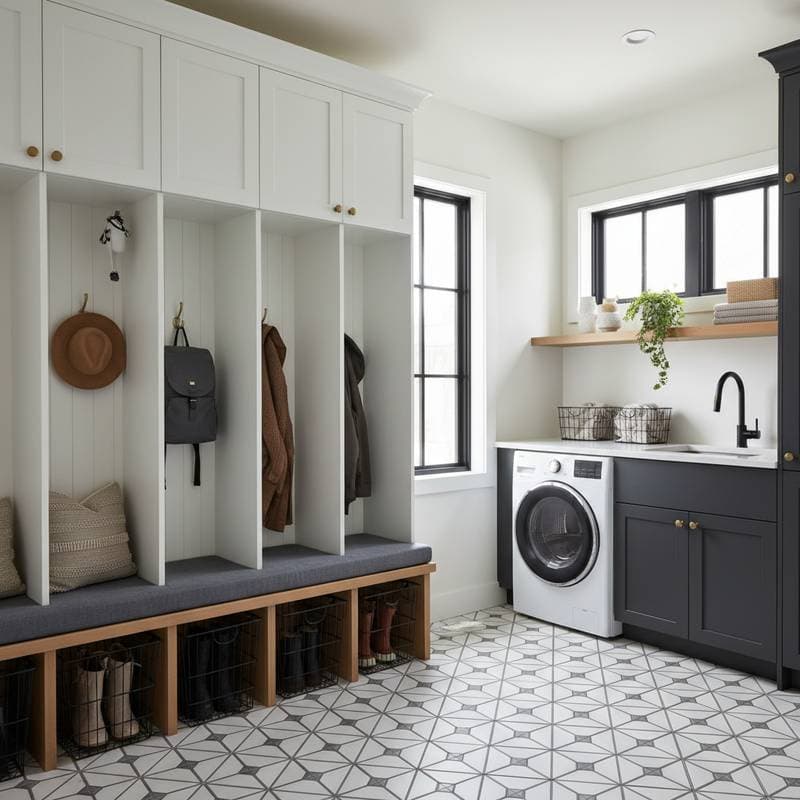
- Water-Resistant Flooring: Materials like sealed tile or vinyl endure moisture and foot traffic.
- Efficient Illumination: LED systems reduce electricity bills over time.
- Humidity Controls: Exhaust fans prevent mold, preserving wood and paint integrity.
Steer clear of non-essential ornamentation that lacks utility. Reserve portions of the budget for skilled installation of structural components, as accurate placement extends service life and avoids costly adjustments.
Tailoring Designs to Household Dynamics
Customize mudroom features to match user profiles, ensuring relevance and longevity. Adaptations address specific challenges while upholding core functionality.
For families with children, incorporate locker units and reachable hooks alongside easy-clean surfaces like semi-gloss paint and removable seat pads.
Pet owners benefit from integrated washing areas or dedicated storage for towels, paired with grout-sealed tiles for straightforward maintenance.
In compact dwellings, utilize wall-hung benches and collapsible hooks to conserve floor space without sacrificing organization.
Realizing Lasting Benefits from Your Mudroom
A meticulously planned mudroom streamlines household routines and elevates daily experiences. By aligning layout with actual use, homeowners achieve spaces that foster order and enjoyment. Implement these insights to craft an entryway that supports your lifestyle, delivering value through efficiency and timeless design.