Reface or Replace: A Kitchen Cabinet Cost Comparison for 2025
Many homeowners face the dilemma of outdated kitchen cabinets. These fixtures endure daily wear from cooking, cleaning, and family routines. The choice between refacing and full replacement influences budget, timeline, and overall kitchen function.
Refacing updates the exterior appearance while preserving the core structure. Replacement involves complete removal and installation of new units. This analysis examines both approaches, focusing on 2025 costs, practical benefits, and long-term considerations to guide informed decisions.
Understanding Cabinet Refacing
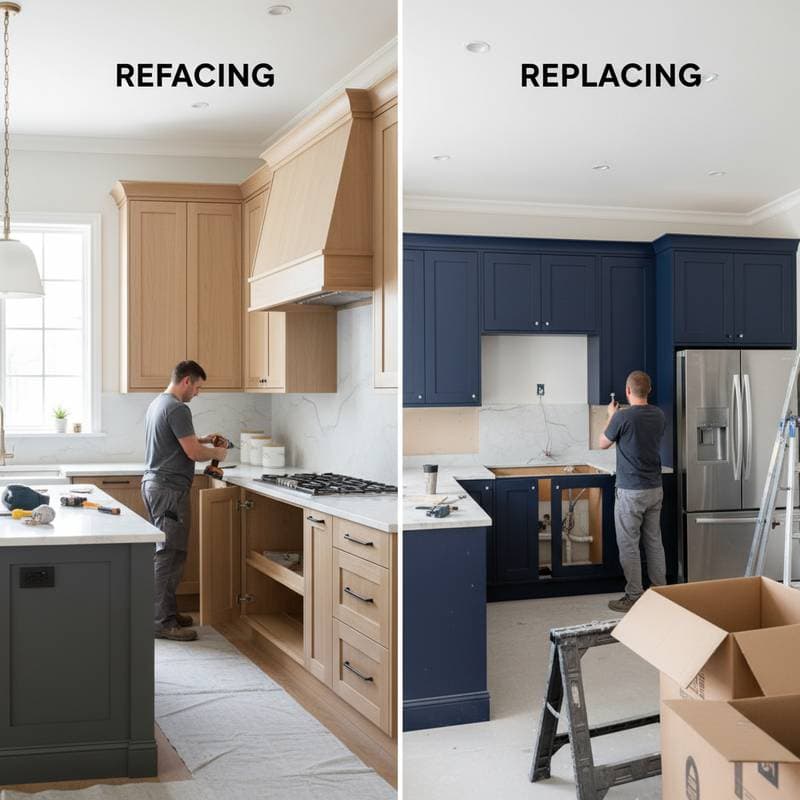
Refacing transforms existing cabinets by applying new doors, drawer fronts, and veneers over the original frames. Professionals typically complete this process in one to two weeks, minimizing disruption to daily life. It suits kitchens with structurally sound boxes but dated finishes.
Key steps include measuring for custom panels, selecting materials like laminate or wood veneer, and installing hardware. This method avoids major demolition, reducing mess and allowing continued use of appliances and countertops during work.
Homeowners gain a refreshed look without altering layouts. For example, adding modern pulls or hinges enhances usability while maintaining familiar storage configurations.
Cost Breakdown for Refacing in 2025
Expect refacing costs to range from $4,000 to $8,000 for an average 10x10-foot kitchen. Factors influencing price include material quality, kitchen size, and labor rates, which average $50 to $100 per hour. High-end options with solid wood doors may approach $10,000.
Compared to replacement, refacing saves 40 to 60 percent on expenses. It requires fewer materials and less labor, making it ideal for budget-conscious updates. Savings compound when avoiding temporary relocation or storage costs during extended renovations.
The Benefits of Full Cabinet Replacement
Replacement entails demolishing old cabinets and installing entirely new ones. This approach allows reconfiguration of the kitchen layout, such as adding an island or optimizing workflow. It demands two to six weeks, depending on complexity and custom features.
New cabinets come in diverse styles, from shaker to flat-panel designs. Integration of smart storage solutions, like pull-out pantries or corner carousels, improves efficiency. This option addresses underlying issues, such as uneven floors or inadequate ventilation.
Cost Breakdown for Replacement in 2025
Replacement costs typically span $10,000 to $25,000 for a standard kitchen. Basic stock cabinets start at the lower end, while semi-custom or bespoke units exceed $30,000. Labor accounts for 50 percent of the total, with materials varying by type: plywood at $200 per linear foot, solid hardwood at $400 or more.
Additional expenses arise from demolition, electrical updates, and plumbing adjustments. Permits and disposal fees add $500 to $2,000. Despite higher upfront costs, replacement boosts home value by 70 to 80 percent of the investment, according to industry benchmarks.
Comparing Durability and Longevity
Refaced cabinets last 10 to 15 years with proper care, relying on the original frame's condition. Veneers resist scratches better than paint but may peel if moisture intrudes. Regular cleaning with mild soap preserves the finish.
Replacement cabinets endure 20 to 30 years, built with reinforced frames and durable finishes. Soft-close mechanisms and dovetail joints enhance resilience against heavy use. Warranties often cover 5 to 10 years, providing peace of mind.
Assess your kitchen's demands: high-traffic family spaces benefit from replacement's robustness, while occasional use favors refacing's efficiency.
Sustainability and Waste Reduction
Refacing promotes eco-friendliness by reusing 70 to 90 percent of existing materials. It generates minimal waste, often limited to old doors and hardware. Opt for low-VOC adhesives and FSC-certified veneers to further reduce environmental impact.
Replacement produces significant debris, including frames and counter supports. Mitigate this by selecting reclaimed wood or recyclable composites. Many suppliers provide take-back programs for old units, diverting items from landfills.
For sustainability-focused homeowners, refacing aligns with green principles while delivering visual upgrades. Pair either option with energy-efficient appliances for broader ecological benefits.
Design Flexibility and Style Options
Refacing limits changes to surfaces and hardware, ideal for subtle refreshes. Choose from matte laminates for modern appeal or stained woods for warmth. It maintains current dimensions, ensuring compatibility with existing counters and appliances.
Replacement unlocks expansive customization, including wall-to-wall cabinetry or glass-front displays. Incorporate trends like matte black hardware or integrated appliances. This flexibility suits evolving tastes and resale appeal.
Align choices with personal style: minimalist designs thrive on clean refacing lines, while eclectic spaces demand replacement's versatility.
Factors Influencing Your Choice
Consider your timeline and tolerance for disruption. Refacing suits quick projects under $10,000, perfect for staging a home sale. Replacement fits major overhauls, ideal for long-term residents seeking tailored functionality.
Budget plays a central role: allocate funds for unexpected costs, such as subfloor repairs during replacement. Consult local contractors for precise quotes, factoring in 2025 material inflation around 3 to 5 percent.
Evaluate lifestyle needs. Active cooks require durable, spacious replacements; casual users find refacing sufficient for aesthetic boosts.
Maintenance for Lasting Results
Post-project care extends cabinet life. For refaced units, dust monthly and avoid abrasive cleaners to protect veneers. Tighten hardware quarterly to prevent sagging.
New cabinets demand similar routines, plus sealing wood annually against humidity. Follow manufacturer guidelines to uphold warranties and retain finish quality.
Regular upkeep ensures your investment yields years of reliable service, enhancing daily kitchen enjoyment.
Making the Smart Upgrade Decision
Weigh costs against desired outcomes to select refacing or replacement. Both elevate your kitchen's appeal and efficiency in 2025. Prioritize options that balance budget, durability, and personal needs for a space that supports your lifestyle.