
Cabinet Refacing vs Replacement: Which Costs Less?
Every few years homeowners examine their kitchen cabinets with a mix of appreciation and dissatisfaction. The units have stored dishes and supplies for years, yet wear from daily use shows on the surfaces. A polished new kitchen appeals to many, yet full renovations often exceed expected budgets.
The choice between refacing and replacement hinges on current cabinet condition, available funds, and long term plans. Refacing refreshes appearance while preserving existing boxes. Replacement rebuilds the entire system from the ground up.
Cabinet Refacing Process and Benefits
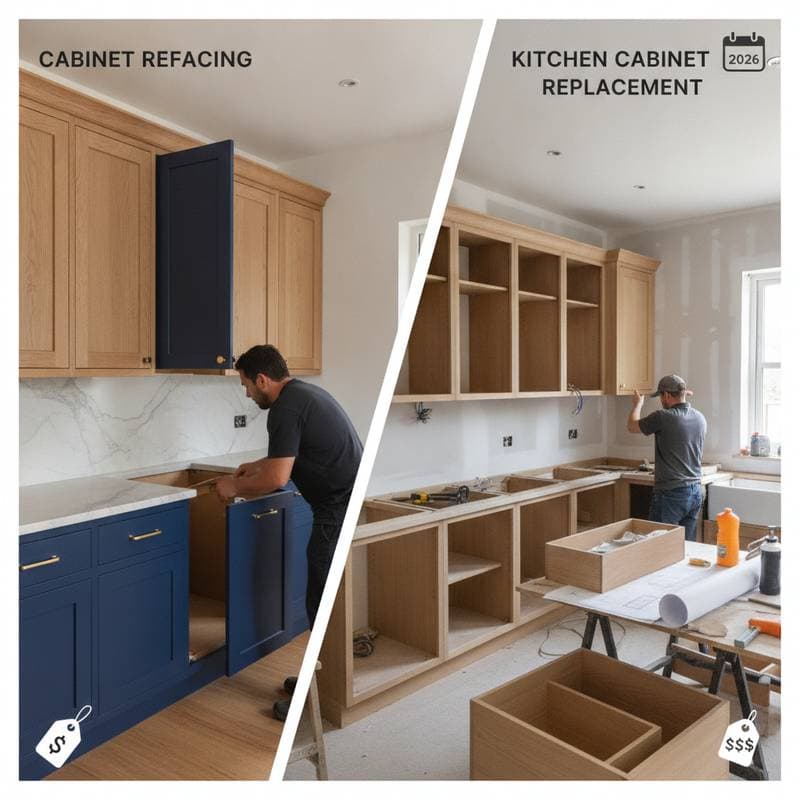
Refacing keeps the cabinet carcasses in place and updates only the visible elements. Installers remove old doors and drawer fronts, then apply new veneer or laminate to exposed surfaces before fitting replacement doors and hardware.
This method reduces demolition waste and shortens project time to three to five days in most homes. Homeowners retain basic kitchen function during work and avoid the expense of new box construction.
Material selection affects final price. Laminate finishes cost less than real wood veneers, while upgraded pulls and hinges add several hundred pounds. Even with premium selections, total expense remains roughly half that of full replacement.
Full Cabinet Replacement Process and Benefits
Replacement removes every cabinet box and installs new units built to current measurements. This approach permits layout changes, addition of soft close mechanisms, and correction of storage shortcomings such as unreachable corner spaces.
Electricians and plumbers can inspect wiring and pipes once walls are exposed. New cabinet heights and configurations can match actual cooking habits and appliance sizes.
The project requires two to four weeks and generates significant dust and debris. Flooring repairs and wall patching often become necessary after removal.
Direct Cost Comparison
Refacing typically ranges from forty to sixty percent of replacement cost when cabinet boxes remain sound. Replacement becomes the stronger choice when boxes show water damage, warping, or original construction flaws.
Additional expenses appear in both routes. Electrical outlets for under cabinet lighting or relocation of handles require extra labour regardless of method. Stock cabinet lines with homeowner installation can reduce replacement totals, while custom veneers raise refacing totals.
Resale impact also differs. Updated layouts from replacement frequently deliver higher buyer appeal than surface changes alone.
Daily Disruption Levels
Refacing keeps most cabinet storage available and limits noise to daytime hours. Families usually manage with minimal take away meals and retain bathroom access for dish washing.
Replacement empties the entire room and often shuts off water and power for periods. Temporary pantry space on dining tables becomes standard, and the timeline stretches when custom orders arrive late.
Long Term Considerations
Homeowners who plan to remain in the property for more than five years gain most from replacement when layout problems exist. Those satisfied with current storage patterns and seeking only colour or finish updates find refacing sufficient.
Refacing generates less landfill material because existing boxes stay in service. Replacement allows donation of old units to workshops or community projects and can incorporate certified sustainable boards and low VOC finishes.
Final Selection Guidance
Inspect cabinet interiors for structural integrity before deciding. Obtain itemised quotes that separate material, labour, and finish costs from each contractor. Weigh the value of reduced disruption against the benefit of corrected storage and layout improvements.
Both completed kitchens deliver smooth operation and improved appearance when quality materials are selected. The decision rests on matching project scope to actual cabinet condition and household priorities.