Reface or Replace: 2025 Kitchen Cabinet Cost Breakdown
A recent National Kitchen and Bath Association survey indicates that nearly 48 percent of homeowners who remodeled their kitchens last year identified cabinets as the largest expense. Cabinet projects usually comprise 25 to 35 percent of the overall renovation budget, positioning this decision as a key financial element. Opting to reface or replace cabinets can alter the total project cost by thousands of dollars, with the best choice hinging on the cabinets' structural condition and financial goals.
Assess Cabinet Condition First
Homeowners often seek a refreshed kitchen appearance without undertaking a complete overhaul. Cabinets may look outdated or worn, yet the underlying boxes could remain structurally sound. Determine if surface-level enhancements provide sufficient return on investment, or if replacing the entire structure offers greater long-term benefits. Remodeling Magazine's Cost vs. Value report shows that targeted kitchen cabinet improvements recoup 60 to 70 percent of costs upon resale when planned carefully.
Expert Evaluation of Cabinet Viability
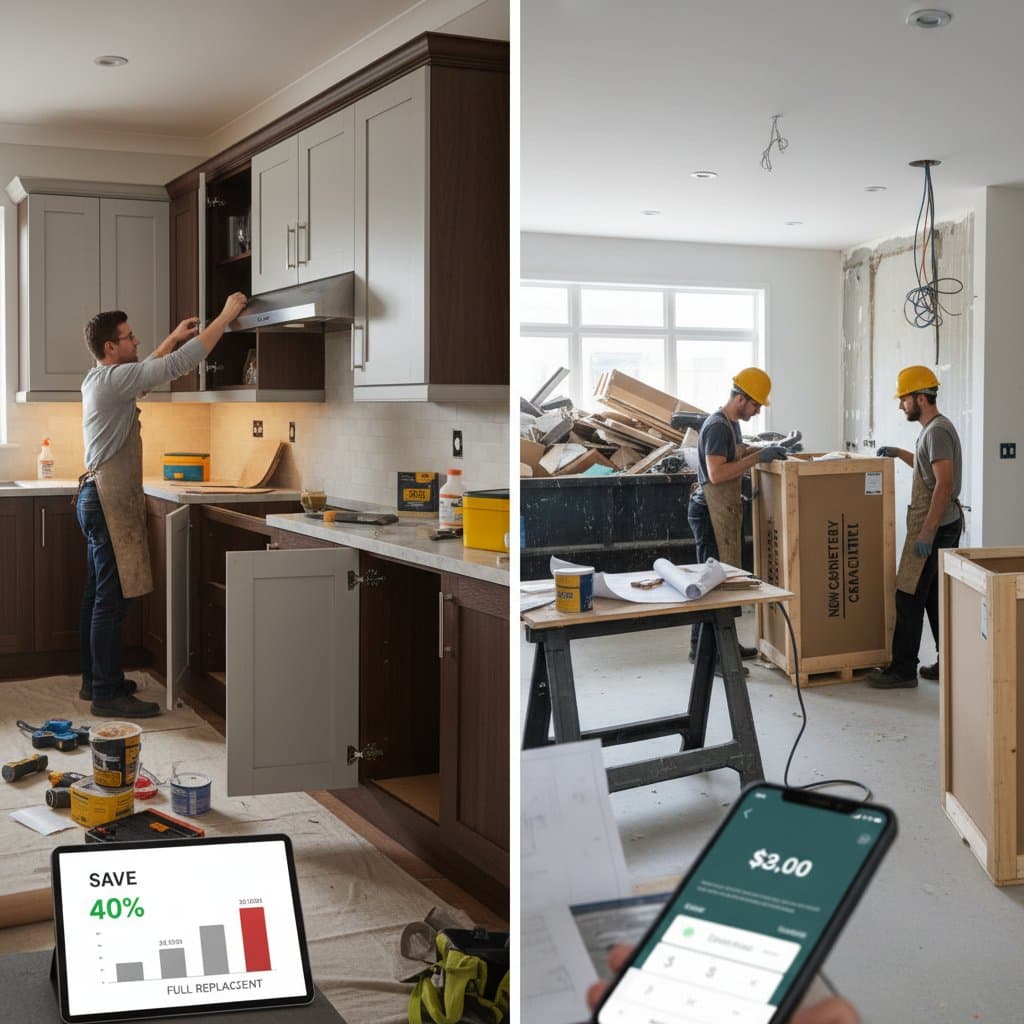
Certified kitchen designers and licensed contractors begin with a thorough inspection of cabinet integrity. Maria Lopez, CKD and project manager at Pacific Design Build with 15 years in residential renovations, notes, "If the cabinet frames consist of solid hardwood and remain square, refacing can save a client up to 40 percent over full replacement." This process entails updating doors, drawer fronts, and surface veneers while retaining the original cabinet boxes.
Replacement proves necessary for cabinets exhibiting water damage, warping, or inefficient layouts. Kevin O'Donnell, general contractor at RenoLogic Construction, explains, "No veneer application can remedy structural failure. When moisture or mold affects the boxes, replacement emerges as the sole viable financial choice."
Detailed Cost Comparison
Refacing by professionals ranges from $140 to $250 per linear foot, influenced by material selections and finish quality. In a typical mid-sized kitchen featuring 25 linear feet of cabinets, expect totals of $3,500 to $6,250. Opting for premium elements like solid wood veneers or bespoke hardware may elevate costs to $8,000.
Replacement expenses fluctuate based on customization level. Basic stock cabinets begin at $100 per linear foot, semi-custom selections average $250 to $600, and bespoke millwork surpasses $1,200 per linear foot. For 25 linear feet, these figures translate to $5,000 to $30,000 or higher, excluding demolition and installation fees.
Account for Additional Expenses
Unexpected costs frequently catch homeowners off guard. Refacing demands surface preparation, fresh hinges, pulls, and occasional minor woodworking. Replacement entails more intensive labor, possible adjustments to plumbing or wiring, and waste removal. Allocate a 10 to 15 percent contingency fund for both approaches to cover surprises such as subfloor fixes or drywall repairs.
Lisa Carmichael, certified remodeling cost analyst at HomeBudget Insights, observes, "Homeowners often overlook the rapid accumulation from finish selections and hardware upgrades. A $4,000 refacing quote can rise to $6,000 with high-end options."
Gather Estimates and Resources
Obtain at least three detailed bids from licensed contractors before proceeding. Insist on itemized breakdowns distinguishing materials from labor to promote clarity. Side-by-side comparisons facilitate value engineering, enabling tweaks to designs and materials that harmonize style with spending limits.
Reliable tools encompass the National Kitchen and Bath Association's contractor listings and Better Business Bureau verifications for regional professionals. Seek client references from completed projects and verify warranties on materials and workmanship. Engage a designer to simulate layouts via software, previewing impacts on kitchen functionality and storage from refacing or replacement.
Choose and Execute Strategically
Refacing provides superior cost efficiency for intact cabinet boxes, ideal for budget-conscious updates. Select replacement when structural issues or layout flaws demand attention. Proactive budgeting in both cases prevents cost overruns and ensures satisfaction.
Review estimates thoroughly, establish firm spending boundaries, and partner with transparent experts. A well-chosen cabinet strategy enhances your kitchen's appeal and supports strong home equity growth.