

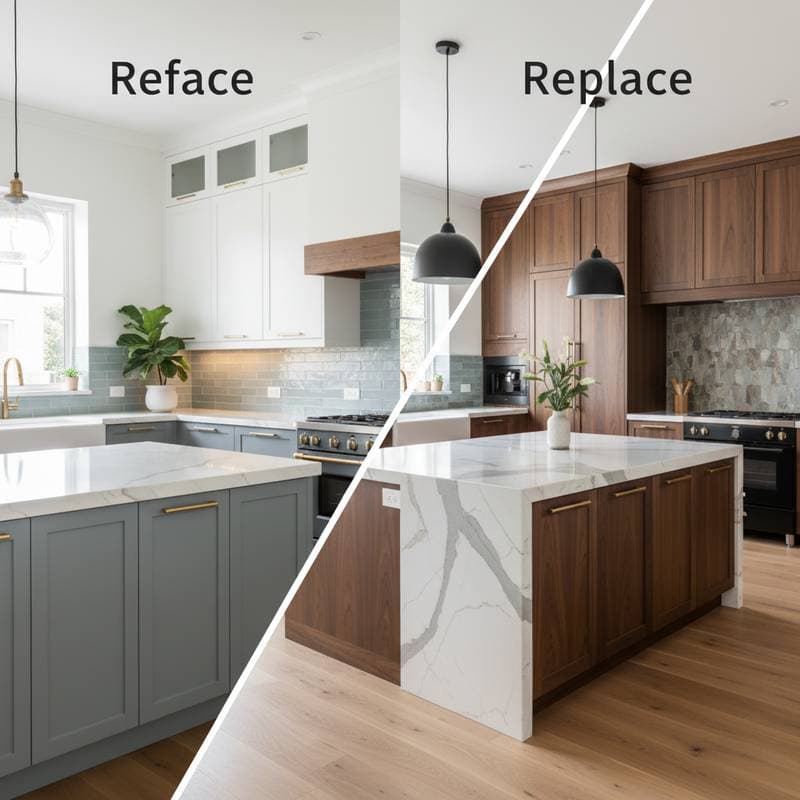
Reface vs. Replace: Comparing Kitchen Cabinet Costs in 2025
Kitchens endure daily wear, and outdated cabinets often signal the need for renewal. Homeowners face a fundamental choice: refacing existing units for a surface-level refresh or replacing them entirely for structural and stylistic overhaul. This decision hinges on the cabinets' condition, desired changes, and available resources.
Refacing suits cabinets with solid frames but dated appearances, offering cosmetic improvements without major alterations. Replacement becomes necessary when foundational issues arise, allowing for comprehensive upgrades. Both approaches influence long-term satisfaction and home value, making a thorough comparison essential.
Understanding Refacing: A Cost-Effective Refresh
Refacing involves applying new veneers, doors, and hardware to existing cabinet boxes, preserving the original structure. This method idealizes scenarios where cabinets remain functional but lack modern appeal. Professionals assess the frames for stability before proceeding, ensuring viability.
Benefits of Refacing
Refacing delivers noticeable transformation with minimal disruption. Projects typically complete in three to five days, reducing inconvenience. Costs range from $4,000 to $8,000 for an average kitchen, depending on materials like wood veneer or laminate.
- Time savings: Installation requires less preparation than demolition.
- Budget efficiency: Expenses cover 40 to 60 percent less than full replacement.
- Eco-friendly aspects: Reuses existing materials, minimizing waste.
Drawbacks include limited layout changes; awkward configurations persist. Not all cabinets qualify if frames show damage.
Refacing Cost Details
Break down expenses to plan accurately:
- Materials: Veneers and doors cost $2,000 to $5,000, with premium options like solid wood adding more.
- Labor: Installation fees span $1,500 to $3,000, varying by region and complexity.
- Accessories: Hardware and trim contribute $500 to $1,000.
Factor in potential add-ons, such as drawer modifications, which increase totals by 10 to 20 percent.
When Replacement Delivers Lasting Value
Replacement entails removing old cabinets and installing new ones, addressing both form and function. This option fits kitchens with compromised structures, like warped frames or outdated layouts. It provides opportunities to integrate modern features seamlessly.
Advantages of Full Replacement
New cabinets offer customization, from modular units to bespoke designs. Enhanced storage solutions, such as soft-close drawers and pull-out shelves, improve usability. Projects boost energy efficiency if paired with updated appliances.
- Design flexibility: Alter dimensions, heights, and configurations freely.
- Durability gains: Modern materials resist moisture and daily use better.
- Resale appeal: Updated kitchens attract buyers, potentially increasing property value by 5 to 10 percent.
Challenges involve higher costs and extended timelines, often two to six weeks. Disruption affects daily routines, with dust and noise common.
Replacement Cost Breakdown
Anticipate these components for precise budgeting:
- Cabinetry: Stock options start at $5,000; semi-custom or custom reach $15,000 or higher.
- Demolition and installation: Labor accounts for $3,000 to $7,000, including wall repairs.
- Ancillary expenses: Countertops, backsplashes, and painting add $2,000 to $5,000.
Total outlays for replacement average $10,000 to $25,000 in 2025, influenced by material selections and kitchen size.
Key Factors: Style, Function, and Budget
Align choices with lifestyle needs to maximize benefits. Kitchens serve as multifunctional spaces, demanding practicality alongside aesthetics.
Evaluating Style
Select finishes that endure family life, such as matte laminates for easy maintenance or painted woods for warmth. Refacing limits changes to exteriors, while replacement permits bold shifts like open shelving or island integrations. Consider trends like handleless designs for a sleek 2025 look.
Prioritizing Function
Identify pain points, including insufficient storage or inefficient workflows. Refacing maintains current ergonomics, potentially perpetuating issues. Replacement allows ergonomic redesigns, such as lowering wall cabinets for accessibility.
Managing Budget
Allocate funds wisely across the project. Cabinets represent 30 to 50 percent of kitchen renovation costs; reserve portions for essentials like lighting. Explore financing or phased approaches to ease financial strain.
Navigating the Renovation Process
Preparation eases transitions during either option. Stockpile non-perishables and establish a makeshift prep area with basic appliances.
Refacing minimizes chaos, with most preparation occurring off-site. Expect brief interruptions for measurements and final fitting. Replacement demands thorough planning: secure permits if structural changes occur, and schedule phases to limit downtime.
Communicate with contractors on timelines and contingencies. Temporary relocations for heavy appliances prevent accidents. Post-installation, inspect for alignment and functionality before final payments.
Maximizing Your Updated Kitchen
A renewed kitchen enhances daily life and gatherings. Maintain surfaces with regular dusting and appropriate cleaners to extend longevity. Organize storage systematically for efficiency.
Experiment with layouts to optimize flow. Incorporate personal touches, like herb planters or display shelves, to foster enjoyment. Regular assessments ensure the space evolves with needs, sustaining its value over time.
Steps to Decide and Proceed
- Inspect cabinets: Check for damage and measure the space.
- Set goals: Define style, function, and budget priorities.
- Gather quotes: Consult at least three professionals for estimates.
- Review options: Weigh refacing versus replacement based on assessments.
- Plan execution: Schedule work and prepare your home accordingly.
These actions lead to a kitchen that aligns with your vision and practicalities.