Your Week-by-Week Guide to a Successful 2025 Kitchen Remodel
Kitchen remodels vary in scope and style, but successful projects share a structured approach. Homeowners frequently encounter challenges such as overlapping trades, unexpected delays, and budget overruns. A disciplined timeline transforms potential chaos into an organized process, allowing the project to advance from initial planning through demolition to the final reveal.
This guide outlines an eight-week plan tailored for a standard kitchen remodel. Adjust timelines based on project size, local regulations, and contractor availability. Focus on preparation at each stage to protect your investment and minimize disruptions.
Week 1: Initial Planning and Measurements
Challenge: Inaccurate measurements lead to ill-fitting cabinets and appliances, increasing costs.
Background: Many homeowners underestimate the importance of precise documentation, resulting in rework during installation.
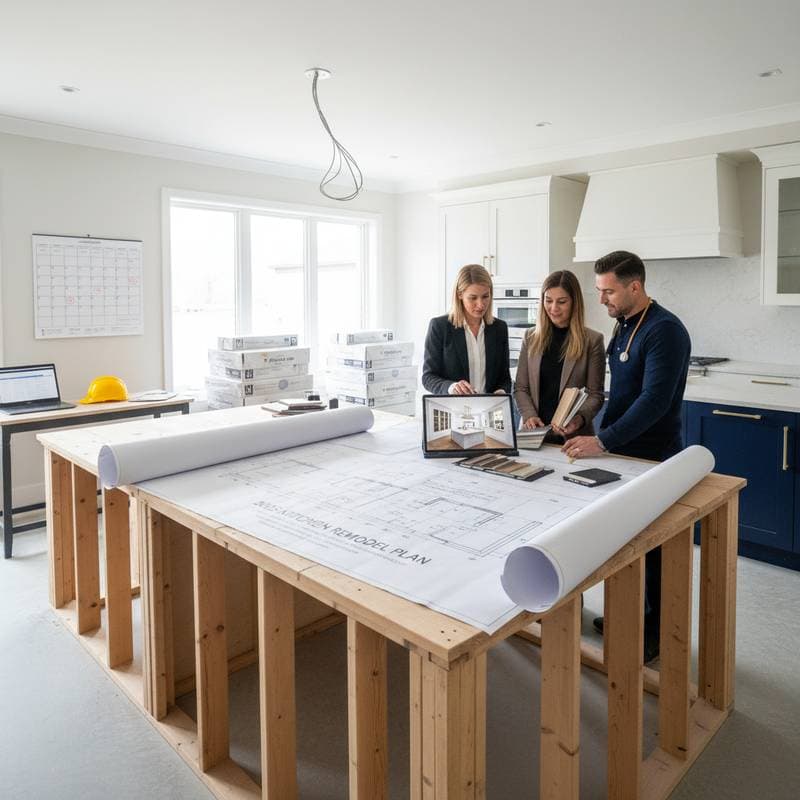
Approach: Measure the existing kitchen thoroughly, including wall lengths, ceiling height, window and door placements, and utility locations. Sketch a basic layout and note structural elements like load-bearing walls.
Key Consideration: Use a laser measure for accuracy and document everything with photos and diagrams. Consult building codes early to identify potential obstacles.
Outcome: Solid measurements form the foundation for design choices and prevent expensive adjustments later.
Week 2: Confirm the Design and Budget
Challenge: Proceeding without a fixed budget often forces compromises on materials or features midway.
Background: Enthusiasm for high-end options can exceed financial limits, leading to scaled-back plans.
Approach: Finalize the design by selecting cabinet styles, countertop materials, appliances, and finishes. Develop a detailed budget breakdown covering cabinetry, appliances, plumbing, electrical work, lighting, flooring, and labor costs.
Key Consideration: Allocate 10 percent of the total budget as a contingency for unforeseen issues, such as hidden wiring or subfloor damage.
Outcome: A locked design paired with a realistic budget reduces stress and avoids mid-project redesigns.
Week 3: Secure Permits and Hire Contractors
Challenge: Delays in approvals or unreliable hires disrupt the entire schedule.
Background: Local regulations vary, and skipping permits can result in fines or required teardowns.
Approach: Submit permit applications for structural changes, electrical, and plumbing modifications. Interview and select licensed contractors, obtaining multiple bids and checking references.
Key Consideration: Verify contractor insurance and ensure contracts specify timelines, payment schedules, and scope of work. Aim to have all approvals in hand before demolition begins.
Outcome: Pre-arranged permits and trusted professionals keep the project moving forward without interruptions.
Week 4: Set Up Temporary Kitchen and Handle Demolition
Challenge: Demolition disrupts household routines without proper preparation.
Background: Families face inconvenience from lack of cooking facilities, often leading to higher food expenses.
Approach: Establish a temporary kitchen in a nearby space with essentials like a microwave, coffee maker, and refrigerator. Cover adjacent areas with plastic sheeting and protective flooring to contain dust.
Key Consideration: Demolition typically spans three to five days for an average kitchen. Follow local waste disposal rules and schedule debris removal in advance.
Outcome: A managed demolition preserves livability in the home and controls cleanup expenses.
Week 5: Complete Rough-Ins for Plumbing and Electrical
Challenge: Poorly planned utility work causes leaks or code violations.
Background: Rushing this phase overlooks future needs, such as additional outlets for smart appliances.
Approach: Install new plumbing lines, electrical wiring, and ventilation ducts according to the design. Position outlets, switches, and fixtures for optimal functionality and safety.
Key Consideration: Inspect all rough-ins before enclosing walls. Ensure compliance with current codes, including GFCI outlets near sinks and adequate circuit capacity for appliances.
Outcome: Reliable infrastructure supports seamless installations and enhances the kitchen's long-term usability.
Week 6: Install Drywall, Flooring, and Paint
Challenge: Incorrect order of tasks damages newly installed surfaces.
Background: Painting before cabinetry or flooring prematurely invites scratches and touch-ups.
Approach: Hang and tape drywall, then install flooring that extends under cabinets if applicable. Apply primer and an initial paint coat prior to cabinet installation, reserving the final coat for afterward.
Key Consideration: Control indoor humidity at 40 to 50 percent to prevent issues like drywall cracks or flooring expansion. Choose durable, water-resistant paints for high-traffic areas.
Outcome: Strategic sequencing safeguards finishes and delivers a professional, lasting appearance.
Week 7: Install Cabinets and Countertops
Challenge: Misaligned cabinets compromise stability and aesthetics.
Background: Leveling errors during this labor-intensive phase affect appliance fit and workflow.
Approach: Mount upper and base cabinets securely, ensuring they are level and plumb. Fabricate and install countertops, sealing edges properly.
Key Consideration: Use shims for adjustments and verify clearances for appliances. Select materials like quartz or granite that balance durability with maintenance needs.
Outcome: Well-installed cabinets and counters create a sturdy base for the remaining elements.
Week 8: Add Fixtures, Backsplash, and Appliances
Challenge: Concurrent work by multiple trades risks surface damage and misalignment.
Background: Appliance deliveries overlapping with tile setting often result in chips or dents.
Approach: Tile the backsplash first, followed by fixture installations like lighting, faucets, and sinks. Connect and position appliances last, testing each for operation.
Key Consideration: Employ flexible hoses for plumbing connections and measure door swings to avoid interference. Secure all components to prevent vibrations or shifts.
Outcome: Precise coordination yields undamaged, fully operational features.
Adapting to Your New Kitchen
After completion, spend time familiarizing yourself with the layout and storage solutions. Evaluate how the design aligns with cooking and gathering habits. Consider minor enhancements, such as pull-out organizers or task lighting, to optimize efficiency. This thoughtful remodel not only elevates functionality but also withstands daily use for years ahead.