
Unveiling 2026 Mudroom Remodel Costs and Essential Layout Strategies
This analysis compiles insights from extensive homeowner renovation data and leading design platforms, highlighting the most effective mudroom updates emerging nationwide. Demand for practical entryways has risen sharply, with online searches for mudroom remodel concepts increasing by over 40 percent on major home improvement resources. These spaces address daily challenges by containing mess, shielding indoor areas from outdoor elements, and delivering an aesthetically pleasing welcome.
This comprehensive guide explores current cost estimates, proven design approaches, and layout techniques that shape high-performing mudrooms. It presents a range of options from cost-effective enhancements to premium configurations, along with professional advice to integrate style, utility, and longevity.
Layout Insights from Leading Designers
Effective spatial organization underpins a mudroom's success. Experts focus on distinct zones, resilient materials, and ample illumination. The examples below demonstrate how strategic planning streamlines routines and elevates functionality.
Family Command Center
Location: Suburban Chicago
Designer: Studio H Interiors
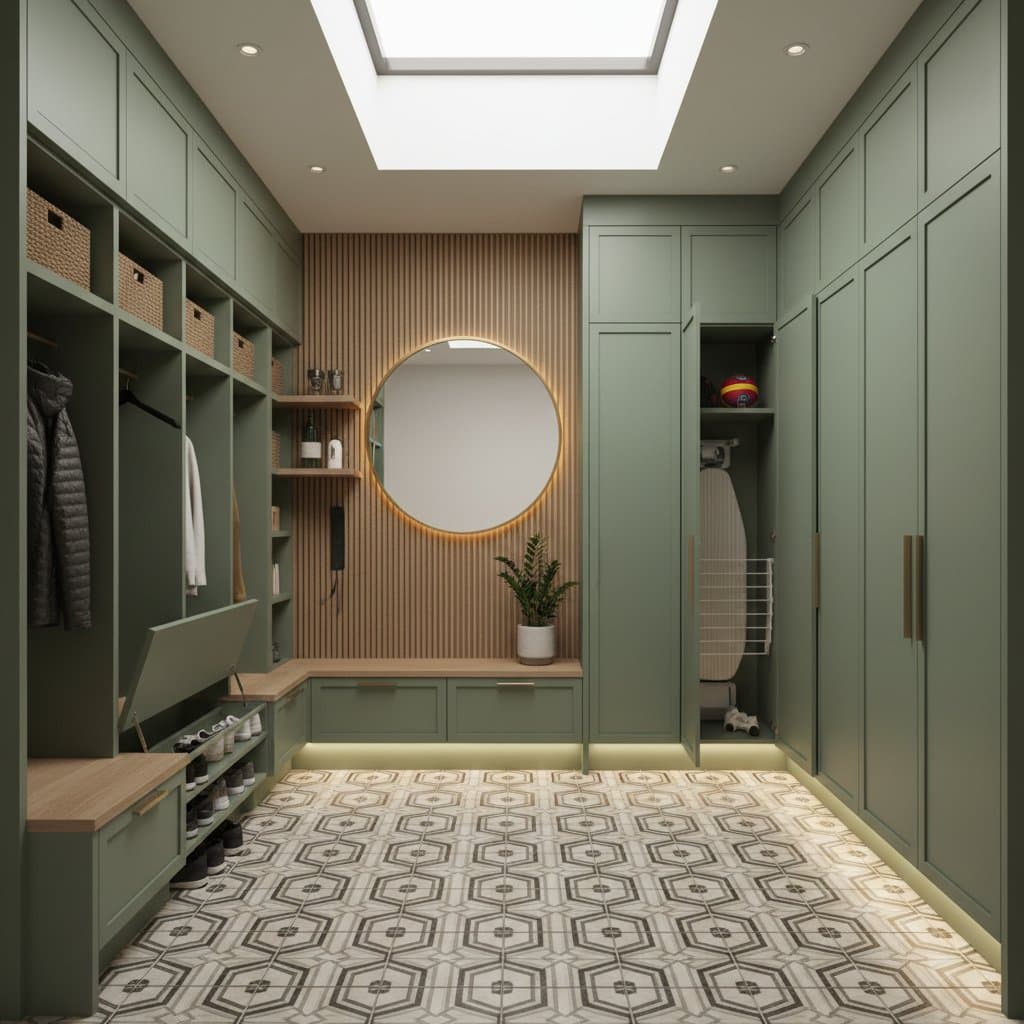
A former breezeway linking the garage to the kitchen now serves as a versatile family headquarters. Custom maple cabinetry finished in soft sage encases a white quartz countertop, ideal for sorting keys and correspondence. A dedicated charging drawer tucks away electronics and wiring discreetly. Hexagonal porcelain tiles on the floor withstand boot traffic and simplify maintenance. Personal lockers ensure each family member has designated storage, fostering an orderly yet inviting atmosphere that prioritizes ease without excess.
Minimalist Flow
Location: Seattle Contemporary Residence
Designer: Aaron Voss Design Group
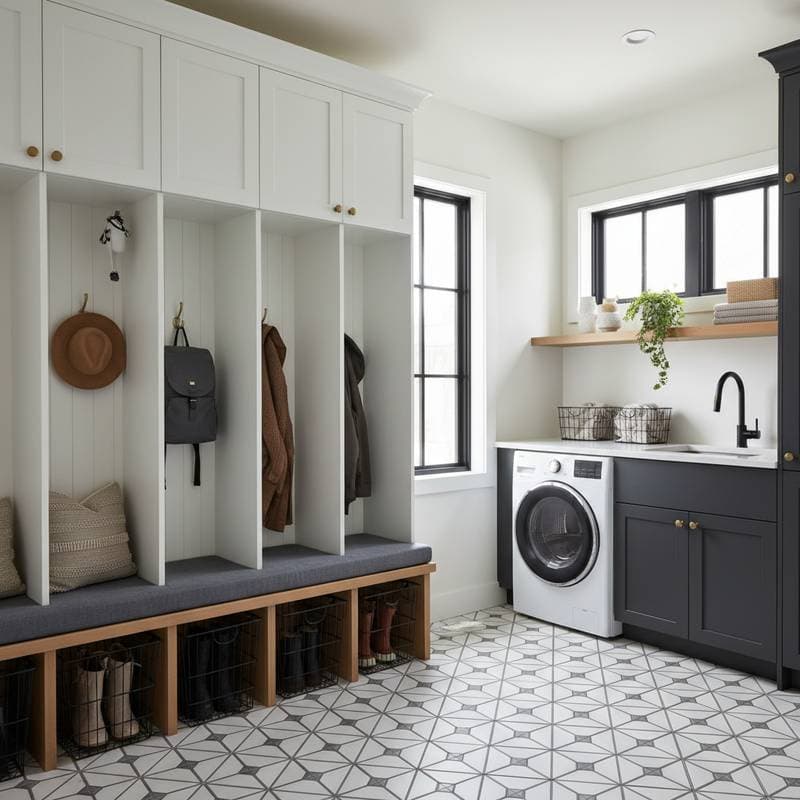
Efficiency guides this design through understated elements. Wall-to-wall flat-panel cabinets in matte white lacquer feature push-latch mechanisms for seamless access. Porcelain flooring mimicking concrete extends from the garage into adjacent areas, promoting a cohesive aesthetic. A slender solid ash bench positioned under a frameless mirror captures light from a clerestory window above. This approach creates a mudroom that integrates subtly with the home's architecture, showcasing how minimalism delivers both practicality and sophistication.
Strategic Planning for Budget-Conscious Projects
Small or existing spaces can achieve remarkable results with focused planning. For new constructions or updates to current entryways, these steps enhance usability and livability while respecting financial limits.
1. Establish Clear Zones
Segment the area into entry, storage, and transition sections. The entry zone captures dirt and handles initial traffic. Storage accommodates outerwear, footwear, and accessories. The transition links smoothly to living areas, maintaining overall home flow.
2. Select Resilient Materials
Invest in surfaces that endure exposure. Opt for porcelain tile in high-moisture areas instead of vulnerable wood, and apply semi-gloss paint to walls for straightforward wipe-downs. These choices reduce long-term upkeep and preserve appearance.
3. Utilize Vertical Space
Maximize height to increase storage without encroaching on floor area. Install stacked cubbies for bags, overhead cabinets for seasonal items, or adjustable hooks suited to different user heights, accommodating both adults and younger family members.
4. Layer Lighting Effectively
Combine sources for versatility. Recessed ceiling fixtures provide broad coverage, while wall-mounted sconces or pendant lights introduce ambient glow, supporting tasks from quick changes to relaxed transitions.
5. Incorporate Practical Seating
Position a built-in bench or standalone unit near the entry to facilitate shoe removal and gearing up. Include drawers or baskets beneath for stowing gloves, scarves, or small tools, keeping essentials within reach.
6. Create a Dedicated Drop Zone
Install a compact countertop, wall-mounted shelf, or pegboard to organize incoming items like mail, keys, or shopping bags. This prevents clutter from spreading and streamlines household management.
7. Infuse Personal Touches
Introduce subtle character through varied textures or hues. Select patterned backsplash tiles, bold trim contrasts, or a single framed print to elevate the space beyond basic utility.
Diverse Layout Ideas for Various Home Styles
Tailor designs to fit architectural contexts and lifestyles. These inspirations adapt to urban constraints, expansive suburban setups, rustic charm, sleek modernity, and blended aesthetics.
Urban Compact Solutions
In tight apartments or slim hallways, prioritize mounted features. A wall-hung bench with integrated storage, narrow pull-out shoe organizers, and a full-length mirror concealing hooks preserve openness. Durable vinyl plank flooring withstands daily use and bounces light to amplify space perception.
Suburban Expansive Designs
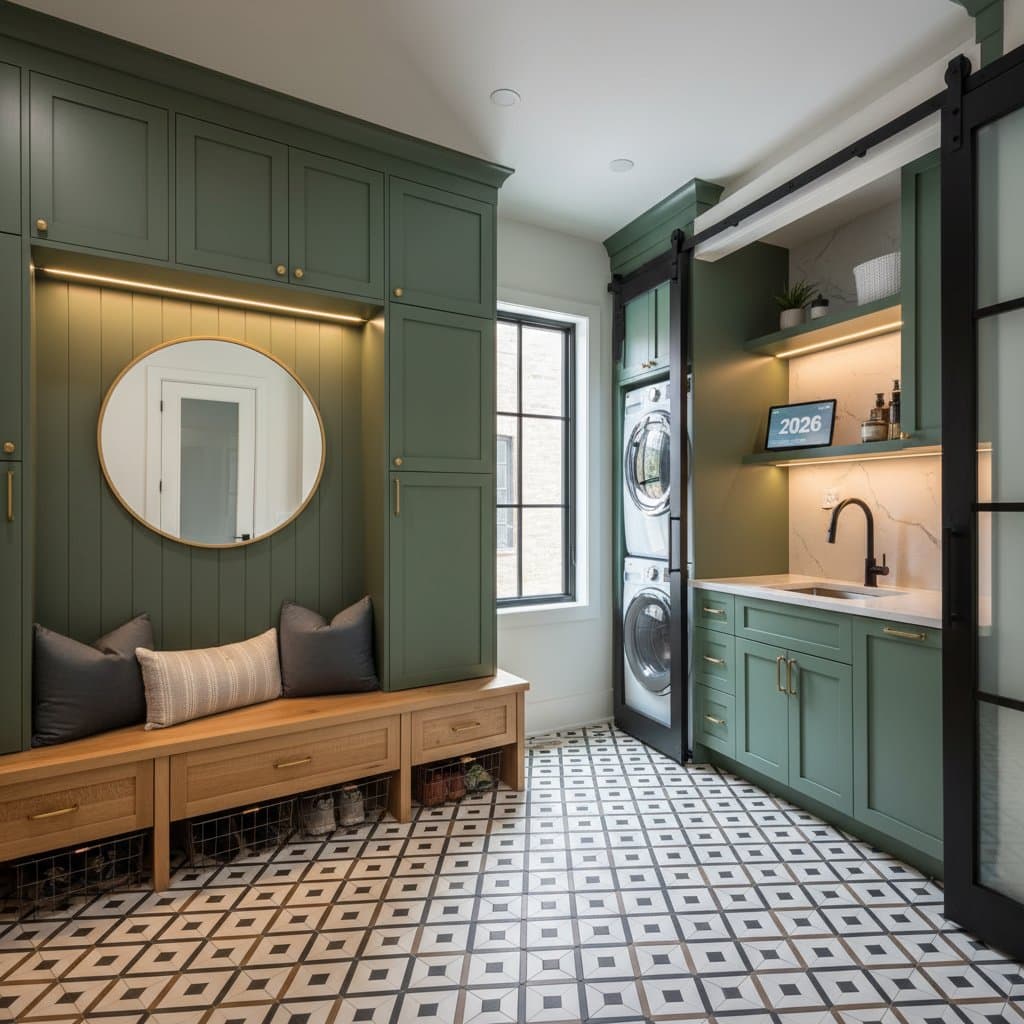
Larger properties often merge mudrooms with utility functions like laundry or pantry access. A fold-down counter topped with quartz offers prep space, complemented by two-tone cabinetry for depth. Matte black hardware updates classic frameworks, adding contemporary edge.
Farmhouse Traditional Approach
Embrace warmth with painted shiplap paneling, vintage-style brass hooks, and classic checkerboard tile patterns. Built-in wall cubbies provide rooted storage, while a sturdy butcher block bench invites daily interaction and evokes artisanal quality.
Modern Luxury Execution
Line one wall with streamlined cabinetry that hides contents completely for a seamless finish. Engineered stone tiles form a sophisticated base, accented by brushed chrome fixtures. Under-cabinet LED lighting ensures subtle illumination for evening entries.
Transitional Harmony
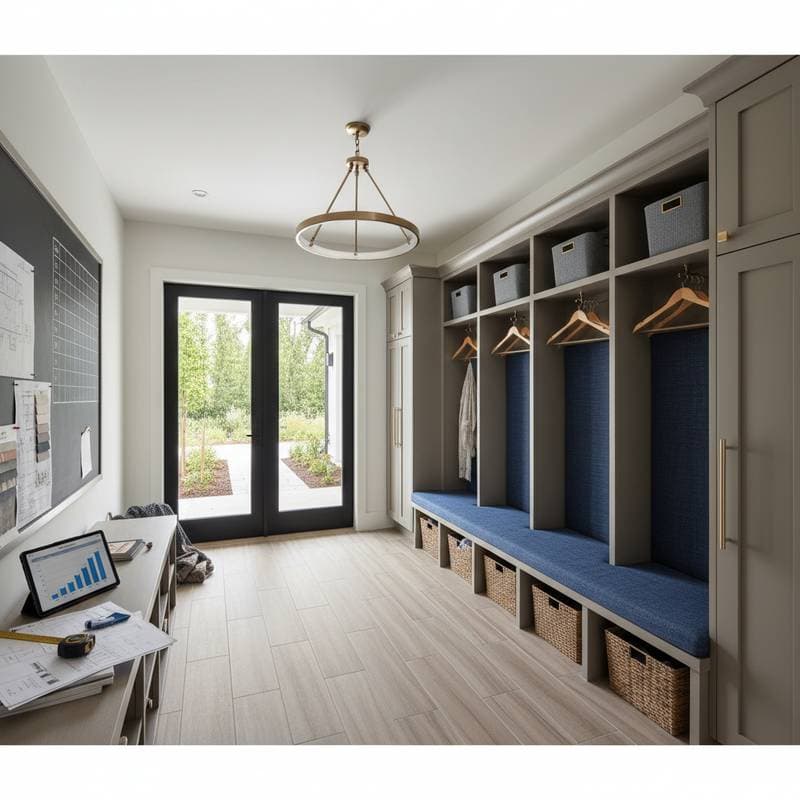
Blend heritage shapes with current materials through cabinets featuring raised insets, satin nickel hardware, and neutral gray tones on walls. This configuration promotes serenity, reliability, and enduring appeal across changing trends.
Enhancing Daily Life Through Thoughtful Design
A superior mudroom extends beyond mere organization to shape emotional well-being. It serves as a buffer, easing the shift from external demands to domestic tranquility. Professionals observe that dedicated sorting areas reduce family tension, as items like footwear and school bags settle into assigned places, smoothing start-of-day preparations.
Maintaining Your Mudroom Investment
Sustain performance with routine care. Vacuum and damp-mop floors each week to avoid abrasive buildup. Update basket contents with seasonal shifts, such as exchanging beach towels for coats. Touch up paint yearly to counter wear from frequent passage. Reassess storage configurations as household dynamics change, adding dividers or extenders as needed. Gradually incorporate elements like textiles or decor that align with evolving preferences, ensuring the space remains both functional and reflective of your lifestyle.