
2025 Mudroom Makeovers: Budget Layout Wins
Imagine arriving home with muddy boots, a soaked umbrella, and groceries slipping from your grasp. Instead of a serene entry, you face piles of shoes and damp jackets. A functional mudroom seems out of reach without a lavish budget, but effective layouts, practical materials, and strategic choices make it achievable.
Home improvement surveys reveal that less than 40 percent of homeowners adhere to their renovation budgets. Mudrooms, despite their compact size, frequently exceed estimates due to custom cabinets, specialized storage, and intricate flooring. Thoughtful planning in layout and spending creates an inviting, efficient space at a fraction of the anticipated cost.
What a Mudroom Really Needs
Effective mudrooms prioritize circulation over elaborate features. They contain dirt, organize items, and maintain household order.
Key components include:
- Durable flooring resistant to water and abrasion
- Storage solutions for footwear, outerwear, bags, and seasonal equipment
- Seating areas for changing shoes or placing packages
- Adequate lighting to locate small items quickly
- Hooks and baskets for immediate access and simple tidying
Interior designer Carla Nguyen of Studio Entry in Boston notes, “Homeowners often overspend trying to make their mudroom look like a magazine cover, but the best investment is in layout. Form follows function, and function saves money.”
The Budget Breakdown
Assess costs before selecting finishes. A complete mudroom renovation typically spans $3,000 to $15,000, influenced by dimensions, materials, and storage options. Primary expenses involve:
- Custom storage units, which range from $2,000 to $5,000
- Flooring installation, such as tile at $10 to $15 per square foot
- Plumbing or electrical additions, like outlets or sinks, costing $500 to $1,500
- Labor, which accounts for approximately half the overall budget
For limited funds, opt for ready-made storage, adhesive-backed flooring, and efficient lighting. Contractor Devin Morrow of Morrow Renovations observes, “Prefabricated cabinets have come a long way. You can get a custom look without the custom invoice.”
Layout Wins That Save You Money
Strategic layout forms the foundation of economical renovations. Efficiency maximizes value and minimizes expenditure.
1. Keep Plumbing Where It Is
Relocating a utility sink or laundry hookup can increase plumbing expenses significantly. If existing water lines are present, design around them. Install a basic countertop or wall-mounted shelf above the sink to enhance utility without added costs.
2. Choose Open Storage
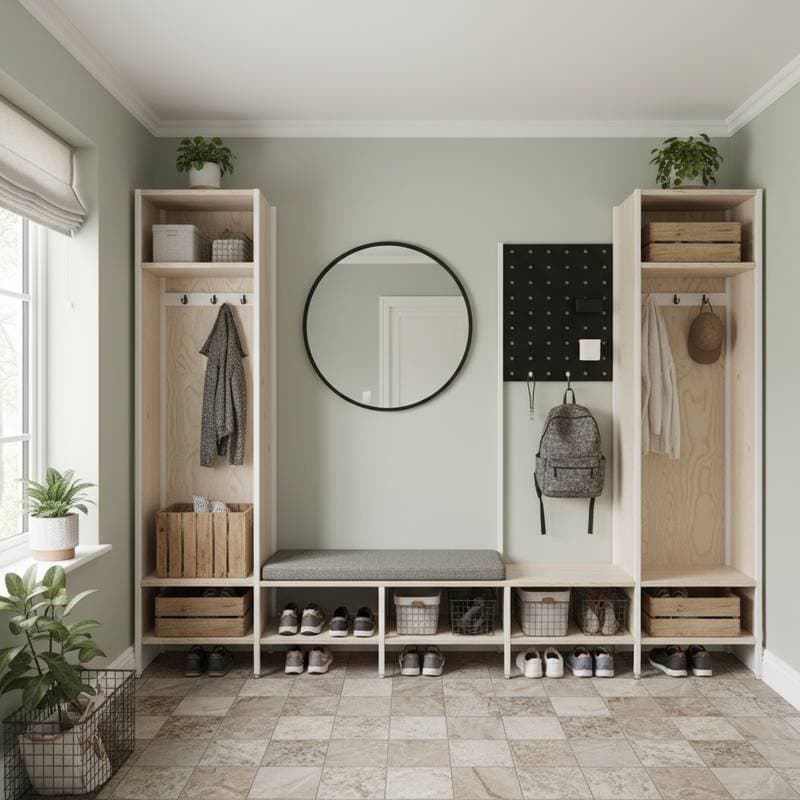
Enclosed cabinets provide a refined appearance but consume space and funds. Open shelving or wall-mounted cubbies maintain openness and install at lower cost. Baskets allow seasonal adjustments without professional intervention.
3. Use Vertical Space
Incorporate hooks, pegboards, and high shelves to utilize height effectively. This approach conserves floor area and reduces accumulation. Designer Marla Ortiz of Homewise Interiors advises, “When clients say they want a mudroom that feels bigger, I tell them to look up. Vertical storage gives you double the function for half the cost.”
4. Define Zones
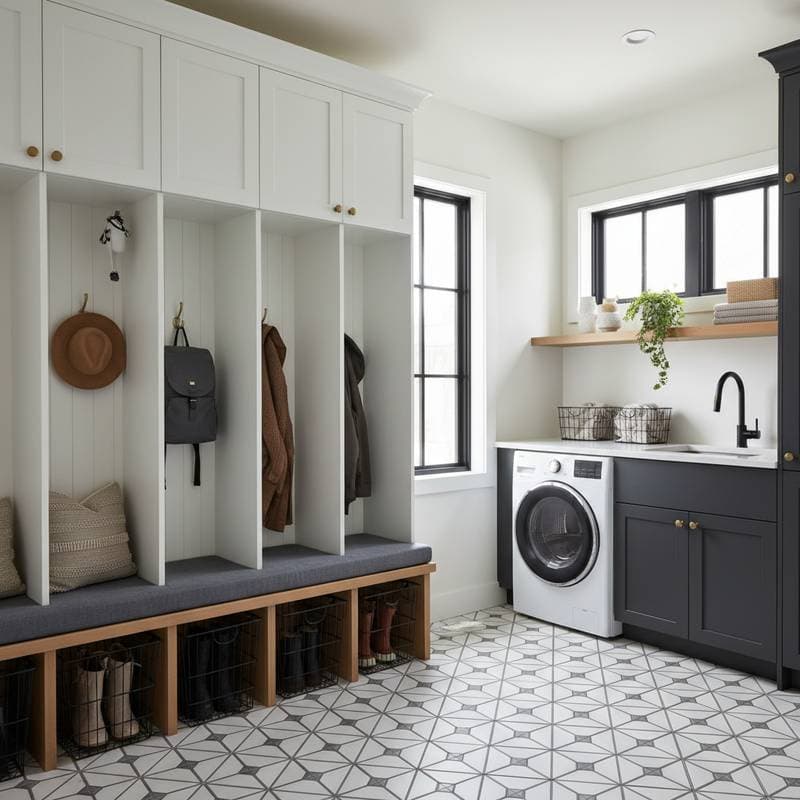
Segment the area into distinct sections: a drop-off zone for incoming items, a storage zone for organization, and a clean zone for transitions. Rugs or subtle flooring changes delineate boundaries visually, promoting order without constructing partitions or costly woodwork.
5. Keep It Modular
Select adjustable benches and stackable units for adaptability. This modular setup permits future rearrangements, avoiding complete overhauls as family needs evolve.
Cost-Saving Materials That Look High-End
Achieve a premium aesthetic without exotic materials. Select options that replicate upscale textures while enduring daily use.
- Luxury vinyl tile (LVT) mimics stone or wood patterns at reduced expense and repels moisture effectively
- Laminate surfaces deliver strength comparable to solid wood at lower prices
- Composite countertops resembling quartz cut costs by hundreds of dollars
- Beadboard panels provide traditional detail more affordably than shiplap alternatives
For added character, invest in a single focal element, such as a patterned rug or metallic hooks, to enhance the overall design without straining finances.
Hidden Costs to Plan For
Small projects often encounter unexpected charges. Anticipate these common additions:
- Electrical modifications for fixtures or receptacles
- Subfloor moisture protection
- Post-installation painting and trim refinishing
- Permits required for utility alterations
Allocate 10 to 15 percent of the budget as a reserve. This buffer transforms potential disruptions into minor adjustments.
DIY vs. Hiring Pros
Mudroom updates suit various skill levels. Homeowners can manage tasks like painting, shelf mounting, and pre-assembled unit setup. Professionals handle plumbing, wiring, and subfloor work for safety and compliance.
When engaging contractors, obtain several detailed bids. Itemized proposals highlight opportunities for savings, such as self-performing cosmetic finishes while experts address structural elements.
Design Trends That Fit Your Wallet
Current mudroom styles emphasize utility and tactile elements over ornamentation. The aesthetic conveys warmth, depth, and individuality.
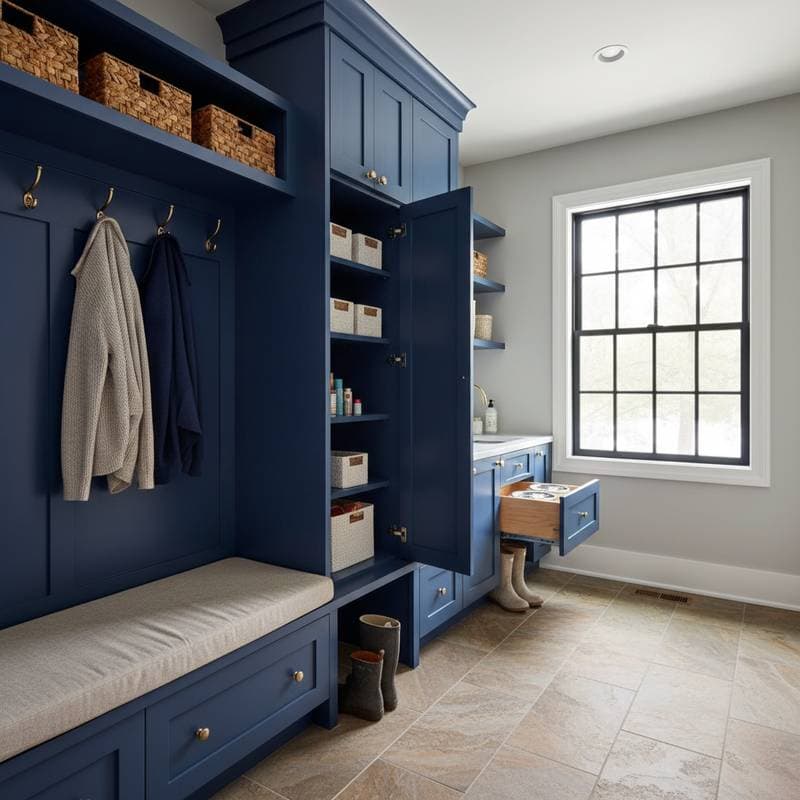
- Natural textures, including woven baskets and wood benches, introduce organic appeal
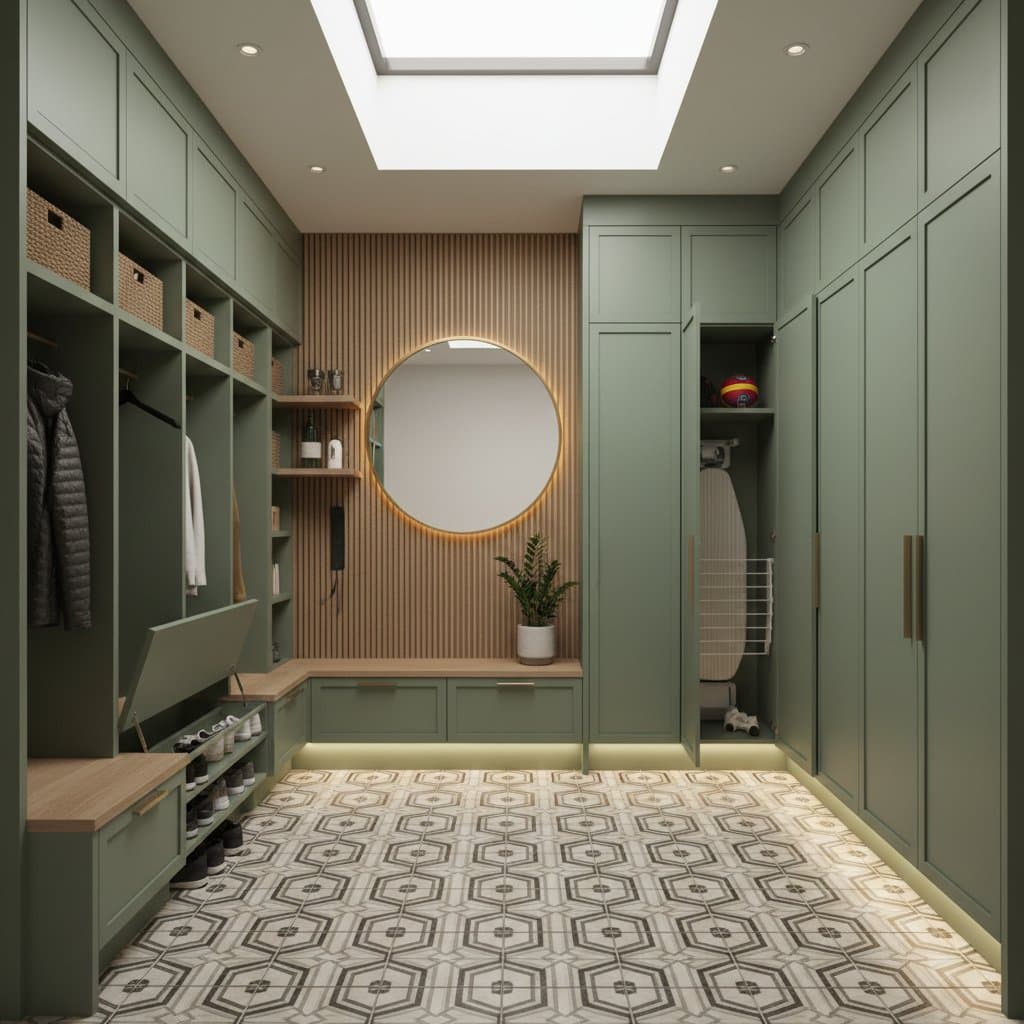
- Muted tones combined with richer hues like forest green or indigo foster tranquility
- Integrated features, such as concealed device chargers or foldable drying systems, enhance everyday efficiency
Incorporate these elements affordably by prioritizing resilient, comfortable selections that endure over time.
Maintaining Your Investment
Sustain the renovated space through consistent care. Routine upkeep protects surfaces and averts costly repairs.
- Clean surfaces weekly to mitigate water damage
- Inspect sealant and grout annually
- Shift area rugs periodically to distribute wear evenly
- Refresh paint or wood treatments every few years
These practices maintain appearance and functionality, boosting long-term value and home marketability.
Implement Your Mudroom Plan
Start by measuring your entryway and sketching zones. Source materials from local suppliers for deals on modular pieces. Track progress against your budget to ensure a seamless transformation into a practical, welcoming hub.