
2025 Mudroom Strategies: Layouts That Optimize Storage
A recent National Association of Home Builders survey reveals that 72 percent of homeowners prioritize improved entryway organization in renovations. The mudroom has evolved from a simple utility area into a vital functional space. With tightening renovation budgets and limited square footage, efficient layouts emerge as essential. Homeowners must balance financial constraints with durable materials and adaptable storage to ensure lasting value.
Understanding the Core Issues: Clutter and Time Loss
Homeowners often overlook the volume of items a mudroom manages, including backpacks, boots, pet essentials, and mail. These elements accumulate rapidly and foster disarray. Home Innovation Research Labs reports that disorganized entryways lead to an average of fifteen minutes lost each morning per household. Adding more cabinets seldom resolves the issue; redesigning the layout to match daily routines proves more effective, while maintaining predictable costs.
Remodeling Magazine estimates the average mudroom renovation at $6,000 to $18,000, varying by size and materials. Poor planning invites escalating expenses from change orders and overlooked storage needs.
Expert Perspective: Layouts and Investment Returns
Strategic layouts curb unexpected costs and enhance resale potential. A 2024 Houzz trends study indicates that storage upgrades like custom cubbies and built-in benches yield up to 65 percent return on investment. Such designs also prolong the durability of floors and cabinets by reducing exposure to moisture and debris.
"Layout forms the foundation of a cost-efficient mudroom," states Laura Whitfield, Certified Kitchen and Bath Designer at North River Interiors with fifteen years of experience. "A proper flow requires less cabinetry and fewer adjustments, helping projects stay within budget."
Practical Design Approaches for 2025
These strategies integrate functionality with fiscal prudence, drawing from current trends and input from remodelers.
Zone-Based Organization
Segment the mudroom into three key areas: drop zone, storage zone, and transition zone.
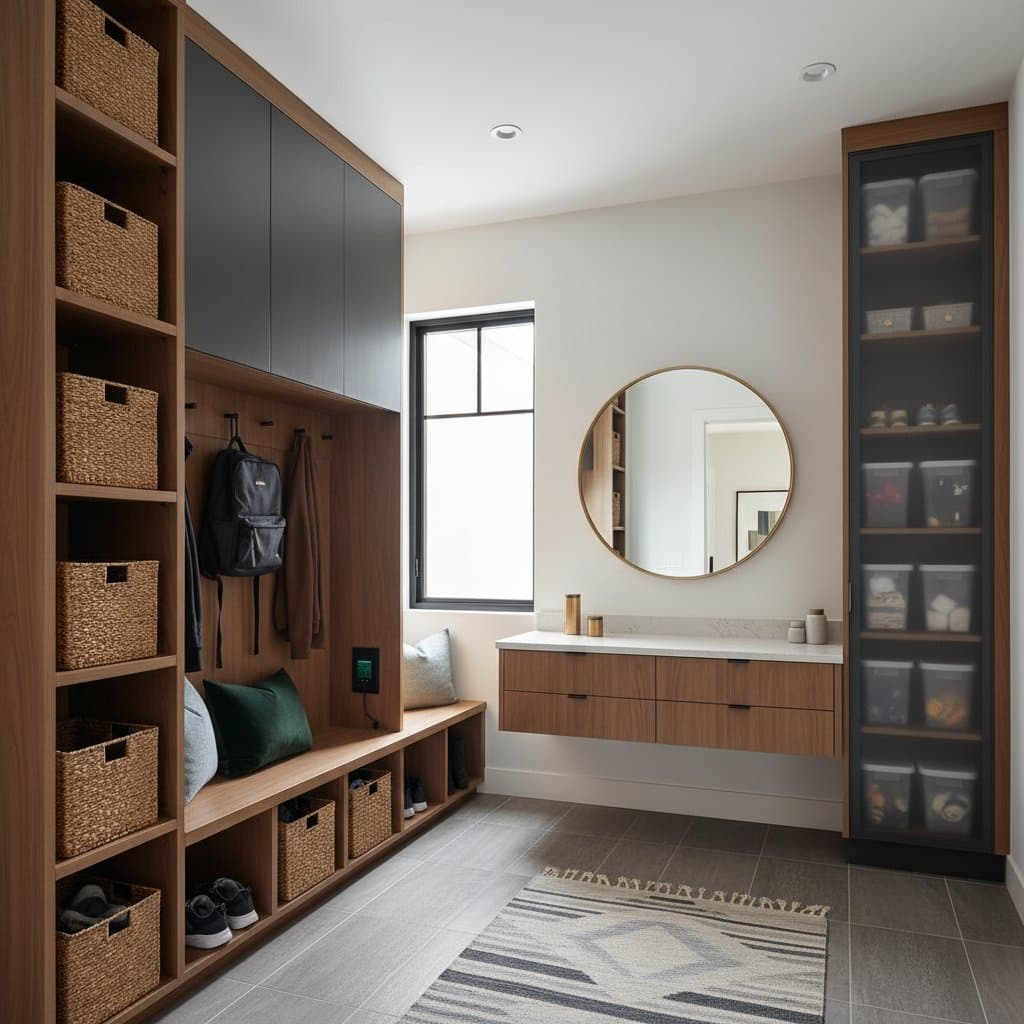
- Drop zone: Install a slim countertop or floating shelf for keys, mail, and everyday items. Prefabricated options begin at $150; custom versions surpass $1,000.
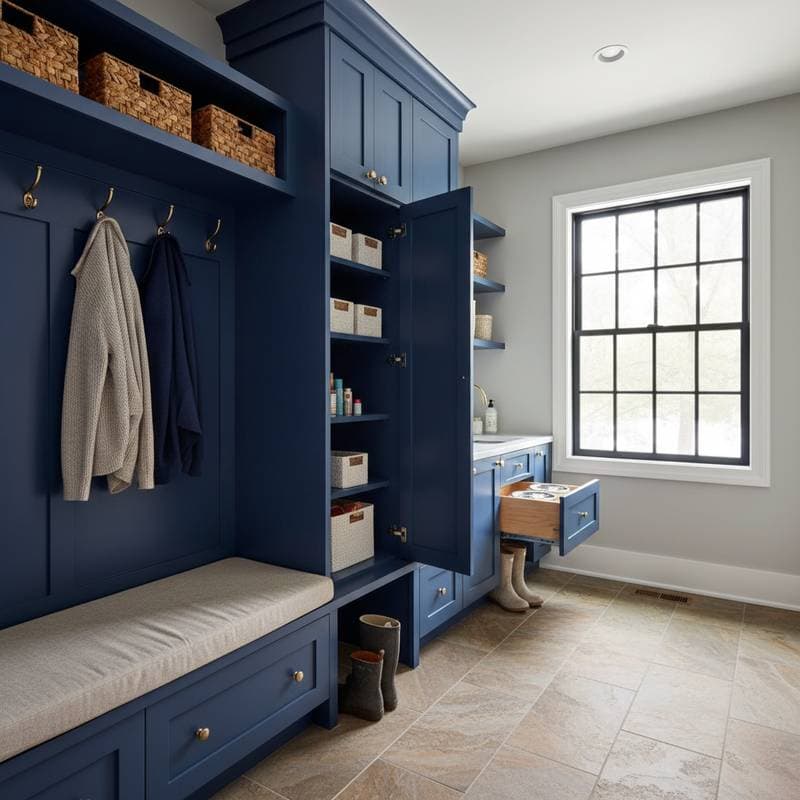
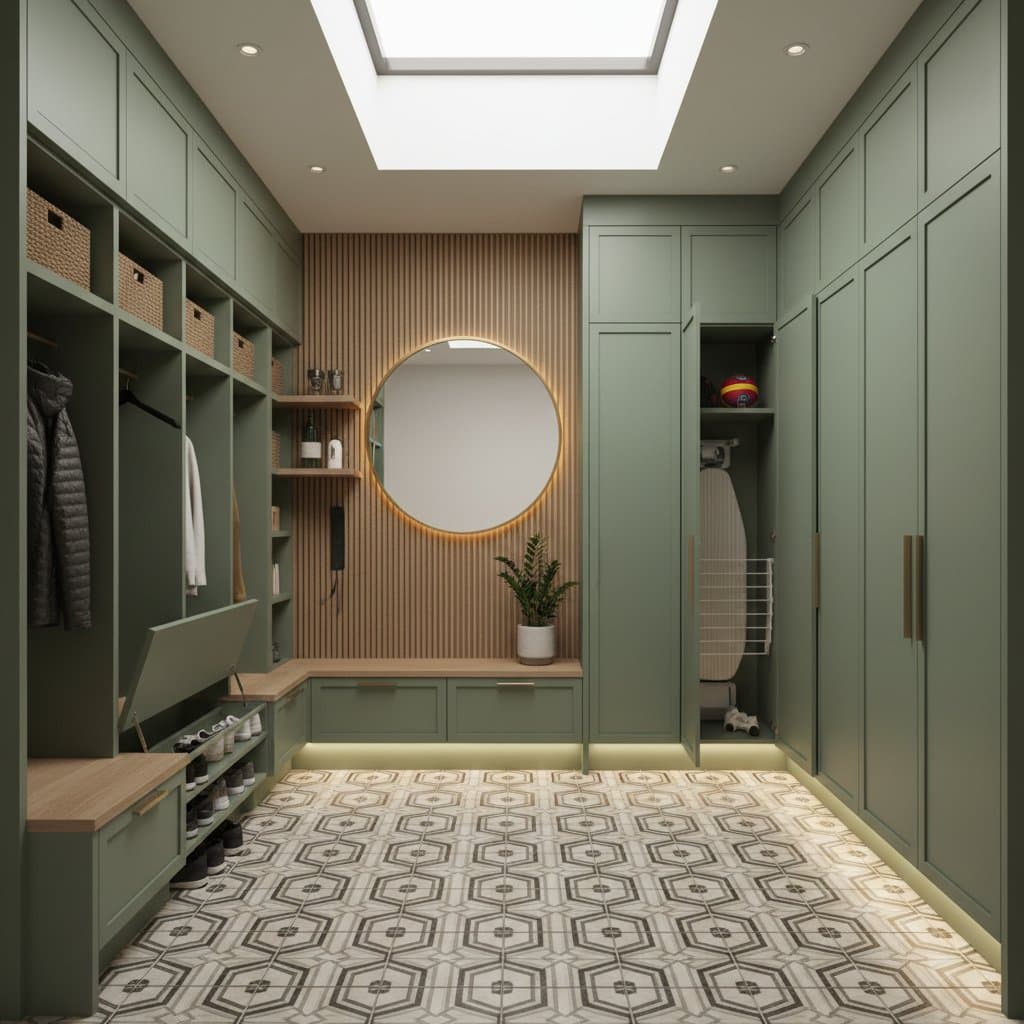
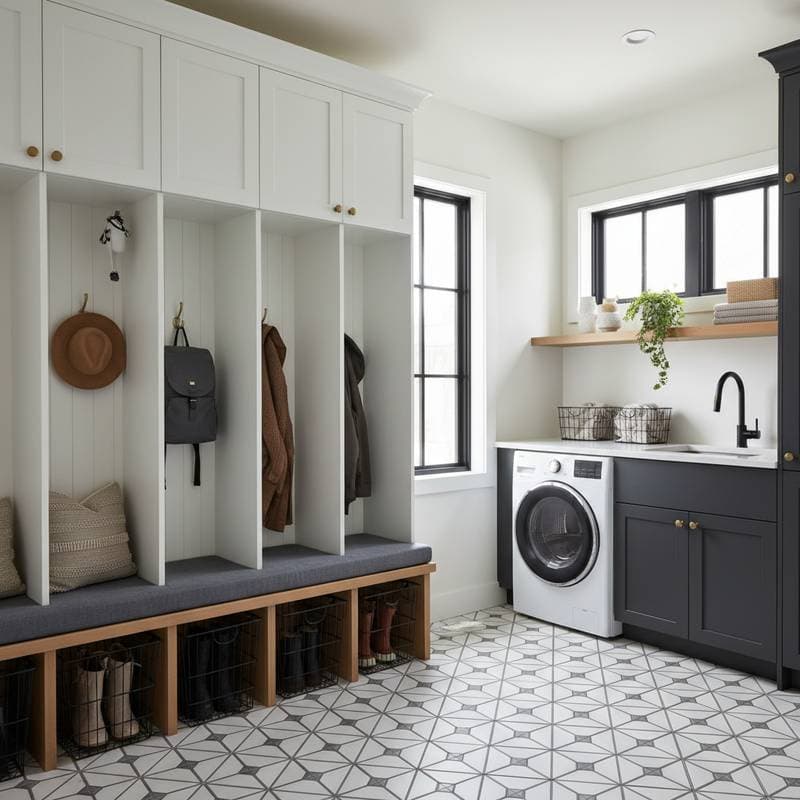
- Storage zone: Use tall lockers or cubbies for coats and shoes, featuring adjustable shelves for seasonal items.
- Transition zone: Add a bench with integrated shoe storage or a waterproof mat to control moisture.
"Many homeowners bypass zoning and later require additional work," notes Ben Keller, project manager at Apex Building Group. "Map all incoming items before committing to the design. This prevents thousands in revisions."
Maximizing Vertical Space
Most mudrooms underutilize wall height. Adding upper cabinets or open shelving above lockers boosts capacity by 30 percent without altering the floor plan. Floating shelves range from $50 to $150 each; upper cabinets average $250 per linear foot.
Integrated Seating Solutions
In smaller areas, seating serves dual purposes as storage. Benches with hydraulic lift-up lids cost more initially but eliminate separate containers. Prices fall between $600 and $1,200 based on materials and finishes. These features enhance usability and withstand daily wear.
Selecting Durable, Affordable Materials
Moisture-resistant MDF paired with laminate finishes offers reliability when sealed correctly. For floors, luxury vinyl tile provides the best value at $3 to $5 per square foot installed, excelling in water resistance. Opt for natural stone or porcelain tile for higher appeal if they match the home's aesthetic, though costs exceed basic options.
Budget Planning and Cost Control
Begin every project with an initial estimate incorporating a 15 percent contingency. Concealed expenses frequently stem from electrical modifications, utility sink plumbing, or subfloor adjustments. Engage a skilled general contractor to outline a comprehensive scope and avoid disruptions.
Apply value engineering to pinpoint substitutions that maintain quality at lower prices. Prefinished wood panels, for example, replace custom shiplap and save $8 to $10 per square foot. Repainting current cabinets instead of full replacement trims thousands from the total.
Building Your Professional Team
Securing experienced experts protects both budget and outcomes. Seek:
- Licensed contractors with a minimum of five years in remodeling.
- Certified designers skilled in storage solutions.
- Suppliers that provide warranties and clear pricing.
"Early designer involvement typically reduces overall expenses," explains Maria Ellis, owner of Ellis Home Planning Group. "It prevents layout errors that trigger expensive changes, particularly with plumbing or electrical components."
Directories from NARI and NKBA list verified professionals. Verify insurance, references, and portfolio images prior to agreements.
Executing the Project Smoothly
Full mudroom renovations span two to four weeks after materials arrive. Custom cabinetry delays or flooring shortages often cause setbacks. To adhere to timelines:
- Procure all supplies before starting demolition.
- Request weekly contractor reports.
- Reserve funds for surprises like subfloor fixes.
Track expenses weekly for ongoing visibility. Tools such as Buildertrend or CoConstruct aid in monitoring labor and materials.
Sustaining Long-Term Functionality
Post-renovation care preserves the investment. Conduct routine cleaning, seasonal purging, and floor resealing to uphold performance. Wall hooks for overflow items curb accumulation.
Strategic mudroom designs yield organization and increased property worth. The leading 2025 approaches emphasize thoughtful execution, fiscal discipline, and optimal space utilization for enduring home enhancement.