
Designing a Functional Mudroom for 2026
Imagine entering your home after a demanding day. You set down your bag, remove your shoes, and immediately sense order. Coats hang precisely, boots align beneath a bench, and keys sit in a designated tray. A thoughtfully designed mudroom establishes this tranquility. It serves as the essential link between the exterior world and your living areas, managing daily transitions with efficiency and elegance.
Planning a mudroom, whether from the ground up or through renovation, transforms household routines. Prioritize practicality in the initial design phase, then incorporate aesthetic elements that reflect personal taste. The following sections outline proven strategies to craft a mudroom suited to your lifestyle, ensuring both utility and appeal.
1. Establish a Dedicated Drop Zone
A mudroom requires a specific area for incoming items to prevent disorder from spreading. Position this zone at the entry point for immediate use. Without such a setup, items accumulate and disrupt the space.
Consider these options for implementation:
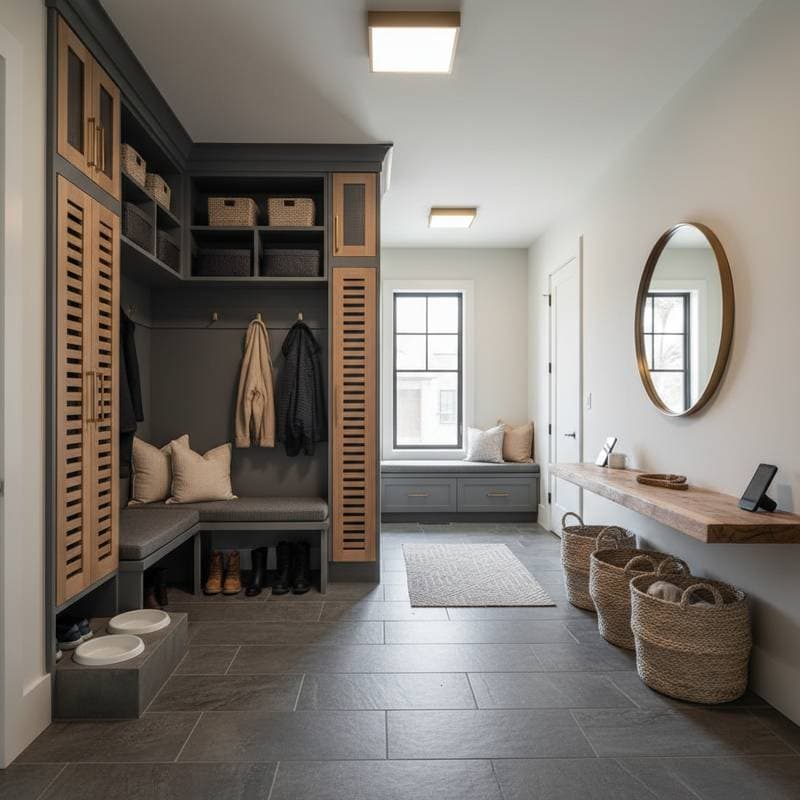
- Install a built-in counter or floating shelf to hold mail, keys, and mobile devices securely.
- Use wall-mounted cubbies, each labeled for family members, to organize personal belongings swiftly.
- Opt for a concealed drawer in a cabinet to store small objects while preserving a streamlined appearance.
This feature extends beyond mere storage. It fosters a seamless entry and exit process, safeguarding the rest of the home from stray possessions.
2. Select Versatile Seating Solutions
Seating forms the core of mudroom functionality. It offers a stable surface for changing footwear and incorporates storage capabilities. Select designs that align with available space and usage patterns.
Explore these practical choices:
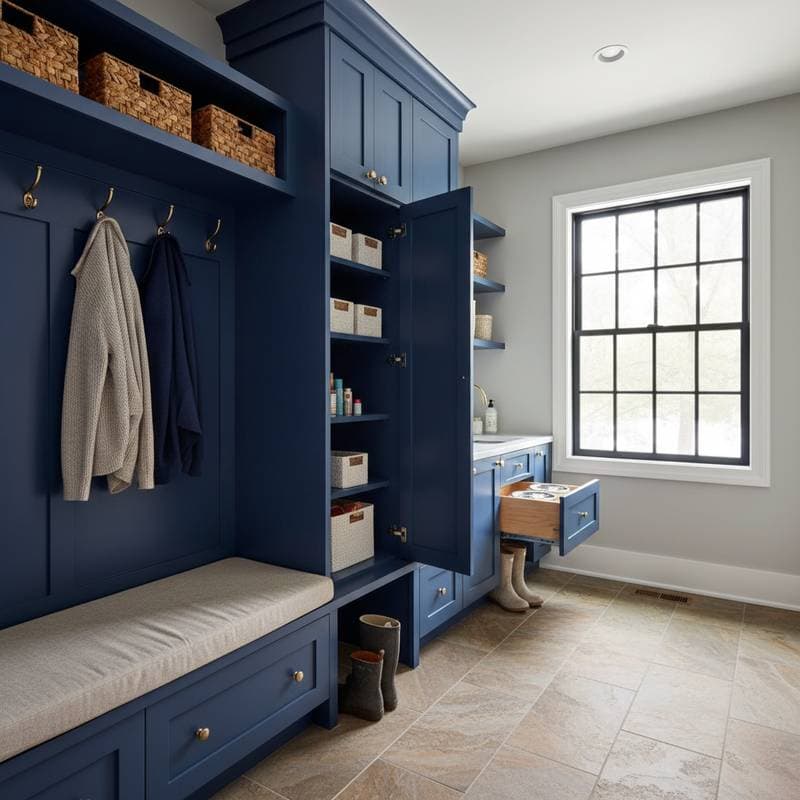
- A lift-top bench conceals seasonal gear or pet essentials beneath its surface.
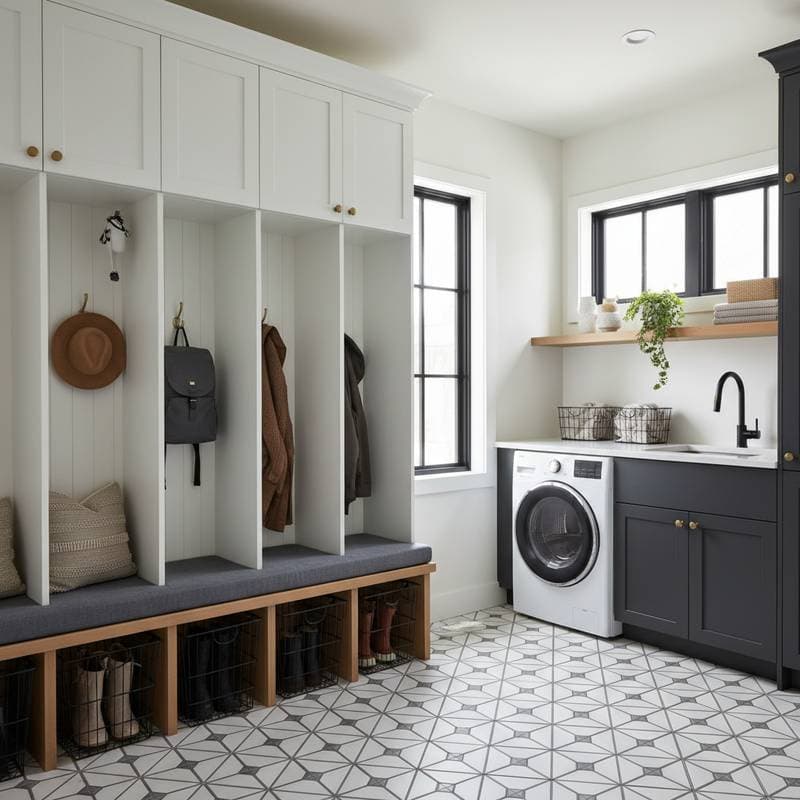
- An open bench paired with baskets allows quick retrieval of shoes and accessories.
- A built-in bench featuring drawers delivers a tailored, orderly aesthetic.
Position the bench to integrate with hooks or cabinets for unified storage. Top it with a cushioned seat in stain-resistant fabric to enhance comfort and introduce subtle color. Such additions elevate usability and create an inviting atmosphere.
3. Select Resilient Materials for High-Traffic Areas
Mudrooms endure constant activity from wet footwear, leaking umbrellas, and tracked-in dirt. Select finishes that withstand wear while contributing to visual warmth. Balance durability with design to maintain long-term appeal.
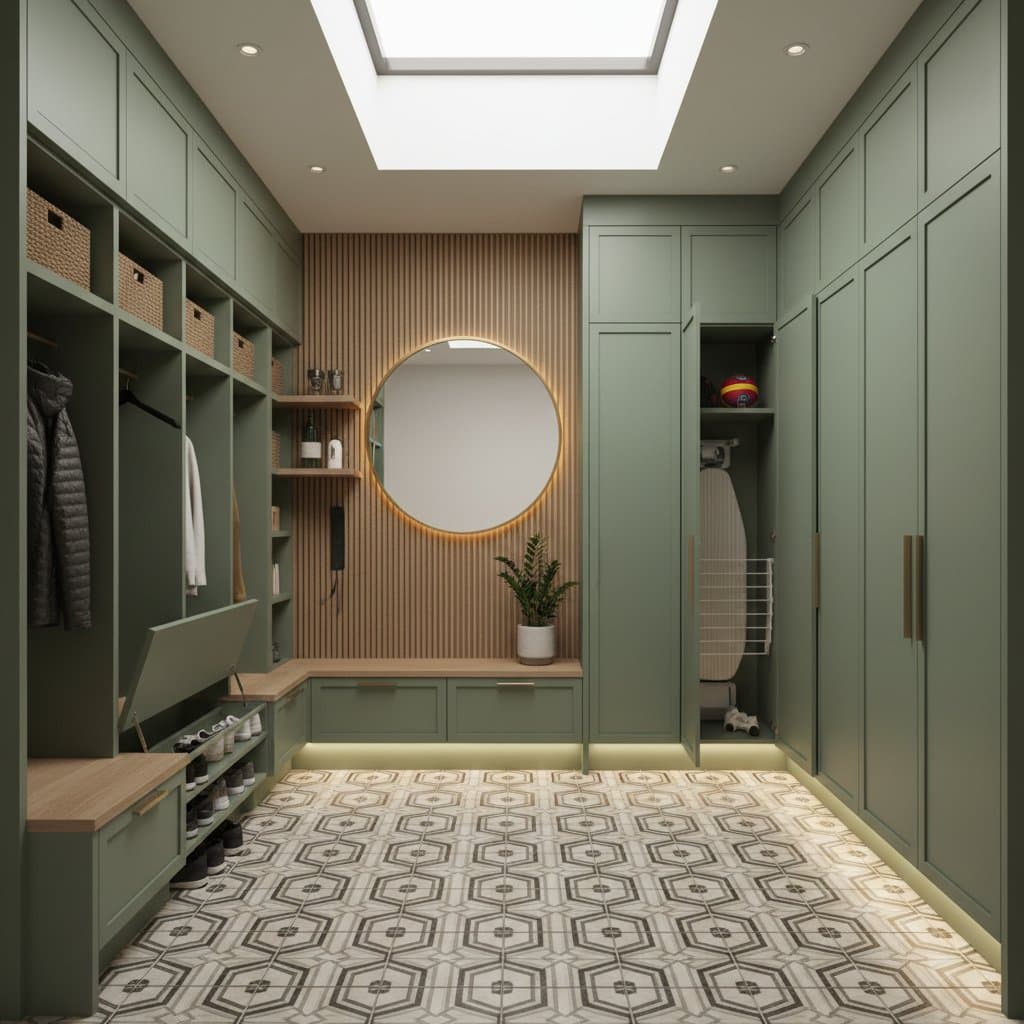
For flooring, prioritize tile, natural stone, or high-quality vinyl plank. These options facilitate simple cleaning and repel moisture effectively. To achieve a wooden appearance without vulnerability, choose porcelain tiles engineered to replicate wood textures.
Apply beadboard paneling or semi-gloss paint to walls for protection against marks and spills. Limit the treatment to the lower four feet of walls to simplify upkeep. For cabinetry and counters, employ sealed wood, laminates, or painted surfaces capable of daily handling. Incorporate matte-finish metal hooks and fixtures to resist smudges and add enduring style.
4. Integrate Strategic Lighting and Electrical Elements
Effective illumination transforms a mudroom from basic to refined. Blend ambient and targeted lights to support various tasks while enhancing the overall mood.
Mount flush ceiling fixtures or recessed cans for even overhead coverage. Supplement with wall-mounted sconces or a compact lamp near the drop zone for softer accents. In cubby areas, install LED strips beneath shelves to illuminate contents and simplify item location.
Include electrical outlets strategically. Place one adjacent to the drop zone for device charging, and another by the bench for appliances like boot dryers. These elements ensure the space operates with convenience and sophistication.
5. Infuse Personal Style Without Compromising Utility
A mudroom merits decorative consideration to harmonize with home aesthetics. Infuse elements that add character while preserving functionality.
Begin with a cohesive color palette. Neutral tones such as warm grays, soft creams, or sage greens promote serenity. For impact, introduce richer shades like navy blue or earthy greens, accented by brass or matte black hardware.
Layer in textures via rattan baskets, wooden details, or stone elements to build visual interest. These choices introduce organic warmth and dimension.
Incorporate subtle decor, such as a framed print, a functional mirror, or fresh foliage in a vase. Maintain restraint to avoid adding clutter, ensuring the space remains purposeful.
6. Accommodate Pets and Specialized Storage Needs
Households with pets benefit from tailored mudroom features. Dedicate areas for pet-related items to streamline care routines.
Install a low drawer that extends into a feeding area or hooks reserved for leashes. If feasible, add a compact utility sink for rinsing paws after outdoor adventures.
For active families, allocate cubbies or bins per individual for sports equipment. Label containers for specific pursuits to eliminate confusion. Use robust hooks for items like helmets or bags.
When adjacent to laundry facilities, leverage proximity with a nearby sink or drying line for efficient handling of soiled gear.
7. Optimize Layout for Seamless Movement
An effective mudroom design promotes intuitive navigation. Assign spots for each item to minimize effort in daily use.
Structure the layout sequentially: hooks near the entrance for outerwear, followed by the bench for footwear changes, and lower storage for shoes. Position accessory baskets close to the door and reserve deeper cabinets for larger objects.
This arrangement supports smooth traffic flow, particularly during peak times. Test the sequence to confirm it aligns with household habits, adjusting as necessary for optimal performance.
Maintaining and Evolving Your Mudroom
Daily interaction reveals the true value of a well-executed mudroom. It acts as a serene threshold to your home, buffering external demands.
Establish habits to sustain its efficiency: tidy the drop zone each week, swap out seasonal storage, and update containers periodically. Monitor usage to identify improvements.
Adapt the design over time as family dynamics change. Modular shelving or adjustable hooks allow flexibility without major overhauls. Ultimately, this space delivers ongoing convenience, turning routine entries into moments of calm and control.