
Mudroom Remodel ROI: Cost vs Value Insights
Examine ten different homes, and observe ten distinct mudroom configurations. Some feature polished built-in elements, while others consist of a simple bench with hooks. Despite this variety, fundamental design principles remain constant. A well-designed mudroom manages dirt, storage, and foot traffic effectively without deteriorating or descending into disorder. Executed properly, it emerges as one of the most appreciated areas in a residence. Handled poorly, it transforms into a cluttered repository that diminishes resale attractiveness. The guidelines presented here distinguish a valuable mudroom remodel from one that squanders resources. These standards guide client projects, ensuring equilibrium among cost, durability, and enduring return.
Rule 1: Prioritize Functional Storage Solutions
Problem: Inadequate storage leads to clutter accumulation, turning the mudroom into a disorganized zone that frustrates users daily.
Context: Mudrooms serve as the primary drop-off point for outdoor gear, shoes, and bags. Without thoughtful organization, items scatter, reducing efficiency and aesthetic appeal.
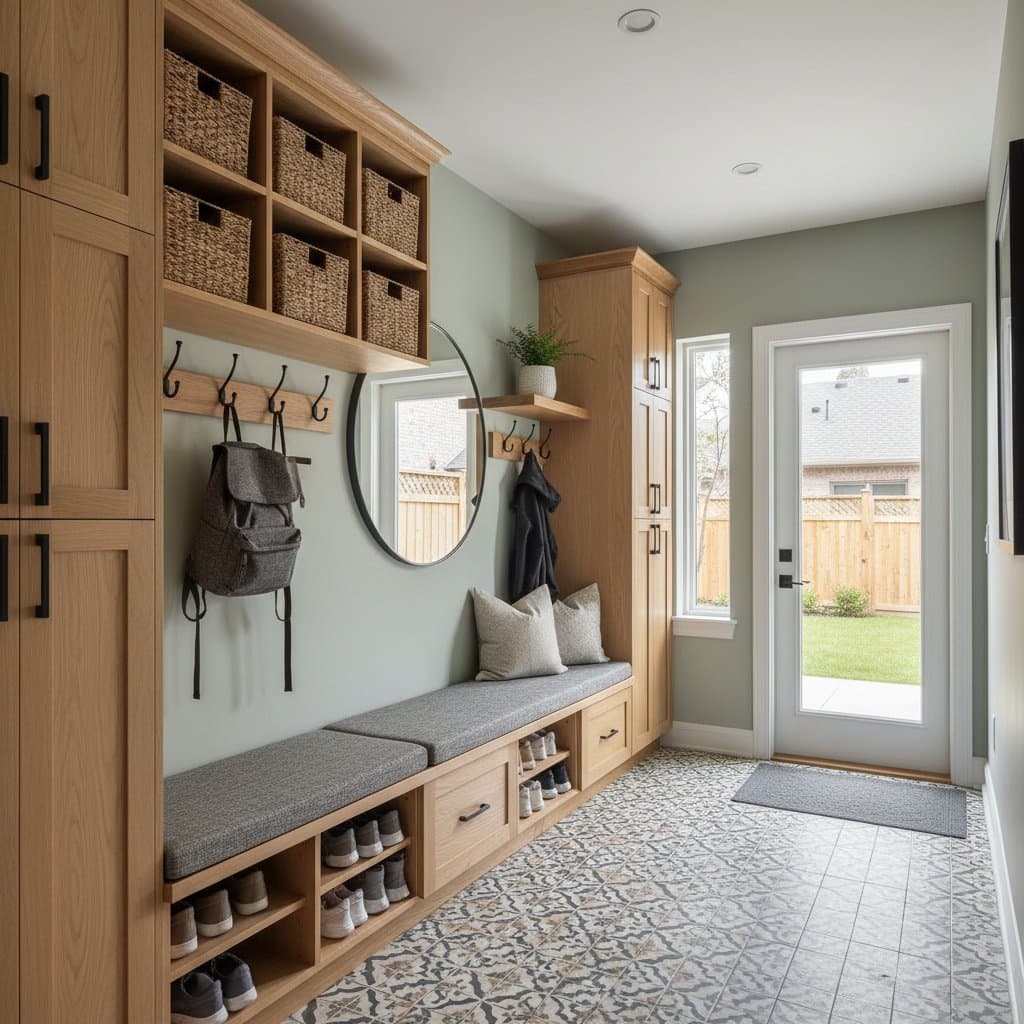
Solution: Incorporate built-in cubbies, hooks at varying heights, and dedicated zones for family members. Opt for adjustable shelving to accommodate changing needs over time.
Technical Detail: Select solid wood or melamine cabinetry with soft-close drawers to withstand heavy use. Ensure hooks support at least 25 pounds each, and include boot trays beneath lower benches to contain moisture.
Benefit: Organized storage enhances usability, making the space feel intentional and spacious. Prospective buyers appreciate such practicality, which contributes to higher perceived home value.
Rule 2: Plan for Water, Dirt, and Wear
Problem: Mudrooms falter when materials prove unable to withstand moisture or abrasive particles. Wooden floors or inferior laminate warp and discolor after one season of damp footwear.
Context: Entry zones endure relentless exposure to weather elements. Absent appropriate materials and drainage features, surfaces degrade rapidly, halving the return on investment.
Solution: Select waterproof flooring options, sealed grout lines, and washable wall paints. Incorporate a floor drain where the area adjoins an exterior entrance. Install a recessed mat well to capture water runoff.
Technical Detail: Porcelain tile rated PEI 4 or above endures abrasion effectively. Employ satin or semi-gloss paint for straightforward cleaning. Utilize cement board underlayment to safeguard against subfloor decay.
Benefit: Resilient finishes minimize ongoing maintenance expenses and sustain visual integrity. This approach allows resale buyers to envision longevity rather than impending repair costs.
Rule 3: Optimize Lighting and Visibility
Problem: Dim or poorly placed lighting creates shadows that hide dirt and complicate navigation, amplifying the sense of disarray.
Context: Mudrooms often lack natural light, relying on artificial sources to illuminate high-activity areas. Inadequate illumination undermines safety and cleanliness efforts.
Solution: Layer ambient, task, and accent lighting. Position fixtures above work zones like benches and sinks. Consider motion-sensor lights for convenience during low-light entries.
Technical Detail: Install LED recessed cans for even overhead coverage, supplemented by under-cabinet strips for detailed tasks. Aim for 300-500 lux illumination levels to meet functional standards.
Benefit: Enhanced visibility promotes tidiness and eases daily routines. Well-lit spaces appeal to buyers seeking modern, user-friendly features that elevate overall home efficiency.
Rule 4: Connect the Mudroom to the Home’s Circulation
Problem: Certain remodels segregate the mudroom or compel traffic through cumbersome routes. Such layouts breed irritation and limit practical utility.
Context: Mudrooms function optimally as transitional hubs, linking exteriors, garages, and primary living spaces. Suboptimal positioning results in underutilization.
Solution: Analyze the residence floor plan to position the mudroom along natural pathways. In constrained areas, repurpose portions of adjacent laundry rooms or hallways near entrances.
Technical Detail: Preserve a minimum of 36 inches for unobstructed passage through the mudroom. Ensure door swings avoid impeding flow. When integrating with laundry facilities, apply soundproofing to common walls.
Benefit: Strategic placement streamlines household movement and boosts convenience. Buyers prioritize such seamless integration, which garners superior evaluations in property appraisals.
Rule 5: Foster Seamless Design Integration
Problem: Remodels that isolate the mudroom as a utilitarian outpost disrupt the home’s cohesive aesthetic.
Context: The mudroom influences first impressions and overall harmony. Disjointed styles clash with surrounding interiors, detracting from perceived quality.
Solution: Echo color palettes, materials, and architectural details from adjacent rooms. Use transitional elements like archways or consistent trim to unify the space.
Technical Detail: Match cabinetry finishes to kitchen styles, and select hardware that complements throughout the home. Incorporate subtle patterns in flooring that extend visually into hallways.
Benefit: Unified design elevates the entire residence’s appeal. This thoughtful bridging reassures buyers of a polished, intentional layout that enhances marketability.
Rule 6: Create a Cleanable, Maintainable Space
Problem: Initial attractiveness fades as maintenance challenges arise. Stained grout, scuffed paint, and disorganized storage erode the remodel’s worth.
Context: Mudrooms operate as active workspaces, not mere displays. They demand resilient, low-effort materials and configurations.
Solution: Choose surfaces tolerant of regular scrubbing. Steer clear of textured walls or wide grout lines. Integrate pull-out baskets or bins for effortless organization.
Technical Detail: Apply epoxy grout for superior stain resistance. Employ protective wall treatments such as beadboard or wainscoting to shield against impacts. Add a utility sink where plumbing permits.
Benefit: Simplified care preserves attractiveness over time, bolstering property value and alleviating owner expenses.
Rule 7: Incorporate Smart Technology Features
Problem: Outdated mudrooms lack modern conveniences, making them feel obsolete amid evolving homeowner expectations.
Context: Contemporary lifestyles demand integrated tech for security, climate control, and efficiency. Ignoring these elements limits appeal in competitive markets.
Solution: Embed charging stations, keyless entry systems, and smart thermostats. Include app-controlled lighting and ventilation to manage humidity.
Technical Detail: Wire for USB outlets in benches and install Wi-Fi-enabled locks. Use dehumidifiers tied to sensors for automatic moisture regulation.
Benefit: Tech enhancements future-proof the space, attracting tech-savvy buyers and justifying premium pricing through added convenience.
Rule 8: Balance Cost with Return on Investment
Problem: Excessive spending on bespoke cabinetry or opulent finishes fails to yield proportional resale gains.
Context: Effective mudroom upgrades harmonize durability, style, and fiscal prudence. Extravagant personalization seldom recoups costs without addressing specific needs.
Solution: Focus expenditures on foundational elements like flooring, robust cabinetry, and spatial enhancements. Employ mid-tier materials that convey sophistication affordably.
Technical Detail: Standard mudroom overhauls deliver robust returns via refreshed flooring, integrated storage, and improved illumination. Reserve structural alterations for genuine circulation flaws.
Benefit: Judicious allocation safeguards monetary returns while providing reliable performance. Discerning buyers commend restrained, effective upgrades.
Rule 9: Emphasize Sustainability and Durability
Problem: Short-lived materials contribute to environmental waste and frequent replacements, inflating long-term costs.
Context: Eco-conscious design aligns with buyer preferences for responsible homes. Sustainable choices extend lifespan and reduce ecological impact.
Solution: Source recycled or low-VOC materials, and prioritize energy-efficient fixtures. Design for adaptability to minimize future renovations.
Technical Detail: Use bamboo or recycled rubber flooring for resilience and renewability. Select LED lighting and water-saving drains to cut utility demands.
Benefit: Green practices appeal to environmentally aware markets, enhancing resale potential and promoting cost savings through longevity.
Rule 10: Treat the Mudroom as a Design Bridge
Problem: Treating the mudroom as an isolated utility area severs it from the home’s stylistic narrative.
Context: As an entry focal point, the mudroom sets the tone for interior aesthetics. Disconnects undermine the residence’s unified character.
Solution: Align elements with broader design themes, using shared motifs to create continuity. Balance utility with subtle elegance to elevate the threshold experience.
Technical Detail: Coordinate trim profiles and hardware across transitions. Introduce natural textures like stone accents that recur in living areas.
Benefit: This integrative approach reinforces architectural cohesion, impressing buyers with a home that flows effortlessly from entry to interior.
Sustaining Your Mudroom Investment
Implement these rules to transform your mudroom into a resilient asset. Focus on durability and integration to ensure the space supports daily life while appreciating in value. Regular assessments keep functionality sharp, securing both immediate enjoyment and future financial rewards.