
2026 Laundry Remodel: Costs vs. Real ROI Revealed
Walk into ten different laundry rooms, and you will observe ten distinct design approaches. Some emphasize sleek cabinetry and luxury finishes, while others stress raw utility. Regardless of the variety, every effective laundry remodel builds upon a foundation of functional design and strategic investment. Homeowners frequently inquire whether upgrading this essential space yields worthwhile returns. A thoughtfully planned remodel provides both immediate convenience and enduring value when informed by established design principles.
The following rules guide the transformation of laundry or combined mudroom-laundry areas. These principles integrate cost considerations, practical value, and usability to support informed decisions and tangible outcomes.
Rule 1: Establish Workflow Before Aesthetics
Problem: Designs that prioritize appearance over function lead to inefficient daily use and frustration.
Context: Homeowners often select cabinetry or colors first, only to discover that appliance placement hinders smooth operations.
Solution: Map the laundry process from sorting to folding. Position the washer and dryer side by side with at least 36 inches of clearance in front for loading and unloading. Designate zones for soiled clothes, clean linens, and ironing to minimize steps between tasks.
Technical Detail: Measure traffic patterns and ensure pathways remain unobstructed. Incorporate a countertop between appliances at a height of 36 inches for folding and sorting.
Benefit: An optimized workflow reduces time spent on chores by up to 30 percent and prevents bottlenecks that cause daily irritation.
Rule 2: Plan for Plumbing and Venting Early
Problem: Treating plumbing and venting as secondary elements causes budgets to exceed estimates significantly.
Context: Relocating washers to interior walls for additional space frequently results in expensive vent modifications or persistent moisture problems.
Solution: Retain water lines and vents along exterior or easily accessible framed walls. Opt for rigid metal ducting in dryer vents instead of flexible hoses. Place a drain pan beneath the washer that connects to a floor drain.
Technical Detail: Relocation expenses vary based on wall access, but anticipate costs for new shut-off valves and pressure-tested supply lines. Consult local codes for vent length limits, typically 25 feet maximum.
Benefit: Proactive planning averts water damage, mold development, and costly structural changes down the line.
Rule 3: Select Moisture-Resistant Materials
Problem: Standard materials degrade quickly in humid environments, leading to premature replacements.
Context: Vinyl flooring and painted drywall absorb moisture over time, fostering mildew and repair needs.
Solution: Choose waterproof options such as luxury vinyl plank flooring, cement board backsplashes, and semi-gloss paints. Install open shelving with corrosion-resistant brackets to promote air circulation.
Technical Detail: Seal joints with silicone caulk rated for wet areas. Select cabinets made from moisture-resistant plywood or composite materials.
Benefit: Durable materials extend the room's lifespan, lower maintenance costs, and maintain a clean, hygienic space.
Rule 4: Prioritize Lighting and Visibility
Problem: Inadequate illumination renders laundry tasks cumbersome and error-prone.
Context: Single overhead fixtures create shadows on work surfaces, complicating stain detection and sorting.
Solution: Implement layered lighting systems. Pair recessed ceiling fixtures with under-cabinet or wall-mounted task lights. Select bulbs at 4000K color temperature for balanced, natural visibility.
Technical Detail: Position switches near all entry points, especially in multi-door setups. Integrate occupancy sensors to conserve energy without manual intervention.
Benefit: Enhanced lighting boosts task precision for sorting, stain treatment, and folding, while elevating the overall room ambiance.
Rule 5: Maximize Storage Efficiency
Problem: Insufficient or poorly organized storage leads to clutter and lost productivity.
Context: Baskets overflow on floors when cabinets lack dedicated compartments for detergents and linens.
Solution: Install adjustable shelving above appliances and pull-out bins for supplies. Reserve lower cabinets for heavy items like laundry baskets. Add wall-mounted rods for hanging delicates.
Technical Detail: Use soft-close drawers to handle frequent access. Ensure shelves support at least 50 pounds per linear foot for stability.
Benefit: Organized storage streamlines access to essentials, reduces search time, and keeps the space tidy.
Rule 6: Integrate Mudroom Efficiency
Problem: Shared laundry and mudroom spaces create imbalances where one area overshadows the other.
Context: Shoes and outerwear accumulate near washers, introducing dirt into clean zones.
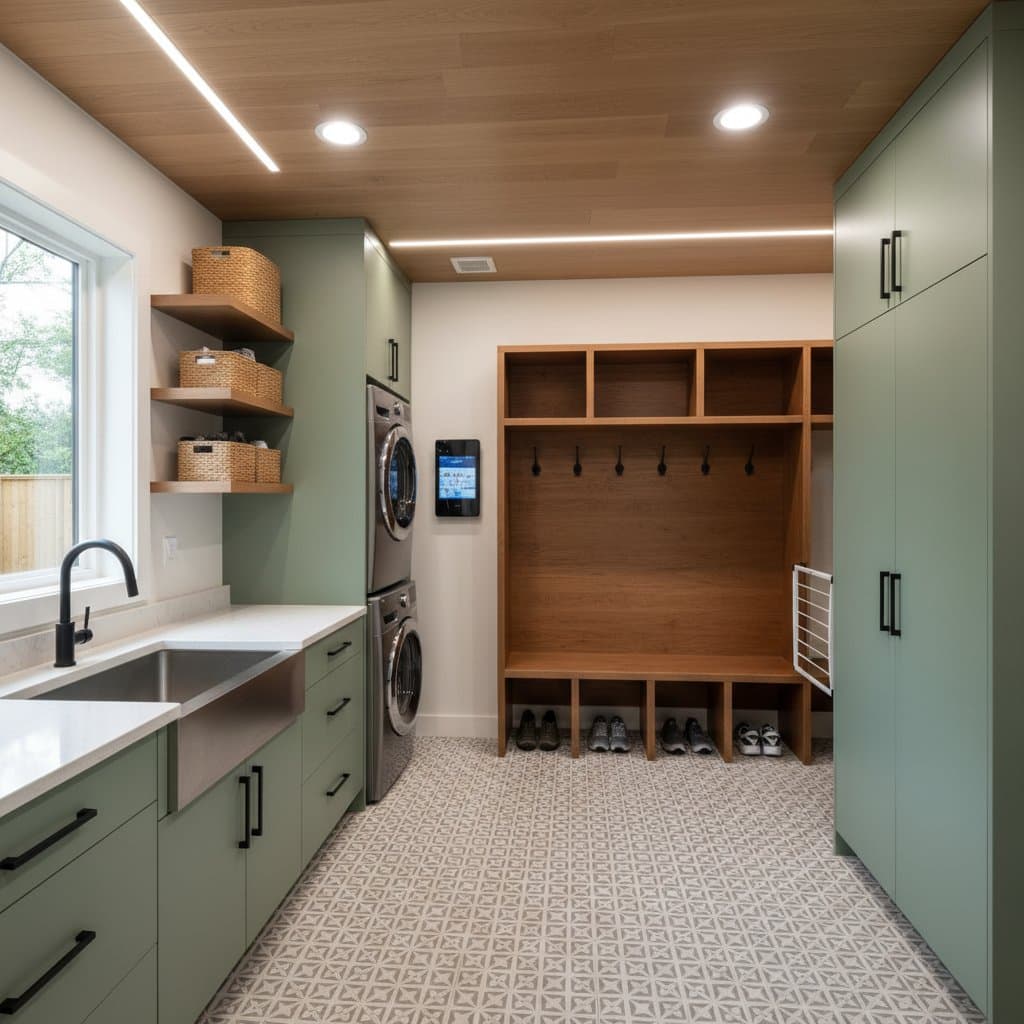
Solution: Clearly delineate areas with a bench featuring cubbies and hooks adjacent to the entry. Apply washable tile or waterproof flooring in the mudroom section. Maintain 36 inches of clear floor space between laundry functions and entry points.
Technical Detail: Incorporate a floor drain near the entrance for boot runoff, using sealed grout and a subtle floor slope for drainage.
Benefit: Zoned designs enhance household circulation and shield laundry areas from external contaminants.
Rule 7: Incorporate Energy-Efficient Appliances
Problem: Outdated equipment drives up utility bills and complicates modern workflows.
Context: Older washers consume excessive water, while inefficient dryers extend cycle times.
Solution: Select Energy Star-rated models with front-loading designs for stacking potential. Integrate smart features like app-based cycle monitoring.
Technical Detail: Verify electrical requirements, such as 240-volt outlets for dryers. Budget for professional installation to ensure proper venting and leveling.
Benefit: Efficient appliances cut energy costs by 20 to 30 percent annually and support faster, more reliable operations.
Rule 8: Add Function-Enhancing Features, Not Just Style
Problem: Pursuing decorative trends often sacrifices practicality for fleeting visual appeal.
Context: Ornamental shelves and bold walls reduce functional surface area and hinder maintenance.
Solution: Focus on utility-driven additions like built-in drying racks, pull-out ironing boards, and retractable hanging rods. Place electrical outlets near folding stations for appliances such as garment steamers.
Technical Detail: Secure retractable elements to withstand 50 pounds of wet laundry. Use grounded outlets with GFCI protection in wet zones.
Benefit: Practical features streamline routines and provide sustained value beyond initial installation.
Rule 9: Budget for Hidden Costs
Problem: Overlooking indirect expenses results in incomplete projects or financial strain.
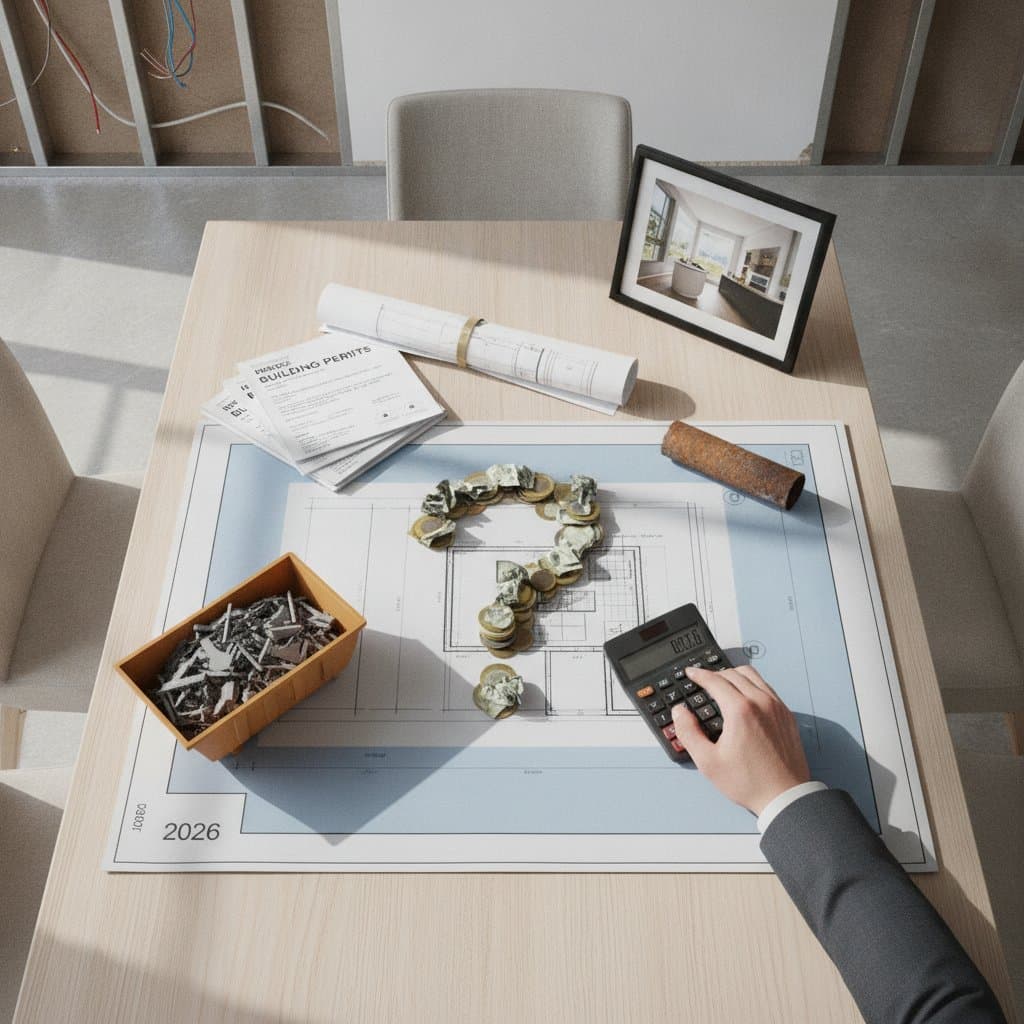
Context: Permits, electrical upgrades, and waste disposal add unexpected layers to basic remodels.
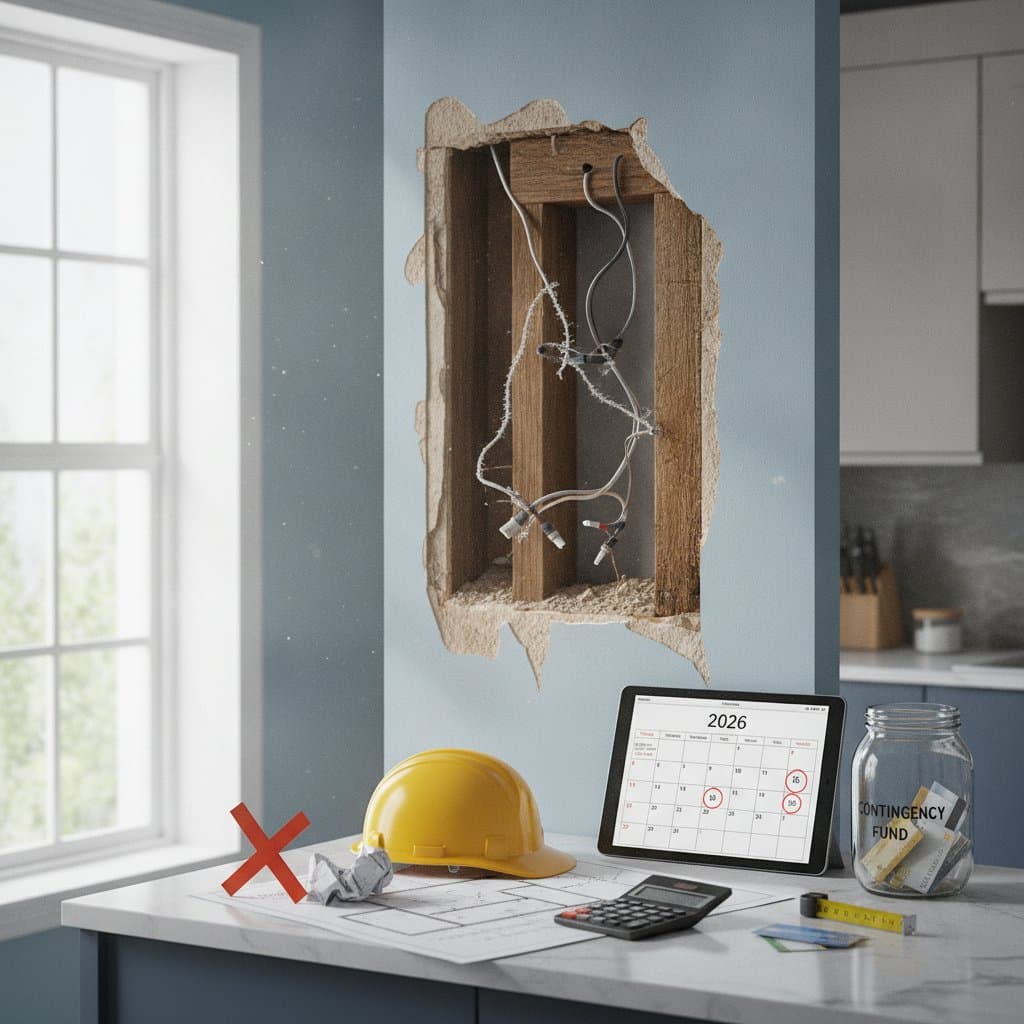
Solution: Allocate 15 to 20 percent of the total budget for contingencies. Obtain quotes from licensed contractors for plumbing, electrical, and demolition work.
Technical Detail: Factor in 2026 material inflation, with average remodels ranging from $5,000 to $15,000 depending on scope. Include disposal fees for old appliances.
Benefit: Comprehensive budgeting ensures project completion without interruptions or compromises.
Rule 10: Evaluate ROI Beyond Resale
Problem: Assessing remodels solely through resale potential undervalues personal benefits.
Context: Laundry upgrades may not match kitchen returns, yet they offer substantial daily advantages.
Solution: Analyze ROI across resale enhancement, workflow time savings, and organizational stress reduction. Track post-remodel utility decreases and chore durations for quantitative insights.
Technical Detail: Resale boosts average 50 to 70 percent of costs recouped, per industry data. Personal ROI includes 10 to 15 hours saved monthly on tasks.
Benefit: A multifaceted evaluation highlights the full spectrum of gains from functional improvements.
Maintaining Your Laundry System
After completing the remodel, maintain the space as an integrated system. Clear counters regularly, inspect plumbing connections quarterly, and renew caulking and grout each year. Adapt storage configurations as household dynamics evolve.
A purposeful laundry design prioritizes reliability over display. Such an approach not only maximizes investment returns but also fosters seamless daily operations.