
Laundry Room Remodel in 2026: Achieving Strong ROI
Laundry rooms rank among the most popular home improvement projects on leading design websites. Homeowners recognize the potential of this overlooked utility area to streamline daily tasks and enhance property worth. Recent analytics from renovation platforms indicate a surge in searches for laundry and mudroom transformations, with emphasis on layouts that prioritize durability, organization, and aesthetic appeal.
Planning a remodel requires careful budget management to ensure each investment contributes to both immediate usability and future marketability. Effective upgrades turn a basic space into an efficient workstation that appeals to prospective buyers. The following sections detail proven design approaches, cost considerations, and implementation strategies that deliver lasting benefits.
1. Enhanced Lighting and Layout Optimization
A well-lit laundry room improves functionality and creates an inviting atmosphere. In a Seattle mid-century modern home, designers from Pacific Northwest Interiors installed recessed LED fixtures along the ceiling and under-cabinet strips for task lighting. They reconfigured the layout to include a central folding counter made from butcher block, positioned between the washer and dryer for easy access.
This setup works because ample illumination reduces errors in sorting and folding while the counter provides a dedicated workspace. The energy-efficient LEDs lower utility bills, adding practical value.
For ROI, optimized layouts increase perceived space efficiency, which appraisers note as a key factor in valuation. Such changes often recoup 70 to 80 percent of costs at resale by demonstrating thoughtful use of square footage.
2. Mudroom Integration for Seamless Flow
Merging the laundry area with a mudroom streamlines entryways in family homes. A project in a Chicago bungalow by Harrison + Co. Design featured charcoal slate flooring that conceals dirt and moisture from outdoor elements. Soft sage-painted beadboard walls provide warmth, and a built-in bench offers concealed storage for footwear and accessories.
The design succeeds by facilitating a logical progression from exterior to interior spaces. Durable slate safeguards the subfloor against water damage, while the unified color scheme blends the dual purposes cohesively.
This approach boosts ROI through multifunctional efficiency, effectively expanding usable area without structural additions. It minimizes maintenance expenses and appeals to buyers seeking practical, low-upkeep features, often yielding returns of 65 to 75 percent.
3. Smart Storage Solutions
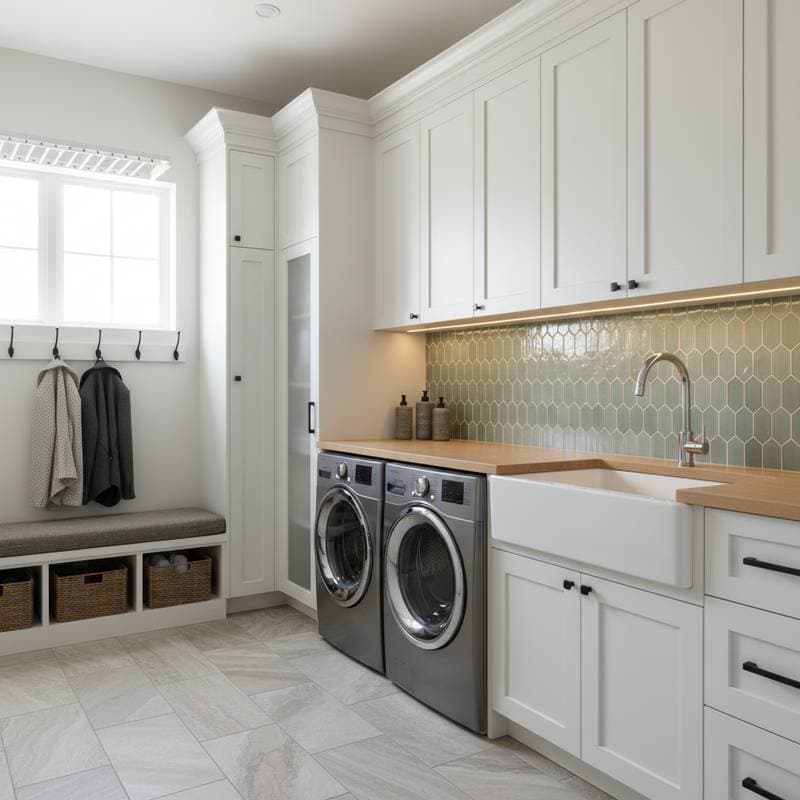
Incorporating innovative storage elevates organization in compact laundry spaces. In a San Francisco row house, Bay Area Custom Homes added floor-to-ceiling pull-out hampers and overhead shelving with adjustable brackets. They selected matte black hardware to complement white cabinetry, creating a streamlined look.
These elements function effectively by maximizing vertical space and categorizing laundry items for quick retrieval. Pull-out units prevent clutter buildup, maintaining a tidy appearance.
Storage upgrades enhance ROI by showcasing superior organization, a priority for modern buyers. Investments here typically recover 80 percent or more, as they highlight the home's readiness for contemporary lifestyles.
4. Patterned Flooring and Finishing Touches
Bold flooring introduces character without dominating the room. A coastal cottage renovation near Santa Barbara by Clara Devon Interiors utilized blue and white geometric encaustic cement tiles alongside white shiplap walls. A brass gooseneck faucet over a deep farmhouse sink provides subtle elegance.
The pattern energizes the area while remaining practical for cleaning. Limited application to the floor controls expenses, and the hardware unifies the design for a polished finish.
Such accents improve ROI by signaling quality craftsmanship, attracting design-conscious purchasers. Floor upgrades often return 60 to 70 percent of investment through heightened visual appeal and durability.
Budget Allocation for Maximum Impact
Approach remodeling costs in targeted layers to optimize returns. Most projects allocate funds as follows:
- Cabinetry and Storage (25 to 30 percent): Opt for custom or semi-custom units with moisture-resistant materials like melamine or sealed hardwood to enhance organization.
- Appliances (20 to 25 percent): Select energy-efficient, front-loading washers and dryers that support stacking for space savings and reduced energy use.
- Surfaces and Flooring (15 to 20 percent): Choose resilient options such as quartz countertops, porcelain tiles, or polished concrete to withstand heavy use.
- Plumbing and Electrical (10 to 15 percent): Upgrade fixtures and wiring to improve efficiency and prevent costly repairs down the line.
- Lighting, Paint, and Accessories (10 to 15 percent): Incorporate multi-level lighting and durable paints to refine the space affordably.
Prioritize functional elements before decorative ones. This method ensures the remodel supports daily needs while positioning the home favorably in the market, with overall ROI often exceeding 70 percent for well-executed projects.
Implementing and Maintaining Your Upgrades
After completion, integrate habits that preserve the space's efficiency. Install a slim pull-out drying rack next to the dryer for delicate items, and use lidded bins to organize supplies neatly.
Regular maintenance, such as wiping surfaces and checking seals, extends the lifespan of materials. These practices keep the area functional and appealing over time.
A thoughtfully remodeled laundry room transcends its utilitarian role. It serves as an efficient hub that enhances home flow and underscores the property's overall quality, delivering value for years to come.