

Hidden Costs That Can Derail Your Kitchen Remodel Budget
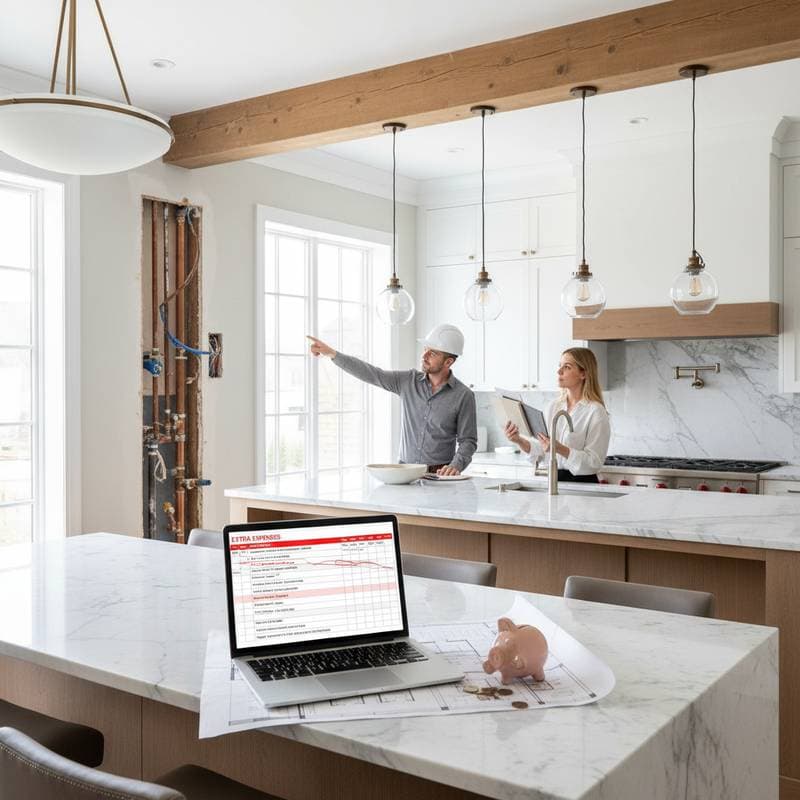
In an ideal scenario, a kitchen remodel proceeds precisely according to plan. New cabinets arrive punctually, flooring aligns flawlessly, and expenses align with the contractor's detailed estimate. Reality, however, frequently introduces unforeseen challenges that strain even the most meticulous budgets. These range from concealed plumbing problems within aged walls to alterations in design during construction, accumulating expenses that generate considerable anxiety. Recognizing the origins of such costs empowers homeowners to manage their project vision and financial resources effectively.
1. Structural Surprises Behind the Walls
Demolition often exposes unanticipated structural problems, particularly in older residences where issues remain concealed from view. Homeowners may encounter rotted subflooring beneath the sink area, framing that fails to comply with contemporary building codes, or electrical wiring requiring comprehensive replacement. Such repairs prove essential and substantially elevate both labor and material expenditures.
Homeowners should allocate a contingency reserve equivalent to 10 to 20 percent of the overall budget to address these occurrences. This financial buffer enables management of surprises without compromising the project's entirety. Prior to commencing demolition, request that the contractor conducts thorough inspections, including minor exploratory openings in walls or floors, to identify potential issues early and refine expectations before extensive removal occurs.
2. Plumbing and Electrical Upgrades
Numerous older kitchens predate the prevalence of modern appliances and advanced lighting systems. Introducing new fixtures, high-capacity ovens, or oversized refrigerators may overwhelm existing infrastructure. Consequently, upgrades to electrical panels, installation of fresh circuits, or replacement of obsolete plumbing pipes become necessary and incur substantial costs.
Homeowners must evaluate their anticipated kitchen usage meticulously. For plans involving multiple appliances or an island featuring a sink, initiate discussions on electrical and plumbing requirements at the outset. Although reusing legacy lines may appear economical, this approach risks future leaks, blockages, or electrical failures. Committing to system modernizations at present prevents expensive subsequent interventions and guarantees safe operation in the renovated space.
3. Cabinetry Modifications and Installation Fees
Cabinets typically represent one of the primary expenditures in a kitchen renovation. Homeowners frequently underestimate that installation and required modifications can surpass the cabinets' base price. Custom adaptations, filler panels, or supplementary trim often prove necessary to accommodate the updated layout.
For semi-custom or stock cabinet orders, verify all measurements meticulously prior to finalizing the purchase. A minor discrepancy can necessitate extra labor for adjustments. Obtain from the installer a comprehensive quote encompassing old cabinet removal, disposal charges, and fees for unforeseen modifications. Addressing these elements in advance mitigates unexpected costs upon delivery.
4. Countertop Fabrication and Edge Finishes
Budgeting for countertops generally emphasizes the material cost per square foot, whether quartz, granite, or butcher block. Fabrication expenses, however, often escape attention; these encompass slab cutting, edge polishing, and provisions for sink or cooktop openings. Design complexity directly influences these additional charges, potentially inflating the total significantly.
To manage expenses effectively, opt for straightforward layouts. Straight edges and reduced seams prove more affordable than curved or waterfall configurations. Prior to material selection, secure from the fabricator a complete estimate detailing cutouts, edge profiles, and installation. Such transparency averts dismay upon receiving the final invoice.
5. Flooring Transitions and Leveling
Floor replacement appears deceptively simple, yet conceals multiple potential costs. Pre-existing floors frequently demand leveling to support new installations properly. Uneven or compromised subfloors compromise the longevity and appearance of tiles or hardwood, while transitions between flooring types, such as from tile to wood, require specialized trim for seamless, secure junctions.
Incorporate underlayment materials and subfloor repair provisions into the budget. Although invisible post-installation, these elements ensure durability. A professional installation prevents issues like creaking or separation, preserving the floor's aesthetic and functionality over time.
6. Appliance Delivery and Hookup Costs
Appliances constitute a significant outlay, but associated expenses extend beyond acquisition. Delivery, installation, and removal of prior units incur fees that accumulate readily. Retailers may levy additional charges for gas line connections, venting setups, or cabinet adjustments for integrated models. Relocating appliances to novel positions often necessitates further plumbing or electrical modifications.
To circumvent surprises, demand a documented itemization of all appliance-related expenditures before committing to purchase. Inquire specifically about inclusions for connections, venting, and old unit disposal. Coordinating these aspects early sustains project efficiency and budget adherence.
7. Permits and Inspection Fees
Even modest remodels may mandate building permits, particularly those involving electrical or plumbing alterations, which require inspections for code compliance. Fees vary by locality and project scale, often reaching several hundred dollars.
Contractors typically manage permitting, but confirm inclusions within their estimates. Neglecting proper permits invites fines or complications during future property sales. Though permits impose an administrative burden, they safeguard the renovation's quality and adherence to safety protocols.
8. Design Changes Midway Through the Project
Mid-project design revisions rank among the most frequent budget disruptors. Alterations like exchanging backsplash tiles, repositioning light fixtures, or selecting premium faucets, though seemingly trivial, propagate impacts on timelines and finances. Contractors impose change order fees to account for labor, materials, and scheduling disruptions.
Minimize this hazard by resolving design specifics comprehensively before initiation. Develop a thorough plan specifying finishes, colors, and fixtures. Employ digital visualizations or physical sample boards to validate selections pre-construction. Adhering to the initial blueprint preserves both schedule and fiscal integrity.
9. Temporary Living and Dining Costs
A kitchen remodel disrupts daily routines, potentially increasing reliance on takeout or makeshift cooking setups in alternative spaces. Over weeks, expenses for disposable dishware and utensils mount unexpectedly.
For projects necessitating temporary relocation, account for lodging and meal provisions. Consider renting compact portable cooktops or establishing microwave stations to economize. Anticipating meal alternatives enhances comfort and alleviates construction-related stress.
10. Finishing Touches and Small Details
Upon completing primary tasks, minor elements often receive insufficient attention despite their cumulative impact. Cabinet hardware, trim molding, outlet covers, and paint retouches, individually inexpensive, collectively add hundreds to the total.
Assemble a checklist for these components at the project's commencement. This strategy facilitates expense monitoring and cohesive selections without end-stage haste. Thoughtful attention to details elevates the kitchen's cohesive aesthetic and functionality.
Strategies for a Budget-Conscious Remodel
Achieving a prosperous kitchen renovation transcends aesthetic selections; it demands rigorous planning, awareness of potential cost sources, and deliberate decision-making. Establish a pragmatic budget incorporating a surprise buffer from the outset. Collaborate with communicative professionals who furnish phased, itemized estimates to navigate the process confidently and realize a durable, enjoyable space.