
2025 Laundry Remodel: Essential Layouts and Cost Insights
Consider the frustration of folding a week's worth of clothing atop a washing machine while juggling a hot beverage. Such experiences highlight how the laundry room warrants greater attention than it often receives. Envision a peaceful, Scandinavian-style area with oak shelving, matte black fixtures, and a smooth-gliding drying rail; contrast that with a typical cluttered alcove featuring mismatched bins, a rumbling dryer, and faded walls.
A laundry remodel project blends luxury with necessity. The focus lies in enhancing daily routines, reducing obstacles, and minimizing lost items like socks. This transformation prioritizes functionality over display.
Dream Features Versus Realistic Outcomes
An ideal laundry room appears clean, well-lit, and streamlined. It includes designated areas for sorting laundry, a versatile folding surface that conceals an iron, and concealed storage for supplies. Optimal illumination ensures visibility, while a subtle scent of fresh linens enhances the atmosphere.
In practice, outcomes hinge on available funds, room dimensions, and willingness to endure construction. Remodels typically require coordination among plumbers, electricians, and carpenters, who may react skeptically to inspiration images. With thoughtful planning, the result delivers both appeal and utility.
Selecting the Optimal Layout
Assess functionality before selecting finishes. The layout determines efficiency and comfort in the space.
1. Galley Layout
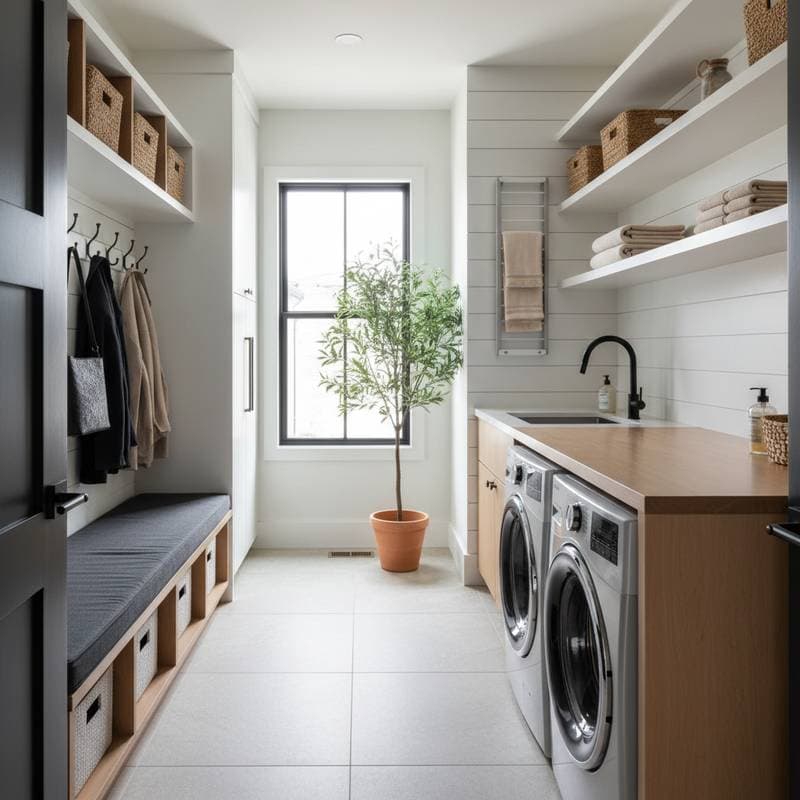
Appliances align side by side beneath a continuous countertop for sorting and folding. Wall-mounted storage keeps essentials accessible. This setup suits compact areas but demands vigilant organization to prevent a confined feel.
2. L-Shaped Layout
This arrangement expands work surfaces and introduces separation between zones. Position hampers beneath one arm, detergents in the corner, and incorporate a compact utility sink. Such division mimics professional organization, distinguishing soiled items from clean ones.
3. Mudroom Integration
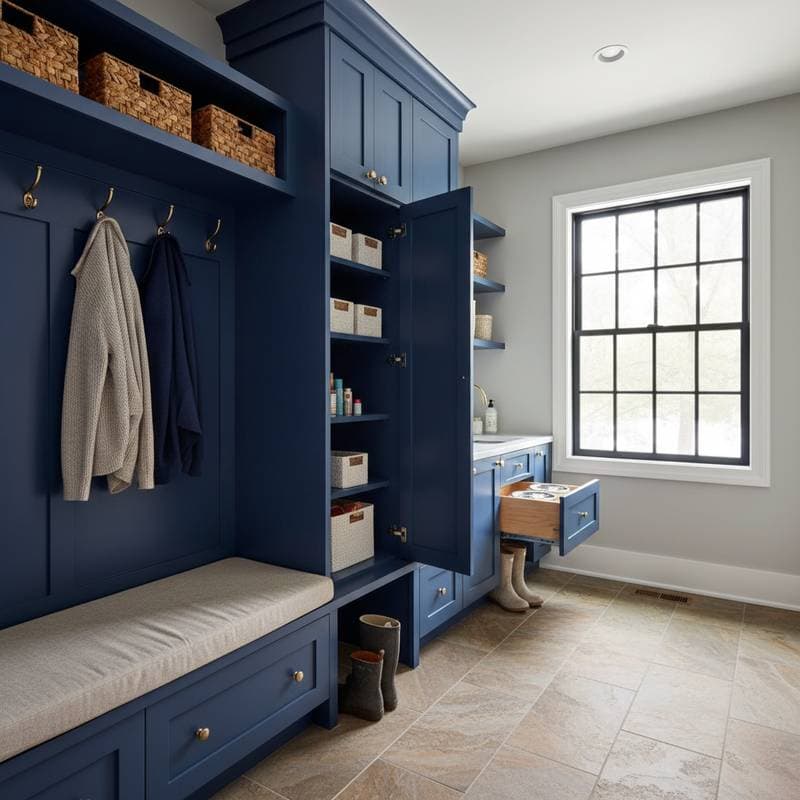
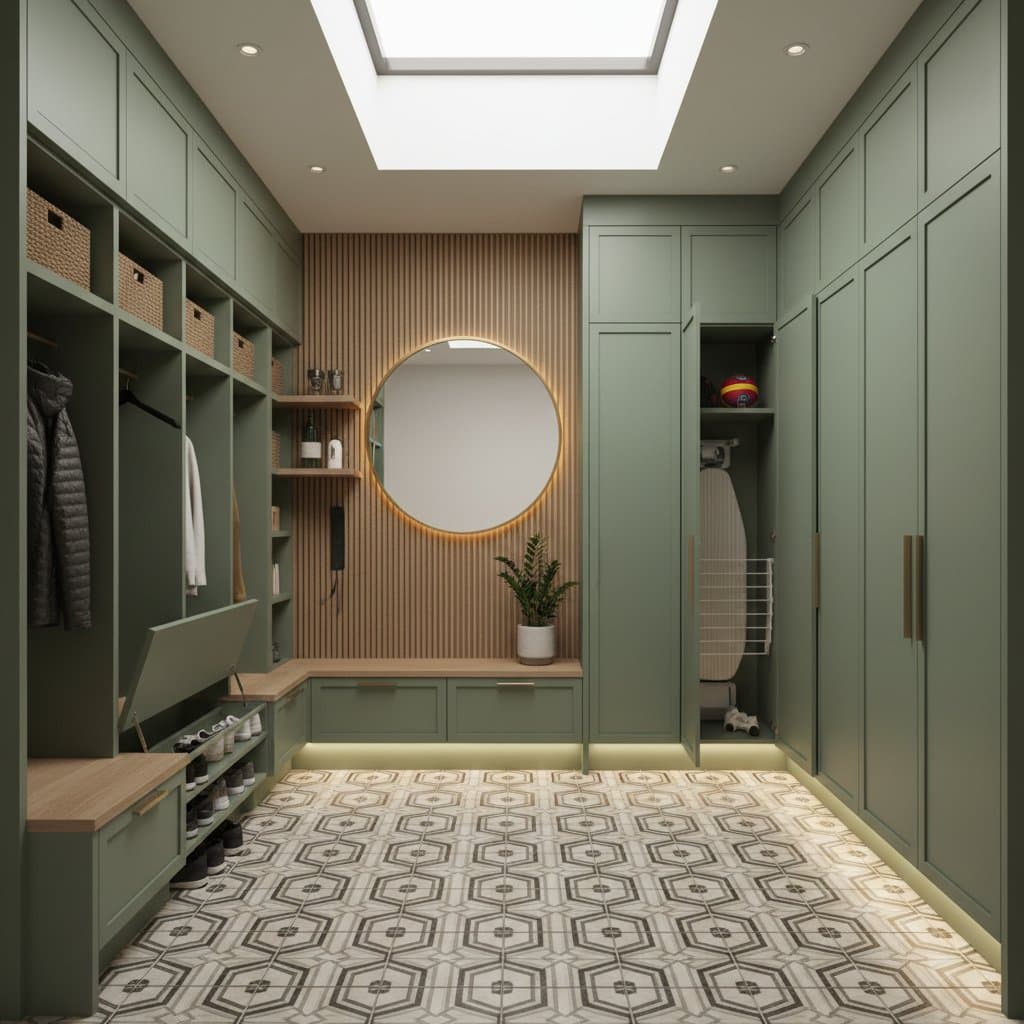
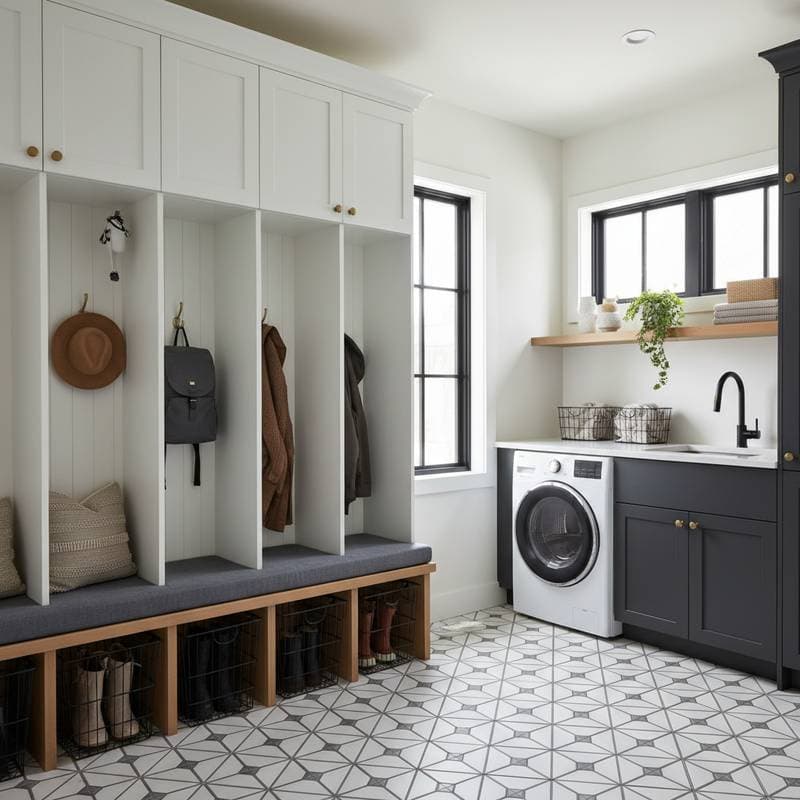
This hybrid design combines laundry with entry functions, ideal for households prone to tracking in dirt. Install benches with integrated cubbies to conceal outerwear and footwear. Opt for resilient flooring and overhead rails to manage wet items effectively.
Detailed Cost Estimates
Expenses fluctuate based on material selections, design intricacy, and utility relocations. Realistic ranges provide a starting point for planning.
- Basic Refresh: Retain existing appliance positions while updating paint, installing shelving, and upgrading lights. Budget approximately $1,000 to $3,000 for these foundational improvements without extensive disruption.
- Mid-Range Remodel: Introduce custom cabinetry, enhanced illumination, a durable countertop, utility sink, and modern fixtures. Allocate $5,000 to $10,000 to achieve refined organization with premium yet accessible materials.
- High-End Renovation: Feature bespoke woodworking, natural stone counters, built-in appliances, and artisanal tiling. Expect $15,000 to $25,000 or more, comparable to minor kitchen overhauls.
Always incorporate a 10 to 20 percent contingency for unforeseen issues, such as hidden plumbing anomalies. One such discovery once required additional adjustments, underscoring the value of flexibility.
Durable Materials for High-Use Areas
Laundry environments endure humidity, warmth, and spills. Select resilient options that withstand these conditions.
- Flooring: Choose luxury vinyl planks or porcelain tiles for their water resistance and simple maintenance. Steer clear of natural wood unless it features engineered construction with robust sealing.
- Countertops: Laminate provides cost-effective utility; quartz delivers superior endurance and subtle elegance.
- Cabinetry: Painted medium-density fiberboard suffices for standard applications, while solid wood imparts enduring character when budget permits.
- Lighting: Combine focused task lights with softer ambient sources for versatility. LED strips beneath cabinets illuminate detailed work effectively during evening sessions.
Key Design Elements for Enhanced Functionality
Subtle enhancements shift the room from utilitarian to inviting without overwhelming the space.
- Hooks and Rails: Install these for convenient access to drying tools and garments, maintaining order.
- Pull-Out Hampers: Organize by load type directly at collection points to streamline the process.
- Open Shelving: Display decorative containers for supplies, ensuring regular cleaning to preserve aesthetics.
- Greenery: Introduce humidity-tolerant plants like pothos to infuse vitality and absorb excess moisture.
For added personality, incorporate a feature tile backsplash or soft wall hues. A sage green accent, for instance, fosters tranquility amid appliance cycles.
Maintaining and Maximizing Your Remodeled Space
After completion, the organized setup redefines chore management. Regular upkeep preserves the investment.
Wipe counters daily to prevent buildup, inspect appliance seals quarterly, and designate shelves strictly for laundry items. Measure your area precisely and align plans with household habits to ensure longevity. Prioritize a dedicated spot for beverages to sustain calm amid routines.
This approach yields a space that supports efficiency and enjoyment, turning necessities into seamless habits.