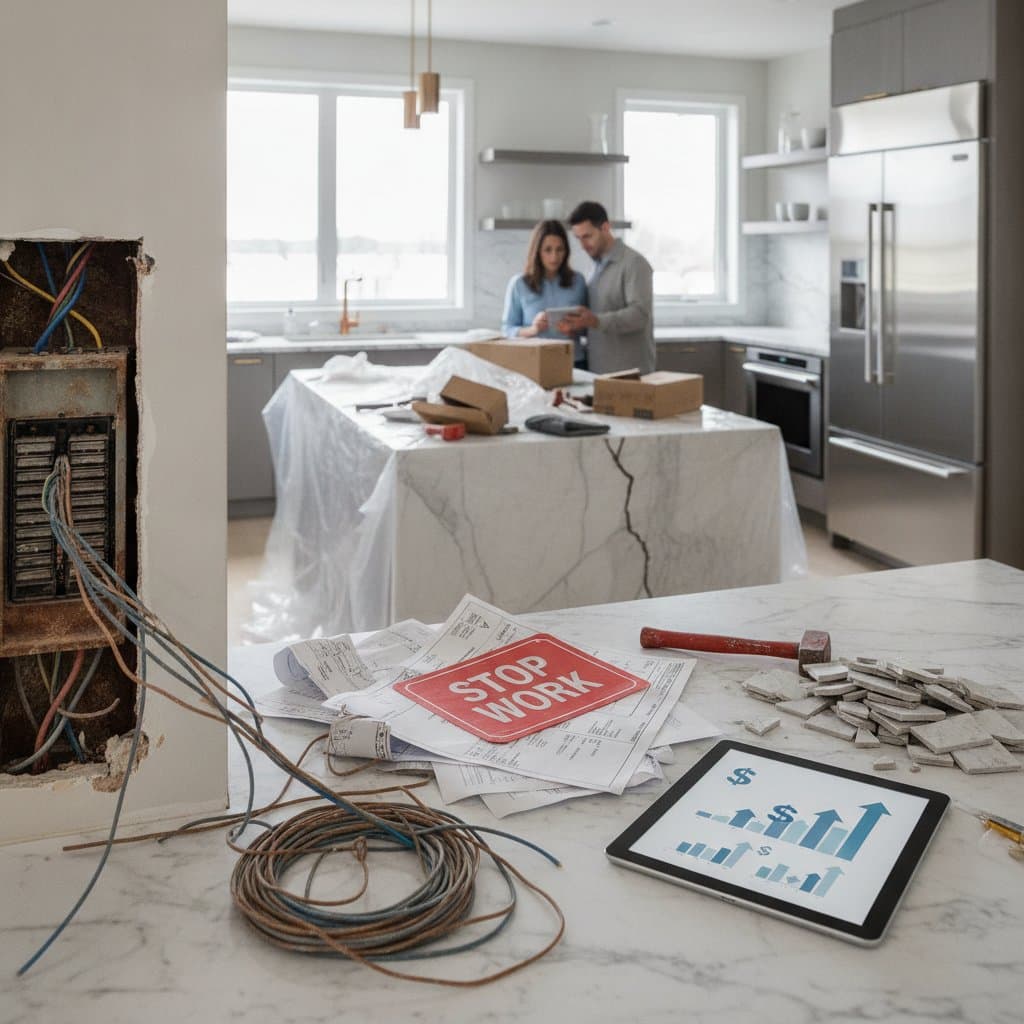


2026 Kitchen Budget Traps: Hidden Remodel Costs Exposed
Planning a kitchen remodel starts with clear expectations about expenses that surface during construction. These issues often exceed initial estimates when left unaddressed. Preparation allows homeowners to maintain financial control throughout the project.
Addressing Electrical System Limitations
Outdated wiring in many homes cannot support modern appliances such as induction cooktops or high powered ovens. A licensed electrician should inspect circuits before demolition begins. This assessment reveals whether new lines or panels are required.
- Schedule a pre demolition electrical review with a qualified contractor.
- Reserve 10 to 15 percent of the overall budget for circuit upgrades.
- Confirm that all new appliances receive dedicated power sources.
Managing Plumbing Relocation Challenges
Moving sinks or adding islands often requires rerouting pipes and updating valves. Older drainage systems may need replacement to meet current codes. Early detection prevents mid project delays and added labor fees.
- Obtain a plumbing inspection prior to finalizing the layout.
- Budget separately for waste pipe adjustments and shutoff valve replacements.
- Verify that new fixtures align with existing supply lines.
Ensuring Proper Cabinet Installation
Walls and floors rarely meet perfect alignment standards, which affects cabinet fit. Professional installers adjust for these variations to maintain level surfaces and seamless joints. Skimping on this step leads to misaligned worktops and drawer problems.
- Hire experienced fitters rather than attempting assembly without training.
- Allow extra time for shimming and leveling during the installation phase.
- Measure all appliance openings after cabinets are secured in place.
Handling Structural Modifications
Removing walls or adding openings can expose load bearing requirements such as steel beams. A structural survey identifies these needs before work starts. Smaller changes like chimney removal may also reveal insulation or dampness issues.
- Commission a full structural assessment for any load bearing alterations.
- Include contingency funds for beam installation or reinforcement.
- Inspect for hidden moisture or insulation gaps during initial evaluations.
Preventing Appliance Fit Problems
Online purchases sometimes result in units that do not match cabinet dimensions or ventilation needs. Delivery constraints in older homes can further complicate placement. Confirming specifications in advance reduces the risk of rework.
- Measure appliance spaces three times before ordering.
- Check ventilation and power requirements listed in product manuals.
- Arrange for on site delivery inspections to avoid damage during transport.
Controlling Finishing Detail Expenses
Items such as handles, lighting, and sealant accumulate quickly when selected individually. A dedicated allowance for these elements keeps spending visible. This approach avoids last minute compromises on quality.
- Create a separate line item for hardware, fixtures, and trim materials.
- Select finishes early to lock in pricing and availability.
- Review bin systems and storage accessories against daily usage needs.
Accounting for Temporary Living Costs
Projects that span several weeks require alternative meal arrangements and storage solutions. Tracking these daily expenses prevents budget erosion. Planning ahead reduces reliance on restaurants and convenience purchases.
Protecting Your Renovation Investment
Anticipating these factors supports a smoother process and preserves resources for the final result. Homeowners who address each area methodically achieve functional outcomes without unexpected shortfalls.